
Filter
902
Featured
43
25
Language
Document type
320
117
115
81
56
53
52
30
26
12
10
10
10
7
3
Countries
228
36
28
19
11
10
8
8
7
6
6
5
5
5
5
5
5
5
5
4
4
4
4
4
4
3
3
3
3
3
3
2
2
2
2
2
2
2
2
2
1
1
1
1
1
1
1
1
1
1
1
1
1
1
1
1
1
1
1
1
1
1
1
1
1
1
1
1
1
1
1
1
1
1
Authors & Publishers
Publication Years
Category
117
67
39
9
5
3
2
Emerging Infectious Diseases • www.cdc.gov/eid • Vol. 25, No. 12, December 2019 2183
Buruli ulcer is a neglected tropical disease caused by Myocobacterium ulcerans; it manifests as a skin lesion, nodule, or ulcer that can be extensive and disabling. To assess the global burden and the progress
...
Buruli ulcer (Mycobacterium ulcerans infection) Resource platform
Dengue and severe dengue treatment recommendations for healthcare providers.
Analysis of microfilaria prevalence data from 430 communities
Diagnosis of Dengue fever for healthcare providers
Obtenga más información sobre el diagnóstico del dengue y la orientación para las pruebas.
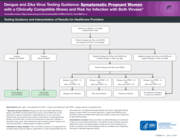
Testing Guidance and Interpretation of Results for Healthcare providers
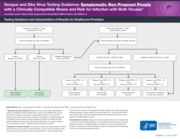
Testing Guidance and Interpretation of Results for Healthcare Providers Dengue and Zika Virus
Transactions of the Royal Society of Tropical Medicine and Hygiene vik,113 no.11. Dengue is the world's most common arboviral infection, with almost 4 billion people estimated to be living at risk of dengue infection. A recently introduced vaccine is currently recommended only for seropositive indi
...
Carlos Chagas discovered American trypanosomiasis, also named Chagas disease (CD) in his honor, just over a century ago. He described the clinical aspects of the disease, characterized by its etiological agent (Trypanosoma cruzi) and identified its insect vector. Initially, CD occurred only in Latin
...
This is a summary of the following peer-reviewed, scientific article:
Comparative Evaluation of Immunoassays to Improve Access to Diagnosis for Chagas Disease in Colombia.
Front. Public Health, 02 July 2019 Sec. Infectious Diseases: Epidemiology and Prevention
Volume 7 - 2019 | https://doi.org/10.3389/fpubh.2019.00166
Chagas disease (CD) is an anthropozoonosis caused by the protozoan parasite Trypanosoma cruzi, that affects about 6–8 million people worldwide (1) a
...

Over 6 million people worldwide are infected with Trypanosoma cruzi, the protozoan that causes Chagas disease
(CD). T. cruzi is transmitted by triatomine insects, congenitally, through uncontrolled blood donations and organ transplants,
and via consumption of food or drink contaminated by triatomi
...
In areas of Mexico, Central America, and South America, where the Trypanosoma cruzi parasite is present in triatomine bugs, improved housing and spraying insecticide inside housing to eliminate the bugs has significantly decreased the spread of Chagas disease. Screening of blood donations for Chagas
...
In 2005, the World Health Organization (WHO) recognized Chagas disease (CD; Trypanosoma cruzi infection) as a neglected tropical disease (NTD) [1] and included it into the global plan to combat NTDs [2]. The Target 3.3 of the United Nations Sustainable Development Goals (UN/SDG) aims at ending the e
...

This document compiles the recommendations made by the World Health Organization (WHO) and the Pan American Health Organization (PAHO) to help professionals in charge of vector control programs in Latin America and the Caribbean at the national, subnational, and local level update their knowledge in
...
El presente documento reúne un conjunto de recomendaciones formuladas por la Organización Mundial de la Salud (OMS) y la Organización Panamericana de la Salud (OPS) para ayudar, a los profesionales encargados de los programas de control de vectores de Latinoamérica y el Caribe a nivel nacional,
...
