
Filter
9863
Text search:
national
plan
Featured
758
2813
Language
8330
1233
383
157
112
88
59
48
18
16
16
12
12
12
9
9
9
8
8
7
7
7
7
6
6
6
5
5
5
5
4
4
4
4
4
4
4
4
4
4
4
3
3
3
3
3
3
3
3
3
3
3
2
2
2
2
2
2
2
1
1
1
1
1
1
1
1
1
1
1
1
1
Document type
5691
1557
1103
492
473
190
166
109
25
21
19
11
1
Countries
372
368
288
220
212
195
191
187
186
182
180
168
167
165
154
139
137
134
132
132
125
115
111
107
105
96
91
81
79
75
72
68
66
64
62
62
61
56
56
52
51
51
51
50
47
46
46
45
44
42
37
37
32
32
32
30
28
25
23
22
22
22
22
20
19
19
18
18
16
16
15
14
14
14
14
13
13
13
13
12
11
11
11
10
9
8
8
8
8
7
7
7
7
7
6
6
6
6
6
6
6
6
5
5
5
5
5
5
5
4
4
4
4
4
3
3
3
3
3
3
3
3
3
3
3
3
3
2
2
2
2
2
2
2
2
2
2
2
2
2
2
2
2
2
2
1
1
1
1
1
1
1
1
1
1
Authors & Publishers
1064
427
383
322
261
236
160
156
150
87
66
61
58
56
52
49
48
48
46
45
43
43
39
38
37
37
36
36
35
35
34
34
33
33
33
33
32
32
32
31
30
30
28
28
27
27
27
26
25
25
25
24
24
24
24
22
22
22
22
21
21
21
21
21
20
20
20
20
19
18
18
18
18
18
17
17
17
17
16
16
16
16
16
16
15
15
14
14
14
14
14
14
13
13
13
13
13
13
12
12
12
12
12
12
12
12
12
12
12
11
11
11
11
11
11
11
11
11
11
11
11
11
11
11
10
10
10
10
10
10
10
10
10
10
10
10
10
10
10
10
10
10
10
10
9
9
9
9
9
9
9
9
9
9
9
9
9
8
8
8
8
8
8
8
8
8
8
8
8
8
8
8
7
7
7
7
7
7
7
7
7
7
7
7
7
7
7
7
7
7
7
7
7
7
7
7
7
7
7
7
6
6
6
6
6
6
6
6
6
6
6
6
6
6
6
6
6
6
6
6
6
6
6
6
6
6
6
6
6
6
6
6
6
6
6
6
6
6
6
6
6
6
6
6
5
5
5
5
5
5
5
5
5
5
5
5
5
5
5
5
5
5
5
5
5
5
5
5
5
5
5
5
5
5
5
5
5
5
5
5
5
5
5
5
5
5
5
5
5
5
5
5
5
5
5
5
5
5
5
5
5
5
5
5
5
5
5
5
5
5
4
4
4
4
4
4
4
4
4
4
4
4
4
4
4
4
4
4
4
4
4
4
4
4
4
4
4
4
4
4
4
4
4
4
4
4
4
4
4
4
4
4
4
4
4
4
4
4
4
4
4
4
4
4
4
4
4
4
4
4
4
4
4
4
4
4
4
4
4
4
4
4
4
4
4
4
4
4
4
4
4
4
4
4
4
4
4
4
4
4
4
4
4
4
4
4
4
4
4
4
4
4
4
4
4
4
4
4
4
4
4
4
4
4
4
4
4
4
4
4
4
4
4
4
3
3
3
3
3
3
3
3
3
3
3
3
3
3
3
3
3
3
3
3
3
3
3
3
3
3
3
3
3
3
3
3
3
3
3
3
3
3
3
3
3
3
3
3
3
3
3
3
3
3
3
3
3
3
3
3
3
3
3
3
3
3
3
3
3
3
3
3
3
3
3
3
3
3
3
3
3
3
3
3
3
3
3
3
3
3
3
3
3
3
3
3
3
3
3
3
3
3
3
3
3
3
3
3
3
3
3
3
3
3
3
3
3
3
3
3
3
3
3
3
3
3
3
3
3
3
3
3
3
3
3
3
3
3
3
3
3
3
3
3
3
3
3
3
3
3
3
3
3
3
3
3
3
3
3
3
3
3
3
3
3
3
3
3
3
3
3
3
3
3
3
3
3
3
3
3
3
3
3
3
3
3
3
3
3
3
3
3
3
2
2
2
2
2
2
2
2
2
2
2
2
2
2
2
2
2
2
2
2
2
2
2
2
2
2
2
2
2
2
2
2
2
2
2
2
2
2
2
2
2
2
2
2
2
2
2
2
2
2
2
2
2
2
2
2
2
2
2
2
2
2
2
2
2
2
2
2
2
2
2
2
2
2
2
2
2
2
2
2
2
2
2
2
2
2
2
2
2
2
2
2
2
2
2
2
2
2
2
2
2
2
2
2
2
2
2
2
2
2
2
2
2
2
2
2
2
2
2
2
2
2
2
2
2
2
2
2
2
2
2
2
2
2
2
2
2
2
2
2
2
2
2
2
2
2
2
2
2
2
2
2
2
2
2
2
2
2
2
2
2
2
2
2
2
2
2
2
2
2
2
2
2
2
2
2
2
2
2
2
2
2
2
2
2
2
2
2
2
2
2
2
2
2
2
2
2
2
2
2
2
2
2
2
2
2
2
2
2
2
2
2
2
2
2
2
2
2
2
2
2
2
2
2
2
2
2
2
2
2
2
2
2
2
2
2
2
2
2
2
2
2
2
2
2
2
2
2
2
2
2
2
2
2
2
2
2
2
2
2
2
2
2
2
2
2
2
2
2
2
2
2
2
2
2
2
2
2
2
2
2
2
2
2
2
2
2
2
2
2
2
2
2
2
2
2
2
2
2
2
2
2
2
2
2
2
2
2
2
2
2
2
2
2
2
2
2
2
2
2
2
2
2
2
2
2
2
2
2
2
2
2
2
2
2
2
2
2
2
2
2
2
2
2
2
2
2
2
2
2
2
2
2
2
2
2
2
2
2
2
2
2
2
2
2
2
2
2
2
2
2
2
2
2
2
2
2
2
2
2
2
2
2
2
2
2
2
2
2
2
2
2
2
2
2
2
2
2
2
2
2
2
2
2
2
2
2
2
2
2
2
2
2
2
2
2
2
2
2
2
2
2
2
2
2
2
2
2
2
2
2
2
2
2
2
2
2
2
2
2
2
2
2
2
2
2
2
2
2
2
2
2
2
2
2
2
2
2
2
2
2
2
2
2
2
2
2
2
2
2
2
2
2
2
2
2
2
2
2
2
2
2
2
2
2
2
2
2
2
2
2
2
2
2
2
2
2
2
2
2
2
2
2
2
2
2
2
2
2
2
2
2
2
2
2
2
2
2
2
2
2
2
2
2
2
2
2
2
2
2
2
2
2
2
2
2
2
2
2
2
2
2
2
2
2
2
2
2
2
2
2
2
2
2
2
2
2
2
2
2
2
2
1
1
1
1
1
1
1
1
1
1
1
1
1
1
1
1
1
1
1
1
1
1
1
1
1
1
1
1
1
1
1
1
1
1
1
1
1
1
1
1
1
1
1
1
1
1
1
1
1
1
1
1
1
1
1
1
1
1
1
1
1
1
1
1
1
1
1
1
1
1
1
1
1
1
1
1
1
1
1
1
1
1
1
1
1
1
1
1
1
1
1
1
1
1
1
1
1
1
1
1
1
1
1
1
1
1
1
1
1
1
1
1
1
1
1
1
1
1
1
1
1
1
1
1
1
1
1
1
1
1
1
1
1
1
1
1
1
1
1
1
1
1
1
1
1
1
1
1
1
1
1
1
1
1
1
1
1
1
1
1
1
1
1
1
1
1
1
1
1
1
1
1
1
1
1
1
1
1
1
1
1
1
1
1
1
1
1
1
1
1
1
1
1
1
1
1
1
1
1
1
1
1
1
1
1
1
1
1
1
1
1
1
1
1
1
1
1
1
1
1
1
1
1
1
1
1
1
1
1
1
1
1
1
1
1
1
1
1
1
1
1
1
1
1
1
1
1
1
1
1
1
1
1
1
1
1
1
1
1
1
1
1
1
1
1
1
1
1
1
1
1
1
1
1
1
1
1
1
1
1
1
1
1
1
1
1
1
1
1
1
1
1
1
1
1
1
1
1
1
1
1
1
1
1
1
1
1
1
1
1
1
1
1
1
1
1
1
1
1
1
1
1
1
1
1
1
1
1
1
1
1
1
1
1
1
1
1
1
1
1
1
1
1
1
1
1
1
1
1
1
1
1
1
1
1
1
1
1
1
1
1
1
1
1
1
1
1
1
1
1
1
1
1
1
1
1
1
1
1
1
1
1
1
1
1
1
1
1
1
1
1
1
1
1
1
1
1
1
1
1
1
1
1
1
1
1
1
1
1
1
1
1
1
1
1
1
1
1
1
1
1
1
1
1
1
1
1
1
1
1
1
1
1
1
1
1
1
1
1
1
1
1
1
1
1
1
1
1
1
1
1
1
1
1
1
1
1
1
1
1
1
1
1
1
1
1
1
1
1
1
1
1
1
1
1
1
1
1
1
1
1
1
1
1
1
1
1
1
1
1
1
1
1
1
1
1
1
1
1
1
1
1
1
1
1
1
1
1
1
1
1
1
1
1
1
1
1
1
1
1
1
1
1
1
1
1
1
1
1
1
1
1
1
1
1
1
1
1
1
1
1
1
1
1
1
1
1
1
1
1
1
1
1
1
1
1
1
1
1
1
1
1
1
1
1
1
1
1
1
1
1
1
1
1
1
1
1
1
1
1
1
1
1
1
1
1
1
1
1
1
1
1
1
1
1
1
1
1
1
1
1
1
1
1
1
1
1
1
1
1
1
1
1
1
1
1
1
1
1
1
1
1
1
1
1
1
1
1
1
1
1
1
1
1
1
1
1
1
1
1
1
1
1
1
1
1
1
1
1
1
1
1
1
1
1
1
1
1
1
1
1
1
1
1
1
1
1
1
1
1
1
1
1
1
1
1
1
1
1
1
1
1
1
1
1
1
1
1
1
1
1
1
1
1
1
1
1
1
1
1
1
1
1
1
1
1
1
1
1
1
1
1
1
1
1
1
1
1
1
1
1
1
1
1
1
1
1
1
1
1
1
1
1
1
1
1
1
1
1
1
1
1
1
1
1
1
1
1
1
1
1
1
1
1
1
1
1
1
1
1
1
1
1
1
1
1
1
1
1
1
1
1
1
1
1
1
1
1
1
1
1
1
1
1
1
1
1
1
1
1
1
1
1
1
1
1
1
1
1
1
1
1
1
1
1
1
1
1
1
1
1
1
1
1
1
1
1
1
1
1
1
1
1
1
1
1
1
1
1
1
1
1
1
1
1
1
1
1
1
1
1
1
1
1
1
1
1
1
1
1
1
1
1
1
1
1
1
1
1
1
1
1
1
1
1
1
1
1
1
1
1
1
1
1
1
1
1
1
1
1
1
1
1
1
1
1
1
1
1
1
1
1
1
1
1
1
1
1
1
1
1
1
1
1
1
1
1
1
1
1
1
1
1
1
1
1
1
1
1
1
1
1
1
1
1
1
1
1
1
1
1
1
1
1
1
1
1
1
1
1
1
1
1
1
1
1
1
1
1
1
1
1
1
1
1
1
1
1
1
1
1
1
1
1
1
1
1
1
1
1
1
1
1
1
1
1
1
1
1
1
1
1
1
1
1
1
1
1
1
1
1
1
1
1
1
1
1
1
1
1
1
1
1
1
1
1
1
1
1
1
1
1
1
1
1
1
1
1
1
1
1
1
1
1
1
1
1
1
1
1
1
1
1
1
1
1
1
1
1
1
1
1
1
1
1
1
1
1
1
1
1
1
1
1
1
1
1
1
1
1
1
1
1
1
1
1
1
1
1
1
1
1
1
1
1
1
1
1
1
1
1
1
1
1
1
1
1
1
1
1
1
1
1
1
1
1
1
1
1
1
1
1
1
1
1
1
1
1
1
1
1
1
1
1
1
1
1
1
1
1
1
1
1
1
1
1
1
1
1
1
1
1
1
1
1
1
1
1
1
1
1
1
1
1
1
1
1
1
1
1
1
1
1
1
1
1
1
1
1
1
1
1
1
1
1
1
1
1
1
1
1
1
1
1
1
1
1
1
1
1
1
1
1
1
1
1
1
1
1
1
1
1
1
1
1
1
1
1
1
1
1
1
1
1
1
1
1
1
1
1
1
1
1
1
1
1
1
1
1
1
1
1
1
1
1
1
1
1
1
1
1
1
1
1
1
1
1
1
1
1
1
1
1
1
1
1
1
1
1
1
1
1
1
1
1
1
1
1
1
1
1
1
1
1
1
1
1
1
1
1
1
1
1
1
1
1
1
1
1
1
1
1
1
1
1
1
1
1
1
1
1
1
1
1
1
1
1
1
1
1
1
1
1
1
1
1
1
1
1
1
1
1
1
1
1
1
1
1
1
1
1
1
1
1
1
1
1
1
1
1
1
1
1
1
1
1
1
1
1
1
1
1
1
1
1
1
1
1
1
1
1
1
1
1
1
1
1
1
1
1
1
1
1
1
1
1
1
1
1
1
1
1
1
1
1
1
1
1
1
1
1
1
1
1
1
1
1
1
1
1
1
1
1
1
1
1
1
1
1
1
1
1
1
1
1
1
1
1
1
1
1
1
1
1
1
1
1
1
1
1
1
1
1
1
1
1
1
1
1
1
1
1
1
1
1
1
1
1
1
1
1
1
1
1
1
1
1
1
1
1
1
1
1
1
1
1
1
1
1
1
1
1
1
1
1
1
1
1
1
1
1
1
1
1
1
1
1
1
1
1
1
1
1
1
1
1
1
1
1
1
1
1
1
1
1
1
1
1
1
1
1
1
1
1
1
1
1
1
1
1
1
1
1
1
1
1
1
1
1
1
1
1
1
1
1
1
1
1
1
1
1
1
1
1
1
1
1
1
1
1
1
1
1
1
1
1
1
1
1
1
1
1
1
1
1
1
1
1
1
1
1
1
1
1
1
1
1
1
1
1
1
1
1
1
1
1
1
1
1
1
1
1
1
1
1
1
1
1
1
1
1
1
1
1
1
1
1
1
1
1
1
1
1
1
1
1
1
1
1
1
1
1
1
1
1
1
1
1
1
1
1
1
1
1
1
1
1
1
1
1
1
1
1
1
1
1
1
1
1
1
1
1
1
1
1
1
1
1
1
1
1
1
1
1
1
1
1
1
1
1
1
1
1
1
1
1
1
1
1
1
1
1
1
1
1
1
1
1
1
1
1
1
1
1
1
1
1
1
1
1
1
1
1
1
1
1
1
1
1
1
1
1
1
1
1
1
1
1
1
1
1
1
1
1
1
1
1
1
1
1
1
1
1
1
1
1
1
1
1
1
1
1
1
1
1
1
1
1
1
1
1
1
1
1
1
1
1
1
1
1
1
1
1
1
1
1
1
1
1
1
1
1
1
1
1
1
1
1
1
1
1
1
1
1
1
1
1
1
1
1
1
1
1
1
1
1
1
1
1
1
1
1
1
1
1
1
1
1
1
1
1
1
1
1
1
1
1
1
1
1
1
1
1
1
1
1
1
1
1
1
1
1
1
1
1
1
1
1
1
1
1
1
1
1
1
1
1
1
1
1
1
1
1
1
1
1
1
1
1
1
1
1
1
1
1
1
1
1
1
1
1
1
1
1
1
1
1
1
1
1
1
1
1
1
1
1
1
1
1
1
1
1
1
1
1
1
1
1
1
1
1
1
1
1
1
1
1
1
1
1
1
1
1
1
1
1
1
1
1
1
1
1
1
1
1
1
1
1
1
1
1
1
1
1
1
1
1
1
1
1
1
1
1
1
1
1
1
1
1
1
1
1
1
1
1
1
1
1
1
1
1
1
1
1
1
1
1
1
1
1
1
1
1
1
1
1
1
1
1
1
1
1
1
1
1
1
1
1
1
1
1
1
1
1
1
1
1
1
1
1
1
1
1
1
1
1
1
1
1
1
1
1
1
1
1
1
1
1
1
1
1
1
1
1
1
1
1
1
1
1
1
1
1
1
1
1
1
1
1
1
1
1
1
1
1
1
1
1
1
1
1
1
1
1
1
1
1
1
1
1
1
1
1
1
1
1
1
1
1
1
1
1
1
1
1
1
1
1
1
1
1
1
1
1
1
1
1
1
1
1
1
1
1
1
1
1
1
1
1
1
1
1
1
1
1
1
1
1
1
1
1
1
1
1
1
1
1
1
1
1
1
1
1
1
1
1
1
1
1
1
1
1
1
1
1
1
1
1
1
1
1
1
1
1
1
1
1
1
1
1
1
1
1
1
1
1
1
1
1
1
1
1
1
1
1
1
1
1
1
1
1
1
1
1
1
1
1
1
1
1
1
1
1
1
1
1
1
1
1
1
1
1
1
1
1
1
1
1
1
1
1
1
1
1
1
1
1
1
1
1
1
1
1
1
1
1
1
1
1
1
1
1
1
1
1
1
1
1
1
1
1
1
1
1
1
1
1
1
1
1
1
1
1
1
1
1
1
1
1
1
1
1
1
1
1
1
1
1
1
1
1
1
1
1
1
1
1
1
1
1
1
1
1
1
1
1
1
1
1
1
1
1
1
1
1
1
1
1
1
1
1
1
1
1
1
1
1
1
1
1
1
1
1
1
1
1
1
1
1
1
1
1
1
1
1
1
1
1
1
1
1
1
1
1
1
1
1
1
1
1
1
1
1
1
1
1
1
1
1
1
1
1
1
1
1
1
1
1
1
1
1
1
1
1
1
1
1
1
1
1
1
1
1
1
1
1
1
1
1
1
1
1
1
1
1
1
1
1
1
1
1
1
1
1
1
1
1
1
1
1
1
1
1
1
1
1
1
1
1
1
1
1
1
1
1
1
1
1
1
1
1
1
1
1
1
1
1
1
1
1
1
1
1
1
1
1
1
1
1
1
1
1
1
1
1
1
1
1
1
1
1
1
1
1
1
1
1
1
1
1
1
1
1
1
1
1
1
1
1
1
1
1
1
1
1
1
1
1
1
1
1
1
1
1
1
1
1
1
1
1
1
1
1
1
1
1
1
1
1
1
1
1
1
1
1
1
1
1
1
1
1
1
1
1
1
1
1
1
1
1
1
1
1
1
1
1
1
1
1
1
1
1
1
1
1
1
1
1
1
1
1
1
1
1
1
1
1
1
1
1
1
1
1
1
1
1
1
1
1
1
1
1
1
1
1
1
1
1
1
1
1
1
1
1
1
1
1
1
1
1
1
1
1
1
1
1
1
1
1
1
1
1
1
1
1
1
1
1
1
1
1
1
1
1
1
1
1
1
1
1
1
1
1
1
1
1
1
1
1
1
1
1
1
1
1
1
1
1
1
1
1
1
1
1
1
1
1
1
1
1
1
1
1
1
1
1
1
1
1
1
1
1
1
1
1
1
1
1
1
1
1
1
1
1
1
1
1
1
1
1
1
1
1
1
1
1
1
1
1
1
1
1
1
1
1
1
1
1
1
1
1
1
1
1
1
1
1
1
1
1
1
1
1
1
1
1
1
1
1
1
1
1
1
1
1
1
1
1
1
1
1
1
1
1
1
1
1
1
1
1
1
1
1
1
1
1
1
1
1
1
1
1
1
1
1
1
1
1
1
1
1
1
1
1
1
1
1
1
1
1
1
1
1
1
1
1
1
1
1
1
1
1
1
1
1
1
1
1
1
1
1
1
1
1
1
1
1
1
1
1
1
1
1
1
1
1
1
1
1
1
1
1
1
1
1
1
1
1
1
1
1
1
1
1
1
1
1
1
1
1
1
1
1
1
1
1
1
1
1
1
1
1
1
1
1
1
1
1
1
1
1
1
1
1
1
1
1
1
1
1
1
1
1
1
1
1
1
1
1
1
1
1
1
1
1
1
1
1
1
1
1
1
1
1
1
1
1
1
1
1
1
1
1
1
1
1
1
1
1
1
1
1
1
1
1
1
1
1
1
1
1
1
1
1
1
1
1
1
1
1
1
1
1
1
1
1
1
1
1
1
1
1
1
1
1
1
1
1
1
1
1
1
1
1
1
1
1
1
1
1
1
1
1
1
1
1
1
1
1
1
1
1
1
1
1
1
1
1
1
1
1
1
1
1
1
1
1
1
1
1
1
1
1
1
1
1
1
1
1
1
1
1
1
1
1
1
1
1
1
1
1
1
1
1
1
1
1
1
1
1
1
1
1
1
1
1
1
1
1
1
1
1
1
1
1
1
1
1
1
1
1
1
1
1
1
1
1
1
1
1
1
1
1
1
1
1
1
1
1
1
1
1
1
1
1
1
1
1
1
1
1
1
1
1
1
1
1
1
1
1
1
1
1
1
1
1
1
1
1
1
1
1
1
1
1
1
1
1
1
1
1
1
1
1
1
1
1
1
1
1
1
1
1
1
1
1
1
1
1
1
1
1
1
1
1
1
1
1
1
1
1
1
1
1
1
1
1
1
1
1
1
1
1
1
1
1
1
1
1
1
1
1
1
1
1
1
1
1
1
1
1
1
1
1
1
1
1
1
1
1
1
1
1
1
1
1
1
1
1
1
1
1
1
1
1
1
1
1
1
1
1
1
1
1
1
1
1
1
1
1
1
1
1
1
1
1
1
1
1
1
1
1
1
1
1
1
1
1
1
1
1
1
1
1
1
1
1
1
1
1
1
1
1
1
1
1
1
1
1
1
1
1
1
1
1
1
1
1
1
1
1
1
1
1
1
1
1
1
1
1
1
1
1
1
1
1
1
1
1
1
1
1
1
1
1
1
1
1
1
1
1
1
1
1
1
1
1
1
1
1
1
1
1
1
1
1
1
1
1
1
1
1
1
1
1
1
1
1
1
1
1
1
1
1
1
1
1
1
1
1
1
1
1
1
1
1
1
1
1
1
1
1
1
1
1
1
1
1
1
1
1
1
1
1
1
1
1
1
1
1
1
1
1
1
1
1
1
1
1
1
1
1
1
1
1
1
1
1
1
1
1
1
1
1
1
1
1
1
1
1
1
1
1
1
1
1
1
1
1
1
1
1
1
1
1
1
1
1
1
1
1
1
1
1
1
1
1
1
1
1
1
1
1
1
1
1
1
1
1
1
1
1
1
1
1
1
1
1
1
1
1
1
1
1
1
1
1
1
1
1
1
1
1
1
1
1
1
1
1
1
1
1
1
1
1
1
1
1
1
1
1
1
1
1
1
1
1
1
1
1
1
1
1
1
1
1
1
1
1
1
1
1
1
1
1
1
1
1
1
1
1
1
1
1
1
1
1
1
1
1
1
1
1
1
1
1
1
1
1
1
1
1
1
1
1
1
1
1
1
1
1
1
1
1
1
1
1
1
1
1
1
1
1
1
1
1
1
1
1
1
1
1
1
1
1
1
1
1
1
1
1
1
1
1
1
1
1
1
1
1
1
1
1
1
1
1
1
1
1
1
1
1
1
1
1
1
1
1
1
1
1
1
1
1
1
1
1
1
1
1
1
1
1
1
1
1
1
1
1
1
1
1
1
1
1
1
1
1
1
1
1
1
1
1
1
1
1
1
1
1
1
1
1
1
1
1
1
1
1
1
1
1
1
1
1
1
1
1
1
1
1
1
1
1
1
1
1
1
1
1
1
1
1
1
1
1
1
1
1
1
1
1
1
1
1
1
1
1
1
1
1
1
1
1
1
1
1
1
1
1
1
1
1
1
1
1
1
1
1
1
1
1
1
1
1
1
1
1
1
1
1
1
1
1
1
1
1
1
1
1
1
1
1
1
1
1
1
1
1
1
1
1
1
1
1
1
1
1
1
1
1
1
1
1
1
1
1
1
1
1
1
1
1
1
1
1
1
1
1
1
1
1
1
1
1
1
1
1
1
1
1
1
1
1
1
1
1
1
1
1
1
1
1
1
1
1
1
1
1
1
1
1
1
1
1
1
1
1
1
1
1
1
1
1
1
1
1
1
1
1
1
1
1
1
1
1
1
1
1
1
1
1
1
1
1
1
1
1
1
1
1
1
1
1
1
1
1
1
1
1
1
1
1
1
1
1
1
1
1
1
1
1
1
1
1
1
1
1
1
1
1
1
1
1
1
1
1
1
1
1
1
1
1
1
1
1
1
1
1
1
1
1
1
1
1
1
1
1
1
1
1
1
1
1
1
1
1
1
1
1
1
1
1
1
1
1
1
1
1
1
1
1
1
1
1
1
1
1
1
1
1
1
1
1
1
1
1
1
1
1
1
1
1
1
1
1
1
1
1
1
1
1
1
1
1
1
1
1
1
1
1
1
1
1
1
1
1
1
1
1
1
1
1
1
1
1
1
1
1
1
1
1
1
1
1
1
1
1
1
1
1
1
1
1
1
1
1
1
1
1
1
1
1
1
1
1
1
1
1
1
1
1
1
1
1
1
1
1
1
1
1
1
1
1
1
1
1
1
1
1
1
1
1
1
1
1
1
1
1
1
1
1
1
1
1
1
1
1
1
1
1
1
1
1
1
1
1
1
1
1
1
1
1
1
1
1
1
1
1
1
1
1
1
1
1
1
1
1
1
1
1
1
1
1
1
1
1
1
1
1
1
1
1
1
1
1
1
1
1
1
1
1
1
1
1
1
1
1
1
1
1
1
1
1
1
1
1
1
1
1
1
1
1
1
1
1
1
1
1
1
1
1
1
1
1
1
1
1
1
1
1
1
1
1
1
1
1
1
1
1
1
1
1
1
1
1
1
1
1
1
1
1
1
1
1
1
1
1
1
1
1
1
1
1
1
1
1
1
1
1
1
1
1
1
1
1
1
1
1
1
1
1
1
1
1
1
1
1
1
1
1
1
1
1
1
1
1
1
1
1
1
1
1
1
1
1
1
1
1
1
1
1
1
1
1
1
1
1
1
1
1
1
1
1
1
1
1
1
1
1
1
1
1
1
1
1
1
1
1
1
1
1
1
1
1
1
1
1
1
1
1
1
1
1
1
1
1
1
1
1
1
1
1
1
1
1
1
1
1
1
1
1
1
1
1
1
1
1
1
1
1
1
1
1
1
1
1
1
1
1
1
1
1
1
1
1
1
1
1
1
1
1
1
1
1
1
1
1
1
1
1
1
1
1
1
1
1
1
1
1
1
1
1
1
1
1
1
1
1
1
1
1
1
1
1
1
1
1
1
1
1
1
1
1
1
1
1
1
1
1
1
1
1
1
1
1
1
1
1
1
1
1
1
1
1
1
1
1
1
1
1
1
1
1
1
1
1
1
1
1
1
1
1
1
1
1
1
1
1
1
1
1
1
1
1
1
1
1
1
1
1
1
1
1
1
1
1
1
1
1
1
1
1
1
1
1
1
1
1
1
1
1
1
1
1
1
1
1
1
1
1
1
1
1
1
1
1
1
1
1
1
1
1
1
1
1
1
1
1
1
1
1
1
1
1
1
1
1
1
1
1
1
1
1
1
1
1
1
1
1
1
1
1
1
1
1
1
1
1
1
1
1
1
1
1
1
1
1
1
1
1
1
1
1
1
1
1
1
1
1
1
1
1
1
1
1
1
1
1
1
1
1
1
1
1
1
1
1
1
1
1
1
1
1
1
1
1
1
1
1
1
1
1
1
1
1
1
1
1
1
1
1
1
1
1
1
1
1
1
1
1
1
1
1
1
1
1
1
1
1
1
1
1
1
1
1
1
1
1
1
1
1
1
1
1
1
1
1
1
1
1
1
1
1
1
1
1
1
1
1
1
1
1
1
1
1
1
1
1
1
1
1
1
1
1
1
1
1
1
1
1
1
1
1
1
1
1
1
1
1
1
1
1
1
1
1
1
1
1
1
1
1
1
1
1
1
1
1
1
1
1
1
1
1
1
1
1
1
1
1
1
1
1
1
1
1
1
1
1
1
1
1
1
1
1
1
1
1
1
1
1
1
1
1
1
1
1
1
1
1
1
1
1
1
1
1
1
1
1
1
1
1
1
1
1
1
1
1
1
1
1
1
1
1
1
1
1
1
1
1
1
1
1
1
1
1
1
1
1
1
1
1
1
1
1
1
1
1
1
1
1
1
1
1
1
1
1
1
1
1
1
1
1
1
1
1
1
1
1
1
1
1
1
1
1
1
1
1
1
1
1
1
1
1
1
1
1
1
1
1
1
1
1
1
1
1
1
1
1
1
1
1
1
1
1
1
1
1
1
1
1
1
1
1
1
1
1
1
1
1
1
1
1
1
1
1
1
1
1
1
1
1
1
1
1
1
1
1
1
1
1
1
1
1
1
1
1
1
1
1
1
1
1
1
1
1
1
1
1
1
1
1
1
1
1
1
1
1
1
1
1
1
1
1
1
1
1
1
1
1
1
1
1
1
1
1
1
1
1
1
1
1
1
1
1
1
1
1
1
1
1
1
1
1
1
1
1
1
1
1
1
1
1
1
1
1
1
1
1
1
1
1
1
1
1
1
1
1
1
1
1
1
1
1
1
1
1
1
1
1
1
1
1
1
1
1
1
1
1
1
1
1
1
1
1
1
1
1
1
1
1
1
1
1
1
1
1
1
1
1
1
1
1
1
1
1
1
1
1
1
1
1
1
1
1
1
1
1
1
1
1
1
1
1
1
1
1
1
1
1
1
1
1
1
1
1
1
1
1
1
1
1
1
1
1
1
1
1
1
1
1
1
1
1
1
1
1
1
1
1
1
1
1
1
1
1
1
1
1
1
1
1
1
1
1
1
1
1
1
1
1
1
1
1
1
1
1
1
1
1
1
1
1
1
1
1
1
1
1
1
1
1
1
1
1
1
1
1
1
1
1
1
1
1
1
1
1
1
1
1
1
1
1
1
1
1
1
1
1
1
1
1
1
1
1
1
1
1
1
1
1
1
1
1
1
1
1
1
1
1
1
1
1
1
1
1
1
1
1
1
1
1
1
1
1
1
1
1
1
1
1
1
1
1
1
1
1
1
1
1
1
1
1
1
1
1
1
1
1
1
1
1
1
1
1
1
1
1
1
1
1
1
1
1
1
1
1
1
1
1
1
1
1
1
1
1
1
1
1
1
1
1
1
1
1
1
1
1
1
1
1
1
1
1
1
1
1
1
1
1
1
1
1
1
1
1
1
1
1
1
1
1
1
1
1
1
1
1
1
1
1
1
1
1
1
1
1
1
1
1
1
1
1
1
1
1
1
1
1
1
1
1
1
1
1
1
1
1
1
1
1
1
1
1
1
1
1
1
1
1
1
1
1
1
1
1
1
1
1
1
1
1
1
1
1
1
1
1
1
1
1
1
1
1
1
1
1
1
1
1
1
1
1
1
1
1
1
1
1
1
1
1
1
1
1
1
1
1
1
1
1
1
1
1
1
1
1
1
1
1
1
1
1
1
1
1
1
1
1
1
1
1
1
1
1
1
1
1
1
1
1
1
1
1
1
1
1
1
1
1
1
1
1
1
1
1
1
1
1
1
1
1
1
1
1
1
1
1
1
1
1
1
1
1
1
1
1
1
1
1
1
1
1
1
1
1
1
1
1
1
1
1
1
1
1
1
1
1
1
1
1
1
1
1
1
1
1
1
1
1
1
1
1
1
1
1
1
1
1
1
1
1
1
1
1
1
1
1
1
1
1
1
1
1
1
1
1
1
1
1
1
1
1
1
1
1
1
1
1
1
1
1
1
1
1
1
1
1
1
1
1
1
1
1
1
1
1
1
1
1
1
1
1
1
1
1
1
1
1
1
1
1
1
1
1
1
1
1
1
1
1
1
1
1
1
1
1
1
1
1
1
1
1
1
1
1
1
1
1
1
1
1
1
1
1
1
1
1
1
1
1
1
1
1
1
1
1
1
1
1
1
1
1
1
1
1
1
1
1
1
1
1
1
1
1
1
1
1
1
1
1
1
1
1
1
1
1
1
1
1
1
1
1
1
1
1
1
1
1
1
1
1
1
1
1
1
1
1
1
1
1
1
1
1
1
1
1
1
1
1
1
1
1
1
1
1
1
1
1
1
1
1
1
1
1
1
1
1
1
1
1
1
1
1
1
1
1
1
1
1
1
1
1
1
1
1
1
1
1
1
1
1
1
1
1
1
1
1
1
1
1
1
1
1
1
1
1
1
1
1
1
1
1
1
1
1
1
1
1
1
1
1
1
1
1
1
1
1
1
1
1
1
1
1
1
1
1
1
1
1
1
1
1
1
1
1
1
1
1
1
1
1
1
1
1
1
1
1
1
1
1
1
1
1
1
1
1
1
1
1
1
1
1
1
1
1
1
1
1
1
1
1
1
1
1
1
1
1
1
1
1
1
1
1
1
1
1
1
1
1
1
1
1
1
1
1
1
1
1
1
1
1
1
1
1
1
1
1
1
1
1
1
1
1
1
1
1
1
1
1
1
1
1
1
1
1
1
1
1
1
1
1
1
1
1
1
1
1
1
1
1
1
1
1
1
1
1
1
1
1
1
1
1
1
1
1
1
1
1
1
1
1
1
1
1
1
1
1
1
1
1
1
1
1
1
1
1
1
1
1
1
1
1
1
1
1
1
1
1
1
1
1
1
1
1
1
1
1
1
1
1
1
1
1
1
1
1
1
1
1
1
1
1
1
1
1
1
1
1
1
1
1
1
1
1
1
1
1
1
1
1
1
1
1
1
1
1
1
1
1
1
1
1
1
1
1
1
1
1
1
1
1
1
1
1
1
1
1
1
1
1
1
1
1
1
1
1
1
1
1
1
1
1
1
1
1
1
1
1
1
1
1
1
1
1
1
1
1
1
1
1
1
1
1
1
1
1
1
1
1
1
1
1
1
1
1
1
1
1
1
1
1
1
1
1
1
1
1
1
1
1
1
1
1
1
1
1
1
1
1
1
1
1
1
1
1
1
1
1
1
1
1
1
Publication Years
1
2512
6459
847
39
2
1
1
1
Category
4267
585
507
459
373
199
80
11
3
1
Toolboxes
803
665
631
466
380
333
314
311
287
280
259
172
159
159
156
139
138
77
69
67
56
55
31
10
3
1
To understand the national situation, Ethiopia did a situation assessment, launched its first strategy in 2011, and took action to contain AMR, as detailed in the blue boxes found throughout this strategy. This updated version of the strategy was in
...
response to the revised health and medicines policies, health sector transformation plan, and the resolutions of the 68th World Health Assembly
of May 2015 and so that Ethiopia’s efforts could be coordinated with global initiatives in the prevention and containment of AMR.
more
This implementation plan sets out a series of programmatic objectives, activities and outcomes for malaria surveillance strengthening in Myanmar over the next two years. This period represents a key phase as the
...
National Malaria Control Programme (NMCP) strives to build on recent achievements in strengthening core surveillance operations.
more
Background: One of the objectives of the Global Action Plan by the World Health Organization (WHO) to contain antimicrobial resistance (AMR), is to improve global awareness through effective communication and education. Comprehensive information on
...
the level of awareness of AMR among Nigerian public is deficient. This study was therefore designed to assess the current level of awareness and knowledge of the Nigerian public of AMR.
more
The handbook on supply chain management for HIV/AIDS commodities was written to assist program managers to plan and implement day–to-day management of all drugs and medical supplies for an HIV/AIDS program. Many of the suggest
...
ed techniques described in this handbook are helpful to program managers starting to plan or scale-up provision of drugs and supplies for a HIV/AIDS program. Additionally, some of the information may be helpful to readers who are implementing a new program and may not have robust logistics systems in place. For other readers, this handbook may serve as a checklist of systems and procedures that need to be in place in order to manage the many of the health commodities required for the HIV/AIDS program.
more
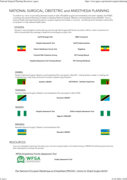
To achieve our vision of providing Universal access to safe, affordable surgical and anesthesia care when needed, the PGSSC is working with several Ministries of Health to develop National Surgical, Obstetric and Anesthesia Plans (NSOAP). This is a
...
national health plan specifically focused on surgical capacity and access in a country - something which has been traditionally not present in most national health plans.
more

Consultancy to conduct desk review on impact of national policies and programs on disability rights and develop an action plan to make existing policies and programs and legislation disability frien
...
dly
more
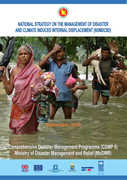
National strategy on the management of disaster and climate induced internal displacement (NSMDCIID)
This strategy has been developed with a view to managing climate-induced internal displacement (CIID) in a comprehensive and rights-based manner. It is part of the action plan for the Government of Bangladesh (GoB) to implement the Sendai Framework.
...
The strategy focuses solely on internal displacements caused by climate-related disasters and not cross-border displacement issues. It aims to chalk out a comprehensive strategy covering all three phases of displacements: (i) pre-displacement; (ii) displacement phase; and (iii) post-displacement. The multidimensional characteristics of the Strategy require participation of all relevant ministries with a target to integrate the concerns of CIIDPs into the existing programmes of all these ministries. more
The strategy focuses solely on internal displacements caused by climate-related disasters and not cross-border displacement issues. It aims to chalk out a comprehensive strategy covering all three phases of displacements: (i) pre-displacement; (ii) displacement phase; and (iii) post-displacement. The multidimensional characteristics of the Strategy require participation of all relevant ministries with a target to integrate the concerns of CIIDPs into the existing programmes of all these ministries. more
Rwanda: Ebola Preparedness Emergency Plan of Action (EPoA) Final Report - DREF Operation n° MDRRW017
Eleven (11) districts in Rwanda were initially were considered most at risk of the outbreak, namely:
• Rusizi, Nyamasheke, Karongi, Rutsiro, Rubavu (bordering DRC)
• Musanze, Burera, Gicumbi and Nyagatare (bordering Uganda)
• Kigali city (comprised of 3 localities) due to the presence of Ki
...
gali International Airport.
The National Contingency plan was revised in February 2019 and two districts added to the list (Nyabihu and Nyanza), bring total districts at risk to 13. During the timeframe, the operation, however covered the 11 initial districts.
more
Following the high-level meeting of the UN General Assembly on antimicrobial resistance held in September 2016 which called for national, regional and international political commitment to address the issue, member countries agreed on the importance
...
of moving forward to develop national action plans by May 2017.
Iraq; represented by the Ministry of Health (MOH) and Ministry of Agriculture (MOA); responded by developing a comprehensive plan to control AMR by analysing the current situation of health, veterinary and environment and determining the strategic priorities for Iraq, which are in accordance with the WHO Global Action Plan objectives
more
Malaria Operational Plan FY 2018 Ethiopia
United States Agency for International Development
United States Agency for International Development
(2018)
C1
This FY 2018 Malaria Operational Plan (MOP) presents a detailed implementation plan for Ethiopia, based on the strategies of PMI and the National
...
Malaria Control Program (NMCP). It was developed in consultation with the Federal Ministry of Health (FMOH), NMCP, Ethiopian Public Health Institute (EPHI), and regional health bureaus, and with the participation of national and international partners involved in malaria prevention and control in the country. The activities that PMI is proposing to support align with the National Malaria Strategic Plan (NMSP 2014-2020) and build on investments made by PMI and other partners to improve and expand malaria-related services, including the Global Fund to Fight AIDS, Tuberculosis, and Malaria (Global Fund) malaria grants. This document briefly reviews the current status of malaria control policies and interventions in Ethiopia, describes progress to date, identifies challenges and unmet needs to achieving the targets of the NMCP and PMI, and provides a description of activities that are planned with FY 2018 funding.
more
Antimicrobial Resistance Division, Ministry of Health, National Action Plans and Monitoring and Evaluation
THE REPUBLIC OF BOTSWANA | MINISTRY OF HEALTH | DEPARTMENT OF PUBLIC HEALTH | NATIONAL MALARIA CONTROL PROGRAMME
Refugee protection in the country is provided within the framework of these international and national refugee laws as well as the core international human rights treaties that have been ratified by the country. Continued insecurity within neighbour
...
ing states has resulted in sustained refugee movements, either directly as a result of internal conflict and human rights abuses or as a result of conflict related to competition for scare natural resources and drought related food insecurity.
more
PEPFAR Malawi’s Country Operational Plan 2022 (COP22) embodies joint priorities from national and subnational dialogues building on the 2020-2025 Nation
...
al Strategic Plan for HIV/AIDS. The interagency team has developed a person-centered, district-tailored and Malawi Population-Based HIV Impact Assessment (MPHIA)-informed strategy through extensive engagement with Government of Malawi (GoM) and Civil Society Organizations (CSOs) to sustain HIV epidemic control. At the end of COP21, PEPFAR Malawi was commended for contributing to reaching epidemic control in strong collaboration with GoM and stakeholders including the Global Fund to Fight AIDS, Tuberculosis and Malaria (Global Fund). This includes enrollment of 88% of recipients of care on three or more months of antiretroviral treatment (ART), better outcomes for Malawian children through remarkable efforts in Orphans and Vulnerable Children (OVC) programming and progress made towards reaching men with more intentional and focused programming.
more
Building on Nigeria’s Call to Action to Save Newborn Lives, the Federal Ministry of Health (FMoH) has developed the National Strategy and Implementation Plan for Scale-up of Chlorhexidine. The Min
...
istry incorporated existing maternal, newborn, and child health plans with additional comprehensive strategic planning and consultation to develop a comprehensive, five-year costed scale-up plan. The strategy and implementation plan is intended to guide programming, resource allocation, and commitments to achieve the national objective of Chlorhexidine uptake of 52% after the fifth year of national scaleup.
more
This updated Comprehensive Mental Health Action Plan 2013-2030 builds upon its predecessor and sets out clear actions for Member States, the WHO Secretariat and international, regional and national
...
partners to promote mental health and well-being for all, to prevent mental health conditions for those at-risk and to achieve universal coverage for mental health services. While the updated action plan includes new and updated indicators and implementation options, the original four major objectives remain unchanged: more effective leadership and governance for mental health; the provision of comprehensive, integrated mental health and social care services in community-based settings; implementation of strategies for promotion and prevention; and strengthened information systems, evidence and research.
In English, French, Spanish, Arabic and Russian available
more
Le présent document qui fait suite à la recommandation ci-dessus citées se veut une
traduction de l’objectif n°4 du Plan National de Développement Sanitaire (PNDS)3
. Il
traduit la volontÃ
...
© du gouvernement burkinabé de développer un cadre de référence
pour tout intervenant dans le domaine de la qualité des prestations de services de
santé.
Il est le fruit d’une collaboration entre le Ministère de la santé et l’Organisation
Mondiale de la santé (OMS)
more
The goal of this contingency plan for El Nino related epidemics is to contribute to the reduction in mortality and morbidity associated with El Nino epidemic threats by ensuring that appropriate systems to support health emergency preparedness, time
...
ly response and post disaster recovery and mitigation are in place at the national, district, health facility and community levels in Rwanda.
more
Il n’est de richesse que d’hommes dit-on. En vertu de ce principe, le Gouvernement de
la République du Bénin, désireux de connaître et d’apprécier l’importance et la qualité de ses
ressources humaines a décidé, par décret n° 99-459 du 22 septembre 1999, d’organiser sur
toute l
...
’étendue du territoire national, un Recensement Général de la Population et de
l’Habitation. Cette importante opération est la troisième du genre depuis notre indépendance
nationale.
more
The Federal Ministry of Health (FMOH) has been coordinating sector wide reforms that aim to improve equity and quality of health services. It is widely known that; the sector is growing in line the overall growth and transformation plan
...
of the country and the sector is being guided by the health sector transformation plan (HSTP). As part of these efforts, to achieve the targets set, the sector identified information revolution as one of the transformational agendas. In the meantime, Appropriate and timely use of health and health-related information is an essential element in the process of transforming the health sector.
more

The Guidance on National Deployment and Vaccination Planning is intended to help countries develop their plan for COVID-19 vaccine introduction.
Le plan stratégique de sécurité et santé au travail pour le personnel de santé (PS-SST/PS) au Togo décrit les défis de la protection du personnel de santé au niveau mondial, régional et national
...
. Il examine la situation actuelle du Togo en matière de sécurité et santé au travail. Il propose également des stratégies pour atteindre les objectifs fixés pour l’amélioration de la sécurité et santé au travail dans les services de santé au Togo sur la base des recommandations de l’OMS et de l’OIT.
more
This document outlines the FAO Action Plan on Antimicrobial Resistance 2021–2025 which serves as a roadmap for focusing global efforts to address AMR in the food and agriculture sectors. The aim of this
...
plan is to help accelerate progress in developing and implementing multi-sectoral National Action Plans to tackle AMR by calling attention to strategic priorities and areas of expertise for FAO support.
Available in English, Arabic, Russian, French, Spanish, Chinese
more
Implementing the global action plan on antimicrobial resistance: first quadripartite biennial report
The first quadripartite biennial report summarizes progress in the implementation of multisectoral national action plans, actions by the quadripartite organizations, actions by the global governance structures, key environmental dimensions, highligh
...
ts areas for accelerated action, and shares case studies from six countries. An Annex with extensive data on the global action plan’s monitoring and evaluation indicators is included. The report was developed through contributions from all 6 WHO regions, member states, various headquarters departments and units, and technical teams from FAO, WOAH and UNEP.
more
Situation analysis
Description of the disaster
An Ebola epidemic that started in March 2014 in Guinea has relentlessly continued to claim lives and to spread to other countries in West Africa. The current Ebola outbreak is the largest in history and the first to affect multiple countries simu
...
ltaneously. There have been over 24 000 reported confirmed, probable, and suspected cases of EVD in Guinea, Liberia and Sierra Leone (table 1), with almost 10 000 reported deaths (outcomes for many cases are unknown). A total of 58 new confirmed cases were reported in Guinea, 0 in Liberia, and 58 in Sierra Leone in the 7 days to 8 March (4 days to 5 March for Liberia). Many experts believe that the official numbers substantially understate the size of the outbreak because of families' widespread reluctance to report cases. Because of the fluidity of movement of people between West Africa and several countries in the East African countries, especially Kenya and Ethiopia (who in turn have extensive interaction with other countries in the region in terms of human movement), the risk of an outbreak of Ebola in East Africa is as eminent as in any of the countries bordering the affected countries. The IFRC regional office intends to support National Societies to raise their Ebola preparedness and response capacity through training, technical support in planning and implementation of Ebola related activities, and coordination both within and outside the movement.
more
The following document outlines the principles, objectives and strategies of a national policy for the protection of orphans and other vulnerable children in Rwanda. The propositions constitute a first step towards a comprehensive framework, which w
...
ill assist the Government and its partners to plan, implement and monitor projects and programmes in favour of orphans and other vulnerable children.
more
This FY 2017 Malaria Operational Plan presents a detailed implementation plan for Senegal, based on the strategies of PMI and the National Malaria
...
Control Program (NMCP) strategy. It was developed in consultation with the NMCP and with the participation of national and international partners involved in malaria prevention and control in the country. The activities that PMI is proposing to support fit in well with the new National Malaria Control strategy and plan (2016-2020) and build on investments made by PMI and other partners to improve and expand malaria-related services, including the Global Fund to Fight AIDS, Tuberculosis, and Malaria (Global Fund) malaria grants. This document briefly reviews the current status of malaria control policies and interventions in Senegal, describes progress to date, identifies challenges and unmet needs to achieving the targets of the NMCP and PMI, and provides a description of activities that are planned with FY 2017 funding.
more
This FY 2019 Malaria Operational Plan presents a detailed implementation plan for Burkina Faso, based on the strategies of PMI and the National Mal
...
aria Control Program (NMCP). It was developed in consultation with the NMCP and with the participation of national and international partners involved in malaria prevention and control in the country. The activities that PMI is proposing to support fit in well with the national malaria control strategy and plan and build on investments made by PMI and other partners to improve and expand malaria-related services, including malaria grants from the Global Fund to Fight AIDS, Tuberculosis, and Malaria. This document briefly reviews the current status of malaria control policies and interventions in Burkina Faso, describes progress to date, identifies challenges and unmet needs to achieving the targets of the NMCP and PMI, and provides a description of activities that are planned with FY 2019 funding.
more
This regional action plan provides a broad framework for the regional level to assist governments in accelerating the implementation of existing international, regional and national commitments on e
...
nding FGM. Formulating the plan has provided an opportunity for the region to identify broad priorities, initiate strategic actions and determine responsibilities among different actors. It also ensures that anti-FGM campaign activities are seen not as standalone efforts but rather as an integral part of the African Union’s discussions, in line with the African Union initiative on eliminating FGM (Saleema Initiative)
more
The Strategic Plan of Action and Budget 2016-2025 for the elimination of onchocerciasisin countries was prepared based on the above dlrective for the consideration of IAF 18.The vision of the plan o
...
f action is to eliminate onchocerciasis in 80 percent of Africancountries. Implementation of the plan will also help strengthen health systems at community level while implementing CDI wlll help scale-up interventions agalnst other NTDs to the benefit of the wider national health systems.
more
This document is produced by the Humanitarian Country Team and the United Nations Resident
Coordinator’s Office in Mozambique, with the support of the United Nations Office for the Coordination of
Humanitarian Affairs (OCHA). The projects reflected here support the
...
national government. It covers the
period from November 2018 to June 2019. The Plan has been revised in March 2019 to incorporate the
immediate response to needs arising from the impact of Cyclone Idai.
more
Plan stratégique 2016-2018
Centre des Opérations d'Urgence Sanitaire (COUS), Ministère de la santé et de l'action sociale - République du Sénégal
Centre des Opérations d'Urgence Sanitaire (COUS), Ministère de la santé et de l'action sociale - République du Sénégal
(2016)
C2
Le plan stratégique du Centre des Opérations d'Urgence Sanitaire du Sénégal 2016-2018 s'inscrit dans la vision des authorités politiques, et en premier lieu dans le deuxième pilier du Plan Sé
...
négal Émergent, visent à renforcer le capital humain, la protection sociale et le développement durable.
Les crises sanitaires étant susceptibles d'ébranler les efforts du Sénégal vers l'émergence, leur maîtrise est du la toute première importance.
Ce plan stratégique est par ailleurs aligné au Plan national de Dévloppement Sanitaire et contribue à fournir un cadre pécis d'action dans son rôle de renforcement du système de gestion des urgences et catastrophes sanitaires d'ampleur nationale.
more
Risk Communication and Community Engagement (RCCE) is an essential component of your health emergency preparedness and response action plan. This tool is designed to support risk communication, community engagement staff and responders working with
...
national health authorities, and other partners to develop, implement and monitor an effective action plan for communicating effectively with the public, engaging with communities, local partners and other stakeholders to help prepare and protect individuals, families and the public’s health during early response to COVID-19.
more
Non- Communicable Diseases (NCDs) over the years have not been given much attention in Ghana and in most Low and Middle- Income Countries (LMICs). The overwhelming burden of communicable diseases and the scarcity of resources has led to the health of all residents in Ghana, NCDs still remain largely
...
underfunded and less prioritized. Attempts in the past have achieved little success. The formulation of Ghana´s NCD policy in 2014 and the accompanying strategic plan is one such effort.
more
This document summarizes preparedness and response activities to address the coronavirus disease (COVID-19) outbreak in South Sudan through the end of 2020. The addendum includes the activities and financial requirements of the updated National COVI
...
D-19 Response Plan. Originally issued in March prior to identification of the first person confirmed with COVID-19 in South Sudan and with a focus on preparedness, the updated plan encompasses a significantly scaled-up national response.
more

The purpose of this publication is to to provide a practical, stepwise approach to the implementation of the national action plans on AMR within the human health sector; and to provide a process and collation of existing WHO tools to prioritize, cos
...
t, implement, monitor and evaluate national action plan activities. The target audience of the publication are national/subnational stakeholders working on AMR within the human health sector. This includes national health authorities, national multi-sectoral coordination groups, senior technical experts and policymakers involved in implementing AMR activities at all levels of the health system, and implementation partners to accelerate sustainable implementation and monitoring and evaluation of national action plans on AMR.
more

In recent years, Rwanda has been on the fast track to achieve major health improvements for its entire population. With the support of government agencies and various non-governmental partners, the Ministry of Health (MoH) has endeavored to decentralize Rwanda’s health system and bring health serv
...
ices closer to the people. Guided by multitude of national and international development frameworks, Rwanda’s healthcare successes include the establishment of a community health insurance scheme (mutuelle de santé), a system of cooperative-financed community health workers in every village, and interventions for researching, preventing, and treating diseases like HIV/AIDS, TB, and malaria.
As the MoH continues to design innovative means to reach and surpass its prescribed health outcome targets, it will hold as core principles the integration of service provision, the increase in healthcare capacity, and the attainment of sustainable funding sources. Rwanda is committed to achieving the Millennium Development Goals by 2015 and has declared Family Planning (FP) a national priority for poverty reduction and socioeconomic development of the country. Modern contraceptive use has more than quadrupled from 2005 to 2010, rising from 10% to 45%, but the government’s Economic Development and Poverty Reduction Strategy calls for an increase the modern contraceptive prevalence to 70% by 2016. While structural changes in health care and supply chains have led to noteworthy improvements in FP and other services, there are still many challenges that must be overcome. As such, a strategic plan is needed to coordinate FP efforts around a well-defined set of objectives and responsibilities.
more

To complement the Global Strategy progress reporting, this report provides a detailed look at country leadership and action toward the Every Newborn National Milestones by 2020. Countries have taken the initiative to show the way forward and have de
...
monstrated significant progress. As part of monitoring this progress, countries have adopted the Every Newborn Tracking Tool. This report presents a compilation of the data collated by the Every Newborn Tracking Tool in 2016, when 51 countries adopted the tool; it also spotlights examples of specific country activity for each National Milestone. Finally, Global Milestones for 2020 were part of the Every Newborn Action Plan to guide global and regional work in support of country efforts and this report highlights relevant progress towards those Global Milestones.
more
The aim of this “model contingency plan” is to assist programme managers and planners in devel-oping a national, context-specific, dengue outbreak response
...
plan in order to: (a) detect a dengue outbreak at an early stage through clearly defined and validated alarm signals; (b) precisely define when a dengue outbreak has started; and (c) organize an early response to the alarm signals or an “emergency response” once an outbreak has started.
more
A la suite de cette analyse de situation, le Ministère de la Santé à travers la Direction des Laboratoires a entrepris des actions correctives parmi lesquelles, l’élaboration d’une politique nationale en matière d’analyses de biologie médicale dont l’un des objectifs spécifiques est
...
d’assurer la qualité des prestations. Nonobstant cet acquis, il reste que le Burkina Faso n’est pas doté d’un plan national qualité pour accompagner les laboratoires dans la mise en œuvre de la démarche qualité.
Le présent plan qualité vise la promotion et la mise en œuvre de la démarche qualité dans les laboratoires d’analyses de biologie médicale.
more
This manual for developing national action plans to address antimicrobial resistance has been developed at the request of the World Health Assembly to assist countries in the initial phase of developing new, or refining existing
...
national action plans in line with the
strategic objectives of the Global Action Plan. It proposes an incremental approach that countries can adapt to the specific needs, circumstances and available resources of each individual country. Details of actions to be taken will vary according to national contexts.
more
The COVID-19 Pakistan Preparedness and Response Plan (PPRP) outlines the international assistance required by the Government of Pakistan (GoP) to stop the transmission of the pandemic and respond to the emerging public health needs in Pakistan. It i
...
s created in line with the Pakistan National Action Plan. It aims to steer a coordinated international effort in consultation with Ministry of Foreign Affairs (MoFA) to support the Ministry of Health Services, Regulations and Coordination (M/O NHSRC), National Disaster Management Authority (NDMA) and Provincial Departments of Health, PDMAs under the overall efforts of the Government of Pakistan (GoP). It is prepared with the support of the UN and is guided by the WHO Strategic Preparedness and Response Plan (SPRP).
more
The Quality Criteria for Health National Adaptation Plans (HNAPs) presents examples of good practice in HNAP development to assist countries in developing a comprehensive, feasible and implementable plan
...
. The criteria are also intended to guide countries in setting the foundation for a long-term iterative HNAP process. The proposed criteria are not prescriptive and should be adapted to dynamic country contexts, uncertain and changing climatic conditions, and new knowledge and technologies.
9 February 2021
more
The Access to COVID-19 Tools (ACT) Accelerator’s Country Readiness and Delivery workstream has released guidance on developing a national deployment and vaccination plan (NDVP) for COVID-19 vaccin
...
es. This course is intended to help national and sub-national focal points in countries develop the NDVP and prepare for COVID-19 vaccine introduction.
Available in English and Macedonian
more
In 2015, to advance the global and national response to antimicrobial resistance (AMR), the World Health Assembly issued resolution WHA68.7 calling for all Member States to develop AMR national acti
...
on plans that address the five objectives of the World Health Organization Global Action Plan (GAP) by May 2017. The WHO GAP provides a framework to support countries in developing their national action plans on AMR. To operationalize and accelerate implementation of national action plans on AMR, WHO has developed a costing and budgeting tool and accompanying user guide. The purpose is to support countries in costing prioritized activities of an operational plan linked to their AMR national action plan, and identify existing funding and funding gaps to promote resource mobilization and sustainable implementation. The target audience of the publication are national policy makers and designated costing coordinators for national action plans on AMR.
more

This guidance aims to assist leaders in the development or revision of humanitarian-sector contributions to district-level pandemic preparedness and response planning. It is directly linked to H2P guidance for national-level planning.
El Niño conditions persisting during the 2015/16 planting season have caused the worst drought in 35 years in Southern Africa, resulting in a second consecutive failed harvest. This has created severe food shortages and compounded existing vulnerabilities. Since July 2016, Namibia and Botswana have
...
declared national drought emergencies, in addition to the declarations made earlier by Lesotho, Malawi, Swaziland and Zimbabwe. Madagascar issued a letter of solidarity with the SADC Appeal, and Mozambique has maintained a red alert in affected areas.
more

The Newborn Situational Analysis reports of 2009 and 2011, as well as the “Bottleneck analysis on neonatal health” of 2013, culminated in the Nigeria launch of “Call to action on Newborn health” at the first National Newborn Health Conferenc
...
e in 2014. This call to action provided the framework for the development of the Nigeria Every Newborn Action
Plan (NiENAP). The NiENAP lays out a vision to end preventable stillbirths and newborn deaths by accelerating progress and scaling up evidence- based high-impact and cost effective interventions. The plan is guided by the principles of country-leadership, integration, accountability, equity, human rights, innovation and research. This blue print outlines our commitment as government and stakeholders to repositioning newborn health as we implement approaches that impact on the lives of newborns for improved health outcome.
more
Le cancer, troisième cause de mortalité, constitue un problème de santé publique au
Burkina Faso. Des actions isolées et sporadiques existent sur le terrain pour faire
face à la demande et aux besoins mais elles restent insuffisantes et non
coordonnées du fait de l’absence de programme.
...
Compte tenu de cette situation, le Ministère de la santé a élaboré la politique
nationale de lutte contre les maladies non transmissibles et un Programme national
de lutte contre le cancer (PNLC). Le présent plan stratégique est un outil
d’opérationnalisation dudit programme.
more
The document presents an assessment developed by both institutions as a contribution to the prioritization of education in national response plans to the health emergency and future recovery strategies. "Countries have deployed various response and
...
recovery plans in which education needs to be incorporated as a central element," the report says, "not only to ensure an education response, but to achieve an equitable, inclusive and sustainable recovery”.
more
One Health Joint Plan of Action (2022-2026)
World Organisation for Animal Health
Food and Agriculture Organization of the United Nations; United Nations Enviroment Programme; Wolrd Health Organization; World Organisation for Animal Health
(2022)
C_WHO
The desired impact of the OH JPA is a world better able to prevent, predict, detect and
respond to health threats and improve the health of humans, animals, plants and the
environment while contributing to sustainable development. The OH JPA aims to work
towards this vision in the following way:
...
• Provide a framework for action and propose a set of activities the four organizations
can offer together to advance and sustainably scale up One Health.
• Provide upstream policy and legislative advice and technical assistance, to help
set national targets and priorities across the sectors for the development and
implementation of One Health legislation, initiatives and programmes.
• Take stock of existing cross-sectoral global and regional initiatives around One
Health, identify and advise on synergies and overlaps, and support coordination.
• Mobilize and make better use of resources across sectors, disciplines and
stakeholders.
• The OH JPA is guided by a theory of change and makes use of One Health principles
to strengthen collaboration, communication, capacity building and coordination
more
Tuberculosis (TB) and particularly drug-resistant TB continue to represent major public health threats in the WHO European Region. This document details the Tuberculosis action plan for the WHO European Region 2023–2030 as well as its monito
...
ring and evaluation framework and outlines the vision and strategic actions for the TB response in the Region for this period. Developed through a Region-wide participatory consultation process, the TB action plan aims to support Member States to implement their national responses to the TB epidemic and provides strategies to enable the Region to reach the global End TB Strategy targets as well as aligning to the priorities of the European Programme of Work, 2020–2025 – “United Action for Better Health in Europe”.
more
The "Global Action Plan for the Prevention and Control of Noncommunicable Diseases 2013-2020," published by the World Health Organization (WHO), provides a roadmap to reduce premature deaths from noncommunicable diseases (NCDs) like heart disease, c
...
ancer, and diabetes. It emphasizes strengthening health systems, implementing preventive measures, and setting global targets to combat risk factors such as tobacco use, unhealthy diets, physical inactivity, and harmful alcohol use. The plan encourages national policies, international cooperation, and multisectoral actions to improve health outcomes worldwide by 2025.
more
Involving Persons Living with HIV Networks in National HIV Policy Dialogue A Case Study of MANET+ in Malawi
M. L. Mattingly; A. G. Yemaneberhan; S. Feller; et al.
USAID; PEPFAR; AIDS Free (Strenghtening High Impact Interventions for a AIDS-free Generation); JSI Research & Training Institute; et al.
(2016)
C2
AIDSFree Case study series
This publication is made possible by the generous support of the American people through the U.S. President’s Emergency Plan for AIDS Relief (PEPFAR) and the U.S. Agency for International Development (USAID) under th
...
e terms of Cooperative Agreement AID-OAA-A-14-00046.
The contents are the responsibility of AIDSFree and do not necessarily reflect the views of PEPFAR, USAID, or the U.S. Government.
more
his revision to the Disaster Management Team’s (DMT) multi-sector response plan for COVID-19 is meant to align the multi-sector plan with the Department of Health’s COVID-19 Emergency Response
...
Plan issued on 24 April 2020. Additionally, at the time of this version, the Department of Education and Department for Community Development and Religion have also issued their own national COVID-19 response and recovery plans.
The Government’s plan maintains a health sector focus and plans for a ‘worst case’ scenario, articulating the process of progressing into containment and subsequently mitigation of community transmission and on to recovery. It presents an opportunity to improve the core capacities of the whole of government, to see where both health and non-health sectors fit in and respond in the immediate and medium terms, and to adapt to the ‘new normal’ that this coronavirus has inevitably presented
more
The 2021 COVID-19 Strategic Preparedness and Response Plan (SPRP) for AFR serves as a regional guide for a holistic public health response to COVID‑19 at regional, national and sub-
...
national levels. The 2021
SPRP:
1. Builds upon the lessons learnt from the implementation of the 2020 SPRP and outlines a regional preparedness, response and recovery strategy for COVID‑19.
2. Has been adapted to reflect the Regional context including COVID-19 vaccination. It also considers epidemiological changes and recommen-dations emerging from the evaluation report of the 2020 SPRP4.
3. Highlights to Member States strategic preparedness and response actions to be sustained at national and sub-national levels, as well as the critical inter-agency and partner support required.
4. provides the indicative resource requirements to reinforce WHO planned interventions in the African Region to enhance countries’ capacities to suppress transmission, save lives and mitigate the impact of the pandemic on people and health systems.
5. Provides a road map for mitigating potential resurgence in the Region as economies reopen and ensure country level continuity of other essential health services.
more
PEPFAR Malawi’s Country Operational Plan (COP) 2021 reflects a culmination of strong interagency collaboration between the PEPFAR Malawi team, Government of Malawi (GoM), and civil society organizations (CSOs) to mitigate the devastating impacts o
...
f COVID-19 and sustain progress achieved over the last two decades towards HIV epidemic control.
At the conclusion of the March 2020 Johannesburg Regional Planning Meeting, the PEPFAR Malawi team presented a COP20 surge strategy to improve client-centered care, mitigate treatment disruption, scale prevention programs to key and vulnerable populations, and strengthen national health systems.
Following this meeting, the first three COVID-19 cases were reported in Malawi and immediately thereafter, adaptations to the COP20 strategy became imperative to deliver safe, client-centered care.
more
This guidance is intended for use in developing standalone TB strategic plans, or TB interventions as part of multidisease or health sector plans. It describes key considerations and steps for strategic planning for TB in line with the World Health Organization’s End TB strategy, and the proposed
...
structure of the NSP. The target audience of this publication are all stakeholders involved in national strategic planning for TB (e.g., ministry of health, other government ministries, private sector, civil society, affected communities, academic and research institutions, and technical and funding partners).
The current document is an update to the 2015 Toolkit to develop a national strategic plan for TB prevention, care and control.
more

Rwanda’s fourth health sector strategic plan (HSSP4) is meant to provide the health sector with a Strategic Plan that will highlight its commitments and priorities for the coming 6 years. It will
...
be fully integrated in the overall economic development plan of the Government. HSSP4 will fulfill the country’s commitment expressed in the national constitution, National Strategy for Transformation (NST) and the aspirations of the Health Sector Policy 2015. The strategies herein adhere to the Universal Health Coverage (UHC) principles towards realisation of the Sustainable Development Goals (SDGs). HSSP4 therefore lays a foundation for Vision 2050 (“The Rwanda We Want”), which will transform Rwanda into a high-income country by 2050. HSSP4 anticipates the epidemiological transition of the country, the increase in population and life expectancy and the expected increase of the health needs of the elderly, notably in Non Communicable Diseases (NCDs). HSSP4 also anticipates a decrease in external financial inflows, hence it is imperative to build secure / resilient health systems.
more
The Platform has functionality for country-level users, such as uploading theNational Deployment and Vaccination Planon the Info tab by the WCO vaccine expert, followed by validation by a government official. The Platform has functionality for regional users, such as Reviewingof
...
National Deployment and Vaccination Plan(NDVP) on the Action Checklist tabor uploading a summary of the review of the NDVP on the Info tab and within the NDVP folder.
more
Globally, over two million women live with obstetric fistula with the majority of the cases
being from Africa. In low-resource settings such as Zambia, obstetric fistula (OF) is a visible indicator of
gaps in maternal health care resulting in failure to provide adequate, accessible and quality m
...
aternal health
care, including family planning, skilled birth attendance, basic and emergency obstetric and neonatal care,
and affordable treatment of fistula. OF is preventable and treatable, and no woman in Zambia should continue to endure the condition. It is therefore necessary that Zambia intensifies national scale up of OF management centers including
community based interventions, train more surgeons and other health workers to provide quality and
affordable care closer to the women who are silently suffering from obstetric fistula.
more
The Blueprint is intended to guide programming, resource allocation, and commitments to achieve the national objective of a contraceptive prevalence rate (CPR) of 36 percent by 2018.
The aim of this publication is to provide a practical resource for emergency planning in the area of public communication in the development of a national radiation emergency communication plan
...
(RECP). The term ‘public communication’ is defined as any activity that communicates information to the public and the media during a nuclear or radiological emergency.
Also available in Spanish: https://www-pub.iaea.org/MTCD/Publications/PDF/EPR_Comm_Plan_2015_S_web.pdf
more
Ce modèle de plan de communication est conçu pour donner aux pays une idée générale des activités de communication à considérer lorsqu'ils préparent l'introduction des vaccins contre la COVID-19. Le tableau ci-dessous doit être complété,
...
avec un plan de communication narratif fournissant des orientations et comprenant les objectifs stratégiques, les publics cibles, etc. Les pays peuvent adapter ce modèle au contexte local et y ajouter des activités en fonction du contexte national.
more

The GAP articulates five objectives for tackling AMR, and sets out the tasks required to achieve them, highlighting
roles and responsibilities for country governments, the One Health Tripartite organizations (FAO, OIE and WHO) and other national an
...
d international partners. To ensure that all stakeholders assume their roles and responsibilities, and to assess whether they are collectively effecting the necessary change in AMR, the implementation of the GAP needs to be routinely monitored and evaluated. To that end, the Tripartite organizations co-developed a monitoring and evaluation (M&E) framework for the GAP, as outlined in this document
more
Previous crises, such as the Ebola virus disease (EVD) in West Africa in 2014, indicate the direct impact movement restrictions and disease containment efforts have on food availability, access, utilization and violence – particularly gender-based violence (GBV). The importance of maintaining and
...
upscaling food security interventions for the most vulnerable populations, alongside the health sector’s efforts to avert disease spread, is therefore undeniable. The COVID-19 outbreak in South Sudan threatens to paralyze an already fragile food system and negatively impact more than 6.5 million people in South Sudan who remain vulnerable. At the same time, the core national capacities for prevention, preparedness and response for public health events is limited, and the healthcare system has been weakened by years of conflict, poor governance and low investments.
more
Almost eight years of active fighting have had profound consequences on the lives of millions of people in the conflict-affected Donetska and Luhanska oblasts of eastern Ukraine. An estimated 2.9 million people are projected to need humanitarian assistance in 2022, with some 55 per cent living in th
...
e non-Government controlled area (NGCA).1 1 According to the national Ukrainian legislation, such areas have been defined as the temporarily occupied territories of Donetska and Luhanska oblasts.
more
This WHO Strategic Response Plan (SRP) will be implemented in collaboration with partners providing life-saving support to people affected by the conflict in Ukraine, whether they are inside or outside Ukraine. It is an overarching framework b
...
uilt on the Ukraine Flash Appeal 2022 to guide priorities and work, according to access and location, in support of national and local authorities who are leading the readiness, response and early recovery activities. The timeframe of this SRP is six months.
more
This country strategic plan is based on consultations with the Government and other partners. It proposes a significant strategic shift to enable WFP to meet the Government’s expectations, considering the recommendations of the strategic review. T
...
he country office has strengthened its approach to deliver as a key government partner on food security and nutrition. This includes a “whole of society” approach in engaging with national actors to provide the integrated multi-sector and political approach needed to continue reducing food insecurity and malnutrition, contributing to three outcomes
more
Maternal mortality has fallen significantly in recent years, especially in countries that have emphasized the prevention of its main causes, such as hemorrhagic and infectious complications and hypertension , including in the Region of the Americas. In its final report on the
...
Plan of Action to Accelerate the Reduction of Maternal Mortality and Severe Maternal Morbidity, the Pan American Health Organization (PAHO) reported a continuing downward trend in maternal mortality, with an 18.1% reduction in the maternal morbidity ratio during the period 2010-2015 . From a pathophysiological perspective, death events are a common end result of a wide spectrum of complications leading to multi-organ dysfunction. However, there is a group of women in this situation who survive, despite the seriousness of their condition. This high number of patients––who were in serious condition
but did not die––reflects the actual health conditions in an institution or a country. For this reason, there is a need to create indicators to estimate morbidity in women due to diseases and incidents that occur during pregnancy, childbirth, and the puerperium. To this end, we propose conducting epidemiological surveillance of an indicator that includes women who survived after presenting a potentially fatal complication during pregnancy, childbirth, or the puerperium, reflecting quality medical attention and care (5, 6). This indicator
is maternal near-miss (MNM), which refers to extremely severe maternal morbidity––cases of a severity that
brings women very close to the death event. After adjusting the definition to a specific population and time,
MNM is defined as a case in which a woman nearly died, but survived a complication that occurred during
pregnancy, childbirth, or within 42 days of termination of pregnancy
more
Summary of National Priorities - Malawi
Community Health Roadmap
United States Agency for International Development; Bill & Melinda Gates Foundation; The Rockefeller Foundation; World Bank Group; community health acceleration partnership; unicef
(2021)
CC
Malawi’s first National Community Health Strategy (NCHS, 2017-2022) defines a new community health system in which community health cadres, both formal and non-formal, deliver services of the Essential Health Package, with a focus on child and mat
...
ernal health. It envisages an integrated approach to service delivery and is embedded in Malawi’s Health Sector Strategic Plan (HSSPII).
more
Food and nutrition security in the Democratic Republic of the Congo is subject to the relentless impact of conflict, epidemics and climate events that have persisted in the country for decades, further compounded by the global COVID-19 pandemic. Lack of infrastructure and investment in agriculture,
...
health and human capital development combine to impede progress towards the achievement of Sustainable Development Goals 2 and 17. While there are several legal instruments and policies that promote food and nutrition security, poor coordination, weak national capacity and exponential population growth present serious obstacles to the achievement of zero hunger. Political instability and siloed sectoral responses to humanitarian and development needs have also affected results to date.
more
This toolkit is a "how to" guide for developing, implementing and evaluating a multisectoral action plan for prevention and control of NCDs. It is targeted at policy-makers, planners and programme managers, and is intended to help countries, provinc
...
es and cities meet the requirements for achieving global and national NCD targets and the Sustainable Development Goals. The toolkit takes the user through a series of actions related to the development of a multisectoral action plan ("MSAP development actions"), and provides forms and a template framework for users to complete as they undertake these actions. Developing a multisectoral action plan involves establishing health needs and engaging relevant stakeholders before determining the actions to take, identifying and prioritizing interventions, deciding on ways to address NCDs while establishing support and resources for prevention and control, and evaluating progress in implementing the plan.
more
This toolkit is a "how to" guide for developing, implementing and evaluating a multisectoral action plan for prevention and control of NCDs. It is targeted at policy-makers, planners and programme managers, and is intended to help countries, provinc
...
es and cities meet the requirements for achieving global and national NCD targets and the Sustainable Development Goals. The toolkit takes the user through a series of actions related to the development of a multisectoral action plan ("MSAP development actions"), and provides forms and a template framework for users to complete as they undertake these actions. Developing a multisectoral action plan involves establishing health needs and engaging relevant stakeholders before determining the actions to take, identifying and prioritizing interventions, deciding on ways to address NCDs while establishing support and resources for prevention and control, and evaluating progress in implementing the plan.
more
The purpose of this reference manual to support learning of ETAT + principles and to complement your clinical training and practice. The manual is for use before, during, and after an ETAT + course.
This manual contains the necessary information to help you to:
• Triage all sick children when th
...
ey arrive at a health facility, into the
following categories:
those with emergency signs
those with priority signs
those who are non-urgent cases
• Assess a child’s airway and breathing and give appropriate treatments
• Assess the child’s circulatory status and level of consciousness
• Manage shock, coma, and convulsions in a child
• Assess and manage severe dehydration in a child with diarrhoea
• Plan, implement, and evaluate ETAT in your own working area in your hospital
more
More than two years since the first SARS-CoV-2 infections were reported, the COVID-19 pandemic remains an acute global emergency. In this Strategic Preparedness, Readiness and Response plan for 2022, WHO sets out a number of key strategic adjustment
...
s that, if implemented rapidly and consistently at national, regional, and global levels, will enable the world to end the acute phase of the pandemic.
more
This toolkit is a "how to" guide for developing, implementing and evaluating a multisectoral action plan for prevention and control of NCDs. It is targeted at policy-makers, planners and programme managers, and is intended to help countries, provinc
...
es and cities meet the requirements for achieving global and national NCD targets and the Sustainable Development Goals. The toolkit takes the user through a series of actions related to the development of a multisectoral action plan ("MSAP development actions"), and provides forms and a template framework for users to complete as they undertake these actions. Developing a multisectoral action plan involves establishing health needs and engaging relevant stakeholders before determining the actions to take, identifying and prioritizing interventions, deciding on ways to address NCDs while establishing support and resources for prevention and control, and evaluating progress in implementing the plan.
more
The Global Strategic Preparedness and Response Plan (SPRP) for mpox, covering the six-month period from September 2024 to February 2025, provides a framework for public health preparedness and response to the mpox emergency. The current draft, subje
...
ct to Member State input, outlines the urgent actions needed at global, regional, and national levels.
more
This manual presents a compelling case for action on carbapenem-resistant organisms (CROs) and describes the linkages between the prevention and control of CROs and the Global Action Plan on Antimicrobial Resistance (AMR). It describes how the eight
...
recommendations contained within the World Health Organization (WHO) guidelines for the prevention and control of carbapenem-resistant Enterobacteriaceae, Acinetobacter baumannii and Pseudomonas aeruginosa in health care facilities relate to general measures (that is, the core components of infection prevention and control [IPC] programmes) that need to be in place in all countries and health care facilities to prevent and control health care-associated infections (HAIs). The use of a stepwise approach is proposed to support implementation and improvement, based on the evidence and experience of what has worked in several health care settings worldwide. The focus is on adoptable and adaptable information.
more
Migrants in Central Asia and the Russian Federation, have been among the most severely impacted by the COVID-19 pandemic.
In the short term, IOM aims at providing support to migrants who are stranded in countries of destination. In addition, IOM will focus its efforts on addressing data gaps, enhan
...
cing national and community preparedness, response and recovery efforts, ensuring that affected people have access to basic services, commodities and protection as well as mitigating the socioeconomic impact of COVID-19.
more

Antimicrobial resistance (AMR) is a global human, animal, plant and environment health threat that needs to be addressed by every country. The impacts of AMR are wide-ranging in terms of human health, animal health, food security and safety, environmental effects on ecosystems and biodiversity, and
...
socioeconomic development. Just like the climate crisis, AMR poses a significant threat to the delivery of the 2030 Agenda for Sustainable Development. The response to the AMR crisis has been spearheaded through the global action plan on antimicrobial resistance (GAP-AMR), developed by the World Health Organization (WHO) in 2015, in close collaboration with the Food and Agriculture Organization of the United Nations (FAO) and the World Organisation for Animal Health (WOAH), and formally endorsed by the three organizations’ governing bodies and by the Political Declaration of the high-level meeting of the United Nations General Assembly on AMR in 2016. In 2022, the three organizations officially became the Quadripartite by welcoming the United Nations Environment Programme (UNEP) into the alliance “to accelerate coordination strategy on human, animal and ecosystem health”.
The aim of the GAP-AMR is to ensure the continuity of successful treatment with effective and safe medicines.
Its strategic objectives include:
• improving the awareness and understanding of AMR;
• strengthening the knowledge and evidence base through surveillance and research;
• reducing the incidence of infection through effective sanitation, hygiene and infection prevention measures; optimizing the use of antimicrobial medicines in human and animal health; and
• developing the economic case for sustainable investment that takes account of the needs of all countries and increasing investment in new medicines, diagnostic tools, vaccines and other interventions.
With the adoption of the GAP-AMR, countries agreed to develop national action plans (NAPs) aligned with the GAP-AMR to mainstream AMR interventions nationally. Individually, the Quadripartite took action to advance AMR interventions in their respective sectors. FAO adopted a resolution on AMR recognizing that it poses an increasingly serious threat to public health and sustainable food production, and developed an AMR action plan to support the resolution’s implementation. For its part, WOAH developed a strategy on AMR aligned with the GAP-AMR, acknowledging the importance of a One Health approach to AMR. Similarly, more recently, UNEP’s governing body, the United Nations Environment Assembly, recognized that AMR is a current and increasing threat and a challenge to global health, food security and the sustainable development of all countries, and welcomed the GAP-AMR and the NAPs developed in accordance with its five overarching strategic objectives
more

INDIA COVID-19 Emergency Response and Health Systems Preparedness Project: Environmental and social commitment plan (ESCP)
Republic of India Ministry of Health and Family Welfare
India COVID-19 Emergency Response and Health Systems Preparedness Project (P173836)
(2020)
C2
Republic of India (hereinafter the Recipient) willimplement the Covid-19 Emergency Response and Health Systems Preparedness project (the Project), with the involvement of the following Ministries/Agencies/Units: Ministry of Health and Family Welfare (MoHFW), Indian Council of Medical Research (ICMR)
...
and the National Center for Disease Control (NCDC).The International Bank for Reconstruction and Development (hereinafter the Bank) has agreed to provide financingfor the Project.
more
January 2021. Save the Children urges governments and donors to take five urgent steps to ensure that children who were in school prior to COVID-19 closures can safely return:
Financial support for the world’s poorest families, so they can send their children to school and keep them healthy;
...
Catch-up classes for students who re-enter the formal education system;
Water, sanitation and hygiene facilities in schools, to make them COVID-19 safe for students, teachers and their families;
National back to school communications campaigns to inform communities that it is safe for children to return;
Effective training for teachers to keep everyone safe during the COVID-19 pandemic.
more
Diabetes mellitus is a leading cause of mortality and reduced life expectancy. We aim to estimate the burden of diabetes by type, year, regions, and socioeconomic status in 195 countries and territories over the past 28 years, which provide information to achieve the goal of World Health Organizatio
...
n Global Action Plan for the Prevention and Control of Noncommunicable Diseases in 2025. Data were obtained from the Global Burden of Disease Study 2017. Overall, the global burden of diabetes had increased significantly since 1990. Both the trend and magnitude of diabetes related diseases burden varied substantially across regions and countries. In 2017, global incidence, prevalence, death, and disability-adjusted life-years (DALYs) associated with diabetes were 22.9 million, 476.0 million, 1.37 million, and 67.9 million, with a projection to 26.6 million, 570.9 million, 1.59 million, and 79.3 million in 2025, respectively. The trend of global type 2 diabetes burden was similar to that of total diabetes (including type 1 diabetes and type 2 diabetes), while global age-standardized rate of mortality and DALYs for type 1 diabetes declined. Globally, metabolic risks (high BMI) and behavioral factors (inappropriate diet, smoking, and low physical activity) contributed the most attributable death and DALYs of diabetes. These estimations could be useful in policy-making, priority setting, and resource allocation in diabetes prevention and treatment.
more

The overall goal of this strategy is to ensure accurate understanding of the
benefits of covid-19 vaccination and alleviate apprehension about the vaccine, to ensure its acceptance and encourage uptake across various audiences.
Objectives
x Create demand, promote acceptability and accessibility o
...
f COVID-19
vaccine among at least 90% of the general public.
x Develop appropriate messages and identify channels to communicate
the potential benefits and risks of the vaccine to all concerned parties,
including decision-makers at all levels.
x Provide timely and accurate information to address misinformation,
rumors and other crisis situations.
x Effectively mobilize and empower communities to ensure participation
and ownership of the vaccination process
x Strengthen communication mechanisms and partnerships among key
stakeholders to support the national communication effort.
more
Treatment plan
National HIV Strategic Plan 2016-2021
Bulletin épidémiologique du Paludisme au Sénégal - Trimestriel 03/2017
Programme National de Lutte Contre le Paludisme - Sénégal
Programme National de Lutte Contre le Paludisme - Sénégal
(2017)
C2
Plan du Bulletin
I- Variation des principaux indicateurs entre Janvier-Septembre_2016 et Janvier-
Septembre_2017
II- Niveau des Indicateurs au 30 Septembre 2017
A. Le niveau des indicateurs de morbidité et de mortalité
B. Carte sc
...
ore Paludisme au 30 Septembre 2017
C. Indicateurs du Paludisme par région médicale au 30 Septembre 2017
D. Indicateurs du Paludisme par district sanitaire au 30 Septembre 2017
E. Indicateurs du Paludisme par établissement public de santé au 30 Septembre 2017
III- Données communautaires au 30 Septembre 2017
IV- Résultats des investigations de cas menées dans les districts en pré élimination au
30 Septembre 2017
more
NATIONAL HIV/AIDS/STI/TB COUNCIL DEVOLUTION PLAN
From response to recovery: Supporting children and communities in Ebola-affected countries
Plan International
(2015)
This policy brief is targeted at national governments, donors and regional and international actors to support Ebola-affected countries to transition from emergency response to recovery.
Le Programme National de Lutte contre le Paludisme (PNLP) a adopté un plan stratégique 2016-2020 qui se veut un plan de consolidation des acquis
...
de la mise en oeuvre du plan décennal de développement sanitaire et social et entend accorder la priorité au renforcement des capacités en matière d’offre de services et de création de la demande.
A travers son impact direct sur l’économie, l’entreprise et les communautés locales, le paludisme constitue un véritable frein au développement économique des pays endémiques, en particulier en Afrique.
more
Antimicrobial resistance (AMR) is a multifaceted, international public health problem, which poses a direct threat to the safety of the population of South Africa. A national response is required to complement the development of a global
...
plan, as articulated in the WHO’s draft resolution EB134/37 “Combating antimicrobial resistance including antibiotic resistance”, adopted by theWorld Health Assembly in May 2014. The overuse of antimicrobials is driving resistance. A return to appropriate, targeted antimicrobial use in humans, animals and the environment is critical if we are to conserve the antimicrobial armamentarium. Various interventions have been put in place to address antimicrobial resistance in South Africa. However, these are insufficient to effectively tackle the threat faced by the country. The strengths of the current system are outweighed by its weaknesses.
more
Guidelines for the Prevention and Containment of Antimicrobial Resistance in South African Hospitals
These guidelines form part of efforts to institutionalise the prevention and containment of antimicrobial resistance (AMR) in health care facilities in South Africa, as outlined in the Antimicrobial Resistance Strategic Framework and Implementation Plan
...
. The focus of these guidelines is on two interrelated aspects of prevention of healthcare associated infections (HAIs) and their spread; and the application of antimicrobial stewardship (AMS) practices at hospital level.
more
Guidelines for the Prevention and Contaiment of of Antimicrobial Resistance in South African Hospitals
recommended
These guidelines form part of efforts to institutionalize the prevention and containment of antimicrobial resistance (AMR) in healthcare facilities in South Africa, as outlined in the Antimicrobial Resistance Strategic Framework and Implementation Plan
...
. The focus of these guidelines is on two interrelated aspects of prevention of healthcare associated infections (HAIs) and their spread; and the application of antimicrobial stewardship (AMS) practices at hospital level. They aim to serve as a practical, step-by-step or ‘how-to’ guide, addressing the infection prevention and AMS components of a robust response in a hospital. They draw on
evidence from various international guidance documents and standards for interventions that have been shown to be successful in infection
prevention and AMS programmes. These interventions have been customised to the South African hospital setting based on local
experiences in the public and private health sectors. This was done through a series of workshops and requests for comment involving
country-level experts.
more
Accessed on 17.02.2020
Lutte contre la maladie, Plan stratégique etc.
Asthma can be a serious disease, but if you understand
the disease and take the right medication to control it, you
should have no problems or symptoms due to your asthma,
even when you are pregnant. To be free from asthma
attacks, you should also check your lung function and use
an action
...
plan if any symptoms occur.
more
This guideline covers diagnosing, monitoring and managing asthma in adults, young people and children. It aims to improve the accuracy of diagnosis, help people to control their asthma and reduce the risk of asthma attacks. It does not cover managing severe asthma or acute asthma attacks. It emphasi
...
zes the importance to include advice in the personalised
action plan on minimising indoor air pollution and reducing exposure to outdoor air pollution.
more

Following the encouraging initial results of the pilot project, the Ministry of Health is committed to increasing access to MDR-TB diagnosis, treatment and care. An expansion plan for the programmatic management of drug-resistant TB has been develop
...
ed and forms part of the Five Year National Strategic Plan for TB Control, 2011-2015. The long-term goals of the MDR-TB expansion plan are threefold:
1. Diagnosis of MDR-TB in all groups of patients at risk for MDR-TB
2. Diagnosis of MDR-TB in all HIV-infected TB patients
3. MDR-TB treatment for all patients diagnosed with MDR-TB under WHO-endorsed treatment protocols more
1. Diagnosis of MDR-TB in all groups of patients at risk for MDR-TB
2. Diagnosis of MDR-TB in all HIV-infected TB patients
3. MDR-TB treatment for all patients diagnosed with MDR-TB under WHO-endorsed treatment protocols more
The report showed commitments made three decades ago to protect the rights of children remain unfulfilled for millions. Violence still affects countless children. Discrimination based on age, gender, disability, sexual orientation and religion harms children worldwide.
Key factors include a lack
...
of investment in critically important services. Most countries fall well short of spending the 5-6% of GDP needed to ensure universal coverage of essential health care. And foreign aid, which many lower income countries rely on, is falling short in areas such as health, education, protection and child care.
Another factor, the report said, is the lack of quality data. Governments tend to rely on data that reflects national averages, making it difficult to identify the needs of specific children and to monitor progress. Comprehensive data collection and disaggregation of data by gender, age, disability and locality, are increasingly important as rights violations disproportionately affect disadvantaged children.
more
Indonesia's National Action Plan for Prevention of Mother to Child HIV Transmission 2013-2017
