
Filter
956
Text search:
air
pollution
Featured
71
177
Language
Document type
342
308
96
51
45
44
17
16
15
6
6
5
3
2
Countries
111
30
25
22
17
16
16
14
13
13
12
11
9
9
9
9
8
8
8
8
7
7
7
7
7
7
6
6
6
6
6
5
4
4
4
4
4
4
3
3
3
3
3
3
3
3
3
3
2
2
2
2
2
2
2
2
2
2
2
2
2
2
2
1
1
1
1
1
1
1
1
1
1
1
1
1
1
1
1
1
1
1
1
1
1
1
1
1
Authors & Publishers
Publication Years
Category
291
132
55
28
21
8
4
Toolboxes
277
126
78
45
23
23
22
22
21
18
14
13
12
10
9
6
5
5
5
5
3
2
1
The substantial burden of death and disability that results from interpersonal violence, road traffic injuries, unintentional injuries, occupational health risks, air pollution, climate change, and
...
Climate risks have significant effects on public health including: injury, death, communicable diseases such as vector-borne and water-borne diseases, and non-communicable impacts such as malnutrition, heat stress and health effects of air
...
The report is geared towards mayors, local government officials and city policy planners.It highlights key areas where city leaders can tackle the drivers of NCDs, including tobacco use, air pollution
...
This report challenges policy-makers and political leaders to tackle fossil fuel production and consumption as a health control issue, in the same way that smoking has been reduced and regulated. Fossil fuel combustion is a major source of toxic air
...
The substantial burden of death and disability that results from interpersonal violence, road traffic injuries, unintentional injuries, occupational health risks, air pollution, climate change, and
...
Known avoidable environmental risks to health cause at least 12.6 million deaths every year, and account for about one quarter of the global burden of disease (2016 data) (1). Air pollution alone ca
...

Current evidence that the climate is changing is overwhelming. Impacts of climate change and variability are being observed: more intense heat-waves, fires and floods; and increased prevalence of food- water- and vector-borne diseases. Climate change will put pressure on environmental and health det
...
Clean and sustainable household energy and appliances, for cooking, heating and lighting can improve health, increase productivity, reduce poverty and protect the environment while addressing air pollution
...
The Lancet Global Health Volume 9, ISSUE 3, e361-e365, March 01, 2021
The public health community has tried for decades to show, through evidence-based research, that safe water, sanitation, and hygiene (WASH) and clean cooking fuels that reduce household
...
The following technical report outlines the rationale, process and results of a joint research study, coordinated by the World Health Organization (WHO) and the Pan-American Health Organization (PAHO), co-chaired by the Ministry of Health and Social Protection and the Ministry of Environment and Sus
...
Human health and well-being are intimately linked to the state of the environment. Water, sanitation and hygiene (WASH), climate change, air pollution and exposure to hazardous chemicals are major c
...
The article analyzes the prevalence and risk factors of chronic respiratory diseases, focusing on sub-Saharan Africa. It highlights that environmental exposures, such as biomass fuel usage and air pollutio
...
In 2015, 5.9 million children under age five died (1). The major causes of child deaths globally are pneumonia, prematurity, intrapartum-related complications, neonatal sepsis, congenital anomalies, diarrhoea, injuries and malaria (2). Most of these diseases and conditions are at least partially cau
...
ITHIM refers to a range of related models and tools developed at CEDAR to perform integrated assessment of the health effects of transport scenarios and policies at the urban and national level. The health effects of transport policies are modelled through the changes in physical activity, road traf
...

The Lancet Planetary Health Volume 6, ISSUE 5, e388-e390, May 01, 2022. As the Stockholm Declaration on the Human Environment turns 50, the role of the health stakeholder community in forward-looking environmental agendas is more important than ever. Breathing
...
Asthma is a common breathing condition. Chances are that at least one in every fifth person will have it. People with asthma might have a cough, or wheeze and a feeling of tightness in their chests. A group of researchers from the United Kingdom teamed up with seven African countries to learn about
...
This booklet presents data on NCD mortality and prevalence of NCD risk factors, by country, for the Region of the Americas. The focus is on the 5 x 5 NCD agenda which includes the main NCDs (cardiovascular diseases, cancer, diabetes, and chronic respiratory diseases), and mental health (suicide); as
...
In this video we take a look at Public Health – the science and art of preventing disease, prolonging life, and promoting health through the organized efforts of society. Public health focuses on improving the health of a population and preventing health problems before they happen. It is a broad
...
Addressing gaps and improving health system performance is simply not enough to prepare a health system to tackle the effects of the climate crisis. Climate change’s impact on the health and well-being of people globally is reaching catastrophic levels. As the earth continues to warm, tens of mill
...

Age-standardized cardiovascular disease (CVD) mortality rates by region ranged from 73.6 per 100,000 in High-income Asia Pacific to 432.3 per 100,000 in Eastern Europe in 2022. Global CVD mortality decreased by 34.9% from 1990 to 2022. Ischemic heart disease had the highest global age-standardized D
...
The World Health Organization's fact sheet on noncommunicable diseases (NCDs) highlights that NCDs, such as cardiovascular diseases, cancers, chronic respiratory diseases, and diabetes, are responsible for 74% of all global deaths, totaling 41 million annually. Notably, 86% of premature NCD deaths (
...
The article investigates the global burden and risk factors of chronic obstructive pulmonary disease (COPD). It emphasizes that COPD is a leading cause of morbidity and mortality worldwide, with significant health and economic impacts. The study identifies smoking as the primary risk factor, but als
...
Our aim is to review current asthma epidemiology, achievements from the last 10 years, and persistent challenges of asthma man- agement and control in low-middle income countries (LMICs). Despite global efforts, asthma continues to be an important public health problem worldwide, particularly in poo
...
The GOLD 2023 report provides a comprehensive update on the global strategy for diagnosing, managing, and preventing chronic obstructive pulmonary disease (COPD). It emphasizes that COPD is a leading cause of death worldwide, driven by risk factors such as tobacco smoking,
...
Asthma is the most common chronic disease in children, imposing a consistent burden on health system. In recent years, prevalence of asthma symptoms became globally increased in children and adolescents, particularly in Low-Middle Income Countries (LMICs). Host (genetics, atopy) and environmental fa
...
Chronic respiratory diseases, such as asthma and
chronic obstructive pulmonary disease, kill more than
four million people every year and affect hundreds
of millions more. These diseases erode the health
and well-being of the patients and have a negative
impact on families and societies. Women
...
Chronic respiratory diseases, such as asthma and
chronic obstructive pulmonary disease, kill more than
four million people every year and affect hundreds
of millions more. These diseases erode the health
and well-being of the patients and have a negative
impact on families and societies. Women
...
Biodiversity and Health in the Face of Climate Change pp 47–66
This chapter reviews the emerging importance of pollen allergies in relation to ongoing climate change. Allergic diseases have been increasing in prevalence over the last decades, partly as the result of the impact of climate change.
...
Cardiovascular diseases are the world’s leading cause of disability and death. Such diseases were responsible in 2019 for an estimated 18.6 million deaths globally and 957,000 deaths in the United States.
In spite of the work carried out by the EU institutions, the Member States, many cities and grassroot movements in Europe, the general public is still not engaging enough in air quality policy initiatives and the level of awareness and knowledge of
...
Non-communicable diseases (NCDs) account for 72% of all deaths globally and this proportion is growing. Greatest increases in NCD mortality are seen in low-income and middle-income countries (LMICs). Places that only a generation ago knew famine are
today experiencing epidemics of obesity, diabetes
...
In 2020, emissions of all key air pollutants in the 27 Member States of the EU (EU-27) continued to decline, maintaining a trend seen since 2005. This was the case despite an increase in gross domestic product (GDP) over the same period.
Residentia
...
There is no safe level of secondhand smoke exposure
Secondhand smoke can travel within multiunit housing and common areas through doorways, cracks in walls, electrical lines, ventilation systems and plumbing.
Opening windows and using fans does not completely remove secondhand smoke.
Heating,
...
The article "Asthma in South African adolescents: a time trend and risk factor analysis over two decades" investigates the prevalence and risk factors for asthma in Cape Town adolescents from 2002 to 2017. The study finds that while the overall prevalence of asthma remained similar, the severity of
...

This guideline covers indoor air quality in residential buildings. It aims to raise awareness of the importance of good air quality in people's homes and how to achieve this.
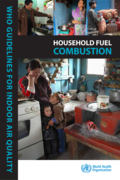
Energy use in the home is a vital and ubiquitous feature of human society. Energy
is used for a wide variety of purposes, including cooking, space heating, light-
ing, small-scale income generation, various household tasks, and entertainment.
Over the reporting period, economic actors continued to carry out their activities with little regard for their impacts on the livelihoods of the communities living in the surrounding areas. In Doo Tha Htoo (Thaton) District, cold dust from a Tatmadaw-run cement factory contaminated nearby waterways
...
Preliminary fndings from a global survey of urban young people on the air they breathe and a child health co-benefts analysis of radical decarbonisation of 16 global cities.
Terminology used to describe the transmission of pathogens through the air varies across scientific disciplines, organizations and the general public. While this has been the case for decades, during the coronavirus disease (COVID-19) pandemic, the
...
The EU's air quality directives (2008/50/EC Directive on Ambient Air Quality and Cleaner Air for Europe and 2004/107/EC Directive on heavy metals a
...
Accessed on 06.03.2022
This interactive tool provides a snapshot – in the form of a map – of current national air quality standards for classical pollutants (particulate matter, nitrogen dioxide, ozone, carbon monoxide and sulphur dioxide)
...
This report presents an overview of the state of air quality and its impacts on health in Africa.
The World Health Organization (WHO) video titled "Preventing Disease Through Healthy Environments" highlights the significant impact of environmental factors on global health. It reports that in 2012, approximately 12.6 million deaths—nearly one in four worldwide—were attributable to unhealthy e
...
The Noncommunicable Diseases Country Profiles 2018 by the World Health Organization (WHO) provides an in-depth look at the burden of noncommunicable diseases (NCDs) such as cardiovascular diseases, cancer, chronic respiratory diseases, and diabetes across WHO Member States. It includes data on NCD m
...
Worldwide, around 2.3 billion people still cook using solid fuels (such as wood, crop waste, charcoal, coal and dung) and kerosene in open fires and inefficient stoves. Most of these people are poor and live in low- and middle-income countries. There is a large discrepancy in access to cleaner cooki
...
The document titled "Early Warning Signs of COPD" from the American Lung Association outlines what COPD is, its risk factors, and the importance of recognizing early symptoms such as persistent cough, breathlessness, and frequent chest infections. It emphasizes the need for early consultation with a
...
BACKGROUND. Asthma is a heterogeneous condition characterised by chronic inflammation and variable expiratory airflow limitation, as well as airway reversibility. The burden of asthma in children is increasing in low- and middle-income countries and remains under-recognised and poorly managed.
OBJE
...
Severe and difficult asthma in a low- and middle-income country (LMIC) can relate to lack of availability of basic medications; potentially reversible factors such as poor adherence or comorbidities such as obesity inhibiting a good response to treatment; and (rarely) true severe, therapy-resistant
...
a "risk factor" is something that increases your chances of getting a disease or condition. In the case of asthma there are two diffrent type of risk factors. There are risk factors for developing asthma , and there are separate risk factors for those who already have asthma getting a severe asthma
...
An allergy is when someone has a bad reaction to something in the enviroment that other people can tolerate. We get allergies when our bodies defence system hurt us instead of protecting us.
Secondhand smoke can infiltrate into other units through hallways and stairwells. Don’t be shy when it comes to your health. Talk to your building manager about making your apartment smokefree.
Secondhand smoke and the harmful chemicals in it are known causes of Sudden Infant Death Syndrome RESPIRATORY INFECTIONS, ear infections.and asthma attacks in infants and children. They are also known causes of HEART DISEASE,stroke, and lung cancer in adult nonsmokers.
Silicosis is not a new disease; the impact of silica dust on respiratory function was observed by Hippocrates in 430 B.C. and in the 16th century by Agricol. In 1713, Rammazini described silicotic nodules in post-mortems of stone cutters presenting with respiratory symptoms. In the mid-late 1800s,
...
Environmental pollution, protection, quality and sustainability
Environmental Pollution
http://dx.doi.org/10.1016/j.envpol.2013.05.046
European Journal of Biomedical and Pharmaceutical Sciences, vol.3 (2016) 1, 192-206
This review shows that if all sub areas of pharmaceutical waste management can efficiently work back to back environmental pollution and dangers to human health ca
...
Globally, environmental pollution and other environmental risks cause 24% of all deaths, and these deaths are largely preventable. A shift towards policies and actions that minimize risks to health and promote health and sustainable personal and soc
...
1 March 2021 This roadmap aims to define the key questions users should consider to assess indoor ventilation and the major steps needed to reach recommended ventilation levels or simply improve indoor air quality (IAQ) in order to reduce the risk o
...
European Journal of Biomedical and Pharmaceutical Sciences, vol.3 (2016) 1, 192-206
This review shows that if all sub areas of pharmaceutical waste management can efficiently work back to back environmental pollution and dangers to human health ca
...
We live in a world in which global warming, pollution, social
injustice, inequity and population health fundamentally influence each other. As a result, health and health care can no longer be thought of and practiced in an isolated manner.
Healthy communities rely on well-functioning ecosystems. They provide clean air, fresh water, medicines and food security. They also limit disease and stabilize the climate. But biodiversity loss is happening at unprecedented rates, impacting human
...
Non-Motorized Transport (NMT) has immense benefits for individual users, as well as society at large, through improvements to physical health, air quality, the environment, climate change, personal finance, accessibility, mobility and the empowermen
...
Extreme heat events (EHEs) are a leading cause of weather-related injury and death in the United States, and under a changing climate, these meteorological episodes are predicted to increase in both frequency and intensity. Prolonged heat exposure from EHEs places an increased strain on the heart an
...
Biodiversity and healthy natural ecosystems, including protected areas in and around cities, provide ecosystem benefits and services that support human health, including reducing flood risk, filtering air pollutants, and providing a reliable supply
...
Prescriptions and Actionables for a Healthy and Green Recovery.
The practical steps outlined in this report aim at creating a healthier, fairer and greener world while investing to maintain and resuscitate the economy hit by the effects of COVID-19.
Policy makers, national and local decision-make
...
Human activities are driving fundamental changes to the biosphere and disrupting many of our planet’s natural systems. There is increasing scientific evidence that the unfolding climate crisis, global pollution, unprecedented levels of biodiversit
...

Many features of the environment have been found to exert an important influence on cardiovascular disease (CVD) risk, progression, and severity. Changes in the environment due to migration to different geographic locations, modifications in lifestyle choices, and shifts in social policies and cultu
...
There is paucity of data on the burden and specific drivers operative in the pathogenesis of chronic obstructive pulmonary disease (COPD) in the African setting and populations. Lack of awareness and inadequate knowledge on the aetio-pathogenesis of the disease together with inadequate capacity for
...
Background
Asthma remains highly prevalent, with more severe symptoms in low-income to middle-income countries (LMICs) compared with high-income countries. Identifying risk factors for severe asthma symptoms can assist with improving outcomes. We aimed to determine the prevalence, severity and ris
...
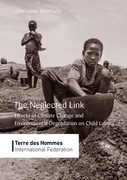
Over half a billion children are living in areas with extremely high levels of floods and nearly 160 million children live in areas of high or extremely high droughts. The World Health Organisation (WHO) estimates that 26% of the annual 6.6 million deaths of children under five are linked to environ
...

Forests, trees and green spaces, hereinafter ‘forests and trees’ for short, provide multiple goods and services that contribute to human health. These include medicines, nutritious foods and other non-wood forest products (NWFPs). Globally, at least 3.5 billion people use NWFPs, including medici
...

Oxfam Water Supply Scheme for Emergencies. This manual is part of a series of guides devised by the Oxfam Public Health Engineering Team to help provide a reliable water supply for populations affected by conflict or natural disaster. Wherever possible, water supplies in emergency conditions should
...
WASH Ex-Post Evaluation Series - Water Communications and Knowledge Management (CKM) Project
This evaluation examines the sustainability of selected components of the USAID/Indonesia Environmental Services Program (ESP), which was implemented from 2004–2010. Among other objectives, this activ ...
This evaluation examines the sustainability of selected components of the USAID/Indonesia Environmental Services Program (ESP), which was implemented from 2004–2010. Among other objectives, this activ ...
The authors conduct an integrated survey of Antimicrobial Resistant Organisms (AMR) in drinking water, wastewater and surface water in three settings in Bangladesh: rural households, rural poultry farms, and urban food markets. Results show that untreated water discharged from rural households, poul
...
Cardiovascular diseases (CVDs) have collectively remained the leading causes of death worldwide and substantially contribute to loss of health and excess health system costs. The Global Burden of Diseases, Injuries, and Risk Factors (GBD) Study has tracked trends in death and disability since 1990 a
...
Climate change is resulting in poorer health outcomes, increasing mortality and is a driver of health inequities. However, health is well placed to be a significant part of the solution; the positive health impacts from stronger climate change action can motivate stronger global ambition; health sys
...

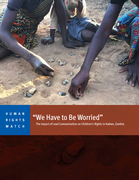
Children in Kabwe are especially at risk because they are more likely to ingest lead dust when playing in the soil, their brains and bodies are still developing, and they absorb four to five times as much lead as adults. The consequences for children who are exposed to high levels of lead and are no
...
The booklet starts with a general overview of how illicit drugs and the environment are linked within the bigger picture of the Sustainable Development Goals, climate change and environmental sustainability. It highlights direct and indirect linkages and gives examples of the significant local and i
...

Almost 25% of deaths worldwide could be prevented if the actions in the compendium were fully implemented
This compendium provides a systematic compilation of published guidance from WHO and other UN organizations on health and environment. Guidance on policies and actions as well as awareness rais
...
WHO's Health in the Green Economy sector briefings examine the health impacts of climate change mitigation strategies considered by the Intergovernmental Panel on Climate Change in their Fourth Assessment Report (Climate Change, 2007). Large, immediate health benefits from some climate change strate
...
Contains tools and resources for countries to develop clean household energy policies and programmes.
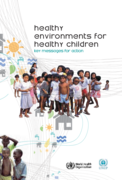
This booklet presents key messages for action, summarized from a set of chapters on different environmental health issues, available at www.who.int/ ceh/publications/healthyenvironmentsforhealthychildren. The work is a result of an on-going partnership between WHO, UNEP and UNICEF in the area of chi
...

No publication year indicated.
The American Journal of Tropical Medicine and Hygiene Volume 106: Issue 1 p.12-14.he piece highlights a body of research that suggests tiny plastic particles could disrupt immune and endocrine systems, damage organs, and cause other health problems. “Without a fundamental reimagining of global
...
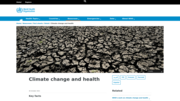
Climate change is the single biggest health threat facing humanity, and health professionals worldwide are already responding to the health harms caused by this unfolding crisis.
The Intergovernmental Panel on Climate Change (IPCC) has concluded that to avert catastrophic health impacts and prevent
...

In this guideline, natural ventilation is considered
among one the effective measures to control infections in health care. This guideline provides
a design and operation guide for hospital planners, engineers, architects and infection control
personnel. The recommendations in this guidelin
...
Patient information on COPD. English version. Also available in: Arabic, French, German, Russian, Turkish, Spanish. For other versions go to: http://www.patienten-information.de/kurzinformationen/lunge/copd-exazerbation
Accessed 4 March 2019.
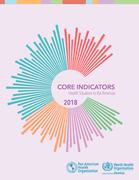
For the 24th consecutive year, PAHO has published the report Health Situation in the Americas: Core Indicators featuring the latest information on key indicators for the Region of the Americas. This 2018 edition includes data on the 82 core indicators for the countries, territories, and sub regions
...
SDG Factsheet: Health-focused urban design can roll back the epidemic of noncommunicable diseases (NCDs), making cities a bedrock for healthy lifestyles – as well as climate-friendly and resilient. WHO’s new Urban Health Initiative provides a model for the health sector to contribute to healthy
...
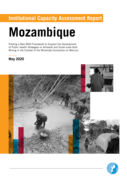
This report presents an assessment of the institutional readiness to detect, prevent and address health issues associated with ASGM and aims to provide an input to the Ministry of Health (MISAU) to define key priorities in the Public Health Strategy on ASGM. Based on the consultation of representati
...
State of Health in the EU Cycle.
With the coronavirus (COVID-19) once again spreading rapidly, and the re-introduction of containment measures to flatten the curve of the epidemic, it is crucial for policymakers to plan effective strategies to re-open their economies to avoid further re-confinement
...
