
Filter
3838
Text search:
América
Featured
302
667
Language
Document type
1768
965
455
207
106
96
70
46
38
37
19
16
13
Countries
424
251
80
71
65
60
59
47
44
38
37
37
36
35
32
31
30
30
29
27
26
26
25
25
24
24
23
23
23
23
22
22
21
20
20
20
19
19
18
18
17
17
16
15
15
15
15
14
14
13
13
13
12
12
12
12
11
10
9
9
9
8
7
6
6
6
6
6
5
5
5
5
5
5
5
5
5
5
5
5
4
4
4
4
4
4
4
4
4
4
4
3
3
3
3
3
3
3
2
2
2
2
2
2
2
2
2
2
2
2
2
2
2
2
2
2
1
1
1
1
1
1
1
1
1
1
1
1
1
1
1
1
1
1
1
1
1
1
1
1
Authors & Publishers
Publication Years
Category
972
373
264
258
147
66
49
6
3
Toolboxes
447
433
342
228
194
187
146
124
121
106
97
92
75
70
67
59
56
55
51
39
23
16
13
2
1
Accessed: 11.03.2020
Cardiovascular diseases remain the leading cause of morbidity and mortality worldwide. There are significant differences in the burden of cardiovascular disease and associated risk factors, across high-income countries and low- and middle-income countries. Cardiac imaging by echocardiography, cardia
...

Chagas is a parasitic disease that affects over 6 million people in the
world. As the disease typically remains asymptomatic for years, new cases
often go unnoticed and unreported, and most people with the disease
are unaware of their condition. Less than 10% of people affected are
diagnosed and
...
The article "The Rising Burden of Non-Communicable Diseases in the Americas and the Impact of Population Aging" examines how the aging population in the Americas is contributing to the growing burden of non-communicable diseases (NCDs), despite improvements in disease prevention and health care. Usi
...
This handbook reflects and updates the work that ECLAC has done in recent decades to establish a methodology for estimating the economic consequences of a disaster, and thus determine the financing required to rebuild and return the affected area to normal. The handbook's third edition strengthens p
...
2018 Progress Report
PEPFAR Strategy for Accelerating HIV/AIDS Epidemic Control (2017-2020)
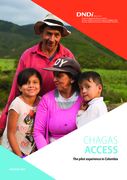
Over 6 million people worldwide are infected with Trypanosoma cruzi, the protozoan that causes Chagas disease. Endemic in 21 Latin American countries, the disease can be transmitted by vector insects called triatomines — also known as “kissing bugs” —, foods or beverages contaminated with th
...
Accessed Online January 2019
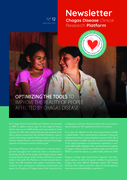
To support its R&D activities on Chagas disease, DNDi launched the Chagas Clinical Research Platform (CCRP). The platform brings together partners, experts, and stakeholders to provide support for evaluation and development of new treatments for Chagas disease. The patient-centred platform aims to f
...

La enfermedad de Chagas es parasitaria y afecta a más de 6 millones
de personas en el mundo. Como normalmente es asintomática durante
años, los nuevos casos suelen no detectarse ni reportarse y la mayoría
de las personas con la enfermedad no tiene conciencia de su condición.
Se diagnostica
...

Clinical Infectious Diseases
1586 - 1594 • CID 2016:62 (15 June) • HIV/AIDS
Normas y Guía técnica
América Latina y el Caribe se ha convertido en el epicentro de la pandemia de enfermedad por coronavirus (COVID-19) y encabeza las estadísticas mundiales de casos. La pandemia ha devenido en una inédita crisis económica y social y, si no se toma
...
Epilepsy is one of the world’s most common chronic neurological disorders. Roughly 50 million people
suffer from it, 5 million of them in the Region of the Americas . Nevertheless, it is estimated that over
50% of these people in Latin America a
...

salud pública de méxico / vol. 50, suplemento 2 de 2008, pp.167-177.
In response to the emerging global concern regarding health and people with intellectual disabilities (ID), several developed countries have established national initiatives to address the unique health needs of this population
...
2014
Addendum to meeting report: Regional consultation on HIV epidemiologic information in Latin America and the Caribbean
La COVID-19 se ha propagado a los 54 países y territorios de las Américas. Para el 26 de mayo del 2020, los casos y las muertes en América Latina habían sobrepasado los de Europa y Estados Unidos en lo que se refiere al número diario de infecci
...
The current effort on fighting COVID-19 cannot conceal the fact that climatic and geological hazards affect Latin-America and the Caribbean every year. At a time when countries of the region are actively responding to the pandemic, they also need to
...
Prevention, early diagnosis, and effective treatment are essential for the control and elimination of Neisseria gonorrhoeae as a public health problem. Currently, in Latin America and the Caribbean, treatment for gonorrhea infection is largely empir
...
Guidelines for Diagnosing and Managing Disseminated Histoplasmosis among People Living with HIV
recommended
Histoplasmosis is a disease caused by the fungus Histoplasma capsulatum. This disease is highly endemic in some regions of North America, Central America, and South
...
The COVID-19 pandemic has had an unprecedented impact on health care systems that, in many instances, worsened the already existing assistance gaps. When it comes to Latin America and Central America
...
La enfermedad de Chagas, también llamada tripanosomiasis americana, sigue siendo endémica en 21 países de América Latina. Sin embargo, como consecuencia de las migraciones, la urbanización, la intensificación del turismo, la modificación de l
...
Antimicrobial resistance (AMR) surveillance plays an important role in the early detection of resistant strains of public health importance and prompt response to outbreaks in hospitals and the community. Surveillance findings are needed to inform medical practice, antibiotic stewardship, and policy
...
In the face of rapid increases in the number of hospitalizations due to COVID-19 in Latin America and the Caribbean, coupled with shortages of human and material resources, including medical equipment and gases, there is a need to redesign models of
...
This technical note summarizes the consolidated guidelines and adapts them to the context of Latin America and the Caribbean, in order to adequately monitor the number of people on ART. For this purpose, guidance is presented on the indicators and t
...
In South and Central America, lymphatic filariasis (LF) is caused by Wuchereria bancrofti, which is transmitted by Culex quinquefasciatus, the only vector species in this region. Of the seven countries considered endemic for LF in the Americas in t
...

This document compiles the recommendations made by the World Health Organization (WHO) and the Pan American Health Organization (PAHO) to help professionals in charge of vector control programs in Latin America and the Caribbean at the national, sub
...

Research and Reports in Tropical Medicine 2022:13 25–40.
Chagas disease (CD) is caused by the parasite Trypanosoma cruzi, and it is endemic in Central, South America, Mexico and the South of the United States. It is an important cause of early mo
...
Chagas disease affects approximately 6 million people, mainly in Latin America. Less than 1% of affected individuals receive proper antiparasitic treatment, and current drugs are inadequate to fight the entire spectrum of the disease. Against this b
...
This report aims to outline the current available knowledge on the health and wellbeing of older persons in the Region of the Americas during the United Nations Decade of Healthy Ageing (2021-2030). It also seeks to guide political actions towards ensuring the human rights of older persons, and desc
...
Health systems in Latin America face many challenges in controlling the increasing burden of diabetes. Digital health interventions are a promise for the provision of care, especially in developing countries where mobile technology has a high penetr
...
Worldwide, studies on asthma prevalence have shown major rises over the last 30 years. The impact on the burden of asthma is being increasingly recognised. In some countries in Latin America, the prevalence of asthma is among the highest in the worl
...
The region of Latin America and the Caribbean (LAC) has high levels of income inequality and urbanization. This leaves a large percentage of the population exposed and vulnerable to infectious disease outbreaks (1). The COVID-19 outbreak occurred su
...
In Latin America and the Caribbean (LAC), one maternal death was registered every hour in 2020. That same year, the trend in the maternal mortality ratio (MMR) for the Region of the Americas regressed alarmingly and unprecedentedly to the levels see
...
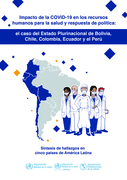
síntesis de hallazgos en cinco países de América Latina
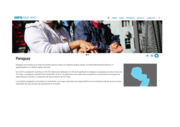
Paraguay se encuentra en el centro de América del Sur; limita con Argentina, Bolivia y Brasil.
La fiebre amarilla es una enfermedad endémica en varios países de América Latina. Con vistas a brindar apoyo a los responsables de la toma de decisiones para priorizar las acciones preventivas frente a esta afección, la Organización Panamerican
...
Faced with the largest population outflow in Latin America of recent years, 95 organizations covering 16 countries have been working together to establish a comprehensive response to the urgent needs of millions of refugees and migrants from Venezue
...
Metodología de recolección de datos sobre flujo de población venezolana en América del Sur
Un análisis desde la perspectiva del sector de la salud en América Latina y el Caribe
Washington, D.C., 2017
An analysis from the perspective of the health sector in Latin America and the Caribbean
Washington, D.C., 2017
Because malaria cases are seen relatively rarely in North America, misdiagnosis by clinicians and laboratorians has been a commonly documented problem in published reports. However, malaria may be a common illness in areas where it is transmitted an
...

It is estimated that, in Latin America alone, between 6 and 8 million people are infected with the parasite, and 99% of these are not receiving treatment, either because they are unaware of their infection or because they do not know that treatment
...
Chagas disease affects 8-10 million people worldwide, mainly in Latin America. The current therapy for Chagas disease is limited to nifurtimox and benznidazole, which are effective in treating only the acute phase of the disease but with severe side
...
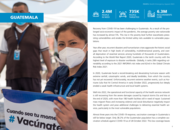
Recovery from COVID-19 has been challenging in Guatemala. As a result of the prolonged socio-economic impact of the pandemic, the average poverty rate nationwide has increased by almost 5%. This rise in the poverty level further exacerbates preexisting vulnerabilities and erodes the limited safety n
...
El objetivo de este protocolo es facilitar la evaluación de los establecimientos de salud de América Latina y el Caribe en lo relativo a agua potable, alcantarillado, saneamiento, higiene, residuos sólidos y limpieza.
In areas of Mexico, Central America, and South America, where the Trypanosoma cruzi parasite is present in triatomine bugs, improved housing and spraying insecticide inside housing to eliminate the
...
Discrete typing units of Trypanosoma cruzi: Geographical and biological distribution in the Americas
Chagas disease caused by Trypanosoma cruzi is a public health issue in Latin America. This highly diverse parasite is divided into at least seven discrete typing units (DTUs) TcI-TcVI and Tcbat. Some DTUs have been associated with geographical distr
...
En el año 2020 se registró una muerte materna cada hora en América Latina y el Caribe (ALC). Ese mismo año, la tendencia de la razón de mortalidad materna (RMM) en la Región de las Américas retrocedió de manera alarmante e inaudita a los niv
...
En el año 2020 se registró una muerte materna cada hora en América Latina y el Caribe (ALC). Ese mismo año, la tendencia de la razón de mortalidad materna (RMM) en la Región de las Américas retrocedió de manera alarmante e inaudita a los niv
...
Regional Initiative for the Elimination of Mother-to-Child Transmission of HIV and Congenital Syphilis in Latin America and the Caribbean
The spread of COVID-19 poses a challenge for emerging markets such as those in Africa and Latin America. While governments around the world are suffering from a shortage of ventilators, hospital beds, and personal protective equipment, availability
...
The spread of COVID-19 poses a challenge for emerging markets such as those in Africa and Latin America. While governments around the world are suffering from a shortage of ventilators, hospital beds, and personal protective equipment, availability
...

It provides curriculum development and technology tools to organizations that want to create workers who transform health in America’s communities. Talance, Inc., lends its clients straight-forward strategies that determine what their staff needs
...

Em vista do aumento repentino do número de hospitalizações causadas pela pandemia de COVID-19 na América Latina e no Caribe, bem como da escassez de recursos humanos e materiais, como equipes médicas e gases medicinais, é necessário reformula
...
This manual has been prepared by the Group on Agriculture of the FAO Regional Office for Latin America and the Caribbean. The purpose of this work is to spread the basic concepts of Good Agricultural Practices (GAP)in order to: guide the production
...

Trypanosoma cruzi is the etiological agent of Chagas disease (CD), considered one of the most important parasitic infections in Latin America. Between 25 and 90 million humans are at infection risk via at least one of multiple infection mechanisms.
...
Chagas disease is named after the Brazilian physician Carlos Chagas, who discovered the disease in 1909. It is caused by the parasite Trypanosoma cruzi, which is transmitted to animals and people by insect vectors and is found only in the Americas (mainly, in rural areas of Latin
...
The protozoan parasite Trypanosoma cruzi causes Chagas disease, an important public health problem throughout Latin America. Current therapeutic options are characterised by limited efficacy, long treatment regimens and frequent toxic side-effects.
...
First discovered more than 100 years ago, Chagas disease continues to affect more than six million people worldwide and is one of the most prevalent public health problems in Latin America and, increasingly, on a global scale. In the last decades, m
...
About six to seven million people worldwide, mostly in Latin America, are estimated to be infected with
Trypanosoma cruzi, the parasite that causes Chagas disease (WHO data from 2021). Chagas disease is
found mainly in endemic areas of 21 Latin Am
...
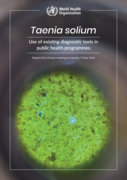
Taeniasis and cysticercosis caused by the parasite T. solium affect vulnerable populations,
mainly in Latin America, sub-Saharan Africa and Asia, where pigs (the intermediate host) roam
free and poor sanitation allows pigs access to human faeces.
Over the past decade, the reduction of maternal mortality in Latin America and the Caribbean has shown signs of a marked slowdown and in some cases a reversal, jeopardizing commitments made at the global and regional levels and by the Member States
...
A century after its discovery, Chagas' disease still represents a major public health challenge in Latin America. Moreover, because of growing population movements, an increasing number of cases of imported Chagas' disease have now been detected in
...

This report includes analysis from informal regional consultations in the African Region, the Caribbean and North America, Latin America, South-East Asia Region, European Region, Eastern Mediterrane
...
This report includes analysis from informal regional consultations in the African Region, the Caribbean and North America, Latin America, South-East Asia Region, European Region, Eastern Mediterrane
...
This report includes analysis from informal regional consultations in the African Region, the Caribbean and North America, Latin America, South-East Asia Region, European Region, Eastern Mediterrane
...
This report includes analysis from informal regional consultations in the African Region, the Caribbean and North America, Latin America, South-East Asia Region, European Region, Eastern Mediterrane
...
This report includes analysis from informal regional consultations in the African Region, the Caribbean and North America, Latin America, South-East Asia Region, European Region, Eastern Mediterrane
...
N Engl J Med. 2016 Jan 13. [Epub ahead of print] Free full text
The explosive pandemic of Zika virus infection occurring throughout South America, Central America, and the Caribbean (see map) and p
...
5th revised edition.
This document provides a ranking of medically important antimicrobials for risk management of antimicrobial resistance due to non-human use. The current revision took place at the seventh meeting of the AGISAR held in Raleigh, United States of
...

Disability, CBR & Inclusive Development, Vol.25 (2014) pp.72-81
This article highlights some lessons about the strategy of community-based inclusive education, drawn from different programmes in Latin America.

Background: Traumatic stress may arise from various incidents often leading to posttraumatic stress disorder (PTSD). The lifetime prevalence of PTSD is estimated at 1% – 2% in Western Europe, 6% – 9% in North America and at just over 10% in coun
...
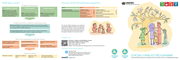
The Strong Families Programme was developed and piloted in Afghanistan thanks to the generous support of the US-INL. To date, this programme has further been piloted in Central America, Central and West Asia, East and West Africa thank
...
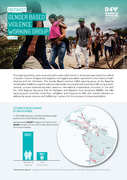
The ongoing political, socio-economic and human rights events in Venezuela have led to the outflow of almost 4 million refugees and migrants, the biggest population movement in the history of Latin America and the Caribbean. The Gender-Based Violenc
...
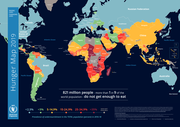
WFP's Hunger Map depicts the prevalence of undernourishment in the population of each country in 2016-18. From Africa and Asia to Latin America and the Near East, there are 821 million people - more than 1 in 9 of the world population - who do not g
...
Downloaded from https://aidsinfo.nih.gov/guidelines on 10/19/2019
Recommendations from the National Institutes of Health, Centers for Disease Control and Prevention, the HIV Medicine Association of the Infectious Diseases Society of America and t
...
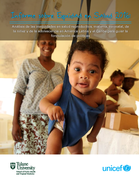
Análisis de las inequidades en salud reproductiva, materna, neonatal, de la niñez y de la adolescencia en América Latina y el Caribe para guiar la formulación de políticas
Version dated April 1st, 2020.
The flow of migrants and refugees from Venezuela constitutes the largest mobilization of people in the history of Latin America. By March 2020, more than 4.9 million Venezuelans have left their country and from these,
...
A new reportshows that people in some 25 countries are set to face devasting levels of hunger in coming months due to the fallout from the COVID-19 pandemic. While the greatest concentration of need is in Africa, countries in Latin America and the C
...
The Bolivarian Republic of Venezuela has been facing a sociopolitical and economic situation that has negatively impacted social and health indicators. There have been intensified population movements both within the country and to other countries, particularly to Argentina, Brazil, Chile, Colombia,
...
The present Community Empowerment Manual draws upon the lessons learned of the Community Protection Approach implementation in Lebanon, the occupied Palestinian territory and Central America during the period 2015-2020 by WeWorld – GVC and its par
...
PNAS 119 (8) e2113947119 | https://doi.org/10.1073/pnas.2113947119
Environmental exposure to active pharmaceutical ingredients (APIs) can have negative effects on the health of ecosystems and humans. While numerous studies have monitored APIs in rivers, these employ different analytical methods, m
...
Climate change is one of the most important issues of our time and has major health and healthcare implications. As some of the most respected professionals in America, doctors and nurses have a crucial part to play in raising awareness of the publi
...
Según el INS (3) la enfermedad de Chagas continúa siendo un problema de salud pública en Colombia y es uno de los países de América Latina que más capta pacientes en fase aguda al año, sin embargo, la tasa de letalidad acumulada a periodo epi
...
In Danger: UNAIDS Global AIDS Update 2022
recommended
Progress in prevention and treatment is faltering around the world, putting millions of people in grave danger. Eastern Europe and central Asia, Latin America, and the Middle East and North Africa have all seen increases in annual HIV infections ove
...
La enfermedad de Chagas (ECha), resultado de la infección por el Trypanosoma cruzi, afecta varias poblaciones de las
zonas rurales de Suramérica y América Central. En los últimos años la enfermedad ha cobrado importancia epidemiológica no sÃ
...
Key facts
Buruli ulcer is a chronic debilitating disease caused by an environmental Mycobacterium ulcerans.
At least 33 countries with tropical, subtropical and temperate climates have reported Buruli ulcer in Africa, South America and Western
...
Datos y cifras
La úlcera de Buruli es una enfermedad crónica y debilitante causada por una micobacteria ambiental: Mycobacterium ulcerans.
Al menos 33 países de clima tropical, subtropical o templado han notificado casos de úlcera de Buruli en África,
...

J Clin Med . 2020 May 18;9(5):1517. doi: 10.3390/jcm9051517.
Chagas disease (CD) is a major burden in Latin America, expanding also to non-endemic countries. A gold standard to detect the CD causing pathogen Trypanosoma cruzi is currently not avai
...
eLife 2020;9:e52072. The Triatominae are vectors for Trypanosoma cruzi, the aetiological agent of the neglected tropical Chagas disease. Their distribution stretches across Latin America, with some species occurring outside of the Americas. In parti
...
Chagas disease, or American trypanosomiasis, is an illness that can cause serious heart and stomach problems. It is caused by a parasite. Chagas disease is common in Latin America, especially in poor, rural areas. It can also be found in the United
...
The Chagas disease data platform is founded upon a collaborative framework that aims to bring together partners including individual researchers in Chagas endemic regions, leading global research institutions, policy specialists and funders from across the globe. The theme is coordinated by a team b
...
Chagas disease is caused by Trypanosoma cruzi, a protozoal organism primarily transmitted by triatomine insect vectors, also known as “kissing bugs.” It is a zoonotic disease originally described by Brazilian physician Dr. Carlos Chagas in 1909 and is widespread in Latin
...

Epidemiology
Chagas disease (American trypanosomiasis) is caused by the protozoan parasite Trypanosoma cruzi, and transmitted to humans by infected triatomine bugs, and less commonly by transfusion, organ transplant, from mother to infant, and in rare instances, by ingestion of contaminated food or
...

Chagas disease is a tropical disease caused by a parasite called Trypansoma cruzi and is primarily spread by Triatomine bugs. It is estimated to affect 6-7 million people, mostly in Latin America, and can cause devastating chronic illness. In this v
...
Onchocerciasis causes skin and eye disease, visual impairment and neurological problems. It is mostly found in Africa, but also in Latin America and Yemen. The common name, ‘river blindness,’ gives a good indication where the disease can be foun
...
Foodborne trematode infections cause 2 million life years lost to disability and death worldwide every year.
People become infected by eating raw fish, crustaceans or vegetables that harbour the parasite larvae.
Foodborne trematodiases are most prevalent in East Asia and South
...
