
Filter
3918
Filtered Results: 3918
Text search:
ReAct
Featured
Recommendations
447
New Publications
933
Language
Document type
No document type
2221
Guidelines
580
Studies & Reports
492
Manuals
228
Fact sheets
124
Training Material
101
Strategic & Response Plan
88
Situation Updates
24
Infographics
20
Brochures
18
Resource Platforms
13
Online Courses
7
Videos
2
Countries / Regions
India
201
Global
116
South Africa
85
Western and Central Europe
80
Kenya
78
Nigeria
69
Ethiopia
68
Uganda
62
Tanzania
62
Sierra Leone
60
Liberia
59
Nepal
55
Zambia
52
Africa
48
Syria
45
Ghana
44
Latin America and the Carribbean
44
Congo, Democratic Republic of
41
Malawi
41
Rwanda
38
Bangladesh
35
Myanmar / Burma
31
Ukraine
30
Philippines
28
Zimbabwe
27
Eastern Europe
27
South–East Asia Region
26
Germany
24
Namibia
23
Lesotho
21
Senegal
19
Indonesia
19
Cambodia
18
West and Central Africa
18
Guinea
17
Mozambique
16
Brazil
16
Colombia
15
East and Southern Africa
15
Middle East and North Africa
15
Burkina Faso
14
Cameroon
14
South Sudan
13
Haiti
12
Argentina
12
Botswana
12
Venezuela
12
USA
11
Lebanon
11
Eswatini/ Swaziland
11
Asia
10
Madagascar
9
Western Pacific Region
9
Eastern Europe and Central Asia
9
Peru
8
Angola
8
Yemen
8
Russia
8
Pakistan
7
Afghanistan
7
Central African Republic
7
Somalia
6
Iraq
6
Jordan
6
Thailand
6
Benin
6
Georgia
6
Vietnam
6
Côte d’Ivoire / Ivory Coast
5
China
5
Bolivia
5
Chile
5
Mali
4
Chad
4
Sudan
4
Paraguay
4
Palestine
4
Niger
3
Togo
3
Ecuador
3
Libya
3
Sri Lanka
3
Moldova
3
United Kingdom
3
Spain
3
Guinea-Bissau
2
Saudi Arabia
2
Gambia
2
El Salvador
2
Greece
2
Guatemala
2
Mexico
2
Fiji
2
Bhutan
2
Albania
2
Southern Africa
2
Laos
2
Congo-Brazzaville
2
Canada
2
Timor Leste/ East Timor
2
Iran
2
Kazakhstan
2
North America
2
France
2
Tunisia
2
Morocco
1
Turkey
1
Egypt
1
Malaysia
1
Mauritania
1
Ireland
1
Singapore
1
Papua New Guinea
1
Dominican Republic
1
North Macedonia
1
Switzerland
1
Serbia
1
Croatia
1
Burundi
1
Honduras
1
Nicaragua
1
Other region
1
Solomon Islands
1
North Korea
1
Italy
1
Djibouti
1
Mongolia
1
Tajikistan
1
Kyrgyzstan
1
Australia
1
Gabon
1
Uruguay
1
Jamaica
1
Japan
1
Mauritius
1
Portugal
1
Morocco
1
Latvia
1
Authors & Publishers
Publication Years
Category
Countries
1255
Clinical Guidelines
405
Public Health
168
Key Resources
154
Women & Child Health
144
Capacity Building
107
Pharmacy & Technologies
68
Annual Report MEDBOX
3
Toolboxes
COVID-19
412
Mental Health
409
HIV
255
TB
248
NTDs
152
Rapid Response
150
AMR
149
Ebola
138
Pharmacy
113
Conflict
97
Caregiver
94
Refugee
93
Disability
89
Planetary Health
87
Natural Hazards
45
Zika
44
Specific Hazards
40
NCDs
38
Global Health Education
33
Polio
32
Cholera
27
Social Ethics
19
Health Financing Toolbox
18
Typhoon
1
Health Financing
1
Mounting an effective international humanitarian response to a chemical, biological, radiological or nuclear (CBRN) event, especially if the response is undertaken on an ad hoc basis, would be extremely difficult and would pose many risks to the responders. The International Committee of the Red Cro...
The World Health Organization Disability Assessment Schedule (WHODAS 2.0) is a generic assessment instrument developed by WHO to provide a standardized method for measuring health and disability across cultures. It was developed from a comprehensive set of International Classification of Functioning...

ICF is WHO's framework for health and disability. It is the conceptual basis for the definition, measurement and policy formulations for health and disability. It is a universal classification of disability and health for use in health and health related sectors. ICF therefore looks like a simple he...

This journal is funded by CBM
An Update will be published in late 2018
The use of explosive weapons, such as bombs, rockets, and mortar and
artillery shells, in cities, towns and villages and in other populated areas
has devastating humanitarian consequences. Explosive weapons act mainly
through the projection of blast and fragmentation wi...
States, the United Nations and civil society organisations continue to raise concerns about the humanitarian impact caused by the use of explosive weapons in populated areas (EWIPA). This issue is currently being examined from political, legal, socio-economic and humanitarian perspectives. The GICHD...

Mem Inst Oswaldo Cruz , Rio de Janeiro, Vol. 110 (3): 377-386, May 2015
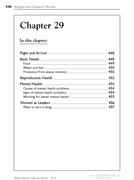
Chapter 29: Refugees and Displaced Women:
Flight and Arrival,
Basic Needs,
Reproductive Health,
Mental Health,
Women as Leaders
Handbook of HUMANITARIAN HEALTH CARE LOGISTICS Designing the Supply Network and Managing the Flows of Information and Health Care Goods in Humanitarian Assistance during Complex Political Emergencies
Long-lasting insecticide-treated nets and/or indoor residual spraying, associated with case
management, are key interventions in the control of malaria in Africa. The objective of this
study is to comment on the role of social and behavior change communication as a potential
key intervention in t...

Int Health. 2012 December 1; 4(4): 253–259. doi:10.1016/j.inhe.2012.07.001
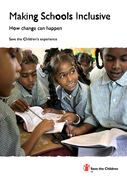
Making education more inclusive requires schools and education authorities to remove the barriers to education experienced by the most excluded children - often the poorest, children with disabilities, children without family care, girls, or children from minority groups. Also included in the text a...
This document provides guidance for countries on how to implement activities to achieve the interruption of yaws transmission. It is intended for use by national yaws eradication programmes, partners involved in the implementation of yaws eradication activities and WHO technical staff who provide te...
This document sets out the criteria and procedures to be followed by countries in verifying the interruption of yaws transmission. It is intended for use by international verification teams, national yaws eradication programmes and WHO technical staff involved in the eradication of yaws.
