Filter
149
Text search:
scorecard
Featured
11
60
Language
Document type
92
26
10
10
3
3
1
1
1
1
1
Countries
11
9
9
8
6
6
5
4
4
4
4
3
3
3
3
3
2
2
2
2
2
2
2
2
2
2
2
2
1
1
1
1
1
1
1
1
1
1
1
1
1
1
1
Authors & Publishers
Publication Years
Category
73
12
11
9
6
3
Toolboxes
19
10
9
7
4
3
3
2
2
2
1
1
1
1
1
1
1
1
WHO and UNICEF have established recommendations for breastfeeding practices. Although every mother decides how to feed her child, this decision is strongly influenced by economic, environmental, social and political factors. The Global Breastfeeding Scorec
...
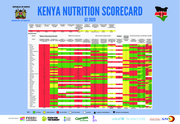
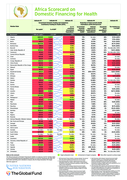
The Africa Scorecard on Domestic Financing for Health is an advocacy tool for member states to use in financial planning and expenditure tracking. It is a tool for measuring only AIDS, TB and malaria spending and is intended to measure only the Abuj
...

This Technical Brief focuses on appraising and prioritising options for climate resilience with a view to informing water, sanitation and hygiene (WASH) programme and project design.
This Technical Brief:
- provides a simple scorecard/che ...
This Technical Brief:
- provides a simple scorecard/che ...
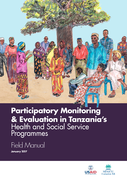
This manual serves as a toolkit of useful PM&E techniques for improving the performance and impact of community-based interventions, such as those involving the most vulnerable children, home-based care and gender-based violence. The manual includes a five-step PM&E programme path and six community
...
The Anglophone Africa Civil Society and Communities CCM Shadow Report and Scorecard Initiative

The Youth Health and Development Programme Government of the Republic of Namibia and UNICEF Programme of Cooperation 1997-2001
State of Health in the WHO African Region
recommended
This report is not a country scorecard. Rather, its purpose is to act as a compass to guide progress towards health in the SDGs.
There has been a significant improvement in the state of health in the region with healthy life expectancy - time spen
...
The threats posed by climate change to agriculture are now well known. Climate change has already resulted in a negative trend in mean crop yield per decade, and this is likely to continue as the century unfolds. In Africa, 650 million people are currently dependent on rain- fed agriculture and, des
...

This results report for the biennium 2020–2021 presents the progress towards the triple billion targets, outcomes and outputs, based on the GPW 13 results framework and indicators. It uses structured methodologies, both quantitative and qualitative, for measuring and analysing the achievements and
...
This guide is an attempt to redress the deficit in understanding of implementation research and to encourage programme personnel and implementers to take a greater interest in the subject, recognizing that implementation research is in fact an integral part of programme planning and execution, rathe
...
The ICOPE Implementation Framework provides a score card to help assess the overall capacity of health and social care services and systems to deliver integrated care in community settings and support the development of ICOPE implementation action plans. There are 19 actions needed to implement ICOP
...
The Demographic Dividend study on Rwanda assessed the socio-economic and human development potential of our country in the short, medium and long-term period using a comprehensive approach. It generated relevant policy and programme information to guide a well-informed polciy required to propel Rwan
...
This timely report comes at a decisive moment in history where
we can reshape urban environments and health systems for the
majority of the world’s population that live in cities. Enabling
this transformation are the SDGs, which have reconfigured how
governments and the international community
...