
Filter
3937
Text search:
reporting
forms
Featured
344
1219
Language
3831
107
59
39
34
25
15
13
8
7
7
6
6
5
5
5
5
4
4
4
4
4
4
4
4
4
3
3
3
3
3
3
3
3
3
3
3
3
3
3
2
2
2
2
1
1
1
1
1
1
1
1
1
1
1
1
1
1
1
Document type
2484
578
413
199
148
45
34
20
4
3
3
3
Countries
200
149
139
110
103
94
87
83
80
80
76
75
75
69
63
63
61
57
55
48
45
36
35
33
31
30
30
30
25
24
22
21
21
20
17
17
16
16
16
15
15
12
12
12
12
12
11
11
11
11
11
10
10
10
9
9
9
8
7
7
7
7
7
6
6
6
6
5
5
5
5
5
5
4
4
4
4
4
4
4
4
3
3
3
3
3
3
3
3
3
3
2
2
2
2
2
2
2
2
2
2
2
2
2
2
2
2
2
2
2
2
2
2
2
1
1
1
1
1
1
1
1
1
1
1
1
1
1
1
1
1
1
1
1
1
1
1
1
1
Authors & Publishers
450
219
161
97
97
96
91
79
68
42
27
26
24
23
23
22
21
18
18
18
17
17
16
16
16
16
16
15
15
15
15
15
15
15
14
14
14
14
13
13
13
13
12
12
12
12
12
11
11
11
11
10
10
10
10
9
9
9
9
9
9
9
9
9
8
8
8
8
8
8
8
8
8
7
7
7
7
7
7
7
7
7
7
7
7
7
7
7
7
7
7
7
6
6
6
6
6
6
6
6
6
6
6
6
6
6
6
6
6
6
6
6
5
5
5
5
5
5
5
5
5
5
5
5
5
5
5
5
5
5
5
5
5
5
5
5
5
4
4
4
4
4
4
4
4
4
4
4
4
4
4
4
4
4
4
4
4
4
4
4
4
4
4
4
4
4
4
4
4
4
4
3
3
3
3
3
3
3
3
3
3
3
3
3
3
3
3
3
3
3
3
3
3
3
3
3
3
3
3
3
3
3
3
3
3
3
3
3
3
3
3
3
3
3
3
3
3
3
3
3
3
3
3
3
3
3
3
3
3
3
3
3
3
3
3
3
3
3
3
3
3
3
3
2
2
2
2
2
2
2
2
2
2
2
2
2
2
2
2
2
2
2
2
2
2
2
2
2
2
2
2
2
2
2
2
2
2
2
2
2
2
2
2
2
2
2
2
2
2
2
2
2
2
2
2
2
2
2
2
2
2
2
2
2
2
2
2
2
2
2
2
2
2
2
2
2
2
2
2
2
2
2
2
2
2
2
2
2
2
2
2
2
2
2
2
2
2
2
2
2
2
2
2
2
2
2
2
2
2
2
2
2
2
2
2
2
2
2
2
2
2
2
2
2
2
2
2
2
2
2
2
2
2
2
2
2
2
2
2
2
2
2
2
2
2
2
2
2
2
2
2
2
2
2
2
2
2
2
2
2
2
2
2
2
2
2
2
2
2
2
2
2
2
2
2
2
2
2
2
2
2
2
2
2
2
2
2
2
2
2
2
2
2
2
2
2
2
2
2
2
2
2
2
2
2
2
2
2
2
2
2
2
2
2
2
2
2
2
2
2
2
2
2
2
2
2
2
2
2
2
2
2
2
2
2
2
2
2
2
2
2
2
2
2
2
2
2
2
2
2
2
2
1
1
1
1
1
1
1
1
1
1
1
1
1
1
1
1
1
1
1
1
1
1
1
1
1
1
1
1
1
1
1
1
1
1
1
1
1
1
1
1
1
1
1
1
1
1
1
1
1
1
1
1
1
1
1
1
1
1
1
1
1
1
1
1
1
1
1
1
1
1
1
1
1
1
1
1
1
1
1
1
1
1
1
1
1
1
1
1
1
1
1
1
1
1
1
1
1
1
1
1
1
1
1
1
1
1
1
1
1
1
1
1
1
1
1
1
1
1
1
1
1
1
1
1
1
1
1
1
1
1
1
1
1
1
1
1
1
1
1
1
1
1
1
1
1
1
1
1
1
1
1
1
1
1
1
1
1
1
1
1
1
1
1
1
1
1
1
1
1
1
1
1
1
1
1
1
1
1
1
1
1
1
1
1
1
1
1
1
1
1
1
1
1
1
1
1
1
1
1
1
1
1
1
1
1
1
1
1
1
1
1
1
1
1
1
1
1
1
1
1
1
1
1
1
1
1
1
1
1
1
1
1
1
1
1
1
1
1
1
1
1
1
1
1
1
1
1
1
1
1
1
1
1
1
1
1
1
1
1
1
1
1
1
1
1
1
1
1
1
1
1
1
1
1
1
1
1
1
1
1
1
1
1
1
1
1
1
1
1
1
1
1
1
1
1
1
1
1
1
1
1
1
1
1
1
1
1
1
1
1
1
1
1
1
1
1
1
1
1
1
1
1
1
1
1
1
1
1
1
1
1
1
1
1
1
1
1
1
1
1
1
1
1
1
1
1
1
1
1
1
1
1
1
1
1
1
1
1
1
1
1
1
1
1
1
1
1
1
1
1
1
1
1
1
1
1
1
1
1
1
1
1
1
1
1
1
1
1
1
1
1
1
1
1
1
1
1
1
1
1
1
1
1
1
1
1
1
1
1
1
1
1
1
1
1
1
1
1
1
1
1
1
1
1
1
1
1
1
1
1
1
1
1
1
1
1
1
1
1
1
1
1
1
1
1
1
1
1
1
1
1
1
1
1
1
1
1
1
1
1
1
1
1
1
1
1
1
1
1
1
1
1
1
1
1
1
1
1
1
1
1
1
1
1
1
1
1
1
1
1
1
1
1
1
1
1
1
1
1
1
1
1
1
1
1
1
1
1
1
1
1
1
1
1
1
1
1
1
1
1
1
1
1
1
1
1
1
1
1
1
1
1
1
1
1
1
1
1
1
1
1
1
1
1
1
1
1
1
1
1
1
1
1
1
1
1
1
1
1
1
1
1
1
1
1
1
1
1
1
1
1
1
1
1
1
1
1
1
1
1
1
1
1
1
1
1
1
1
1
1
1
1
1
1
1
1
1
1
1
1
1
1
1
1
1
1
1
1
1
1
1
1
1
1
1
1
1
1
1
1
1
1
1
1
1
1
1
1
1
1
1
1
1
1
1
1
1
1
1
1
1
1
1
1
1
1
1
1
1
1
1
1
1
1
1
1
1
1
1
1
1
1
1
1
1
1
1
1
1
1
1
1
1
1
1
1
1
1
1
1
1
1
1
1
1
1
1
1
1
1
1
1
1
1
1
1
1
1
1
1
1
1
1
1
1
1
1
1
1
1
1
1
1
1
1
1
1
1
1
1
1
1
1
1
1
1
1
1
1
1
1
1
1
1
1
1
1
1
1
1
1
1
1
1
1
1
1
1
1
1
1
1
1
1
1
1
1
1
1
1
1
1
1
1
1
1
1
1
1
1
1
1
1
1
1
1
1
1
1
1
1
1
1
1
1
1
1
1
1
1
1
1
1
1
1
1
1
1
1
1
1
1
1
1
1
1
1
1
1
1
1
1
1
1
1
1
1
1
1
1
1
1
1
1
1
1
1
1
1
1
1
1
1
1
1
1
1
1
1
1
1
1
1
1
1
1
1
1
1
1
1
1
1
1
1
1
1
1
1
1
1
1
1
1
1
1
1
1
1
1
1
1
1
1
1
1
1
1
1
1
1
1
1
1
1
1
1
1
1
1
1
1
1
1
1
1
1
1
1
1
1
1
1
1
1
1
1
1
1
1
1
1
1
1
1
1
1
1
1
1
1
1
1
1
1
1
1
1
1
1
1
1
1
1
1
1
1
1
1
1
1
1
1
1
1
1
1
1
1
1
1
1
1
1
1
1
1
1
1
1
1
1
1
1
1
1
1
1
1
1
1
1
1
1
1
1
1
1
1
1
1
1
1
1
1
1
1
1
1
1
1
1
1
1
1
1
1
1
1
1
1
1
1
1
1
1
1
1
1
1
1
1
1
1
1
1
1
1
1
1
1
1
1
1
1
1
1
1
1
1
1
1
1
1
1
1
1
1
1
1
1
1
1
1
1
1
1
1
1
1
1
1
1
1
1
1
1
1
1
1
1
1
1
1
1
1
1
1
1
1
1
1
1
1
1
1
1
1
1
1
1
1
1
1
1
1
1
1
1
1
1
1
1
1
1
1
1
1
1
1
1
1
1
1
1
1
1
1
1
1
1
1
1
1
1
1
1
1
1
1
1
1
1
1
1
1
1
1
1
1
1
1
1
1
1
1
1
1
1
1
1
1
1
1
1
1
1
1
1
1
1
1
1
1
1
1
1
1
1
1
1
1
1
1
1
1
1
1
1
1
1
1
1
1
1
1
1
1
1
1
1
1
1
1
1
1
1
1
1
1
1
1
1
1
1
1
1
1
1
1
1
1
1
1
1
1
1
1
1
1
1
1
1
1
1
1
1
1
1
1
1
1
1
1
1
1
1
1
1
1
1
1
1
1
1
1
1
1
1
1
1
1
1
1
1
1
1
1
1
1
1
1
1
1
1
1
1
1
1
1
1
1
1
1
1
1
1
1
1
1
1
1
1
1
1
1
1
1
1
1
1
1
1
1
1
1
1
1
1
1
1
1
1
1
1
1
1
1
1
1
1
1
1
1
1
1
1
1
1
1
1
1
1
1
1
1
1
1
1
1
1
1
1
1
1
1
1
1
1
1
1
1
1
1
1
1
1
1
1
1
1
1
1
1
1
1
1
1
1
1
1
1
1
1
1
1
1
1
1
1
1
1
1
1
1
1
1
1
1
1
1
1
1
1
1
1
1
1
1
1
1
1
1
1
1
1
1
1
1
1
1
1
1
1
1
1
1
1
1
1
1
1
1
1
1
1
1
1
1
1
1
1
1
1
1
1
1
1
1
1
1
1
1
1
1
1
1
1
1
1
1
1
1
1
1
1
1
1
1
1
1
1
1
1
1
1
1
1
1
1
1
1
1
1
1
1
1
1
1
1
1
1
1
1
1
1
1
1
1
1
1
1
1
1
1
1
1
1
1
1
1
1
1
1
1
1
1
1
1
1
1
1
1
1
1
1
1
1
1
1
1
1
1
1
1
1
1
1
1
1
1
1
1
1
1
1
1
1
1
1
1
1
1
1
1
1
1
1
1
1
1
1
1
1
1
1
1
1
1
1
1
1
1
1
1
1
1
1
1
1
1
1
1
1
1
1
1
1
1
1
1
1
1
1
1
1
1
1
1
1
1
1
1
1
1
1
1
1
1
1
1
1
1
1
1
1
1
1
1
1
1
1
1
1
1
1
1
1
1
1
1
1
1
1
1
1
1
1
1
1
1
1
1
1
1
1
1
1
1
1
1
1
1
1
1
1
1
1
1
1
1
1
1
1
1
1
1
1
1
1
1
1
1
1
1
1
1
1
1
1
1
1
1
1
1
1
1
1
1
1
1
1
1
1
1
1
1
1
1
1
1
1
1
1
1
1
1
1
1
1
1
1
1
1
1
1
1
1
1
1
1
1
1
1
1
1
1
1
1
1
1
1
1
1
1
1
1
1
1
1
1
1
1
1
1
1
1
1
1
1
1
1
1
1
1
1
1
1
1
1
1
1
1
1
1
1
1
1
1
1
1
1
1
1
1
1
1
1
1
1
1
1
1
1
1
1
1
1
1
1
1
1
1
1
1
1
1
1
1
1
1
1
1
1
1
1
1
1
1
1
1
1
1
1
1
1
1
1
1
1
1
1
1
1
1
1
1
1
1
1
1
1
1
1
1
1
1
1
1
1
1
1
1
1
1
1
1
1
1
1
1
1
1
1
1
1
1
1
1
1
1
1
1
1
1
1
1
1
1
1
1
1
1
1
1
1
1
1
1
1
1
1
1
1
1
1
1
1
1
1
1
1
1
1
1
1
1
1
1
1
1
1
1
1
1
1
1
1
1
1
1
1
1
1
1
1
1
1
1
1
1
1
1
1
1
1
1
1
1
1
1
1
1
1
1
1
1
1
1
1
1
1
1
1
1
1
1
1
1
1
1
1
1
1
1
1
1
1
1
1
1
1
1
1
1
1
1
1
1
1
1
1
1
1
1
1
1
1
1
1
1
1
1
1
1
1
1
1
1
1
1
1
1
1
1
1
1
1
1
1
1
1
1
1
1
1
1
1
1
1
1
1
1
1
1
1
1
1
1
1
1
1
1
1
1
1
1
1
1
1
1
1
1
1
1
1
1
1
1
1
1
1
1
1
1
1
1
1
1
1
1
1
1
1
1
1
1
1
1
1
1
1
1
1
1
1
1
1
1
1
1
1
1
1
1
1
1
1
1
1
1
1
1
1
1
1
1
1
1
1
1
1
1
1
1
1
1
1
1
1
1
1
1
1
1
1
1
1
1
1
1
1
1
1
1
1
1
1
1
1
1
1
1
1
1
1
1
1
1
1
1
1
1
1
1
1
1
1
1
1
1
1
1
1
1
1
1
1
1
1
1
1
1
1
1
1
1
1
1
1
1
1
1
1
1
1
1
1
1
1
1
1
1
1
1
1
1
1
1
1
1
1
1
1
1
1
1
1
1
1
1
1
1
1
1
1
1
1
1
1
1
1
1
1
1
1
1
1
1
1
1
1
1
1
1
1
1
1
1
1
1
1
1
1
1
1
1
1
1
1
1
1
1
1
1
1
1
1
1
1
1
1
1
1
1
1
1
1
1
1
1
1
1
1
1
1
1
1
1
1
1
1
1
1
1
1
1
1
1
1
1
1
1
1
1
1
1
1
1
1
1
1
1
1
1
1
1
1
1
1
1
1
1
1
1
1
1
1
1
1
1
1
1
1
1
1
1
1
1
1
1
1
1
1
1
1
1
1
1
1
1
1
1
1
1
1
1
1
1
1
1
1
1
1
1
1
1
1
1
1
1
1
1
1
1
1
1
1
1
1
1
1
1
1
1
1
1
1
1
1
1
1
1
1
1
1
1
1
1
1
1
1
1
1
1
1
1
1
1
1
1
1
1
1
1
1
1
1
1
1
1
1
1
1
1
1
1
1
1
1
1
1
1
1
1
1
1
1
1
1
1
1
1
1
1
1
1
1
1
1
1
1
1
1
1
1
1
1
1
1
1
1
1
1
1
1
1
1
1
1
1
1
1
1
1
1
1
1
1
1
1
1
1
1
1
1
1
1
1
1
1
1
1
1
1
1
1
1
1
1
1
1
1
1
1
1
1
1
1
1
1
1
1
1
1
1
1
1
1
1
1
1
1
1
1
1
1
1
1
1
1
1
1
1
1
1
1
1
1
1
1
1
1
1
1
1
1
1
1
1
1
1
1
1
1
1
1
1
1
1
1
1
1
1
1
1
1
1
1
1
1
1
1
1
1
1
1
1
1
1
1
1
1
1
1
1
1
1
1
1
1
1
1
1
1
1
1
1
1
1
1
1
1
1
1
1
1
1
1
1
1
1
1
1
1
1
1
1
1
1
1
1
1
1
1
1
1
1
1
1
1
1
1
1
1
1
1
1
1
1
1
1
1
1
1
1
1
1
1
1
1
1
1
1
1
1
1
1
1
1
1
1
1
1
1
1
1
1
1
1
1
1
1
1
1
1
1
1
1
1
1
1
1
1
1
1
1
1
1
1
1
1
1
1
1
1
1
1
1
1
1
1
1
1
1
1
1
1
1
1
1
1
1
1
1
1
1
1
1
1
1
1
1
1
1
1
1
1
1
1
1
1
1
1
1
1
1
1
1
1
1
1
1
1
1
1
Publication Years
1
902
2651
363
19
1
Category
1615
241
220
198
155
86
42
6
2
Toolboxes
304
282
278
242
174
130
122
118
102
95
90
86
76
69
55
51
45
33
28
22
21
16
6
2
1
1
Against this background of nearly 20 years of experience of research, development and
improvement in patient safety, the role of incident and adverse event reporting, as well as the
benefits that derive from it, is still a work in progress.This do
...
cument has two main purposes:
• to provide an up-to-date perspective on patient safety incident reporting and
learning systems currently in place, including how to fill in existing gaps in these
systems;
• to provide practical guidance on the establishment and effective use of patient
safety incident reporting and learning systems.
more

Introduction to HIV, AIDS and STI Surveillance - HIV Clinical Staging and Case Reporting
United States Department of Health and Human Services; Centers for Disease Control and Prevention (HHS-CDC); Global AIDS Program (GAP); et al.
United States Department of Health and Human Services; Centers for Disease Control and Prevention (HHS-CDC); Global AIDS Program (GAP); et al.
(2009)
C2
Participant Manual September 2009
The Guidance Notes seek to help operationalize, simplify and standardize the collection and reporting of data through the application of common language and methods. They provide information on the key issues to take into account in the collection o
...
f health data and the types of data that should be collated, and potential stakeholders to engage with. They adapt and complement the UNDRR/UNISDR Technical guidance for monitoring and reporting on progress in achieving the global targets of the Sendai Framework for Disaster Risk Reduction, which has a multisectoral target audience.
more
Reporting system for the general public - This document aims to provide practical guidelines on how to set up national systems for consumers to report adverse reactions to medicines. The purpose is to help countries set up a well-organized and effec
...
tive consumer reporting system within their pharmacovigilance centre. Throughout this document, the phrase “consumer reporting” is used to refer to reporting of adverse drug reactions (ADRs) by the general public.
more
(updated December 2014).
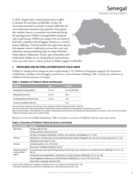
In 2016, Senegal made a minimal advancement in efforts to eliminate the worst forms of child labor. In June, the Government launched an initiative to remove tailbés from the street and prosecute marabouts that perpetrate crimes against their studen
...
ts; however, no marabouts were prosecuted during the reporting period. Children in Senegal perform dangerous tasks in gold mining. Children also engage in the worst forms of child labor, including in forced begging, sometimes as a result of human trafficking.
more
Communication to Healthcare Professionals Mar-2020
This guideline is intended to assist healthcare professionals in the participation of very important process of continuous surveillance of safety and efficacy of the health products which are used in their clinical practice. Continuous evaluation o
...
f medicines’ benefit and harm help to achieve the ultimate goal of safe and effective treatments available to patients.
The guideline is intended to assist healthcare professionals in the reporting of suspected adverse drug reactions (ADRs) associated with the use of all registered health products, including medicines, old medicines, medical devices and in-vitro diagnostics (IVDs).
more
Introduction Pharmacovigilance (PV) systems to monitor drug and vaccine safety are often inadequate in sub-Saharan
Africa. In Malawi, a PV enhancement initiative was introduced to address major barriers to PV.
Objective The objective of this initiative was to improve
...
reporting of adverse events (AEs) by strengthening passive safety
surveillance via PV training and mentoring of local PV stakeholders and healthcare providers (HCPs) at their own healthcare
facilities (HCFs).
Methods An 18-month PV training and mentoring programme was implemented in collaboration with national stakeholders,
and in partnership with the Ministry of Health, GSK and PATH. Two-day training was provided to Expanded Programme on
Immunisation coordinators, identified as responsible for AE reporting, and four National Regulatory Authority representa-
tives. Abridged PV training and mentoring were provided regularly to HCPs. Support was given in upgrading the national
PV system. Key performance indicators included the number of AEs reported, transmission of AE forms, completeness of
reports, serious AEs reported and timeliness of recording into VigiFlow.
Results In 18 months, 443 HCPs at 61 HCFs were trained. The number of reported AEs increased from 22 (January 2000 to
October 2016) to 228 (November 2016 to May 2018), enabling Malawi to become a member of the World Health Organization
Programme for International Drug Monitoring. Most (98%) AE report forms contained mandatory information on reporter,
event, patient and product, but under 1% were transmitted to the national PV office within 48 h.
Conclusion Regular PV training and mentoring of HCPs were effective in enhancing passive safety surveillance in Malawi,
but the transmission of reports to the national PV centre requires further improvement.
more
Document No. : FDA/SMC/SMD/GL-RAR/2013/01
3rd edition. In 2001, Uganda adapted the Integrated Disease Surveillance and Response (IDSR) developed by World Health Organization (WHO) for member states in African region. The Ministry of Health has been implementing the IDSR strategy since then with success across the country. This strategy prov
...
ides the opportunity for rational use of resources and maximises investments in health surveillance systems. The 3rd edition IDSR guidelines incorporates lessons learnt from previous
epidemics, new frameworks like the Global Health Security Agenda (GHSA), One Health, Disaster Risk Management (DRM), the WHO regional strategy for health security and emergencies, and the rising non-communicable diseases, and aims to strengthen implementation of IHR (2005) core surveillance and response capacities. These guidelines have been adapted to reflect national priorities, policies and public health structures; and shall be used in conjunction with other similar
guidelines/strategies or initiatives.
Overall, the 3rd edition technical guidelines will incorporate the following:
• Strengthening Indicator Based Surveillance
• Strengthening Event Based Surveillance
• Improving community-based disease surveillance
• Improving Cross Border Surveillance and response
• Scaling up e-IDSR implementation
• Improving reporting and information sharing platforms
• Improved data sharing across sectors
• Tailoring IDSR to Emergency or Disaster contexts
The 3rd edition guidelines are intended for use as:
• A general reference for surveillance activities across all levels
• A set of definitions for thresholds that trigger some action for response
• A stand-alone reference for level-specific guidelines on surveillance and response
• A resource for developing training, supervision and evaluation of surveillance activities
• A guide for improving early detection and preparedness for outbreak response.
more
Disaster Preparedness Training Programme
Module 5
Monitoring and Evaluation
October 2018
Module 5: Monitoring and evaluation. This module is for people responsible for monitoring PrEP programmes at the national and site levels. It provides information on how to monitor PrEP for safety and effectiveness, suggesting core and additiona
...
l indicators for site-level, national and global reporting.
more
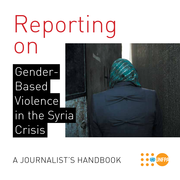
Reporting on Gender-Based Violence in Syria Crisis: A Journalist's Handbook [EN/AR]
UN Population Fund
(2015)
UNFPA launches Journalist’s Handbook: Reporting on Gender-Based Violence in Syria Crisis
Amman, 9 March 2015 – Under the patronage of Her Royal Highness Princess Rym Ali, UNFPA launched a handbook on
...
Reporting on Gender-Based Violence in the Syria Crisis to help journalists better understand issues surrounding gender-based violence (GBV) and to write about it more effectively and sensitively.
more
This is a detailed manual giving a step by step approach to undertaking the pharmacovigilance of antiretrovirals. It is intended to be a source of practical advice for Pharmacovigilance Centres and health professionals involved in HIV/AIDS prevention and treatment programmes. A number of WHO publica
...
tions are available that provide a background to pharmacovigilance and, as far as possible, that material will not be repeated here. Health officials, planners, the staff of Pharmacovigilance Centres, public health teams and all health workers should become familiar with these publications, which are: • Safety of Medicines: A guide to detecting and reporting adverse drug reactions
more
Version 1.0, 2014-11-21
Introduction:
This document lists TB indicators that can be derived from the recording and reporting tools defined
in Definitions and reporting framework for tuberculosis
...
– 2013 revision (WHO/HTM/TB/2013.2).
Geneva, World Health Organization; 2013. (http://www.who.int/tb/publications/definitions/en/).
More details on the rationale, calculation and use of these indicators are available in the following
publications:
• Understanding and using tuberculosis data (WHO/HTM/TB/2014.09). Geneva, World Health
Organization. 2014.
(http://www.who.int/tb/publications/understanding_and_using_tb_data/en/)
• Companion handbook to the WHO guidelines for the programmatic management of drugresistant
tuberculosis (WHO/HTM/TB/2014.11). Geneva, World Health Organization. 2014.
(http://www.who.int/tb/publications/pmdt_companionhandbook/en/)
• A guide to monitoring and evaluation for collaborative TB/HIV activities: 2014 revision. Geneva,
World Health Organization. 2014.
more
ERJ Open Res 2017; 3: 00002-2017
Reporting on Gender-Based Violence in Syria Crisis: A Journalist's Handbook
U N Population Fund
(2015)
The handbook is the first comprehensive collection of practical tips for journalists on how to report on GBV in the context of Syria crisis, building upon internationally recognised ethical principles. It gives an overview of techniques to guarantee the safety, confidentiality and dignity of survivo
...
rs, their families and communities. It includes terms, ethical questions and practical concerns associated with covering GBV, as well as an overview of some of the organisations involved in both combatting GBV and providing support services for survivors.
more
