Filter
374
Text search:
needle
exchange
Featured
25
119
Language
Document type
301
25
24
16
2
2
2
1
1
Countries
42
14
13
11
11
9
8
8
7
7
7
7
7
5
5
4
4
4
4
4
3
3
3
3
3
3
3
2
2
2
2
2
2
2
1
1
1
1
1
1
1
1
1
1
1
1
1
1
1
1
1
Authors & Publishers
Publication Years
Category
142
30
12
11
7
5
2
Toolboxes
107
30
29
9
8
7
6
5
4
3
3
3
3
3
1
1
1
1
The new WHO guidelines provide recommended steps for safe phlebotomy and reiterate accepted principles for drawing, collecting blood and transporting blood to laboratories/blood banks.
Zule et al. Harm Reduction Journal (2018) 15:44 https://doi.org/10.1186/s12954-018-0249-3
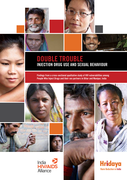
Findings from a cross-sectional qualitative study of HIV vulnerabilities among People Who Inject Drugs and their sex partners in Bihar and Manipur, India. The study is one of the first qualitative comparative studies to seek an in-depth understanding of the vulnerabilities to HIV acquisition among P
...
Q 6. Does the provision of sterile injection equipment to injecting drug users reduce injecting related harm? Is advice on ways to reduce drug related harm safe and effective, using an outreach model of service delivery?
Harm reduction: evidence, impacts and challenges
-10-

Policy Brief, Updated in March 2017
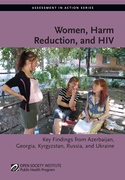
Assessment in action series
Key Findings from Azerbaijan, Georgia, Kyrgyzstan, Russia, and Ukraine
Writing by Katya Burns
Editing by Paul Silva and Roxanne Saucier
Integrated HIV Behavioral and Serologic Surveillance

Evaluation report
September 2014