
Filter
1802
Text search:
livelihoods
Featured
126
555
Language
Document type
934
435
122
114
75
47
38
25
4
3
3
2
Countries
100
89
71
64
61
52
51
41
39
38
37
36
35
35
32
28
26
26
25
25
24
23
21
21
20
18
16
16
15
14
14
14
14
14
14
14
13
13
13
12
11
11
11
11
10
10
9
9
7
7
7
7
7
6
6
6
6
5
5
5
5
5
4
4
4
4
4
4
3
3
3
3
3
3
3
3
3
3
3
3
2
2
2
2
2
2
2
2
2
2
2
2
2
2
2
1
1
1
1
1
1
1
1
1
1
1
1
1
1
1
1
1
1
1
1
1
1
1
1
1
1
1
Authors & Publishers
Publication Years
Category
709
123
61
44
22
15
8
1
Toolboxes
259
192
169
104
102
94
85
63
55
48
33
25
19
16
14
11
6
6
6
4
3
3
2
2
1
This plan guides FAO’s response to prevent the levels of food insecurity and malnutrition from worsening. It sets out key emergency agricultural livelihood interventions to be implemented within the framework of the 2018 Yemen Humanitarian Response Plan (HRP)
The study on refugee economies shows that refugees and former refugees are contributing positively to Zambia’s economy in various ways and have the potential to contribute even further if legal and other obstacles are removed.
The study targeted mainly Congolese, Burundian, Somali, and Rwandan re
...
Strengthening resilient agricultural livelihoods
Level 3 responses are activated in the most complex and challenging humanitarian emergencies, when the highest level of mobilization is required across the humanitarian system. Even before the confli
...
The situation in South Sudan has proven to be unpredictable and volatile. New hotspots of violent conflict and civil unrest have continued to emerge and levels of severe acute food insecurity have become progressively worse. In addition to years of fighting and political instability, the country fac
...
This manual aims to provide practical guidance to field workers in order to maximise the nutritional impact of food security & livelihoods (FSL) interventions. This requires the systematic use of a ‘nutrition lens’ at each step of the project cy
...
This survey of agricultural livelihoods and food security in the context of the impact of coronavirus disease 2019 (COVID-19) and other shocks was undertaken during February 2021 by the Food and Agriculture Organization of the United Nations (FAO) i
...
The number of new Ebola infections in Sierra Leone is declining, despite the outbreak continuing to claim lives. New cases have dropped to around 9-12 per week, according to recent WHO figures. There were over 500 cases per week at the height of the crisis around late November 2014.
The impact on t
...
17 February 2021
During the second joint meeting of African ministers responsible for health, ICT and transport on the rollout of the Africa Against COVID-19: Saving Lives, Economies and Livelihoods campaign, a call was made to African countries to
...
In 2018, the Food and Agriculture Organization of the United Nations (FAO) in South Sudan must respond to the highest levels of food insecurity ever recorded in the country. To address this challenge, FAO revised its multiyear Emergency Livelihood Response Programme (ELRP) to enable rapid food produ
...
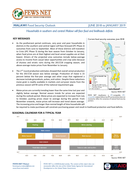
MALAWI Food Security Outlook JUNE 2018 to JANUARY 2019
As the postharvest period continues, very poor and poor households in districts in the southern and central region will face Stressed (IPC Phase 2) outcomes from June to September. Most of these districts will transition to Crisis (IPC Pha ...
As the postharvest period continues, very poor and poor households in districts in the southern and central region will face Stressed (IPC Phase 2) outcomes from June to September. Most of these districts will transition to Crisis (IPC Pha ...

Looking forward, the 2019-2020 Regional Refugee Response Plan (RRRP) for the DRC situation aims at addressing the needs of new arrivals of Congolese refugees in the region, and those in protracted situations. By supporting livelihoods opportunities
...
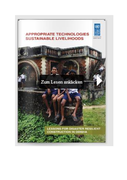
This publication outlines results from a UNDP partnership with the Government of Odisha, supported by the Swiss Agency for Development and Cooperation and Care Today that demonstrated how low-cost, disaster-resilient building technologies enabled communities to build structures that could better wit
...
Currently, Mauritius and Seychelles have 85 and 82 percent vaccination rates, respectively, surpassing the 70 percent target set by the WHO in 2021. Countries that have attained vaccination rates of between 50 and 70 percent include Liberia
at 67 percent, Rwanda at 66 percent, Morocco at 62 percent
...

Despite improvements in recent years, the prevalence of undernutrition among women and children in Myanmar remains unacceptably high. One in three children are stunted and about 8% are acutely malnourished. Micronutrient deficiencies are common among infants, young children and pregnant women. In fa
...
Five months after the beginning of the desert locust upsurge in the Greater Horn of Africa and Yemen, and four months since the launch of the response plan (24 January 2020) a total of USD 130 million have been mobilized in the region.
As described in the recently published Food and Agriculture Org
...
Updated version June 2015

This guidance document is meant to support practitioners working in disaster prone contexts to develop and implement more effective integrated resilience programming. It promotes programming that cuts across different fields of work like rights awareness, food security, emergency preparedness,
...
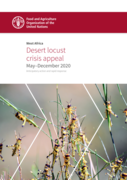
Recent forecasts by the Food and Agriculture Organization of the United Nations (FAO) have indicated a risk of locust invasion in West Africa from June 2020. From East Africa, some swarms could reach the eastern part of the Sahel and continue westwards from Chad to Mauritania.
Surveillance and co
...
