
Filter
343
Text search:
genital
cutting
Featured
31
119
Language
Document type
226
50
30
14
8
5
3
3
3
1
Countries
19
17
16
15
13
13
11
8
8
8
7
6
5
5
4
4
4
4
3
3
3
3
3
2
2
2
2
2
2
1
1
1
1
1
1
1
1
1
1
1
1
1
1
1
1
1
1
1
1
1
1
Authors & Publishers
Publication Years
Category
161
86
19
16
16
8
3
Toolboxes
26
19
12
11
10
9
7
5
5
3
3
2
1
1
1
1
Lessons from a decade of Progress
This report is a comprehensive statistical overview of female genital mutilation/cutting (FGM/C) in the 29 countries where the practice is concentrated. Analysis of the data reflects current perspec
...
Journal of Biosocial Science / Volume 34 / Issue 04 / October 2002, pp 525 - 539
DOI: DOI:10.1017/S0021932002005254, Published online: 24 September 2002
This paper examines determinants of one aspect of sexual behaviour – coital frequency – among 2188 married women in the Central African Re
...
The coronavirus disease 2019 (COVID-19) pandemic has created a global and gendered crisis that is compounding existing inequalities and disproportionately affecting girls and women. Emerging evidence from the COVID-19 crisis in 2020 shows school closures, disruptions in essential services and rising
...
This regional action plan provides a broad framework for the regional level to assist governments in accelerating the implementation of existing international, regional and national commitments on ending FGM. Formulating the plan has provided an opportunity for the region to identify broad prioritie
...
This handbook is for health care providers involved in the care of girls and women who have been subjected to any form of female genital mutilation (FGM). This includes obstetricians and gynaecologists, surgeons, general medical practitioners, midwi
...
Female genital mutilation is a harmful traditional practice that violates girls’ right to health
and overall well-being. Most research cites social acceptance, marriageability, community
belonging, proof of virginity, curbing promiscuity, hygien
...
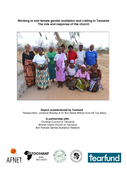

The coronavirus disease 2019 (COVID-19) pandemic has created a global and gendered crisis that is compounding existing inequalities and disproportionately affecting girls and women. Emerging evidence from the COVID-19 crisis in 2020 shows school closures, disruptions in essential services and rising
...
In recognition that Female Genital Mutilation (FGM) is not only a harmful practice but a violation of human rights, Kenya has adopted a robust legal framework. The country has ratified several international legal instruments that have become part of
...
Evidence shows that FGM can cause several physical, mental and sexual health complications in girls and women, and in newborns. Health-care providers play an important role in supporting girls and women living with FGM, and improving their health and well-being. They are in a unique position to infl
...
Despite the existence of criminal law, which is an important aspect of anti-FGM policies and programmes, there is not much research on the effects of cross-border practices that invalidate the law as a deterrent. Much remains unknown about the practice of cross-border FGM, specifically about gaps in
...
Female genital mutilation/cutting (FGM/C) refers to “all procedures involving partial
or total removal of the female external genitalia or other injury to the female
...
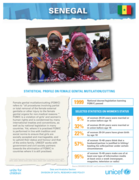
Female genital mutilation/cutting (FGM/C) refers to “all procedures involving partial or total removal of the female external genitalia or other injury to the female
...
Understanding and addressing violence against women
Female Genital Mutilation in Mali: Insights from a statistical analysis Mali is home to nearly 8 million girls and women who have experienced FGM. Overall, 89 per cent of girls and women aged 15 to 49 years have undergone the practice, ranging from
...
