Filter
270
Text search:
chemical
incidents
Featured
32
76
Language
Document type
155
41
37
22
10
2
1
1
1
Countries
20
10
10
8
7
7
6
5
4
4
4
4
3
3
3
2
2
2
2
2
2
2
1
1
1
1
1
1
1
1
1
1
1
1
1
1
1
1
1
Authors & Publishers
Publication Years
Category
74
29
11
10
10
5
3
Toolboxes
52
37
29
14
12
11
10
10
9
8
6
5
4
2
2
2
1
1
1
1
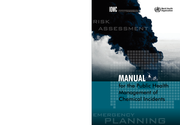
The purpose of the WHO Manual for the Public Health Management of Chemical Incidents is to provide a comprehensive overview of the principles and roles of public health in the management of
...
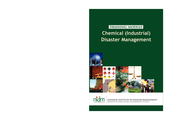
Key Features:
• Module Users: Disaster Management Trainers
• Training Targets: State Government and District
officials / Disaster Management Authorities / Disaster
Management Planners and Responders
• Training Duration: 5 working days (one week)
• Trainers Input: Multi-disciplinary
â€
...
Specific Objectives
• To increase the knowledge and awareness of personnel on chemical management.
• To educate the personnel on the potential adverse health effects of chemical exposure.
•
...
"National Disaster Management Guidelines: Management
of Chemical (Terrorism) Disasters (are intended to
focus on all aspects of the disaster management
cycle, including prevention measures such as
surveillance and intelligence, mitigation of dir
...
In 2005, the World Health Organization (WHO) Member States adopted the revised International
Health Regulations (IHR) (2005). The Regulations provide a unique public health framework in the
form of obligations and recommendations that enable countries to better p
...
The message contained in this publication is clear: countries need a
public health system that can respond to the deliberate release of
chemical and biological agents. Regrettable though this message may
be, the use of poison gas in the war betwe
...
2nd edition. The purpose of the WHO human health risk assessment toolkit: chemical hazards is to provide its users with guidance to identify, acquire and use the information needed to assess chemical
...
This Guide contains information, guidelines, diagrams and other materials addressed to medical practitioners who are engaged in the treatment of casualties of chemical weapons. It is made available to the public for information purposes, but is not
...
The Agency for Toxic Substances and Disease Registry (ATSDR) has produced a three-volume series entitled Managing Hazardous Material Incidents. The series is designed to help emergency response and health care professionals plan for and respond to h
...
The Syrian Government’s Widespread and Systematic Use of Chemical Weapons
"Patient decontamination principles are set forth here from a strategic perspective, rather than a tactical
one. The principles are meant to guide, but not specify, operational practices. The guidance is evidencebased
to the extent possible and the supporting evidence is documented and briefly dis
...
This manual describes methods for investigating clusters or outbreaks that may be of chemical origin and describes the importance of a structured, coordinated, collaborative multidisciplinary, multi-agency approach at local, regional, national and i
...
"This Code provides practical guidance on how to manage health and safety risks associated with hazardous
chemicals for persons conducting a business or undertaking who use chemicals in their workplace."
This document provides information for WHO Member States, particularly low-income and middle-income countries, to strengthen preparedness and response plans with regard to the social and mental health consequences of biological and chemical attacks.
...

"The aim of this book remains as for the first edition, namely to provide an initial point of ready
reference for the identification of hazards and precautions for dangerous chemicals. It is targeted
not only at those in the chemical and process i
...


IAEA Safety Standards for protecting people and the environment
This course describes the health effects of war, weapons and strategies of violent conflict. Beginning with weapons of mass destruction it then moves on to other weapons and strategies of war such as the use of landmines and mass rape. The course concludes with a number of lessons which give an hist
...