Filter
1376
Text search:
Vector
Control
Featured
131
450
Language
Document type
703
275
177
70
68
26
21
16
9
6
1
1
Countries
80
49
43
31
29
28
28
24
21
19
19
17
17
16
16
15
15
14
14
13
13
13
12
12
12
12
11
11
11
10
10
10
9
8
8
8
8
7
7
6
6
5
5
5
5
5
5
4
4
4
4
3
3
3
3
3
3
3
3
3
3
3
3
3
2
2
2
2
2
2
2
2
2
2
2
2
2
2
2
2
2
2
2
2
2
2
1
1
1
1
1
1
1
1
1
1
1
1
1
1
1
1
1
1
1
1
1
1
1
Authors & Publishers
Publication Years
Category
492
140
125
65
23
22
18
2
Toolboxes
161
146
133
112
103
43
38
28
20
16
16
14
13
11
10
10
9
7
6
5
4
2
1
1

The Global vector control response 2017–2030 (GVCR) provides a new strategy to strengthen vector cont
...
The intention of this handbook on integrated vector management (IVM) is to provide
guidance to the managers of vector-borne disease control progra
...
This toolkit for integrated vector management (IVM) is designed to help national and regional programme managers coordinate across sectors to design and run large IVM programmes.
The toolkit provides the technical detail required to plan, imple ...
The toolkit provides the technical detail required to plan, imple ...
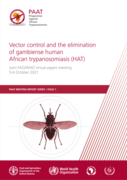
The main purpose of the meeting was to review tsetse control tools, activities and their contribution to the elimination of gHAT and the monitoring thereof. Seven endemic countries provided reports on recent and ongoing
...

Despite the significant role of vector control in national leishmaniasis control programmes, the programmatic community perceives
...
Guidelines for malaria vector control
recommended
these guidelines are updated on 16 February 2021
Please check the new guideline here
https://medbox.org/document/who-guidelines-for-malaria#GO

This document compiles the recommendations made by the World Health Organization (WHO) and the Pan American Health Organization (PAHO) to help professionals in charge of vector control programs in L
...
Vector-borne diseases are responsible for 17% of the global burden of communicable diseases and more than 500 000 deaths annually. The ambitious global targets for the control of
...
El presente documento reúne un conjunto de recomendaciones formuladas por la Organización Mundial de la Salud (OMS) y la Organización Panamericana de la Salud (OPS) para ayudar, a los profesionales encargados de los programas de control de vector
...
The document explains why vector control is important in national programmes and describes the preparation of a tailor-made vector
...
This document outlines the evaluation process that WHO undertakes to assess novel tools and strategies targeted at VBDs. Its aim is to articulate the linkage between the generation of evidence that demonstrates public health impact of novel interventions, and the development of policy recommendation
...

The purpose of this handbook is to provide guidance to Member States on the practical aspects of maintaining sanitary standards at international borders at ports, airports, and ground crossings (points of entry) as set out in the International Health Regulations (2005). It provides technical advice
...

The primary audience for this guidance is persons
working directly in vector-borne disease prevention
and control, including programme managers,
researchers and field workers. A brief technical
...
Training module on malaria control
Sleeping sickness is controlled by case detection and treatment but this often only reaches less than 75% of the population. Vector control is capable of completely interrupting HAT transmission but
...