
Filter
100
Text search:
Soil-transmitted
helminthiasis
Featured
5
18
Language
Document type
33
30
12
11
4
3
2
1
1
1
1
1
Countries
22
3
3
3
3
2
2
2
2
2
2
2
1
1
1
1
1
1
1
1
1
1
1
1
1
1
1
1
1
1
Authors & Publishers
Publication Years
Category
27
11
6
4
3
2
1
Toolboxes
49
4
1
1
1
1
1
1
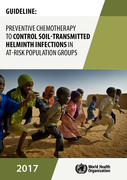
Preventive chemotherapy to control soil-transmitted helminth infections in at-risk population groups
recommended
Treating children infected with intestinal worms is one of the simplest and most cost–effective ways to improve their health.
The recommendations are intended for a wide audience, including policy-makers and their expert advisers as well as technical and programme staff at government institution
...
As a high-burden neglected tropical disease, soil-transmitted helminth (STH) infections remain a major problem in the world, especially among children under five years of age. Since young children a
...

Soil-transmitted helminths are a group of intestinal worms that include Ascaris lumbricoides (giant roundworm), Trichuris trichiura (whipworm), and Ancylostoma spp. (A. duodenale, A. ceylanicum) and
...

Background: Despite several cycles of Mass Drug Administration (MDA), however, the prevalence of Soil-transmitted helminthiasis (STH) remains high
...
Coordinated Use of Anthelminthic Drugs in Control Interventions: a Manual for Health Professionals and Programme Managers
Infections by the soil-transmitted helminths (STH), including Ascaris lumbricoides, Trichuris trichiura, Ancylostoma duodenale/Necator americanus (hookworms), and Strongyloides stercoralis, dispropo
...
Soil transmitted helminth (STH) infections are among the most common human infections worldwide with over 1 billion people affected. Many estimates of STH infection are often based on school-aged ch
...
Schistosomiasis and soil-transmitted helminths (STH) infections are major public health problems. We aimed to study the 6-mo impact of mass drug administration with praziquantel and albendazole on u
...
Soil-transmitted helminth (STH) infections are among the most common infections worldwide with an estimated 1.5 billion infected people or 24% of the world’s population. These infections affect th
...
Soil-transmitted helminth (STH) infections are among the most common infections worldwide and affect the poorest and most deprived communities. They are transmitted by eggs present in human faeces w
...
Diagnostic performance, cost-effectiveness, ease of performance, rapidity and in-field applicability of tests for Soil-transmitted helminth infections.
Soil-transmitted helminths (STH) affect 1.45 billion people worldwide, and high intensity infections are associated with anemia, undernutrition and impaired cognition, particularly among children. M
...

Human schistosomiasis is caused mainly by 3 schistosome species: Schistosoma haematobium, S. mansoni and S. japonicum. S. guineensis, S. intercalatum and S. mekongi have a highly localized distribution in Central Africa and along the Mekong River in South-East Asia, respectively.
...
Website last accessed on 24.03.2023
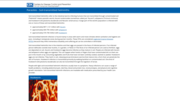
Education and information about Soil-Transmitted Helminths including Human Hookworm, Roundworm and Whipworm.
Website last accessed on 31.03.2023
Youtube Video (Explainity)
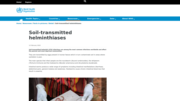
oil-transmitted helminth (STH) infections are among the most common infections worldwide and affect the poorest and most deprived communities.
They are transmitted by eggs present in human faeces which in turn contaminate soil in areas where sanitation is poor.
The main species that infect peopl
...
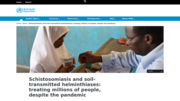
Despite pandemic-related disruptions, a total of 76.9 million people received treatment for schistosomiasis in 2020, representing a global coverage of 31.9%, compared with 105 million treated in 2019 (coverage of 44.8%).
The latest data published by the World Health Organization (WHO) show that 2
...
A MANUAL FOR WASH IMPLEMENTERS, BOTSWANA
Sightsavers | Department for International Development | The International Trachoma Initiative | Children Without Worms | WaterAid | WASH Advocates | Center for Global Safe Water, Emory University | CARE USA
