
Filter
175
Text search:
Pets
Featured
15
35
Language
Document type
83
34
27
11
10
3
2
2
1
1
1
Countries
13
12
7
6
5
4
3
3
3
2
2
2
2
2
2
2
2
2
2
2
2
1
1
1
1
1
1
1
1
1
1
1
1
1
1
1
1
1
1
1
1
1
1
1
1
1
1
Authors & Publishers
Publication Years
Category
57
9
9
4
3
2
Toolboxes
20
17
15
11
11
10
8
7
7
6
6
4
4
4
4
3
2
2
1
1
1
1
This document addresses the risk of Ebola virus disease (EVD) to household pets, including dogs, and what, if any role, they may play in EVD transmission.
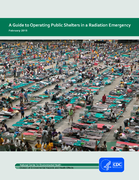
This guide is intended for shelter operators, planners, and staff, as well as emergency managers, public health professionals, and radiation protection professionals who participate in shelter planning and could be called upon to support shelter operations. This guide provides information on the inc
...
Cases of monkeypox (MPX) acquired in the EU have recently been reported in nine EU Member States (Austria, Belgium, France, Germany, Italy, Portugal, Spain, Sweden, and the Netherlands).
Monkeypox (MPX) does not spread easily between people. Human-to-human transmission occurs through close contact
...
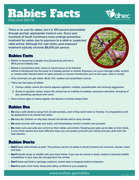
There is no cure for rabies, but it is 100 percent preventable through prompt, appropriate medical care. Every year hundreds of South Carolinians must undergo preventive treatment for rabies due to exposure to a rabid or suspected rabid animal. Although the cost varies, post-exposure treatment typic
...
The article "Asthma in South African adolescents: a time trend and risk factor analysis over two decades" investigates the prevalence and risk factors for asthma in Cape Town adolescents from 2002 to 2017. The study finds that while the overall prevalence of asthma remained similar, the severity of
...
Rabies is a fatal but preventable viral disease. It can spread to people and pets if they are bitten or scratched by a rabid animal. In the United States, rabies is mostly found in wild animals like bats, raccoons, skunks, and foxes. However, in man
...
Rabies is transmitted when saliva or neural tissue of an infected animal is introduced into the body. Exposure can occur through a bite, scratch, or contact with saliva to broken skin or mucous membranes such as the eyes or mouth, BUT rabies is preventable! Vaccinations for your
...
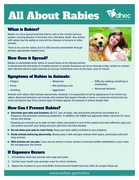
Rabies is a virus (Lyssavirus) that infects cells in the central nervous
system, causing disease in the brain and, ultimately, death. Any animal
with rabies has the ability to transmit the disease to humans or other
animals.
There is no cure for rabies, but it is 100 percent preventable through
...

As information about COVID-19 is rapidly evolving, it can be challenging to navigate and synthesize all of the information. The purpose of this document is to provide a synthesized, indexed reference of accurate, standardized COVID-19 information from trustworthy sources. Information is presented in
...
Handbook of Foodborne Pathogenic Microorganisms and Natural Toxins
The extensive use of antimicrobials in human and veterinary medicine in recent years has accelerated the emergence and spread of resistant microorganisms. This situation has been worsened by the lack of investment in developing new effective antibiotics. The severity of the consequences is clear to
...
Staying safe in spite of a disaster. What can you do for your safety in the event of a disaster?
In spring 2013, after weeks of rain, whole areas of southern, eastern and northern Germany were beset by catastrophic floods. Settlements vanished in th
...
Here are the answers to the most common queries about the novel coronavirus based on our discussion with the various experts from the reputed institutes and analysis of the CDC, WHO, and MoHFW guidelines.

Deutsch lernen
recommended
Jeder ehrenamtliche Helfer in und um Würzburg kann sich an Standpunkt e.V. wenden und kostenlos Skripte bekommen. Schreibt dazu bitte eine Mail an info@standpunkt-ev.de

Deutsch lernen. Farsi
recommended
Jeder ehrenamtliche Helfer in und um Würzburg kann sich an Standpunkt e.V. wenden und kostenlos Skripte bekommen. Schreibt dazu bitte eine Mail an info@standpunkt-ev.de
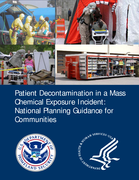
"Patient decontamination principles are set forth here from a strategic perspective, rather than a tactical
one. The principles are meant to guide, but not specify, operational practices. The guidance is evidencebased
to the extent possible and the supporting evidence is documented and briefly dis
...
