
Filter
49
Text search:
BMJ
PACK
Featured
2
3
Language
Document type
19
10
7
7
2
2
1
1
Countries
3
2
2
2
2
2
2
1
1
1
1
1
1
1
1
1
Authors & Publishers
Publication Years
Category
15
10
5
5
1
Toolboxes
8
6
4
4
3
3
1
1
1
For the primary health worker in a low/middle-income country (LMIC) setting, delivering quality primary care is challenging. This is often complicated by clinical guidance that is out of date, inconsistent and informed by evidence from high-income countries that ignores LMIC resource constraints and
...
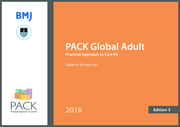
The Practical Approach to Care Kit (PACK) is a health systems improvement programme designed to support the work of primary care health workers in underserved communities (like doctors, nurses, midwives, health officers, community health practitione
...
Practical Approach to Care Kit
Kit de Cuidados em Atenção Primária
Guia de manejo clínico da COVID 19 para Atenção Primária
O PACK Brasil é uma parceria entre a Unidade de Tradução do Conhecimento (KTU), Secretaria Municipal de Saúde d
...
Practical Approach to Care Kit
Kit de Cuidados em Atenção Primária
Guia de manejo clínico da COVID 19 para Atenção Primária
O PACK Brasil é uma parceria entre a Unidade de Tradução do Conhecimento (KTU), Secretaria Municipal de Saúde d
...
PACK Nigeria (Adult and Child) provides a single, integrated, comprehensive, evidence-informed clinical guide to support all cadres working in primary healthcare in Nigeria: i.e. junior community health extension workers (JCHEWs), community health e
...
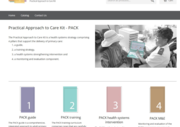
The Practical Approach to Care Kit is a health systems strategy comprising 4 pillars that support the delivery of primary care:
a guide,
a training strategy,
a health systems strengthening intervention and
a monitoring and evaluation component.
BMJ 2020; 370 doi: https://doi.org/10.1136/bmj.m3026 (Published 11 August 2020)
The BMJ "practice pointer" inlcudes a one-page visual summary of a
...
Asthma is the most common noncommunicable disease in children, and among the most common in adults. According to the most recent estimates from the Global Asthma Network Phase I study, around one in 10 children and adults have symptoms of asthma and one in 20 school-aged children have severe asthma
...
second edition
Included more self-measured blood pressure (SMBP)-focused content with tools and resources.
Showcased more tools to find patients with potentially undiagnosed HTN.
Added new strategies that focus on chronic kidney disease testing and identification.
A global call to action to protect the mental health of health and care workers
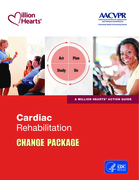
This Cardiac Rehabilitation Change Package was completed by the Centers for Disease Control and Prevention (CDC) in collaboration with the American Association of Cardiovascular and Pulmonary Rehabilitation (AACVPR) with the purpose of helping cardiac rehabilitation programs, hospital quality improv
...
Updated Guidelines
This paper provides case studies of several food product improvement policies from across the WHO European Region. The aim is to share country experience, assess the various merits of the different approaches, discuss lessons learned, and provide guidance for best practice that may be more widely ap
...

African Journal of Emergency Medicine
Volume 11, Issue 1, March 2021, Pages 132-139
Asthma is the most common non-communicable disease in children and remains one of the most common throughout the life course. The great majority of the burden of this disease is seen in low-income and middle-income countries (LMICs), which have disproportionately high asthma-related mortality relati
...
Consolidated recommendations for palliative care in the SARS pandemic-Cov-2/COVID-19 2020
The Practical Approach to Emergencies in the Pregnant Mother, Newborn infant and Child. Provder Manual

In 2016, the risk of premature mortality1 from noncommunicable diseases (NCDs) in Ethiopia was 18.3%. The economic costs of NCDs are significant and are due principally to their impact on the non-health sector (reduced workforce and productivity). In this study, it is estimated that NCDs cost Ethiop
...
Caregiver Part 1: Key Resources
recommended
May 17,2022 MEDBOX Issue Brief no.21
