
Filter
19
Text search:
M.
Vicari
Featured
Recommendations
2
New Publications
3
Language
Document type
No document type
7
Studies & Reports
4
Guidelines
3
Manuals
2
Strategic & Response Plan
2
Training Material
1
Countries / Regions
Guinea
1
Somalia
1
Western and Central Europe
1
Global
1
Authors & Publishers
Publication Years
Category
Clinical Guidelines
3
Countries
2
Public Health
1
Key Resources
1
Toolboxes
HIV
10
Ebola
2
Rapid Response
2
COVID-19
2
Mental Health
1
Planetary Health
1
Supplement Article
J Acquir Immune Defic Syndr Volume 78, Supplement 1, August 15, 2018 www.jaids.com
Supplement Article
www.jaids.com J Acquir Immune Defic Syndr Volume 78, Supplement 1, August 15, 2018
The Lancet. Published Online December 22, 2016 http://dx.doi.org/10.1016/S0140-6736(16)32621-6. Open Access
PLOS Medicine | https://doi.org/10.1371/journal.pmed.1002514 March 1, 2018
the Lancet : Published Online July 31, 2015 http://dx.doi.org/10.1016/S0140-6736(15)61117-5
Supplement Article
J Acquir Immune Defic Syndr Volume 78, Supplement 1, August 15, 2018 www.jaids.com
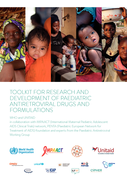
WHO and UNITAID
in collaboration with IMPAACT (International Maternal Pediatric Adolescent AIDS Clinical Trials) network, PENTA (Paediatric European Network for Treatment of AIDS) foundation and experts from the Paediatric Antiretroviral Working Group
Supplement Article
www.jaids.com J Acquir Immune Defic Syndr Volume 78, Supplement 1, August 15, 2018
orientaciones provisionales, 8 de noviembre de 2020
This interim guidance is most useful for countries interested in monitoring relative circulations of influenza and SARS-CoV-2 viruses. The document provides practical information to maintain surveillance of influenza and monitor SARS-CoV-2 using e
...
his guidance provides interim guidance for the integration of SARS-CoV-2 and influenza virologic and genomic surveillance, from sentinel site case enrolment and sampling to the eventual sharing of the virus sequence data, a process known as end-to-end surveillance. This guidance builds on experience
...
This report of the EFSA and ECDC presents the results of zoonoses monitoring activities carried out in 2020 in 27 EU Member States (MS) and nine non-MS. Key statistics on zoonoses and zoonotic agents in humans, food, animals and feed are provided and interpreted historically.
Through technical consultations with countries and partners, WHO has led the development of Preparedness and Resilience for Emerging Threats Module 1: Planning for respiratory pathogen pandemics. Version 1.0. The Module, currently available as an advanced draft, builds on previous pandemic lessons a
...
Supplement Article
www.jaids.com J Acquir Immune Defic Syndr Volume 78, Supplement 1, August 15, 2018

Cryptococcal disease is one of the most common opportunistic infections among people living with advanced HIV disease and is a major contributor to severe illness, morbidity, and mortality, particularly in sub-Saharan Africa.
These guidelines update the recommendations that were first released i
...

Accessed: 19.10.2019

Cholera is an acute gastrointestinal infection caused by the bacterium Vibrio Cholerae serogroup O1 or O139, and is often linked to unsafe drinking water, lack of proper sanitation and personal hygiene. It adversely affects mostly the poor and vulnerable populations in countries, which are already d
...
Supplement Article
J Acquir Immune Defic Syndr Volume 78, Supplement 1, August 15, 2018 www.jaids.com
Genomic sequencing has been an essential tool in generating virological data, driving the laboratory response, and better understanding the dispersal and evolutionary patterns of SARS-CoV-2. In addition to the characterization of the global circulation patterns, early detection of SARS-CoV-2 variant
...
La méningite est mortelle et débilitante ; elle frappe brutalement ; elle a de graves conséquences sanitaires, économiques et sociales et touche tous les âges de la vie dans tous les pays du monde. La méningite bactérienne peut être à l’origine d’épidémies, entraîner la mort dans les
...
