
Filter
2253
Text search:
empowerment
Featured
134
673
Language
2107
71
44
38
24
18
10
8
8
3
3
3
3
2
2
2
2
2
2
2
2
2
2
2
1
1
1
1
1
1
1
1
1
1
1
1
1
1
1
1
1
Document type
1504
330
138
101
83
39
26
11
5
5
5
2
1
1
Countries
116
78
76
73
66
62
58
51
49
49
46
43
43
42
41
39
38
34
32
30
29
25
25
25
23
23
18
17
16
16
15
14
14
14
13
12
12
12
12
11
11
10
9
9
9
8
8
8
7
7
7
6
6
6
6
6
5
5
5
4
4
4
4
3
3
3
3
3
3
3
3
3
3
2
2
2
2
2
2
2
1
1
1
1
1
1
1
1
1
1
1
1
1
1
1
1
1
1
1
1
1
Authors & Publishers
153
106
78
75
68
53
51
43
42
39
30
24
19
18
17
15
14
14
13
12
12
11
11
10
9
9
9
8
8
8
8
8
8
7
7
7
7
7
7
7
7
7
7
7
6
6
6
6
6
6
6
6
6
6
6
6
6
5
5
5
5
5
5
5
5
5
5
5
5
5
5
5
5
5
5
5
4
4
4
4
4
4
4
4
4
4
4
4
4
4
4
4
4
4
4
4
4
4
4
4
4
4
4
4
4
4
4
4
3
3
3
3
3
3
3
3
3
3
3
3
3
3
3
3
3
3
3
3
3
3
3
3
3
3
3
3
3
3
3
3
3
3
3
3
3
3
3
3
3
3
3
3
3
3
3
3
3
3
3
3
3
3
3
3
3
3
3
3
2
2
2
2
2
2
2
2
2
2
2
2
2
2
2
2
2
2
2
2
2
2
2
2
2
2
2
2
2
2
2
2
2
2
2
2
2
2
2
2
2
2
2
2
2
2
2
2
2
2
2
2
2
2
2
2
2
2
2
2
2
2
2
2
2
2
2
2
2
2
2
2
2
2
2
2
2
2
2
2
2
2
2
2
2
2
2
2
2
2
2
2
2
2
2
2
2
2
2
2
2
2
2
2
2
2
2
2
2
2
2
2
2
2
2
2
2
2
2
2
2
2
2
2
2
2
2
2
2
2
2
2
2
2
2
2
2
2
2
2
2
2
2
2
2
2
2
2
2
2
2
2
2
2
2
2
2
1
1
1
1
1
1
1
1
1
1
1
1
1
1
1
1
1
1
1
1
1
1
1
1
1
1
1
1
1
1
1
1
1
1
1
1
1
1
1
1
1
1
1
1
1
1
1
1
1
1
1
1
1
1
1
1
1
1
1
1
1
1
1
1
1
1
1
1
1
1
1
1
1
1
1
1
1
1
1
1
1
1
1
1
1
1
1
1
1
1
1
1
1
1
1
1
1
1
1
1
1
1
1
1
1
1
1
1
1
1
1
1
1
1
1
1
1
1
1
1
1
1
1
1
1
1
1
1
1
1
1
1
1
1
1
1
1
1
1
1
1
1
1
1
1
1
1
1
1
1
1
1
1
1
1
1
1
1
1
1
1
1
1
1
1
1
1
1
1
1
1
1
1
1
1
1
1
1
1
1
1
1
1
1
1
1
1
1
1
1
1
1
1
1
1
1
1
1
1
1
1
1
1
1
1
1
1
1
1
1
1
1
1
1
1
1
1
1
1
1
1
1
1
1
1
1
1
1
1
1
1
1
1
1
1
1
1
1
1
1
1
1
1
1
1
1
1
1
1
1
1
1
1
1
1
1
1
1
1
1
1
1
1
1
1
1
1
1
1
1
1
1
1
1
1
1
1
1
1
1
1
1
1
1
1
1
1
1
1
1
1
1
1
1
1
1
1
1
1
1
1
1
1
1
1
1
1
1
1
1
1
1
1
1
1
1
1
1
1
1
1
1
1
1
1
1
1
1
1
1
1
1
1
1
1
1
1
1
1
1
1
1
1
1
1
1
1
1
1
1
1
1
1
1
1
1
1
1
1
1
1
1
1
1
1
1
1
1
1
1
1
1
1
1
1
1
1
1
1
1
1
1
1
1
1
1
1
1
1
1
1
1
1
1
1
1
1
1
1
1
1
1
1
1
1
1
1
1
1
1
1
1
1
1
1
1
1
1
1
1
1
1
1
1
1
1
1
1
1
1
1
1
1
1
1
1
1
1
1
1
1
1
1
1
1
1
1
1
1
1
1
1
1
1
1
1
1
1
1
1
1
1
1
1
1
1
1
1
1
1
1
1
1
1
1
1
1
1
1
1
1
1
1
1
1
1
1
1
1
1
1
1
1
1
1
1
1
1
1
1
1
1
1
1
1
1
1
1
1
1
1
1
1
1
1
1
1
1
1
1
1
1
1
1
1
1
1
1
1
1
1
1
1
1
1
1
1
1
1
1
1
1
1
1
1
1
1
1
1
1
1
1
1
1
1
1
1
1
1
1
1
1
1
1
1
1
1
1
1
1
1
1
1
1
1
1
1
1
1
1
1
1
1
1
1
1
1
1
1
1
1
1
1
1
1
1
1
1
1
1
1
1
1
1
1
1
1
1
1
1
1
1
1
1
1
1
1
1
1
1
1
1
1
1
1
1
1
1
1
1
1
1
1
1
1
1
1
1
1
1
1
1
1
1
1
1
1
1
1
1
1
1
1
1
1
1
1
1
1
1
1
1
1
1
1
1
1
1
1
1
1
1
1
1
1
1
1
1
1
1
1
1
1
1
1
1
1
1
1
1
1
1
1
1
1
1
1
1
1
1
1
1
1
1
1
1
1
1
1
1
1
1
1
1
1
1
1
1
1
1
1
1
1
1
1
1
1
1
1
1
1
1
1
1
1
1
1
1
1
1
1
1
1
1
1
1
1
1
1
1
1
1
1
1
1
1
1
1
1
1
1
1
1
1
1
1
1
1
1
1
1
1
1
1
1
1
1
1
1
1
1
1
1
1
1
1
1
1
1
1
1
1
1
1
1
1
1
1
1
1
1
1
1
1
1
1
1
1
1
1
1
1
1
1
1
1
1
1
1
1
1
1
1
1
1
1
1
1
1
1
1
1
1
1
1
1
1
1
1
1
1
1
1
1
1
1
1
1
1
1
1
1
1
1
1
1
1
1
1
1
1
1
1
1
1
1
1
1
1
1
1
1
1
1
1
1
1
1
1
1
1
1
1
1
1
1
1
1
1
1
1
1
1
1
1
1
1
1
1
1
1
1
1
1
1
1
1
1
1
1
1
1
1
1
1
1
1
1
1
1
1
1
1
1
1
1
1
1
1
1
1
1
1
1
1
1
1
1
1
1
1
1
1
1
1
1
1
1
1
1
1
1
1
1
1
1
1
1
1
1
1
1
1
1
1
1
1
1
1
1
1
1
1
1
1
1
1
1
1
1
1
1
1
1
1
1
1
1
1
1
1
1
1
1
1
1
1
1
1
1
1
1
1
1
1
1
1
1
1
1
1
1
1
1
1
1
1
1
1
1
1
1
1
1
1
1
1
1
1
1
1
1
1
1
1
1
1
1
1
1
1
1
1
1
1
1
1
1
1
1
1
1
1
1
1
1
1
1
1
1
1
1
1
1
1
1
1
1
1
1
1
1
1
1
1
1
1
1
1
1
1
1
1
1
1
1
1
1
1
1
1
1
1
1
1
1
1
1
1
1
1
1
1
1
1
1
1
1
1
1
1
1
1
1
1
1
1
1
1
1
1
1
1
1
1
1
1
1
1
1
1
1
1
1
1
1
1
1
1
1
1
1
1
1
1
1
1
1
1
1
1
1
1
1
1
1
1
1
1
1
1
1
1
1
1
1
1
1
1
1
1
1
1
1
1
1
1
1
1
1
1
1
1
1
1
1
1
1
1
1
1
1
1
1
1
1
1
1
1
1
1
1
1
1
1
1
1
1
1
1
1
1
1
1
1
1
1
1
1
1
1
1
1
1
1
1
1
1
1
1
1
1
1
1
1
1
1
1
1
1
1
1
1
1
1
1
1
1
1
1
1
1
1
1
1
1
1
1
1
1
1
1
1
1
1
1
1
1
1
1
1
1
1
1
1
1
1
1
1
1
1
1
1
1
1
1
1
1
1
1
1
1
1
1
1
1
1
1
1
1
1
1
1
1
1
1
1
1
1
1
1
1
1
1
1
1
1
1
1
1
1
1
1
1
1
1
1
1
1
1
1
1
1
1
1
1
1
1
1
1
1
1
1
1
1
1
1
1
1
1
1
1
1
1
1
1
1
1
1
1
1
1
1
1
1
1
1
1
1
1
1
1
1
1
1
1
1
1
1
1
1
1
1
1
1
1
1
1
1
1
1
1
1
1
1
1
1
1
1
1
1
1
1
1
1
1
1
1
1
1
1
1
1
1
1
1
1
1
1
1
1
1
1
1
1
1
1
1
1
1
1
1
1
1
1
1
1
1
1
1
1
1
1
1
1
1
1
1
1
1
1
1
1
1
1
1
1
1
1
1
1
1
1
1
1
1
1
1
1
1
1
1
1
1
1
1
1
1
1
1
1
1
1
1
1
1
1
1
1
1
1
1
1
1
1
1
1
1
1
1
1
1
1
1
1
1
1
1
1
1
1
1
1
1
1
1
1
1
1
1
1
1
1
1
1
1
1
1
1
1
1
1
1
1
1
1
1
1
1
1
1
1
1
1
1
1
1
1
1
1
1
1
1
1
1
1
1
1
1
1
1
1
1
1
1
1
1
1
1
1
1
1
1
1
1
1
1
1
1
1
1
1
1
1
1
1
1
1
1
1
1
1
1
1
1
1
1
1
1
1
1
1
1
1
1
1
1
1
1
1
1
1
1
1
1
1
1
1
1
1
1
1
1
1
1
1
1
1
1
1
1
1
1
1
1
1
1
1
1
1
1
1
1
1
1
1
1
1
1
1
1
1
1
1
1
1
1
1
1
1
1
1
1
1
1
1
1
1
1
1
1
1
1
1
1
1
1
1
1
1
1
1
1
1
1
1
1
1
1
1
1
1
1
1
1
1
1
1
1
1
1
1
1
1
1
1
1
1
1
1
1
1
1
1
1
1
1
1
1
1
1
1
1
1
1
1
1
1
1
1
1
1
1
1
1
1
1
1
1
1
1
1
1
1
1
1
1
1
1
1
1
1
1
1
1
1
1
1
1
1
1
1
1
1
1
1
1
1
1
1
1
Publication Years
1
506
1566
176
3
1
Category
1024
152
136
59
48
31
1
1
1
Toolboxes
225
220
190
96
71
68
64
60
51
47
38
33
22
19
18
13
11
10
6
6
5
4
2
1
Healthcare 2020, 8(1), 26; https://doi.org/10.3390/healthcare8010026
The current article is an integrative and analytical literature review on the concept and meaning of empathy in health and social care professionals. Empathy, i.e., the ability to understand the perso
...
nal experience of the patient without bonding with them, constitutes an important communication skill for a health professional, one that includes three dimensions: the emotional, cognitive, and behavioral. It has been proven that health professionals with high levels of empathy operate more efficiently as to the fulfillment of their role in eliciting therapeutic change.The empathetic professional comprehends the needs of the health care users, as the latter feel safe to express the thoughts and problems that concern them. Although the importance of empathy is undeniable, a significantly high percentage of health professionals seem to find it difficult to adopt a model of empathetic communication in their everyday practice. Some of the factors that negatively influence the development of empathy are the high number of patients that professionals have to manage, the lack of adequate time, the focus on therapy within the existing academic culture, but also the lack of education in empathy. Developing empathetic skills should not only be the underlying objective in the teaching process of health and social care undergraduate students, but also the subject of the lifelong and continuous education of professionals
more
The State of the world’s nursing 2020 report provides the latest, most up-to-date evidence on and policy options for the global nursing workforce.
This National Health Policy has 5 objectives, namely
i. To strengthen the healthcare delivery system to be resilient
ii. To encourage the adoption of healthy lifestyles
iii. To improve the physical environment
iv. To improve the socio-economic status of the population
v. To ensure sustainable f
...
inancing for health
These objectives shall collectively ensure that there will be improved alignment, complementarity and synergies within and across all public sector ministries as well as with other stakeholders, towards achieving the national health goal.
The policy shall therefore ensure that MDAs and other identifiable organizations work within the principles of the Health-in-All Policy and the One-Health Policy frameworks (WHO), to achieve the desired healthy life status of people living in Ghana.
more
In order to meet changing global population needs and consumer expectations, healthcare systems worldwide are under transformation and face restructuring. As systems adapt and shift their emphasis in response to the disparate requests for healthcare services, oppor-tunities emerge for nurses, especi
...
ally the APN, to meet these demands and unmet needs (Bryant-Lukosius et al. 2017; Carryer et al. 2018; Cassiani & Zug 2014; Cooper & Docherty 2018; Hill et al. 2017; Maier et al.2017). In 2002, the International Council of Nurses (ICN) pro-vided an official position on Advanced Practice Nursing (ICN 2008a). Since that time, worldwide development has increased significantly and simultaneously this field of nursing has matured. ICN felt that a review of its position was needed to assess the relevance of the definition and characteristics offered in 2002. This guid-ance paper defines diverse elements such as assump-tions and core components of the APN. The attributes and descriptors presented in this paper are intended to promote a common vision to continue to enable a greater understanding by the international nursing and healthcare communities for the development of roles commonly identified as Clinical Nurse Specialist (CNS) and Nurse Practitioner (NP).
more
For the primary health worker in a low/middle-income country (LMIC) setting, delivering quality primary care is challenging. This is often complicated by clinical guidance that is out of date, inconsistent and informed by evidence from high-income countries that ignores LMIC resource constraints and
...
burden of disease. The Knowledge Translation Unit (KTU) of the University of Cape Town Lung Institute has developed, implemented and evaluated a health systems intervention in South Africa, and localised it to Botswana, Nigeria, Ethiopia and Brazil, that simplifies and standardises the care delivered by primary health workers while strengthening the system in which they work. At the core of this intervention, called Practical Approach to Care Kit (PACK), is a clinical decision support tool, the PACK guide. This paper describes the development of the guide over an 18-year period and explains the design features that have addressed what the patient, the clinician and the health system need from clinical guidance, and have made it, in the words of a South African primary care nurse, ‘A tool for every day for every patient’. It describes the lessons learnt during the development process that the KTU now applies to further development, maintenance and in-country localisation of the guide: develop clinical decision support in context first, involve local stakeholders in all stages, leverage others’ evidence databases to remain up to date and ensure content development, updating and localisation articulate with implementation.
more
Midwifery Capacity Building Strategy for Northern Syria
2017-2021
Available in Arabic
Anywhere But Syria: How 10 Years of Conflict Left Syria’s Displaced Children Without a Sense of Home
After ten years of war, the vast majority of Syria’s children cannot imagine a future in their country, according to a new report by Save the Children. On average, 86% of Syrian refugee children surveyed in Jordan, Lebanon, Turkey and the Netherlands said they would not want to return to their cou
...
ntry of origin. Of children displaced inside Syria, one in three would rather be living in another country. Children who fled their homes are struggling to feel safe where they are now, as around two in five children of those surveyed by Save the Children said they face discrimination and a lack of education. Many feel they have no say over their future.
more
This new plan has been developed to build on successes made and lessons learnt from implementation of the two initial plans and to provide a short to medium term strategic anchor against which preparedness and response plans to the corona virus disease COVID-19 epidemic in the country should focus o
...
n for the period June 2021 to June 2022.
more
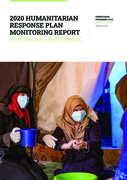
The figures and findings reflected in the 2020 PMR represent the independent analysis of the United Nations (UN) and its humanitarian partners based on information available to them. Many of the figures provided throughout the document are estimates based on sometimes incomplete and partial data set
...
s using the methodologies for collection that were available at the time. The Government of Syria has expressed its reservations over the data sources and methodology of assessments used to inform the 2020 Humanitarian Needs Overview (HNO) as well as on a number of HNO findings reflected in the 2020 HRP. This applies throughout the document.
more
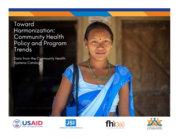
The Community Health Systems (CHS) Catalog is a resource that provides information on community health program workers, and interventions for the 25 countries deemed priority by USAID’s Of of Population and Reproductive Health. It comprises a compilation of 25 country profiles developed from a de
...
sk review of community health policies, strategies, a related documentation.
This document summarizes country trends drawn from the CHS Catalog and highlights interesting and relevant findings
about the global community health policy landscape.
more
For the purpose of this document, Interprofessional is defined as: Multiple health disciplines with diverse knowledge and skills who share an integrated set of goals and who utilize interdependent collaboration that involves communication, sharing of knowledge and coordination of services to provide
...
services to patients/clients and their care-giving systems. This best practice guideline, Developing and Sustaining Interprofessional Health Care: Optimizing patients/clients, organizational, and system outcomes is intended to foster healthy work environments. The focus in developing this guideline was identifying attributes of interprofessional care that will optimize quality outcomes for patients/clients, providers, teams, the organization and the system. This guideline identifies best practices to enable, enhance and sustain teamwork and interprofessional collaboration, and to enhance positive outcomes for patients/clients, systems and organizations. It is based on the best available evidence; where evidence was limited, the recommendations were based on the consensus of expert opinion.
more
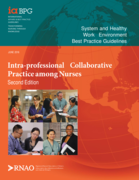
The goal of this best practice guideline is to strengthen collaborative practice among nurses, because effective collaborative practice is essential for working in health-care organizations.
In this guideline, we focus on collaborative practice amongst three types of nursing professionals – reg
...
istered nurse (RN), registered practical nurse (RPN) and nurse practitioner (NP) – and explore what fosters healthy work environments for them, aware that collaboration must align with the needs of the patient or client.
This best practice guideline was developed to assist nurses, nursing leaders, other health professionals and senior managers to enhance positive outcomes for patients/clients individual/family/group/community), nurses, and the organization through intra-professional collaborative practice.
more
Learn how the decision making process must ensure that appropriate structures and supports are in place to maximize the nursing effort resulting in the best possible care and positive outcomes for the patients/clients, nursing personnel, and the organization.
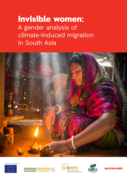
New research exposes how women and children are disproportionally affected by climate migration, which puts them at greater risk of gender-based violence, child labour and exploitation.
Governments must ensure the safety and protection of women and girls in climate emergencies, including the safe
...
and equal access to basic services, food, and healthcare before, during, and after disasters. Women must also be included in decision making in their communities so they can lead on resilience building and address gendered issues of migration and displacement.
more
Noma (cancrum oris) is a severe gangrenous disease of the mouth and face. It mostly affects children between the ages of 2 and 6 years living in extreme poverty. In addition to the known factors such as malnutrition, lack of vaccination in children and poor oral hygiene, several social and environme
...
ntal factors such as maternal malnutrition and close spacing of pregnancies that result in offspring with increasingly weakened immune systems are potentially related to the onset of the disease.
The aim of this guide is to assist the ministries of health (MoHs) to identify a general goal to be attained by the end of five years, with a view to sustainably reducing the incidence of noma as a public health problem through programmes that are fully integrated with national health planning, strengthening of primary health care (PHC) and attainment of UHC.
more
The primary audience of this report with the compendium of resources are youth engagement practitioners in the Red Cross Red Crescent National Societies as well as technical experts and policy makers across the humanitarian landscape that thrive for meaningful interventions with and for children, ad
...
olescents, and young adults experiencing the impact of the COVID-19 pandemic.
more
The toolkit provides practical guidance and tools that can support efforts, including planning and implementation activities, to create dementia-inclusive societies.
The toolkit is divided into two parts. Part I contains background information and a conceptual framework for creating dementia-incl
...
usive societies. Part II includes four practical modules, each featuring a series of practical steps and exercises. The four modules focus on: starting a new dementia-friendly initiative (DFI), integrating dementia into an existing initiative, monitoring and evaluation a DFI, and scaling a DFI. The modules can be used together or separately and offer guidance that can be adapted to suit local needs and settings.
more
The case studies in this document are set in different scales and geographies, tackling a wide realm of issues connected to urban housing recovery — locally in Nepal and globally. The case studies are categorized into three:
case studies from partner organizations
case studies from house
...
holds’ perspective
global case studies
more
39 examples of field practices, and learnings from 20 countries, for all phases of humanitarian response. The report shows that deliberate and proactive action is required to ensure that persons with disabilities from all constituencies are systematically included and meaningfully participate in DRR
...
and humanitarian preparedness, response and recovery. It draws lessons from field practices, but does not provide technical guidance. The newly published IASC Guidelines are the reference document to seek in-depth theoretical and technical information.
more
This guidance document is meant to support practitioners working in disaster prone contexts to develop and implement more effective integrated resilience programming. It promotes programming that cuts across different fields of work like rights awareness, food security, emergency preparedness, livel
...
ihoods, education, health etc. whilst at the same time encouraging us to work simultaneously at the individual, household, community and national level. It includes specific recommendations for developing resilience programming for communities prone to floods, cyclone, drought and earthquakes. It also includes recommendations to develop safe school programming to help reduce the impact of disasters on school infrastructure, ensure education continuity and build the resilience of students, teachers and their families.
more
