
Filter
2301
Text search:
Resilience
Featured
194
574
Language
2175
85
66
39
37
22
18
16
8
5
4
4
4
4
4
3
3
3
2
2
2
2
2
2
2
2
2
2
2
1
1
1
1
1
1
1
1
1
1
1
1
1
1
1
1
1
1
1
1
1
1
1
1
1
1
1
Document type
1030
609
211
158
139
48
48
31
10
7
6
2
2
Countries
155
79
76
58
53
45
45
40
38
36
35
34
34
33
32
29
29
24
23
21
20
20
18
18
17
17
15
15
14
14
14
13
13
13
13
13
13
12
12
12
11
10
10
10
10
10
9
9
8
8
8
8
7
7
7
7
6
6
6
6
6
5
5
5
4
4
4
4
4
3
3
3
3
3
3
3
3
3
3
3
3
3
3
2
2
2
2
2
2
2
2
2
2
1
1
1
1
1
1
1
1
1
1
1
1
1
1
1
1
1
1
1
1
1
1
1
1
1
1
Authors & Publishers
252
100
87
55
54
54
54
29
25
23
20
19
19
19
16
16
16
16
16
15
14
14
14
13
12
12
12
12
11
11
11
11
10
10
10
10
9
9
9
8
8
8
8
8
8
7
7
7
7
7
6
6
6
6
6
6
6
6
5
5
5
5
5
5
5
5
5
5
4
4
4
4
4
4
4
4
4
4
4
4
4
4
4
4
4
4
4
4
4
4
4
4
3
3
3
3
3
3
3
3
3
3
3
3
3
3
3
3
3
3
3
3
3
3
3
3
3
3
3
3
3
3
3
3
3
3
3
3
3
3
3
3
3
3
3
3
3
3
3
3
3
3
3
2
2
2
2
2
2
2
2
2
2
2
2
2
2
2
2
2
2
2
2
2
2
2
2
2
2
2
2
2
2
2
2
2
2
2
2
2
2
2
2
2
2
2
2
2
2
2
2
2
2
2
2
2
2
2
2
2
2
2
2
2
2
2
2
2
2
2
2
2
2
2
2
2
2
2
2
2
2
2
2
2
2
2
2
2
2
2
2
2
2
2
2
2
2
2
2
2
2
2
2
2
2
2
2
2
2
2
2
2
2
2
2
2
2
2
2
2
2
2
2
2
2
2
2
2
2
2
2
2
2
2
2
2
2
2
2
2
2
2
2
2
2
2
2
2
2
2
2
2
2
2
2
2
2
2
2
2
2
1
1
1
1
1
1
1
1
1
1
1
1
1
1
1
1
1
1
1
1
1
1
1
1
1
1
1
1
1
1
1
1
1
1
1
1
1
1
1
1
1
1
1
1
1
1
1
1
1
1
1
1
1
1
1
1
1
1
1
1
1
1
1
1
1
1
1
1
1
1
1
1
1
1
1
1
1
1
1
1
1
1
1
1
1
1
1
1
1
1
1
1
1
1
1
1
1
1
1
1
1
1
1
1
1
1
1
1
1
1
1
1
1
1
1
1
1
1
1
1
1
1
1
1
1
1
1
1
1
1
1
1
1
1
1
1
1
1
1
1
1
1
1
1
1
1
1
1
1
1
1
1
1
1
1
1
1
1
1
1
1
1
1
1
1
1
1
1
1
1
1
1
1
1
1
1
1
1
1
1
1
1
1
1
1
1
1
1
1
1
1
1
1
1
1
1
1
1
1
1
1
1
1
1
1
1
1
1
1
1
1
1
1
1
1
1
1
1
1
1
1
1
1
1
1
1
1
1
1
1
1
1
1
1
1
1
1
1
1
1
1
1
1
1
1
1
1
1
1
1
1
1
1
1
1
1
1
1
1
1
1
1
1
1
1
1
1
1
1
1
1
1
1
1
1
1
1
1
1
1
1
1
1
1
1
1
1
1
1
1
1
1
1
1
1
1
1
1
1
1
1
1
1
1
1
1
1
1
1
1
1
1
1
1
1
1
1
1
1
1
1
1
1
1
1
1
1
1
1
1
1
1
1
1
1
1
1
1
1
1
1
1
1
1
1
1
1
1
1
1
1
1
1
1
1
1
1
1
1
1
1
1
1
1
1
1
1
1
1
1
1
1
1
1
1
1
1
1
1
1
1
1
1
1
1
1
1
1
1
1
1
1
1
1
1
1
1
1
1
1
1
1
1
1
1
1
1
1
1
1
1
1
1
1
1
1
1
1
1
1
1
1
1
1
1
1
1
1
1
1
1
1
1
1
1
1
1
1
1
1
1
1
1
1
1
1
1
1
1
1
1
1
1
1
1
1
1
1
1
1
1
1
1
1
1
1
1
1
1
1
1
1
1
1
1
1
1
1
1
1
1
1
1
1
1
1
1
1
1
1
1
1
1
1
1
1
1
1
1
1
1
1
1
1
1
1
1
1
1
1
1
1
1
1
1
1
1
1
1
1
1
1
1
1
1
1
1
1
1
1
1
1
1
1
1
1
1
1
1
1
1
1
1
1
1
1
1
1
1
1
1
1
1
1
1
1
1
1
1
1
1
1
1
1
1
1
1
1
1
1
1
1
1
1
1
1
1
1
1
1
1
1
1
1
1
1
1
1
1
1
1
1
1
1
1
1
1
1
1
1
1
1
1
1
1
1
1
1
1
1
1
1
1
1
1
1
1
1
1
1
1
1
1
1
1
1
1
1
1
1
1
1
1
1
1
1
1
1
1
1
1
1
1
1
1
1
1
1
1
1
1
1
1
1
1
1
1
1
1
1
1
1
1
1
1
1
1
1
1
1
1
1
1
1
1
1
1
1
1
1
1
1
1
1
1
1
1
1
1
1
1
1
1
1
1
1
1
1
1
1
1
1
1
1
1
1
1
1
1
1
1
1
1
1
1
1
1
1
1
1
1
1
1
1
1
1
1
1
1
1
1
1
1
1
1
1
1
1
1
1
1
1
1
1
1
1
1
1
1
1
1
1
1
1
1
1
1
1
1
1
1
1
1
1
1
1
1
1
1
1
1
1
1
1
1
1
1
1
1
1
1
1
1
1
1
1
1
1
1
1
1
1
1
1
1
1
1
1
1
1
1
1
1
1
1
1
1
1
1
1
1
1
1
1
1
1
1
1
1
1
1
1
1
1
1
1
1
1
1
1
1
1
1
1
1
1
1
1
1
1
1
1
1
1
1
1
1
1
1
1
1
1
1
1
1
1
1
1
1
1
1
1
1
1
1
1
1
1
1
1
1
1
1
1
1
1
1
1
1
1
1
1
1
1
1
1
1
1
1
1
1
1
1
1
1
1
1
1
1
1
1
1
1
1
1
1
1
1
1
1
1
1
1
1
1
1
1
1
1
1
1
1
1
1
1
1
1
1
1
1
1
1
1
1
1
1
1
1
1
1
1
1
1
1
1
1
1
1
1
1
1
1
1
1
1
1
1
1
1
1
1
1
1
1
1
1
1
1
1
1
1
1
1
1
1
1
1
1
1
1
1
1
1
1
1
1
1
1
1
1
1
1
1
1
1
1
1
1
1
1
1
1
1
1
1
1
1
1
1
1
1
1
1
1
1
1
1
1
1
1
1
1
1
1
1
1
1
1
1
1
1
1
1
1
1
1
1
1
1
1
1
1
1
1
1
1
1
1
1
1
1
1
1
1
1
1
1
1
1
1
1
1
1
1
1
1
1
1
1
1
1
1
1
1
1
1
1
1
1
1
1
1
1
1
1
1
1
1
1
1
1
1
1
1
1
1
1
1
1
1
1
1
1
1
1
1
1
1
1
1
1
1
1
1
1
1
1
1
1
1
1
1
1
1
1
1
1
1
1
1
1
1
1
1
1
1
1
1
1
1
1
1
1
1
1
1
1
1
1
1
1
1
1
1
1
1
1
1
1
1
1
1
1
1
1
1
1
1
1
1
1
1
1
1
1
1
1
1
1
1
1
1
1
1
1
1
1
1
1
1
1
1
1
1
1
1
1
1
1
1
1
1
1
1
1
1
1
1
1
1
1
1
1
1
1
1
1
1
1
1
1
1
1
1
1
1
1
1
1
1
1
1
1
1
1
1
1
1
1
1
1
1
1
1
1
1
1
1
1
1
1
1
1
1
1
1
1
1
1
1
1
1
1
1
1
1
1
1
1
1
1
1
1
1
1
1
1
1
1
1
1
1
1
1
1
1
1
1
1
1
1
1
1
1
1
1
1
1
1
1
1
1
1
1
1
1
1
1
1
1
1
1
1
1
1
1
1
1
1
1
1
1
1
1
1
1
1
1
1
1
1
1
1
1
1
1
1
1
1
1
1
1
1
1
1
1
1
1
1
1
1
1
1
1
1
1
1
1
1
1
1
1
1
1
1
1
1
1
1
1
1
1
1
1
1
1
1
1
1
1
1
1
1
1
1
1
1
1
1
1
1
1
1
1
1
1
1
1
1
1
1
1
1
1
1
1
1
1
1
1
1
1
1
1
1
1
1
1
1
1
1
1
1
1
1
1
1
1
1
1
1
1
1
1
1
1
1
1
1
1
1
1
1
1
1
1
1
1
1
1
1
1
1
1
1
1
1
1
1
1
1
1
1
1
1
1
1
1
1
1
1
1
1
1
1
1
1
1
1
1
1
1
1
1
1
1
1
1
1
1
1
1
1
1
1
1
1
1
1
1
1
1
1
1
1
1
1
1
1
1
1
1
1
1
1
1
1
1
1
1
1
1
1
1
1
1
1
1
1
1
1
1
1
1
1
1
1
1
1
1
1
1
1
1
1
1
1
1
1
1
1
1
1
1
1
1
1
1
1
Publication Years
978
1230
90
3
Category
651
136
109
93
36
28
9
7
3
Toolboxes
295
291
276
187
107
99
91
89
88
76
76
52
37
25
19
15
13
10
9
8
7
7
5
4
2
New funding requirements: CHF 2.8 billion IFRC-wide of which CHF 670 million is channelled through the IFRC Emergency Appeal in support of National Societies
English Analysis on World about Climate Change and Environment, Recovery and Reconstruction and Epidemic; published on 26 Oct 2021 by UNEP

Containment strategies: lessons from early COVID-19 responses in five African countries
World Health Organization WHO, Regional Office of Africa; AHOP
WHO Regional Office for Africa
(2021)
C_WHO
The number of COVID-19 cases is on the rise again, with South Africa nearing half of all confirmed cases in the WHO African Region. Threats of new variants loom and low vaccination coverage raises questions on the future of the response to COVID-19. Prevention remains the key strategy in most sub-Sa
...
haran countries. Five National Centres (NCs) from the African Health Observatory Platform on Health Systems and Policies (AHOP), based in Ethiopia, Kenya, Nigeria, Rwanda and Senegal, reflect on lessons to be learnt from their containment responses in the initial phases. They construct timelines to highlight the policies and challenges associated with introducing a range of public health containment measures and
discuss the extent to which these measures continue to be valuable given the ever-changing nature of the pandemic.
more
This document focus on the direct consequences of the virus (morbidity and mortality) in specific populations and on the results of measures aimed at mitigating the spread of the virus, with indirect impacts on socio-economic conditions. In this complex scenario, the gender approach has not received
...
due attention during the pandemic. Gender is one of the structural determinants of health, but it does not appear in analyses of the direct and indirect effects of the pandemic, despite being essential in the recognition and analysis of the differential impacts on men and women and their interaction with the different determinants of health.
more
The early prevention project “Strong together!” supports refugee parents and their young children (0–4 years) in Berlin, Germany. It aims to mitigate the transmission of trauma to the generation born in exile. For refugee families who have only recently arrived in Germany, the COVID‐19 pande
...
mic poses a particularly great challenge. Not only are they confronted with numerous challenges in respect to rebuilding their lives in Germany after fleeing war and persecution, but are also vulnerable to conscious and unconscious anxieties, fantasies, and conflicts evoked by the pandemic and the threat it poses to their lives. This was observed in the context of the mother–child groups of “Strong together!”
more
What are patient navigators and how can they improve integration of care?
Budde, H.; G.A.Williams, G. Scarpetti, et al.
World Health Organization WHO, Regional Office of Europe
(2021)
C_WHO
Policy brief
Training Modules for climate change and Health - WHO
The overview of findings from five Latin American countries
The Lancet Countdown is an international collaboration that independently monitors the health consequences of a changing climate. Publishing updated, new, and improved indicators each year, the Lancet Countdown represents the
consensus of leading researchers from 43 academic institutions and UN ag
...
encies. The 44 indicators of this report expose an unabated rise in the health impacts of
climate change and the current health consequences of the delayed and inconsistent response of countries around the globe—providing a clear imperative for accelerated action that puts the health of people and planet above all else.The 2021 report coincides with the UN Framework Convention on Climate Change 26th Conference of the Parties (COP26), at which countries are facing pressure to realise the ambition of the Paris Agreement to keep the global average temperature rise to 1·5°C and to
mobilise the financial resources required for all countries to have an effective climate response. These negotiations unfold in the context of the COVID-19 pandemic—a global health crisis that has claimed millions of lives, affected livelihoods and communities around the globe, and exposed deep fissures and inequities in the world’s capacity to cope with, and respond to, health emergencies. Yet, in its response to both crises, the world is faced with an unprecedented opportunity to ensure a healthy future for all.
more
The frequency of infectious disease epidemics is increasing, and the role of the health sector in the management of epidemics is crucial in terms of response. In the context of infectious disease epidemics, the use of climate-informed early warning systems (EWS) has the potential to increase the eff
...
ectiveness of disease control by intervening before or at the beginning of the epidemic curve, instead of during the downward slope.
Currently, the initiation of interventions is heavily reliant on routine disease surveillance systems – data that often arrive too late for preventative response. However, forecasting of disease outbreaks using surveillance and weather information shows promising potential – there also remains further scope to examine seasonal climate forecasts. By combining these elements in new EWS based on computational models, it will be possible to improve both the timeliness and impact of disease control. The World Health Organization (WHO) is strengthening existing surveillance systems for infectious diseases to enable the development of more robust and timely EWS, which has resulted in the rapid development and innovation of EWS for disease outbreaks.
more
The Impacts of Climate Change on Human Health
in the United States: A Scientific Assessment
Climate change is a significant threat to the health of the American people. This scientific assessment examines how climate change is already affecting human health and the changes that may occur in the fu
...
ture.
more

Left unabated, climate change will have catastrophic effects on the health of present and future generations. Such effects are already seen in Europe, through more frequent and severe extreme weather events, alterations to water and food systems, and changes in the environmental suitability for infe
...
ctious diseases. As one of the largest current and historical contributors to greenhouse gases and the largest provider of financing for climate change mitigation and adaptation, Europe’s response is crucial, for both human health and the planet. To ensure that health and
wellbeing are protected in this response it is essential to build the capacity to understand, monitor, and quantify health impacts of climate change and the health co-benefits of accelerated action.
more
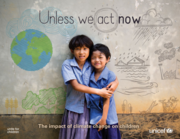
Today’s children, and their children, are the ones who will live with the consequences of climate change.
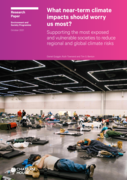
What near-term climate impacts should worry us most?
Supporting the most exposed and vulnerable societies to reduce
regional and global climate risks
national programmes for occupational health and safety for health workers: lessons learned from countries: summary report of the WHO online workshop, 15 July 2020
The COVID-19 pandemic has impacted the world and consequently increased MHPSS needs across various contexts. While National Societies respond to the rising mental health and psychosocial support needs, they are also adapting to and implementing remote support, such as telephone hotlines or other onl
...
ine services. Accordingly, many trainings in psychological first aid (PFA) of staff and volunteers have moved to online platforms.
Throughout the pandemic, the PS Centre developed online approaches, guidances, adaptable tools, videos, podcasts, and other materials on MHPSS. This was to ensure easy access to tools and resources that assist National Societies in their training efforts in MHPSS during COVID-19.
more
Job satisfaction among healthcare workers in Ghana and Kenya during the COVID-19 pandemic: Role of perceived preparedness, stress, and burnout
Afulani PA, Nutor JJ, Agbadi P, Gyamerah AO, Musana J, Aborigo RA, et al.
PLOS Global Public Health
(2021)
CC
The COVID-19 pandemic has affected job satisfaction among healthcare workers; yet this has not been empirically examined in sub-Saharan Africa (SSA). We addressed this gap by examining job satisfaction and associated factors among healthcare workers in Ghana and Kenya during the COVID-19 pandemic. W
...
e conducted a cross-sectional study with healthcare workers (N = 1012). The two phased data collection included: (1) survey data collected in Ghana from April 17 to May 31, 2020, and (2) survey data collected in Ghana and Kenya from November 9, 2020, to March 8, 2021. We utilized a quantitative measure of job satisfaction, as well as validated psychosocial measures of perceived preparedness, stress, and burnout; and conducted descriptive, bivariable, and multivariable analysis using ordered logistic regression. We found high levels of job dissatisfaction (38.1%), low perceived preparedness (62.2%), stress (70.5%), and burnout (69.4%) among providers. High perceived preparedness was positively associated with higher job satisfaction (adjusted proportional odds ratio (APOR) = 2.83, CI [1.66,4.84]); while high stress and burnout were associated with lower job satisfaction (APOR = 0.18, CI [0.09,0.37] and APOR = 0.38, CI [0.252,0.583] for high stress and burnout respectively). Other factors positively associated with job satisfaction included prior job satisfaction, perceived appreciation from management, and perceived communication from management. Fear of infection was negatively associated with job satisfaction. The COVID-19 pandemic has negatively impacted job satisfaction among healthcare workers. Inadequate preparedness, stress, and burnout are significant contributing factors. Given the already strained healthcare system and low morale among healthcare workers in SSA, efforts are needed to increase preparedness, better manage stress and burnout, and improve job satisfaction, especially during the pandemic.
more
INTRODUCTION: Health service use among the public can decline during outbreaks and had been predicted among low and middle-income countries during the COVID-19 pandemic. In March 2020, the government of the Democratic Republic of the Congo (DRC) started implementing public health measures across Kin
...
shasa, including strict lock-down measures in the Gombe health zone.
METHODS: Using monthly time series data from the DRC Health Management Information System (January 2018 to December 2020) and interrupted time series with mixed effects segmented Poisson regression models, we evaluated the impact of the pandemic on the use of essential health services (outpatient visits, maternal health, vaccinations, visits for common infectious diseases and non-communicable diseases) during the first wave of the pandemic in Kinshasa. Analyses were stratified by age, sex, health facility and lockdown policy (i.e, Gombe vs other health zones).
RESULTS: Health service use dropped rapidly following the start of the pandemic and ranged from 16% for visits for hypertension to 39% for visits for diabetes. However, reductions were highly concentrated in Gombe (81% decline in outpatient visits) relative to other health zones. When the lock-down was lifted, total visits and visits for infectious diseases and non-communicable diseases increased approximately twofold. Hospitals were more affected than health centres. Overall, the use of maternal health services and vaccinations was not significantly affected.
CONCLUSION: The COVID-19 pandemic resulted in important reductions in health service utilizsation in Kinshasa, particularly Gombe. Lifting of lock-down led to a rebound in the level of health service use but it remained lower than pre-pandemic levels.
more
Lancet Public health 2022 January 6, 2022 https://doi.org/10.1016/ S2468-2667(21)00249-8
Growth in the number of individuals living with dementia underscores the need for public health planning efforts and policy to address the needs of this group. Country-level estimates can be used to inform nati
...
onal planning efforts and decisions. Multifaceted approaches, including scaling up interventions to address modifiable risk factors and investing in research on biological mechanisms, will be key in addressing the expected increases in the number of individuals affected by dementia.
more
