
Filter
3345
Text search:
First
line
drug
management
Featured
349
1078
Language
3281
48
39
36
21
13
11
5
3
3
3
2
2
2
1
1
1
1
1
1
1
1
1
1
Document type
2162
425
419
134
114
41
28
13
5
3
1
Countries
238
121
97
96
92
91
80
73
73
69
68
66
61
56
54
48
44
44
43
41
34
30
27
26
26
26
25
24
22
18
17
16
14
13
13
12
11
11
10
9
8
8
8
8
8
7
7
7
7
6
6
6
6
6
6
6
5
5
5
5
5
5
5
4
4
4
4
3
3
3
3
3
3
3
3
3
3
3
3
3
3
3
2
2
2
2
2
2
2
2
1
1
1
1
1
1
1
1
1
1
1
1
1
1
1
1
1
1
1
1
1
1
1
1
1
1
1
1
1
1
Authors & Publishers
429
203
157
93
91
67
65
58
43
29
27
26
24
23
22
21
21
20
20
19
19
18
18
17
16
15
15
14
13
13
13
13
13
12
12
12
12
11
11
11
11
11
10
10
10
9
9
9
9
9
9
8
8
8
8
8
8
8
8
8
8
8
7
7
7
7
7
7
7
7
7
7
6
6
6
6
6
6
6
6
6
6
6
6
6
6
6
5
5
5
5
5
5
5
5
5
5
5
5
5
5
5
5
5
5
5
5
5
5
5
4
4
4
4
4
4
4
4
4
4
4
4
4
4
4
4
4
4
4
4
4
4
4
4
4
4
4
4
4
4
4
4
4
4
4
4
4
4
4
4
4
3
3
3
3
3
3
3
3
3
3
3
3
3
3
3
3
3
3
3
3
3
3
3
3
3
3
3
3
3
3
3
3
3
3
3
3
3
3
3
3
3
3
3
3
3
3
3
3
3
3
3
3
3
3
3
3
3
3
3
3
3
3
3
3
3
3
3
3
3
2
2
2
2
2
2
2
2
2
2
2
2
2
2
2
2
2
2
2
2
2
2
2
2
2
2
2
2
2
2
2
2
2
2
2
2
2
2
2
2
2
2
2
2
2
2
2
2
2
2
2
2
2
2
2
2
2
2
2
2
2
2
2
2
2
2
2
2
2
2
2
2
2
2
2
2
2
2
2
2
2
2
2
2
2
2
2
2
2
2
2
2
2
2
2
2
2
2
2
2
2
2
2
2
2
2
2
2
2
2
2
2
2
2
2
2
2
2
2
2
2
2
2
2
2
2
2
2
2
2
2
2
2
2
2
2
2
2
2
2
2
2
2
2
2
2
2
2
2
2
2
2
2
2
2
2
2
2
2
2
2
2
2
2
2
2
2
2
2
2
2
2
2
2
2
2
2
2
2
2
2
2
2
2
2
2
2
2
2
2
2
2
2
2
2
2
2
2
2
2
2
2
2
1
1
1
1
1
1
1
1
1
1
1
1
1
1
1
1
1
1
1
1
1
1
1
1
1
1
1
1
1
1
1
1
1
1
1
1
1
1
1
1
1
1
1
1
1
1
1
1
1
1
1
1
1
1
1
1
1
1
1
1
1
1
1
1
1
1
1
1
1
1
1
1
1
1
1
1
1
1
1
1
1
1
1
1
1
1
1
1
1
1
1
1
1
1
1
1
1
1
1
1
1
1
1
1
1
1
1
1
1
1
1
1
1
1
1
1
1
1
1
1
1
1
1
1
1
1
1
1
1
1
1
1
1
1
1
1
1
1
1
1
1
1
1
1
1
1
1
1
1
1
1
1
1
1
1
1
1
1
1
1
1
1
1
1
1
1
1
1
1
1
1
1
1
1
1
1
1
1
1
1
1
1
1
1
1
1
1
1
1
1
1
1
1
1
1
1
1
1
1
1
1
1
1
1
1
1
1
1
1
1
1
1
1
1
1
1
1
1
1
1
1
1
1
1
1
1
1
1
1
1
1
1
1
1
1
1
1
1
1
1
1
1
1
1
1
1
1
1
1
1
1
1
1
1
1
1
1
1
1
1
1
1
1
1
1
1
1
1
1
1
1
1
1
1
1
1
1
1
1
1
1
1
1
1
1
1
1
1
1
1
1
1
1
1
1
1
1
1
1
1
1
1
1
1
1
1
1
1
1
1
1
1
1
1
1
1
1
1
1
1
1
1
1
1
1
1
1
1
1
1
1
1
1
1
1
1
1
1
1
1
1
1
1
1
1
1
1
1
1
1
1
1
1
1
1
1
1
1
1
1
1
1
1
1
1
1
1
1
1
1
1
1
1
1
1
1
1
1
1
1
1
1
1
1
1
1
1
1
1
1
1
1
1
1
1
1
1
1
1
1
1
1
1
1
1
1
1
1
1
1
1
1
1
1
1
1
1
1
1
1
1
1
1
1
1
1
1
1
1
1
1
1
1
1
1
1
1
1
1
1
1
1
1
1
1
1
1
1
1
1
1
1
1
1
1
1
1
1
1
1
1
1
1
1
1
1
1
1
1
1
1
1
1
1
1
1
1
1
1
1
1
1
1
1
1
1
1
1
1
1
1
1
1
1
1
1
1
1
1
1
1
1
1
1
1
1
1
1
1
1
1
1
1
1
1
1
1
1
1
1
1
1
1
1
1
1
1
1
1
1
1
1
1
1
1
1
1
1
1
1
1
1
1
1
1
1
1
1
1
1
1
1
1
1
1
1
1
1
1
1
1
1
1
1
1
1
1
1
1
1
1
1
1
1
1
1
1
1
1
1
1
1
1
1
1
1
1
1
1
1
1
1
1
1
1
1
1
1
1
1
1
1
1
1
1
1
1
1
1
1
1
1
1
1
1
1
1
1
1
1
1
1
1
1
1
1
1
1
1
1
1
1
1
1
1
1
1
1
1
1
1
1
1
1
1
1
1
1
1
1
1
1
1
1
1
1
1
1
1
1
1
1
1
1
1
1
1
1
1
1
1
1
1
1
1
1
1
1
1
1
1
1
1
1
1
1
1
1
1
1
1
1
1
1
1
1
1
1
1
1
1
1
1
1
1
1
1
1
1
1
1
1
1
1
1
1
1
1
1
1
1
1
1
1
1
1
1
1
1
1
1
1
1
1
1
1
1
1
1
1
1
1
1
1
1
1
1
1
1
1
1
1
1
1
1
1
1
1
1
1
1
1
1
1
1
1
1
1
1
1
1
1
1
1
1
1
1
1
1
1
1
1
1
1
1
1
1
1
1
1
1
1
1
1
1
1
1
1
1
1
1
1
1
1
1
1
1
1
1
1
1
1
1
1
1
1
1
1
1
1
1
1
1
1
1
1
1
1
1
1
1
1
1
1
1
1
1
1
1
1
1
1
1
1
1
1
1
1
1
1
1
1
1
1
1
1
1
1
1
1
1
1
1
1
1
1
1
1
1
1
1
1
1
1
1
1
1
1
1
1
1
1
1
1
1
1
1
1
1
1
1
1
1
1
1
1
1
1
1
1
1
1
1
1
1
1
1
1
1
1
1
1
1
1
1
1
1
1
1
1
1
1
1
1
1
1
1
1
1
1
1
1
1
1
1
1
1
1
1
1
1
1
1
1
1
1
1
1
1
1
1
1
1
1
1
1
1
1
1
1
1
1
1
1
1
1
1
1
1
1
1
1
1
1
1
1
1
1
1
1
1
1
1
1
1
1
1
1
1
1
1
1
1
1
1
1
1
1
1
1
1
1
1
1
1
1
1
1
1
1
1
1
1
1
1
1
1
1
1
1
1
1
1
1
1
1
1
1
1
1
1
1
1
1
1
1
1
1
1
1
1
1
1
1
1
1
1
1
1
1
1
1
1
1
1
1
1
1
1
1
1
1
1
1
1
1
1
1
1
1
1
1
1
1
1
1
1
1
1
1
1
1
1
1
1
1
1
1
1
1
1
1
1
1
1
1
1
1
1
1
1
1
1
1
1
1
1
1
1
1
1
1
1
1
1
1
1
1
1
1
1
1
1
1
1
1
1
1
1
1
1
1
1
1
1
1
1
1
1
1
1
1
1
1
1
1
1
1
1
1
1
1
1
1
1
1
1
1
1
1
1
1
1
1
1
1
1
1
1
1
1
1
1
1
1
1
1
1
1
1
1
1
1
1
1
1
1
1
1
1
1
1
1
1
1
1
1
1
1
1
1
1
1
1
1
1
1
1
1
1
1
1
1
1
1
1
1
1
1
1
1
1
1
1
1
1
1
1
1
1
1
1
1
1
1
1
1
1
1
1
1
1
1
1
1
1
1
1
1
1
1
1
1
1
1
1
1
1
1
1
1
1
1
1
1
1
1
1
1
1
1
1
1
1
1
1
1
1
1
1
1
1
1
1
1
1
1
1
1
1
1
1
1
1
1
1
1
1
1
1
1
1
1
1
1
1
1
1
1
1
1
1
1
1
1
1
1
1
1
1
1
1
1
1
1
1
1
1
1
1
1
1
1
1
1
1
1
1
1
1
1
1
1
1
1
1
1
1
1
1
1
1
1
1
1
1
1
1
1
1
1
1
1
1
1
1
1
1
1
1
1
1
1
1
1
1
1
1
1
1
1
1
1
1
1
1
1
1
1
1
1
1
1
1
1
1
1
1
1
1
1
1
1
1
1
1
1
1
1
1
1
1
1
1
1
1
1
1
1
1
1
1
1
1
1
1
1
1
1
1
1
1
1
1
1
1
1
1
1
1
1
1
1
1
1
1
1
1
1
1
1
1
1
1
1
1
1
1
1
1
1
1
1
1
1
1
1
1
1
1
1
1
1
1
1
1
1
1
1
1
1
1
1
1
1
1
1
1
1
1
1
1
1
1
1
1
1
1
1
1
1
1
1
1
1
1
1
1
1
1
1
1
1
1
1
1
1
1
1
1
1
1
1
1
1
1
1
1
1
1
1
1
1
1
1
1
1
1
1
1
1
1
1
1
1
1
1
1
1
1
1
1
1
1
1
1
1
1
1
1
1
1
1
1
1
1
1
1
1
1
1
1
1
1
1
1
1
1
1
1
1
1
1
1
1
1
1
1
1
1
1
1
1
1
1
1
1
1
1
1
1
1
1
1
1
1
1
1
1
1
1
1
1
1
1
1
1
1
1
1
1
1
1
1
1
1
1
1
1
1
1
1
1
1
1
1
1
1
1
1
1
1
1
1
1
1
1
1
1
1
1
1
1
1
1
1
1
1
1
1
1
1
1
1
1
1
1
1
1
1
1
1
1
1
1
1
1
1
1
1
1
1
1
1
1
1
1
1
1
1
1
1
1
1
1
1
1
1
1
1
1
1
1
1
1
1
1
1
1
1
1
1
1
1
1
1
1
1
1
1
1
1
1
1
1
1
1
1
1
1
1
1
1
1
1
1
1
1
1
1
1
1
1
1
1
1
1
1
1
1
1
1
1
1
1
1
1
1
1
1
1
1
1
1
1
1
1
1
1
1
1
1
1
1
1
1
1
1
1
1
1
1
1
1
1
1
1
1
1
1
1
1
1
1
1
1
1
1
1
1
1
1
1
1
1
1
1
1
1
1
1
1
1
1
1
1
1
1
1
1
1
1
1
1
1
1
1
1
1
1
1
1
1
1
1
1
1
1
1
1
1
1
1
1
1
1
1
1
1
1
1
1
1
1
1
1
1
1
1
1
1
1
1
1
1
1
1
1
1
1
1
1
1
1
1
1
1
1
1
1
1
1
1
1
1
1
1
1
1
1
1
1
1
1
1
1
1
1
1
1
1
1
1
1
1
1
1
1
1
1
1
1
1
1
1
1
1
1
1
1
1
1
1
1
1
1
1
1
1
1
1
1
1
1
1
1
1
1
1
1
1
1
1
1
1
1
1
1
1
1
1
1
1
1
1
1
1
1
1
1
1
1
1
1
1
1
1
1
1
1
1
1
1
1
1
1
1
1
1
1
1
1
1
1
1
1
1
1
1
1
1
1
1
1
1
1
1
1
1
1
1
1
1
1
1
1
1
1
1
1
1
1
1
1
1
1
1
1
1
1
1
1
1
1
1
1
1
1
1
1
1
1
1
1
1
1
1
1
1
1
1
1
1
1
1
1
1
1
1
1
1
1
1
1
1
1
1
1
1
1
1
1
1
1
1
1
1
1
1
1
1
1
1
1
1
1
1
1
1
1
1
1
1
1
1
1
1
1
1
1
1
1
1
1
1
1
1
1
1
1
1
1
1
1
1
1
1
1
1
1
1
1
1
1
1
1
1
1
1
1
1
1
1
1
1
1
1
1
1
1
1
1
1
1
1
1
1
1
1
1
1
1
1
1
1
1
1
1
1
1
1
1
1
1
1
1
1
1
1
1
1
1
1
1
1
1
1
1
1
1
1
1
1
1
1
1
1
1
1
1
1
1
1
1
1
1
1
1
1
1
1
1
1
1
1
1
1
1
1
1
1
1
1
1
1
1
1
1
1
1
1
1
1
1
1
1
1
1
1
1
1
1
1
1
1
1
1
1
1
1
1
1
1
1
1
1
1
1
1
1
1
1
1
1
1
1
1
1
1
1
1
1
1
1
1
1
1
1
1
1
1
1
1
1
1
1
1
1
1
1
1
1
1
1
1
1
1
1
1
1
1
1
1
1
1
1
1
1
1
1
1
1
1
1
1
1
1
1
1
1
1
1
1
1
1
1
1
1
1
1
1
1
1
1
1
1
1
1
1
1
1
1
1
1
1
Publication Years
588
2356
385
15
1
Category
1507
338
173
149
55
55
38
1
1
Toolboxes
362
340
239
184
102
93
81
64
60
53
43
43
36
29
27
25
19
18
15
13
8
8
4
Unstable settings present challenges for the effective provision of antiretroviral treatment (ART). In this paper, we summarize the experience and results of providing ART and implementing contingency plans during acute instability in the Central African Republic (CAR) and Yemen.
The current trend in AMR in Uganda and globally is rising and calls for immediate action. The 71st UN General Assembly (UNGA), the 68th World Health Assembly, and organizations including the World Health Organization (WHO), the Food and Agriculture Organization (FAO), and the World Organization for
...
Animal Health (OIE), have agreed on a set of actions that member countries such as Uganda are committed to implement. The Government of Uganda (GoU) has put in place a framework through this National AMR Action Plan to address the threat AMR poses to the welfare of the peoples of Uganda. The Action Plan sets out a coordinated and collaborative One Health approach involving key stakeholders in government and other sectors to confront the threat and shall be coordinated by a Uganda National Antimicrobial Resistance Committee (UNAMRC).
more
National Action Plan on Antimicrobial Resistance/Afghanistan
Ministry of Public Health, Afghanistan
Food and Agriculture Organization of the United Nations FAO
(2017)
C2
AMR is one of the Key priority of the global health security agenda action package, as well as it is one of the commitments of Ministry of Public Health Afghanistan to combat AMR. In Afghanistan because of war and some other political issues the borders of the country are not well secured and well c
...
ontrolled therefore control of smuggling of medicine is a big challenge in front of the rational use of medicine. Lack of knowledge (professionals and public), poor economic state, conflict of war, presence of remote areas and etc…. are the other main challenges for this to won the battle of combating AMR.
more
As a public good, antimicrobial medicines require rational use if their effectiveness is to be preserved. However, up to 50% of antibiotic use is inappropriate, adding considerable costs to patient care, and increasing morbidity and mortality. In addition, there is compelling evidence that antimicro
...
bial resistance is driven by the volume of antimicrobial agents used. High rates of antimicrobial resistance to common treatments are currently reported all over the world, both in health care settings and in the community. For over two decades, the Region of the Americas has been a pioneer in confronting antimicrobial resistance from a public health perspective. However, those efforts need to be stepped up if we are to have an impact on antimicrobial resistance and want to quantify said impact.
more
This paper was developed to support AMR coordination committees and others tasked with addressing AMR at country level to do just that. Drawing on the published literature and the operational experience and expertise of different LMICs, the paper points to six key strategies for success and offers a
...
series of practical tips and suggestions on how to implement each one.
more
The Global Antibiotic Resistance Partnership (GARP)-Mozambique team, in partnership with the Center for Disease Dynamics, Economics & Policy (CDDEP), has produced this report as part of a solid com-mitment to develop actionable policy proposals to tackle antibiotic resistance and improve appropriate
...
antibiotic access. It is the result of a thorough review of published and unpublished data on antibiotic resistance and a long internal consultation effort that engaged academic scientists, health professionals and other stakeholders within Mozambique.
more
Antibiotic resistance is no longer a concern for the distant future but is a pressing issue, both globally and in Nepal. As part of global effort to preserve the effectiveness of antibiotics, the Global Antibiotic Resistance Partnership (GARP)-Nepal was established to doc
...
ument the current state of antibiotic access, use and resistance in the country, and to identify policies and actions that could set a course for antibiotic sustainability.
more

Antimicrobial resistant (AMR) organisms are increasing globally, threatening to render existing treatments ineffective against many infectious diseases. In Africa, AMR has already been documented to be a problem for HIV and the pathogens that cause malaria, tuberculosis, typhoid, cholera, meningitis
...
, gonorrhea, and dysentery. Recognizing the urgent need for action, the World Health Assembly adopted the Global Action Plan on Antimicrobial Resistance in May 2015. In accordance with the Global Action Plan and to meet needs specific to Africa, Africa CDC will establish the Anti-Microbial Resistance Surveillance Network (AMRSNET). AMRSNET is a network of public health institutions and leaders from human and animal health sectors who will collaborate to measure, prevent, and mitigate harms from AMR organisms.
more
The National Department of Health and Department of Agriculture, Forestry and Fisheries have collectively engaged to determine the key interventions that will form the basis for this strategy taking into account the recommendations from the WHO and OIE.
The development and implementation of a Natio
...
nal Antimicrobial Resistance Strategy Framework that complements international efforts is a major step towards containment of the growing threat of antimicrobial resistance in human and animal health. Global partnerships need to be strengthened because the responsibility for reducing resistance is a shared one. This responsibility is not only limited to the health care sector, but calls for collaborative action in all sectors - human, animal and agriculture.
The National Antimicrobial Resistance Strategy Framework will affect South Africa’s response to this looming threat. We already have the tools and expertise to make a difference, now all we need is to work together toward a better future.
more
Supporting the continuity of health and nutrition services in the context of COVID-19 in refugee settings
recommended
The 2014–2015 Ebola outbreak was catastrophic in West Africa but the indirect impact of increasing the mortality rates of other conditions was also substantial. The increased number of deaths caused by malaria, HIV/AIDS, and tuberculosis attributable to health system failures exceeded deaths from
...
Ebola.
With a relatively limited COVID-19 caseload, health systems may have the capacity to maintain routine service delivery in addition to managing COVID-19 cases. When caseloads are high, and/or health workers are directly affected, strategic adaptations are required to ensure that increasingly limited resources provide maximum benefit for the refugees and surrounding host population. The following are key considerations for UNHCR operations on prioritized health care services in the event of a COVID-19 outbreak. These are based on WHO Guidance for Maintaining Essential Health Services and UNHCR guidance for operations and where relevant operation or site level outbreak preparedness and response plans.
more
One important application of digital health in TB patient care is the support that it can lend to medication adherence. TB programmes have already been using short message service (SMS), video-supported treatment (VOT) and event monitoring device for medication support
...
(EMM)1 to help patients complete treatment and health-care workers to monitor both daily dosing and treatment continuity
more
UNAIDS report on the global AIDS epidemic shows that 2020 targets will not be met because of deeply unequal success; COVID-19 risks blowing HIV progress way off course. Missed targets have resulted in 3.5 million more HIV infections and 820 000 more AIDS-related deaths since 2015 than if the world w
...
as on track to meet the 2020 targets. In addition, the response could be set back further, by 10 years or more, if the COVID-19 pandemic results in severe disruptions to HIV services.
more
6 July 2021. Three new nucleic acid amplification test (NAAT) classes are endorsed by WHO and included.
The latest operational handbook includes the new classes recommended by WHO. It aims at facilitating the implementation of the WHO recommendations by the Member States, technical partners, and ot
...
hers involved in managing patients with TB and DR-TB. The operational handbook provides practical information on existing and new tests recommended by WHO, step-by-step advice on implementing and scale-up testing to achieve local and national impact and lastly, model diagnostic algorithms, which are updated to incorporate the latest recommendations. An overview of budgetary considerations and information sheets on each of the newly recommended tests is provided.
more
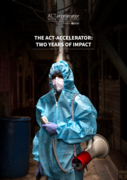
The two-year impact report for the Access to COVID-19 Tools (ACT) Accelerator details impact, case studies and timelines of key milestones for the Diagnostics, Therapeutics and Vaccines pillars, as well as the Health Systems and Response Connector.
The WHO country office for Ghana, began the year 2019 with a 4-day staff retreat at the Busua Beach Resort in the Western Region from 04 to 08 March 2019. The theme for the retreat was ‘Impacting the Health and Lives of the people of Ghana through the Triple Billion Goal”. The staff outlined pri
...
orities and strategies to strengthen WHO’s contribution to the national health agenda during the year. Working in collaboration with the Ministry of Health/Ghana Health Service and other allied health institutions and stakeholders, the WHO country office, provided support aimed at achieving its
mission which is attaining the highest level of health by the people in the country though its six operational areas which are (i) Communicable Diseases (ii) Non-Communicable Diseases, (iii) Promoting Health through the Life Course (iv), Health Systems, (v) Preparedness, Surveillance and Response (vi) Corporate services and enabling functions.
more
J of Pharm Policy and Pract 14, 27 (2021). https://doi.org/10.1186/s40545-021-00309-8
It is Zika virus (ZIKV) that most often causes these neurological effects it appears to be the only arbovirus than can cause congenital malformations such as microcephaly. In any case, more scientific tests are needed to establish the causal relationship between the virus and this malformation (7-10
...
).
This document is a practical tool designed to help health workers improve clinical diagnosis and provide timely care for patients infected
with the dengue, chikungunya, or Zika virus. It is intended mainly for
health workers in primary care facilities where laboratory diagnosis of
arboviruses is not always available. However, this guide may also be
very useful in hospitals that provide second- and third-level care, as it
describes the clinical manifestations of each of the three most important
arboviral diseases currently found in the Region, the elements for
differential diagnosis, and their clinical behavior.
more
