
Filter
2062
Text search:
program
overview
Featured
133
606
Language
1977
36
32
23
21
15
7
4
3
2
2
2
2
2
2
1
1
1
1
1
1
1
1
1
1
Document type
1290
318
167
112
73
46
25
19
6
3
1
Countries
70
67
66
63
49
49
49
47
39
38
35
35
34
34
34
33
33
32
27
27
24
23
21
20
19
19
18
18
16
13
13
13
12
12
12
11
11
11
10
10
10
9
9
8
8
8
8
8
7
7
7
7
6
6
5
5
5
5
5
4
4
4
4
4
4
3
3
3
3
3
3
3
3
3
3
2
2
2
2
2
2
2
2
2
2
2
2
2
2
2
2
2
1
1
1
1
1
1
1
1
1
1
1
1
1
1
1
1
1
1
1
Authors & Publishers
158
108
63
58
53
34
29
25
21
19
18
17
17
16
15
13
12
11
11
11
11
11
10
10
10
9
9
9
8
8
8
8
7
7
7
7
7
7
7
7
7
7
7
7
7
7
6
6
6
6
6
6
6
6
5
5
5
5
5
5
5
5
5
5
5
5
5
5
4
4
4
4
4
4
4
4
4
4
4
4
4
4
4
4
4
4
4
4
4
4
4
4
4
4
3
3
3
3
3
3
3
3
3
3
3
3
3
3
3
3
3
3
3
3
3
3
3
3
3
3
3
3
3
3
3
3
3
3
3
3
3
3
3
3
3
3
3
3
3
3
2
2
2
2
2
2
2
2
2
2
2
2
2
2
2
2
2
2
2
2
2
2
2
2
2
2
2
2
2
2
2
2
2
2
2
2
2
2
2
2
2
2
2
2
2
2
2
2
2
2
2
2
2
2
2
2
2
2
2
2
2
2
2
2
2
2
2
2
2
2
2
2
2
2
2
2
2
2
2
2
2
2
2
2
2
2
2
2
2
2
2
2
2
2
2
2
2
2
2
2
2
2
2
2
2
2
2
2
2
2
2
2
2
2
2
2
2
2
2
2
2
2
2
2
2
2
2
2
2
2
2
2
2
2
2
2
2
2
2
2
2
2
2
2
2
2
2
2
2
2
2
2
2
2
2
2
2
2
2
2
2
2
2
2
2
2
2
2
2
1
1
1
1
1
1
1
1
1
1
1
1
1
1
1
1
1
1
1
1
1
1
1
1
1
1
1
1
1
1
1
1
1
1
1
1
1
1
1
1
1
1
1
1
1
1
1
1
1
1
1
1
1
1
1
1
1
1
1
1
1
1
1
1
1
1
1
1
1
1
1
1
1
1
1
1
1
1
1
1
1
1
1
1
1
1
1
1
1
1
1
1
1
1
1
1
1
1
1
1
1
1
1
1
1
1
1
1
1
1
1
1
1
1
1
1
1
1
1
1
1
1
1
1
1
1
1
1
1
1
1
1
1
1
1
1
1
1
1
1
1
1
1
1
1
1
1
1
1
1
1
1
1
1
1
1
1
1
1
1
1
1
1
1
1
1
1
1
1
1
1
1
1
1
1
1
1
1
1
1
1
1
1
1
1
1
1
1
1
1
1
1
1
1
1
1
1
1
1
1
1
1
1
1
1
1
1
1
1
1
1
1
1
1
1
1
1
1
1
1
1
1
1
1
1
1
1
1
1
1
1
1
1
1
1
1
1
1
1
1
1
1
1
1
1
1
1
1
1
1
1
1
1
1
1
1
1
1
1
1
1
1
1
1
1
1
1
1
1
1
1
1
1
1
1
1
1
1
1
1
1
1
1
1
1
1
1
1
1
1
1
1
1
1
1
1
1
1
1
1
1
1
1
1
1
1
1
1
1
1
1
1
1
1
1
1
1
1
1
1
1
1
1
1
1
1
1
1
1
1
1
1
1
1
1
1
1
1
1
1
1
1
1
1
1
1
1
1
1
1
1
1
1
1
1
1
1
1
1
1
1
1
1
1
1
1
1
1
1
1
1
1
1
1
1
1
1
1
1
1
1
1
1
1
1
1
1
1
1
1
1
1
1
1
1
1
1
1
1
1
1
1
1
1
1
1
1
1
1
1
1
1
1
1
1
1
1
1
1
1
1
1
1
1
1
1
1
1
1
1
1
1
1
1
1
1
1
1
1
1
1
1
1
1
1
1
1
1
1
1
1
1
1
1
1
1
1
1
1
1
1
1
1
1
1
1
1
1
1
1
1
1
1
1
1
1
1
1
1
1
1
1
1
1
1
1
1
1
1
1
1
1
1
1
1
1
1
1
1
1
1
1
1
1
1
1
1
1
1
1
1
1
1
1
1
1
1
1
1
1
1
1
1
1
1
1
1
1
1
1
1
1
1
1
1
1
1
1
1
1
1
1
1
1
1
1
1
1
1
1
1
1
1
1
1
1
1
1
1
1
1
1
1
1
1
1
1
1
1
1
1
1
1
1
1
1
1
1
1
1
1
1
1
1
1
1
1
1
1
1
1
1
1
1
1
1
1
1
1
1
1
1
1
1
1
1
1
1
1
1
1
1
1
1
1
1
1
1
1
1
1
1
1
1
1
1
1
1
1
1
1
1
1
1
1
1
1
1
1
1
1
1
1
1
1
1
1
1
1
1
1
1
1
1
1
1
1
1
1
1
1
1
1
1
1
1
1
1
1
1
1
1
1
1
1
1
1
1
1
1
1
1
1
1
1
1
1
1
1
1
1
1
1
1
1
1
1
1
1
1
1
1
1
1
1
1
1
1
1
1
1
1
1
1
1
1
1
1
1
1
1
1
1
1
1
1
1
1
1
1
1
1
1
1
1
1
1
1
1
1
1
1
1
1
1
1
1
1
1
1
1
1
1
1
1
1
1
1
1
1
1
1
1
1
1
1
1
1
1
1
1
1
1
1
1
1
1
1
1
1
1
1
1
1
1
1
1
1
1
1
1
1
1
1
1
1
1
1
1
1
1
1
1
1
1
1
1
1
1
1
1
1
1
1
1
1
1
1
1
1
1
1
1
1
1
1
1
1
1
1
1
1
1
1
1
1
1
1
1
1
1
1
1
1
1
1
1
1
1
1
1
1
1
1
1
1
1
1
1
1
1
1
1
1
1
1
1
1
1
1
1
1
1
1
1
1
1
1
1
1
1
1
1
1
1
1
1
1
1
1
1
1
1
1
1
1
1
1
1
1
1
1
1
1
1
1
1
1
1
1
1
1
1
1
1
1
1
1
1
1
1
1
1
1
1
1
1
1
1
1
1
1
1
1
1
1
1
1
1
1
1
1
1
1
1
1
1
1
1
1
1
1
1
1
1
1
1
1
1
1
1
1
1
1
1
1
1
1
1
1
1
1
1
1
1
1
1
1
1
1
1
1
1
1
1
1
1
1
1
1
1
1
1
1
1
1
1
1
1
1
1
1
1
1
1
1
1
1
1
1
1
1
1
1
1
1
1
1
1
1
1
1
1
1
1
1
1
1
1
1
1
1
1
1
1
1
1
1
1
1
1
1
1
1
1
1
1
1
1
1
1
1
1
1
1
1
1
1
1
1
1
1
1
1
1
1
1
1
1
1
1
1
1
1
1
1
1
1
1
1
1
1
1
1
1
1
1
1
1
1
1
1
1
1
1
1
1
1
1
1
1
1
1
1
1
1
1
1
1
1
1
1
1
1
1
1
1
1
1
1
1
1
1
1
1
1
1
1
1
1
1
1
1
1
1
1
1
1
1
1
1
1
1
1
1
1
1
1
1
1
1
1
1
1
1
1
1
1
1
1
1
1
1
1
1
1
1
1
1
1
1
1
1
1
1
1
1
1
1
1
1
1
1
1
1
1
1
1
1
1
1
1
1
1
1
1
1
1
1
1
1
1
1
1
1
1
1
1
1
1
1
1
1
1
1
1
1
1
1
1
1
1
1
1
1
1
1
1
1
1
1
1
1
1
1
1
1
1
1
1
1
1
1
1
1
1
1
1
1
1
1
1
1
1
1
1
1
1
1
1
1
1
1
1
1
1
1
1
1
1
1
1
1
1
1
1
1
1
1
1
1
1
1
1
1
1
1
1
1
1
1
1
1
1
1
1
1
1
1
1
1
1
1
1
1
1
1
1
1
1
1
1
1
1
1
1
1
1
1
1
1
1
1
1
1
1
1
1
1
1
1
1
1
1
1
1
1
1
1
1
1
1
1
1
1
1
1
1
1
1
1
1
1
1
1
1
1
1
1
1
1
1
1
1
1
1
1
1
1
1
1
1
1
1
1
1
1
1
1
1
1
1
1
1
1
1
1
1
1
1
1
1
1
1
1
1
1
1
1
1
1
1
1
1
1
1
1
1
1
1
1
1
1
1
1
1
1
1
1
1
1
1
1
1
1
1
1
1
1
1
1
1
1
1
1
1
1
1
1
1
1
1
1
1
1
1
1
1
1
1
1
1
1
1
1
1
1
1
1
1
1
1
1
1
1
1
1
1
1
1
1
1
1
1
1
1
1
1
1
1
1
1
1
1
1
1
1
1
1
1
1
1
1
1
1
1
1
1
1
1
1
1
1
1
1
1
1
1
1
1
1
1
1
1
1
1
1
1
1
1
1
1
1
1
1
1
1
1
1
1
1
1
1
1
1
1
1
1
1
1
1
1
1
1
1
1
1
1
1
1
1
1
1
1
1
1
1
1
1
1
1
1
1
1
1
1
1
1
1
1
1
1
1
1
1
1
1
1
1
1
1
1
1
1
1
1
1
1
1
1
1
1
1
1
1
1
1
1
1
1
1
1
1
1
1
1
1
1
1
1
1
1
1
1
1
1
1
1
1
1
1
1
1
1
1
1
1
1
1
1
1
1
1
1
1
1
1
1
1
1
1
1
1
1
1
1
1
1
1
1
1
1
1
1
1
1
1
1
1
1
1
1
1
1
1
1
1
1
1
1
1
1
1
1
1
1
1
1
1
1
1
1
1
1
1
1
1
1
1
1
1
1
1
1
1
1
1
1
1
1
1
1
1
1
1
1
1
1
1
1
1
1
1
1
1
1
1
1
1
1
1
1
1
1
1
1
1
1
1
1
1
1
1
1
1
1
1
1
1
1
1
1
1
1
1
1
1
1
1
1
1
1
1
1
1
1
1
1
1
1
1
1
1
1
1
1
1
1
1
1
1
1
1
1
1
1
1
1
1
1
1
1
1
1
1
1
1
1
1
1
1
1
1
1
1
1
1
1
1
1
1
1
1
1
1
1
1
1
1
1
1
1
1
1
1
1
1
1
1
1
1
1
1
1
1
1
1
1
1
1
1
1
1
1
1
1
1
1
1
1
1
1
1
1
1
1
1
1
1
1
1
1
1
1
1
1
1
1
1
1
1
1
1
1
1
1
1
1
1
1
1
1
1
1
1
1
1
1
1
1
1
1
1
1
1
1
1
1
1
1
1
1
1
1
1
1
1
1
1
1
1
1
1
1
1
1
1
1
1
1
1
1
1
1
1
1
1
1
1
1
1
1
1
1
1
1
1
1
1
1
1
1
1
1
1
1
1
1
1
1
1
1
1
1
1
1
1
1
1
1
1
1
1
1
1
1
1
1
1
1
1
1
1
1
1
1
Publication Years
1
445
1414
193
9
Category
841
121
118
101
96
85
19
3
1
Toolboxes
178
158
99
89
85
80
73
65
51
50
34
34
32
32
32
31
28
23
11
7
7
6
4
1
WHO Information Series on School Health
World Health Organization (WHO); Unicef; Education International ; et al.
World Health Organization (WHO); Unicef; Education International ; et al.
(2004)
C_WHO
Teachers' Exercise Book for HIV Prevention
Document 6.1
This booklet contains all the participatory learning experiences that are included in the Training and Resource Manual on School Health and HIV and AIDS Prevention. It is to be given to all teachers who receive training as part of the EI/WH
...
O School Health and HIV Prevention Project. Other groups may wish to copy and use the materials in this document to help adults and students prevent HIV infection and related discrimination.
more
The threat posed by antimicrobial resistance (AMR) to public health as well as global health security has been reiterated in umerous World Health Assembly (WHA) resolutions. AMR is also prioritized under the Global Health Security Agenda (GHSA), and India is one of the contributing countries. The Mi
...
nistry of Health & Family Welfare (MoHFW) identified AMR as one of the top 10 priorities for the ministry’s collaborative work with WHO. The National Health Policy 2017 identifies antimicrobial resistance as a problem and calls for effective action to address it. An international conference on AMR – “Combating Antimicrobial Resistance: A
Public Health Challenge and Priority”, was jointly organized by the Government of India and World Health Organization (WHO) in February 2016, which was attended by more than 350 participants. The Hon’ble Prime Minister, Shri Narendra Modi, and the Hon’ble Union Minister for Health, Shri J.P. Nadda have reiterated government’s commitment to tackle AMR.
more
Facilitator's Training Guide for a Stigma-Free Health Facility
R. Kidd; S. Clay; M. Stockton; et al.
USAID From the American People; PEPFAR; Health Policy Project
(2015)
C2
Policy
June 2015
Training Menus, Facilitation Tips, and Participatory Training Modules
With an FGM prevalence of 75.8% among women aged 15-491, Burkina Faso is classified by UNICEF2 as a ‘moderately high prevalence’ country.
FGM is practised across all regions, ethnic groups and religions in Burkina Faso. There are distinct regional variations; FGM prevalence ranges from 54.8%
...
in the Centre-West to 89.5% in the Centre-East. Two-thirds of the population of Burkina Faso live in rural areas, and nearly 10% more women aged 15-49 have had FGM in rural areas (78.4%) than in urban areas (68.7%). Prevalence in the capital, Ouagadougou, is 64.8%.3
more
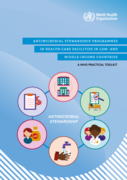
Stewardship is defined as “the careful and responsible management of something entrusted to one’s care”. It was originally applied in the health-care setting as a tool for optimizing antimicrobial use, termed “antimicrobial stewardship” (AMS). Stewardship has since be
...
en applied in the context of governance of the health sector as a whole, taking responsibility for the health and well-being of the population and guiding health systems at the national and global level.
more
The purpose of this guidance is to assist WHO Member States, and other stakeholders, in the establishment and development of programmes of integrated surveillance of antimicrobial resistance in foodborne bacteria (i.e., bacteria commonly transmitted by food). In this guidance, “integrated surveill
...
ance of antimicrobial resistance in foodborne bacteria” is defined as the collection, validation, analyses and reporting of relevant microbiological and epidemiological data on antimicrobial resistance in foodborne bacteria from humans, animals, and food, and on relevant antimicrobial use in humans and animals. Integrated surveillance of antimicrobial resistance in foodborne bacteria therefore includes data from relevant food chain sectors (animals, food and humans) and includes data on both antimicrobial resistance and antimicrobial use. Integrated surveillance of antimicrobial resistance for foodborne bacteria expands on traditional public health surveillance to include multiple elements of the food chain, and to include antimicrobial use data, to better understand the sources of infection and transmission routes.
more
Antimicrobial resistance (AMR) is a serious public health concern with economic, social and political implications that are global in scope, and cross all environmental and ethnic boundaries. As a global threat, AMR risks the achievements of modern medicine, and has the po
...
tential to impact overall global development. It is important, therefore, to elevate AMR beyond health as part of a larger development agenda in the context of the Sustainable Development Goals (SDGs). This report provides in-depth technical discussions in areas that have direct implications to the containment of AMR as a development agenda. The report is organized in five chapters which served as the technical background documents for the Biregional Technical Consultation on AMR in Asia, 14-15 April 2016. More information from the meeting is available in the WHO Meeting Report: Biregional Technical Consultation on Antimicrobial Resistance in Asia. The meeting was the first time senior officials from the Ministry of Health and Ministry of Agriculture across Asia came together to tackle AMR
more

Intensive Care Med (2009) 35:9–29DOI 10.1007/s00134-008-1336-9
Although thousands of papers have been devoted tohospital-acquired pneumonia (HAP), many controversiesremain, and management of HAP is probably often sub-optimal. Several reviews or guidelines have been pub-lished rec
...
ently, mostly by North American initiatives(CDC, ATS). Three European Societies (ERS, ESCMID andESICM) were interested in producing a document thatcould complement in some way the last IDSA/ATS guidelines published 3 years ago. In addition, the Helics
working group supported this initiative.
more
Antibiotic resistance has been recognized as a major global health threat and optimizing prescribing is one of the most effective measures to preserve the effectiveness of antibiotics. The quality of prescribing depends mostly on those prescribers belonging to clinical medical specialties
...
having direct contact with patients. These doctors, who comprise the majority of antibiotic prescribers,undergo long-term undergraduate and postgraduate training that shapes their professional knowledge and behaviour
J Antimicrob Chemother2019;74: 3611–3618doi:10.1093/jac/dkz375 Advance Access publication 3 September 2019
more
The State of the world’s nursing 2020 report provides the latest, most up-to-date evidence on and policy options for the global nursing workforce. It also presents a compelling case for considerable – yet feasible – investment in nursing education, jobs, and leadership.
The primary chapters
...
of the report outline the role and contributions of nurses with respect to the WHO “triple billion” targets; the health labour market and workforce policy levers to address the challenges to nurses working to their full potential; the findings from analysis of National Health Workforce Account (NHWA) data from 191 Member States and progress in relation to the projected shortfall of nurses by 2030; and forward-looking policy options for an agenda to strengthen the nursing workforce to deliver the Sustainable Development Goals, improve health for all, and strengthen the primary health care workforce on our journey towards universal health coverage.
more
Training module for Incident response system - Basic & Intermediate
National Institute of Disaster Management (nidm); Ministry of Home Affairs; Government of India
National Institute of Disaster Management (nidm); Ministry of Home Affairs; Government of India
(2020)
C2
Accessed: 16.04.2020

The following protocol has been designed to investigate the extent of infection, as determined by seropositivity in the general population, in any country in which COVID-19 virus infection has been reported. Each country may need to tailor some aspects of this protocol to align with public health, l
...
aboratory and clinical systems, according to capacity, availability of resources and cultural appropriateness. However, using a standardized protocol such as this one below, epidemiological exposure data and biological samples can be systematically collected and shared rapidly in a format that can be easily aggregated, tabulated and analyzed across many different settings globally for timely estimates of COVID-19 virus infection severity and attack rates, as well as to inform public health responses and policy decisions. This is particularly important in the context of a novel respiratory pathogen, such as COVID-19 virus
more
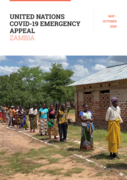
The Government of Republic of Zambia reported the first confirmed cases of COVID-19 on 18th March 2020. As of April 27th, 2020, there were 89 confirmed cases, three deaths and 42 recoveries. Confirmed cases are located in three provinces: Lusaka (83 cases), Copperbelt province (5 cases) and Central
...
(1 case). Zambia introduced a series of measures including closure of three international airports, closure of all schools, movement restrictions and closure of non-essential services such as restaurant, bar, gym and public gatherings to curb the transmission rate.
more
The focus of the current quarterly edition of Eurohealth (from the European Observatory on Health Systems and Policies) is Antimicrobial Resistance (AMR) and contains the following articles:
• Strengthening implementation of AMR national action plans
• Fostering clinical developmen
...
t and commercialisation of novel antibiotics
• Tackling AMR in the community
• Quantifying the benefits of vaccines in combating AMR
more
Strategic Advice
This evaluation report of UNICEF’s Psychosocial Support Response for Syrian Children in Jordan was conducted by
Antares Foundation team (Albertien van der Veen, Reem AbuKishk, Shadi Bushnaq, Orso Muneghina, Reem Rawdha
and Tineke van Pietersom) under the supervision of guidance Farhod Kamidov, M
...
onitoring and Evaluation Officer
and Muhammad Rafiq Khan, Child Protection Specialist (CPiE).This is achieved through community-supported child and
adolescent friendly spaces (CFSs)1 and community-based
child protection mechanisms and processes. Currently,
in its fourth year of operation as part of the Syria crisis,
UNICEF considers it an opportune moment to take stock
of the programme’s overall effectiveness to date and in so
doing to inform its future.
more
Updated 20 Nov. 2020
Countries can use this checklist of hospital governance, structures, plans and protocols to rapidly determine the current capacities of hospitals to respond to the COVID-19 pandemic and to identify gaps and major areas that require investment and action for the development of h
...
ospital readiness improvement plans. The tool can be used periodically to monitor hospital emergency operational readiness capacity development
more
Fetal alcohol spectrum disorders (FASD) represent a range of physical, mental, and behavioral disabilities caused by alcohol use during pregnancy, or prenatal alcohol exposure (PAE). FASDs are considered to be one of the leading preventable causes of developmental disability. Despite its high preval
...
ence, FASD is often misdiagnosed or underdiagnosed, making interventions more challenging or delayed.
his publication was initially developed for use in Spanish-speaking countries of the Americas and is intended to serve as a training workbook for providers of various disciplines to learn about the fundamentals of diagnosing FASD and to apply them to several case scenarios. It also discusses ethical implications of diagnosing FASD to the mother and child. Target audiences include physicians, psychologists, allied health professionals, social workers, and other providers that may encounter individuals affected by FASD. It is ideally used as a supplement for in-person training by experts in the fields of dysmorphology, epidemiology, and neuropsychology.
more
Recognizing the extent to which the COVID-19 outbreaks affects women and men differently is hugely important. Some preliminary data suggested that more men than women are dying, potentially due to sex-based immunological differences, higher rates of cardiovascular disease for men and lifestyle choic
...
es, such as smoking. However, the experiences and lessons learned from the Zika and Ebola outbreaks and the HIV pandemic demonstrate that robust gender analysis and informed, gender-integrated response are vital to strengthen the access and acceptability of the humanitarian services needed to meet the distinct needs of women and girls, as well as men and boy and LGBTI people.
more

This guideline document lays out the indicators for monitoring the 2016 Political Declaration on ending AIDS. The Global AIDS Monitoring (GAM) process has been often referenced as a benchmark for successful international accountability mechanisms.
