Filter
555
Text search:
infancy
Featured
38
130
Language
Document type
364
79
54
20
15
10
9
2
1
1
Countries
48
25
20
12
11
11
10
9
8
8
7
6
6
6
5
5
4
4
4
4
4
4
3
3
3
3
3
3
2
2
2
2
1
1
1
1
1
1
1
1
1
1
1
1
1
1
1
1
1
1
1
1
1
1
1
1
1
1
1
1
Authors & Publishers
Publication Years
Category
189
77
63
22
16
14
1
Toolboxes
89
46
31
16
15
15
15
14
9
9
6
6
6
5
5
4
4
2
1
1
Available in: English, French, Chinese, Spanish, Russian, Arabic, Thai, Korean, Tajik, Vietnamese, Uzbek
http://www.who.int/disabilities/cbr/guidelines/en/
The Priority medicines for mothers and children 2011 list was updated following the 18th Expert Committee Meeting
on Selection and Use of Medicines, the release of new treatment guidelines and feedback from partners following
the 2011 version. In alignment with the UN Global strategy f
...

WHO guidelines on the pharmacological treatment of persisting pain in children with medical illnesses
This review of the IFRC support to the Sierra Leone Red Cross Society response to the 2012 cholera outbreak provides ideas and concepts to promote a more coherent and evidence based rationale on how to make more effective use of IFRC global assets to stop, control, mitigate and respond to cholera ep
...
PLoS One. 2012; 7(4): e29656.
Published online 2012 Apr 20. doi: 10.1371/journal.pone.0029656
The curriculum, which complements the national pediatric ART training, was finalized in 2011 and was subsequently implemented nationally. The training curriculum includes a 15-module Trainer Manual, a Participant Manual, and accompanying PowerPoint slides.

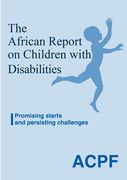
This pan-African report describes and analyses the cultural, social, physical and other societal barriers preventing children with disabilities in Africa from realising their full human potential. It also describes the opportunities, initiatives and good practices that exist, that indicate the progr
...

This is the fifteenth edition of the lecture notes. They were first published in 1987 as a summary of the material used in the biannual epilepsy teaching weekend organised under the auspices of the UK Chapter of the International League against Epilepsy.
(Lecture series consist of a total of 59 cha
...
Q3: What approaches are available to enable non-specialized health care providers to identify children with intellectual disabilities, including intellectual disabilities due to specific causes?