
Filter
358
Text search:
airborne
precautions
Featured
72
71
Language
Document type
156
111
32
25
13
8
6
3
2
1
1
Countries / Regions
21
21
21
12
11
10
9
9
8
7
6
5
5
5
5
4
4
4
3
3
3
3
3
2
2
2
2
2
2
2
2
2
2
1
1
1
1
1
1
1
1
1
1
1
1
1
1
1
1
1
1
1
Authors & Publishers
Publication Years
Category
111
35
26
22
8
5
5
Toolboxes
100
53
36
35
22
16
13
12
8
7
6
4
4
3
3
2
1
1
1
Copenhagen, Denmark, 24–25 August 2017

8–18 December 2015
4–15 February 2013

14–22 April 2015
10–21 March 2014
Humanitarian emergencies, regardless of type and cause, have a number of common risk factors for communicable diseases inextricably linked to excess risk of morbidity and mortality which can come from vaccine–preventable diseases (VPDs). The reduction of VPDs is a significant aim of public-health
...
The purpose of this document is to inform the public about biological and chemical hazards and thereby prepare the population for an immediate response in the event of an incident until public health support is provided.
The agents reported here are: Anthrax, Botulism, Haemorrhagic Fever,
...
The purpose of the WHO Manual for the Public Health Management of Chemical Incidents is to provide a comprehensive overview of the principles and roles of public health in the management of chemical incidents and emergencies. While this information is provided for each phase of the emergency cycle,
...
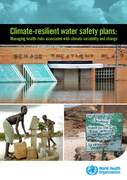
Long-term planning for an adequate and safe supply of drinking-water should be set in the context of growing external uncertainties arising from changes in the climate and environment. The water safety plan (WSP) process offers a systematic framework to manage these risks by considering the implica
...
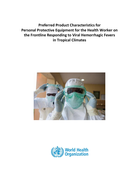
The scope of this PPC document is to serve as a guide to address the unmet public health need for a PPE system that protects the HW-F in tropical climate
s while caring for patients and providing heavy duty essential health services.
The characteristics described in this guidance are targeted fo
...

The WHO South-East Asia (SEA) Region bears a high burden of tuberculosis (TB) and MDR-TB. In 2015, the Region accounted for nearly 200 000 or 35% of the global estimated new RR/MDR-TB cases eligible for treatment. Extensively drug-resistant TB (XDRTB) has also been reported from s
...
This document provides the specifications for major pesticide application equipment used for control of vectors of diseases. The specification guidelines contained herein are intended to assist national authorities and other public health users in selecting equipment of assured quality for applicati
...
This document provides a generic model that can be used for risk assessment of exposure to insecticide products applied as indoor residual sprays. It aims to harmonize the risk assessment of such insecticides for public health use in order to generate comparable data for their registering and labell
...
Long-lasting insecticidal nets (LNs) constitute a core vector control intervention against malaria. A number of new LN products are under development and will require assessment of risks to humans. This document provides an updated generic model that can be used for the risk assessment of exposure t
...

This document highlights the key aspects of safe health-care waste management in order to guide policy-makers, practitioners and facility managers to improve such services in health-care facilities. It is based on the comprehensive WHO handbook Safe management of wastes from health-care activities (
...
2nd edition. The purpose of the WHO human health risk assessment toolkit: chemical hazards is to provide its users with guidance to identify, acquire and use the information needed to assess chemical hazards, exposures and the corresponding health risks in their given health risk assessment contexts
...

The purpose of this document is to present and promote the minimum requirements for IPC programmes at the national and health care facility level, identified by expert consensus according to available evidence and in the context of the WHO core components.
The minimum requirements are defined as: I
...
Laboratory Biossafety Manual
