
Filter
2136
Text search:
acute
respiratory
infections
Featured
301
553
Language
1969
84
64
64
39
36
17
13
9
7
5
5
4
4
3
3
3
3
3
3
3
2
2
2
2
1
1
1
1
1
1
1
1
1
1
1
1
1
1
1
1
1
1
1
1
1
1
1
1
1
1
Document type
1019
494
329
107
64
50
31
21
8
4
3
2
Countries
135
87
78
61
43
43
42
41
41
39
39
38
35
35
34
30
30
29
27
27
26
25
21
21
20
20
18
16
16
16
15
15
14
14
13
12
11
11
10
10
9
9
9
8
8
7
7
7
6
6
6
6
6
6
5
4
4
4
4
4
3
3
3
3
3
3
3
3
3
3
2
2
2
2
2
2
2
2
1
1
1
1
1
1
1
1
1
1
1
1
1
1
1
1
1
1
1
1
1
1
1
1
1
1
1
1
1
1
Authors & Publishers
373
109
81
61
60
46
38
31
21
19
16
16
16
16
13
13
12
12
12
10
10
10
10
10
10
9
9
9
8
8
8
8
8
7
7
7
7
7
7
7
7
7
6
6
6
6
6
6
6
6
5
5
5
5
5
5
5
5
5
5
5
5
4
4
4
4
4
4
4
4
4
4
4
4
4
4
4
4
4
4
4
4
4
4
4
4
4
4
4
4
4
4
4
4
4
3
3
3
3
3
3
3
3
3
3
3
3
3
3
3
3
3
3
3
3
3
3
3
3
3
3
3
3
3
3
3
3
3
3
3
3
3
3
3
3
3
3
3
3
3
3
3
3
3
2
2
2
2
2
2
2
2
2
2
2
2
2
2
2
2
2
2
2
2
2
2
2
2
2
2
2
2
2
2
2
2
2
2
2
2
2
2
2
2
2
2
2
2
2
2
2
2
2
2
2
2
2
2
2
2
2
2
2
2
2
2
2
2
2
2
2
2
2
2
2
2
2
2
2
2
2
2
2
2
2
2
2
2
2
2
2
2
2
2
2
2
2
2
2
2
2
2
2
2
2
2
2
2
2
1
1
1
1
1
1
1
1
1
1
1
1
1
1
1
1
1
1
1
1
1
1
1
1
1
1
1
1
1
1
1
1
1
1
1
1
1
1
1
1
1
1
1
1
1
1
1
1
1
1
1
1
1
1
1
1
1
1
1
1
1
1
1
1
1
1
1
1
1
1
1
1
1
1
1
1
1
1
1
1
1
1
1
1
1
1
1
1
1
1
1
1
1
1
1
1
1
1
1
1
1
1
1
1
1
1
1
1
1
1
1
1
1
1
1
1
1
1
1
1
1
1
1
1
1
1
1
1
1
1
1
1
1
1
1
1
1
1
1
1
1
1
1
1
1
1
1
1
1
1
1
1
1
1
1
1
1
1
1
1
1
1
1
1
1
1
1
1
1
1
1
1
1
1
1
1
1
1
1
1
1
1
1
1
1
1
1
1
1
1
1
1
1
1
1
1
1
1
1
1
1
1
1
1
1
1
1
1
1
1
1
1
1
1
1
1
1
1
1
1
1
1
1
1
1
1
1
1
1
1
1
1
1
1
1
1
1
1
1
1
1
1
1
1
1
1
1
1
1
1
1
1
1
1
1
1
1
1
1
1
1
1
1
1
1
1
1
1
1
1
1
1
1
1
1
1
1
1
1
1
1
1
1
1
1
1
1
1
1
1
1
1
1
1
1
1
1
1
1
1
1
1
1
1
1
1
1
1
1
1
1
1
1
1
1
1
1
1
1
1
1
1
1
1
1
1
1
1
1
1
1
1
1
1
1
1
1
1
1
1
1
1
1
1
1
1
1
1
1
1
1
1
1
1
1
1
1
1
1
1
1
1
1
1
1
1
1
1
1
1
1
1
1
1
1
1
1
1
1
1
1
1
1
1
1
1
1
1
1
1
1
1
1
1
1
1
1
1
1
1
1
1
1
1
1
1
1
1
1
1
1
1
1
1
1
1
1
1
1
1
1
1
1
1
1
1
1
1
1
1
1
1
1
1
1
1
1
1
1
1
1
1
1
1
1
1
1
1
1
1
1
1
1
1
1
1
1
1
1
1
1
1
1
1
1
1
1
1
1
1
1
1
1
1
1
1
1
1
1
1
1
1
1
1
1
1
1
1
1
1
1
1
1
1
1
1
1
1
1
1
1
1
1
1
1
1
1
1
1
1
1
1
1
1
1
1
1
1
1
1
1
1
1
1
1
1
1
1
1
1
1
1
1
1
1
1
1
1
1
1
1
1
1
1
1
1
1
1
1
1
1
1
1
1
1
1
1
1
1
1
1
1
1
1
1
1
1
1
1
1
1
1
1
1
1
1
1
1
1
1
1
1
1
1
1
1
1
1
1
1
1
1
1
1
1
1
1
1
1
1
1
1
1
1
1
1
1
1
1
1
1
1
1
1
1
1
1
1
1
1
1
1
1
1
1
1
1
1
1
1
1
1
1
1
1
1
1
1
1
1
1
1
1
1
1
1
1
1
1
1
1
1
1
1
1
1
1
1
1
1
1
1
1
1
1
1
1
1
1
1
1
1
1
1
1
1
1
1
1
1
1
1
1
1
1
1
1
1
1
1
1
1
1
1
1
1
1
1
1
1
1
1
1
1
1
1
1
1
1
1
1
1
1
1
1
1
1
1
1
1
1
1
1
1
1
1
1
1
1
1
1
1
1
1
1
1
1
1
1
1
1
1
1
1
1
1
1
1
1
1
1
1
1
1
1
1
1
1
1
1
1
1
1
1
1
1
1
1
1
1
1
1
1
1
1
1
1
1
1
1
1
1
1
1
1
1
1
1
1
1
1
1
1
1
1
1
1
1
1
1
1
1
1
1
1
1
1
1
1
1
1
1
1
1
1
1
1
1
1
1
1
1
1
1
1
1
1
1
1
1
1
1
1
1
1
1
1
1
1
1
1
1
1
1
1
1
1
1
1
1
1
1
1
1
1
1
1
1
1
1
1
1
1
1
1
1
1
1
1
1
1
1
1
1
1
1
1
1
1
1
1
1
1
1
1
1
1
1
1
1
1
1
1
1
1
1
1
1
1
1
1
1
1
1
1
1
1
1
1
1
1
1
1
1
1
1
1
1
1
1
1
1
1
1
1
1
1
1
1
1
1
1
1
1
1
1
1
1
1
1
1
1
1
1
1
1
1
1
1
1
1
1
1
1
1
1
1
1
1
1
1
1
1
1
1
1
1
1
1
1
1
1
1
1
1
1
1
1
1
1
1
1
1
1
1
1
1
1
1
1
1
1
1
1
1
1
1
1
1
1
1
1
1
1
1
1
1
1
1
1
1
1
1
1
1
1
1
1
1
1
1
1
1
1
1
1
1
1
1
1
1
1
1
1
1
1
1
1
1
1
1
1
1
1
1
1
1
1
1
1
1
1
1
1
1
1
1
1
1
1
1
1
1
1
1
1
1
1
1
1
1
1
1
1
1
1
1
1
1
1
1
1
1
1
1
1
1
1
1
1
1
1
1
1
1
1
1
1
1
1
1
1
1
1
1
1
1
1
1
1
1
1
1
1
1
1
1
1
1
1
1
1
1
1
1
1
1
1
1
1
1
1
1
1
1
1
1
1
1
1
1
1
1
1
1
1
1
1
1
1
1
1
1
1
1
1
1
1
1
1
1
1
1
1
1
1
1
1
1
1
1
1
1
1
1
1
1
1
1
1
1
1
1
1
1
1
1
1
1
1
1
1
1
1
1
1
1
1
1
1
1
1
1
1
1
1
1
1
1
1
1
1
1
1
1
1
1
1
1
1
1
1
1
1
1
1
1
1
1
1
1
1
1
1
1
1
1
1
1
1
1
1
1
1
1
1
1
1
1
1
1
1
1
1
1
1
1
1
1
1
1
1
1
1
1
1
1
1
1
1
1
1
1
1
1
1
1
1
1
1
1
1
1
1
1
1
1
1
1
1
1
1
1
1
1
1
1
1
1
1
1
1
1
1
1
1
1
1
1
1
1
1
1
1
1
1
1
1
1
1
1
1
1
1
1
1
1
1
1
1
1
1
1
1
1
1
1
Publication Years
788
1093
238
16
1
Category
989
214
125
115
82
34
27
Toolboxes
443
104
97
77
77
64
62
51
45
44
41
38
32
30
26
22
11
10
9
9
8
6
2
Les infections au SRAS-CoV-2 chez les enfants et les adolescents provoquent une maladie moins grave et moins de décès que chez les adultes. Bien qu'une évolution moins grave de l'infection soit un résultat positif, on s'inquiète du fait que des
...
symptômes légers aient pu conduire à moins de tests, ce qui a entraîné un nombre moins important de cas identifiés de COVID-19 chez les enfants. Si les enfants présentant des symptômes légers ou inexistants transmettent la maladie, ils peuvent agir comme des vecteurs de transmission au sein de leur communauté. Il est essentiel de comprendre les symptômes, l'infectivité et les modes de transmission du SRAS-CoV-2 chez les enfants et les adolescents pour développer, adapter et améliorer les mesures de contrôle du COVID-19 à tous les âges. Ce document est un résumé des connaissances actuelles concernant l'acquisition et la transmission de l'infection par le SRAS-CoV-2 et les symptômes de la maladie COVID-19 chez les enfants et les adolescents. Il vise à éclairer les décisions, en fonction des contextes locaux, sur la meilleure façon de maintenir ouvertes les écoles, les jardins d'enfants et les crèches et sur les conseils à appliquer en matière de mixité intergénérationnelle.
more
Journal of Pulmonary & Respiratory Medicine 6: 326. doi:10.4172/2161-105X.1000326
Nosocomial or health-facility-acquired infections are a serious issue, representing one of the most significant causes of morbidity and mortality in healthcare systems and consuming many scarce resources, especially in developing countries. Although
...
much has been done, particularly in the hospital setting, to reduce the risk of these infections, the problem persists and demands innovative and cost-efficient solutions.
Although the care provided in most primary health care facilities is predominantly ambulatory with few or no inpatient beds, infection prevention is still important to minimize or eliminate the risks of facility-acquired infections and assure quality patient care.
Health facilities and hospitals should have written infection control procedures and guidelines in place and should also be monitoring that these procedures are adhered to in both inpatient and ambulatory care settings.
more
Asthma is the most common chronic respiratory disease (CRD) worldwide and is estimated to affect 262 million causing significant mortality and morbidity, and has emerged as an important public health problem in many Latin American (LA) countries ove
...
r the last 30 or so years. LA is a highly diverse region in terms of geography, climate, wealth, and ethnicity including 20 different countries with 639 million inhabitants, where 40 million are estimated to have asthma. A common feature of LA countries is the high level of social inequalities3 (Figure 1). In LA, asthma prevalence in both children and adults is highly variable and, where high, is among the highest worldwide, particularly in coastal tropical cities.
more
Early detection, assessment and response to acute public health events:

Those who clean are the first line of defense against health care-associated infections (HAIs), and support efforts to reduce antimicrobial resistance (AMR).
Strengthening the training of this important group can contribute to resolving many of t
...
oday’s public health challenges. This is important given that cleaning both surfaces and hands is vital to control the transmission of a number of HAIs.
This two-part training package targets those who clean heath care facilities.
The Trainer’s Guide takes the user through how to prepare, deliver and sustain an effective training for those who clean. The Modules and Resources provides instructions, definitions, photographs, posters and specific illustrations of recommended practices
The package can be used by those who deliver environmental cleaning training programmes and/or those with a background in IPC including ministries of health, nongovernmental organizations, academic institutions, experts working in Quality of care, IPC and environmental cleaning/ Water, sanitation and Hygiene (WASH) and Health facility IPC focal points and onsite cleaning supervisors
more

Hand Hygiene and COVID-19
recommended
MEDBOX Issue Brief No.2.
The main route of transmission of the Sars-CoV-2 virus are small respiratory droplets. Therefore, thoroughly cleaning of hands with either alcohol-based hand rub or soap and water is one of the corner stones of basic protec
...
tive measures against COVID-19 for everyone. A particular focus of this Issue Brief are documents for the health care sector, but also multilingual material for the public.
more
Infectious diseases cause over one billion human infections per year, with millions of deaths each year globally. Extensive health and financial burden is seen from both established and emerging infectious diseases. Infectious diseases also affect p
...
lants and animals, which may pose threats to agriculture and water supplies with additional impacts on human health. This Question and Answers, prepared by the World Health Organization (WHO) and Convention on Biological Diversity (CBD) Secretariat under their joint work programme on biodiversity and health, and launched of the occasion of the International Day for Biodiversity 2020, summarizes some of the interlinkages between biodiversity and infectious diseases.
WHO is continuously monitoring and responding to the COVID 19 outbreak. This Q&A will be updated as more is known about COVID-19, how it is affecting people worldwide, and the effectiveness of interventions against the disease.
more
Guidelines for Diagnosing and Managing Disseminated Histoplasmosis among People Living with HIV
recommended
Histoplasmosis is a disease caused by the fungus Histoplasma capsulatum. This disease is highly endemic in some regions of North America, Central America, and South America and is also reported in certain countries of Asia and Africa. It often affects people with impaired immunity, including people
...
living with HIV, among whom the most frequent clinical presentation is disseminated histoplasmosis. The symptoms of disseminated histoplasmosis are non-specific and may be indistinguishable from those of other infectious diseases, especially disseminated tuberculosis (TB), thus complicating diagnosis and treatment. Histoplasmosis is one of the most frequent opportunistic infections caused by fungal pathogens among people living with HIV in the Americas and may be responsible for 5–15% of AIDS-related deaths every year in this Region. These guidelines aim to provide recommendations for the diagnosis, treatment, and management of disseminated histoplasmosis in persons living with HIV
more

In Kenya, the bacterial infections that contribute most to human disease are often those in which re-‐sistance is most evident. Examples are multidrug-‐resistant enteric
...
bacterial pathogens such as typhoid, diarrhoeagenic Escherichia coli and invasive non-‐typhi salmonella, penicillin-‐resistant Streptococcus pneu-‐moniae, vancomycin-‐resistant enterococci, methicillin-‐resistant Staphylococcus aureus and multidrug-‐re-‐sistant Mycobacterium tuberculosis. Resistance to medicines commonly used to treat malaria is of particu-‐lar concern, as is the emerging resistance to anti-‐HIV drugs. Often, more expensive medicines are required to treat these infections, and this becomes a major challenge in resource-‐poor settings.
more
Reproductive, Maternal, Newborn, and Child Health
Robert E. Black, Ramanan Laxminarayan, Marleen Temmerman; et al.
International Bank for Reconstruction and Development The World Bank
(2016)
CC
Disease Control Priorities –3rdEdition, Volume 2.
This book focuses on maternal conditions, childhood illness, and malnutrition. Specifically, the chapters address acute illness and undernutrition in children, principally under age 5. It also cov
...
ers maternal mortality, morbidity, stillbirth, and influences to pregnancy and pre-pregnancy. It also includes the transition to older childhood, in particular, the overlap and commonality with the child development volume
more

Updated with information on Ebola virus disease and Middle East respiratory syndrome coronavirus
A wide variety of health events ranging in severity may occur related to air transport, requiring different responses or, perhaps, no response at all.
...
The target audience for this guidance document includes the national focal points (NFP) for the IHR and public health authorities at PoE, as well as national aviation regulatory authorities, airport operators and personnel, aircraft operators, air crew and other stakeholders involved in air transport and emergency preparedness and response to public health events
more
28 Sept. 2021
The focus of this fact sheet is on the four main causes of acute bacterial meningitis:
Neisseria meningitidis (meningococcus)
Streptococcus pneumoniae (pneumococcus)
Haemophilus influenzae
Streptococcus agalacti
...
ae (group B streptococcus)
more
People with underlying noncommunicable diseases (NCDs) such as hypertension, diabetes, cardiovascular disease, chronic respiratory disease and cancer have a high risk for developing severe and even fatal COVID-19. It is important for them to strictl
...
y follow basic protective measures and make sure their chronic diseases are well managed. However, pandemics cripple health systems and compromise provision routine medical care. This technical note gives general guidance to people living with NCDs, their caregivers and family members, the public, health programme managers and health-care workers on how to reduce risks of a COVID-19 infection and maintain care for people living with NCDs during the outbreak.
more
The speed of developing diagnostics for SARS-CoV-2, the causative agent of coronavirus disease 2019 (COVID-19), has been quite remarkable. Diagnostics have focused on nucleic acid amplification testing (NAAT) to identify infected individuals in acute
...
-phase disease for timely implementation of mitigation strategies and case management. More and more immunodiagnostics, mostly rapid diagnostic tests, are being made available as an alternative to NAATs. This type of test can be used out-of-laboratory conditions at large scale.
more

Humanitarian crises exacerbate nutritional risks and often lead to an increase in acute malnutrition. Emergencies include both manmade (conflict) and natural disasters (floods, drought, cyclones, typhoons, earthquakes, volcanic eruptions, etc.). Com
...
plex emergencies are combinations of both manmade and natural disasters, often of a protracted nature. Millions of people are affected by humanitarian crises every year. The increasing frequency and scale of emergencies requires nutrition to be addressed in all phases of a response.
Crisis situations, whether acute or protracted, impact on a range of factors that can increase the risk of undernutrition, morbidity, and mortality. They may involve: the large-scale destruction of property and infrastructure; the erosion of livelihood strategies and purchasing power; a breakdown of and reduced access to essential services, including health services, water supply, and sanitation; and the displacement of large numbers of people. Emergencies can also disrupt social systems and the quality of care/feeding practices. Household access to food may be negatively affected and people may find themselves in overcrowded settlements with their families divided. As a result, at the individual level, there is often an increased risk of deteriorating health and nutritional status, resulting in a greater likelihood of death.
more
This report offers a summary of the provided support and recommendations on priority activities for IPC improvement at national and facility levels. The COVID-19 pandemic spotlighted areas for improvement in the IPC programme at national and facility levels. Improvements in the IPC programme were ac
...
hieved during the acute phase of the pandemic response. WHO will continue to support the Ministry Health of Ukraine and the Public Health Centre, as well as health facility managers and health-care providers, on the next steps to ensure the sustainability of progress achieved and to further enhance IPC in health-care settings.
more
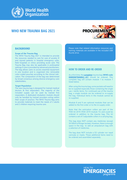
The WHO Trauma Bag 2021 is intended to provide the resources needed to care for care of acutely ill and injured patients in hospital emergency units, field hospitals or clinics providing acute care. The Trauma Bag may also be applicable in prehospi
...
tal settings if care is provided by advanced practitioners. The bag allows users to access essential equipment in one location and is organized into removable color-coded pouches according to the clinical indication. The composition of the bag was determined by broad consensus among diverse emergency care stakeholders.
The new trauma bag is designed for trained medical doctors & first responders. The majority of the included supply can be used by trained first responders. A dedicated intubation module should only be handled by trained providers acting within their scope of practice. The WHO Trauma Bag aims to provide materials to meet the needs of 2 adults and 2 children requiring trauma care
more
To improve survival and quality of life among the 2.5 million children living with HIV, a comprehensive package of prevention, care and treatment is required. This package should include management of infections such as pneumonia, diarrhoea, malaria
...
and ear infections, as well as common opportunistic infections and HIV-related co-morbidities. WHO is developing a series of guidelines on each of these conditions, following the GRADE approach. The document on the management of pneumonia and diarrhoea in HIV-infected infants and children is the first of this series. The recommendations are similar to those for non infected children, but they cover specific aspects related to HIV infection.
more
Technical Note on Antimicrobial Resistance
This document reflects UNICEF’s response to the growing global threat of AMR to child survival, growth and development. It identifies UNICEF’s AMR-specific and AMR-sensitive actions in reducing infections
...
, promoting access to and optimal use of antimicrobials, and increasing AMR awareness and understanding. Of particular relevance to this group, UNICEF country offices are directed to provide technical support for development and implementation of national AMR action plans, linking them as appropriate to maternal, newborn and child health programmes and ensuring these are prioritized in both surveillance and policy changes. The guidance note on AMR is intended to inform UNICEF’s AMR-related internal initiatives, programming and activities, as well as external engagements with governments and other stakeholders.
more
