
Filter
1042
Text search:
Health
Care
Without
Harm
Asia
Featured
Recommendations
115
New Publications
232
Language
Document type
No document type
578
Studies & Reports
194
Guidelines
142
Manuals
62
Strategic & Response Plan
25
Training Material
21
Fact sheets
8
Situation Updates
6
Infographics
4
Resource Platforms
1
Online Courses
1
Countries / Regions
Global
67
Western and Central Europe
34
India
29
Myanmar / Burma
23
South–East Asia Region
20
Asia
18
Ukraine
17
Nepal
13
Bangladesh
13
Indonesia
12
Syria
11
Eastern Europe and Central Asia
11
Latin America and the Carribbean
10
Eastern Europe
10
Philippines
9
Nigeria
8
Ethiopia
7
Afghanistan
7
Middle East and North Africa
7
Liberia
6
Uganda
6
Pakistan
6
Zambia
6
Tanzania
6
Cambodia
6
West and Central Africa
6
Africa
6
Russia
6
Thailand
5
East and Southern Africa
5
Western Pacific Region
5
Tajikistan
5
Vietnam
5
South Africa
4
Georgia
4
Sierra Leone
3
Congo, Democratic Republic of
3
Zimbabwe
3
Kenya
3
Namibia
3
Yemen
3
Iran
3
Guinea
2
USA
2
Ghana
2
Somalia
2
South Sudan
2
China
2
Malaysia
2
Malawi
2
North Macedonia
2
Croatia
2
Albania
2
Laos
2
Moldova
2
Kyrgyzstan
2
Japan
2
Senegal
1
Haiti
1
Jordan
1
Turkey
1
Rwanda
1
Singapore
1
Papua New Guinea
1
Central African Republic
1
Eswatini/ Swaziland
1
Brazil
1
Serbia
1
Colombia
1
Ecuador
1
Botswana
1
Lesotho
1
Mexico
1
Venezuela
1
Armenia
1
Qatar
1
Lithuania
1
Uzbekistan
1
Kazakhstan
1
North America
1
Turkmenistan
1
Portugal
1
Spain
1
Azerbaijan
1
Bosnia and Herzegovina
1
Authors & Publishers
Publication Years
Category
Countries
163
Clinical Guidelines
116
Women & Child Health
106
Public Health
76
Key Resources
41
Capacity Building
23
Pharmacy & Technologies
9
General Guidelines
2
Toolboxes
HIV
211
Mental Health
146
COVID-19
77
Planetary Health
50
TB
42
Refugee
33
Caregiver
33
Conflict
32
Global Health Education
29
Disability
28
Rapid Response
23
AMR
22
Natural Hazards
13
Pharmacy
12
Health Financing Toolbox
12
Specific Hazards
10
NCDs
10
Ebola
9
NTDs
9
Zika
5
Polio
4
Social Ethics
4
Cholera
3
Health Financing
1
The report focuses on several key areas where health outcomes are falling short, and provides insight into ways in which countries can improve the situation for their children and adolescents. Areas in focus include mental
...
Overwhelming evidence shows that a range of health concerns—mental illness, substance dependence, HIV/AIDS, and noncommunicable diseases—affect prisoners disproportionately. But, while incarceration poses risks to
...
Mental disorders impose an enormous burden on society, accounting for almost one in three years lived with disability globally. •In addition to their health impact, mental disorders cause a significant economic burden due to lost economic output a
...
Internally displaced persons (IDPs), refugees, migrants and returnees constitute a sizeable population in the WHO Eastern Mediterranean Region. There were 12 million refugees (half are Palestinians) and 13 million IDPs in the Region as of 2018. These populations are often vul
...
This paper reviews the effects of vertical responses to COVID-19 on health systems, services, and people’s access to and use of them in LMICs, where historic and ongoing under-investments heighten vulnerability to a multiplicity of
...
An Advocate’s Guide: Strategic Indicators for Universal Access to Sexual and Reproductive Health and Rights
recommended
This guide was prepared to enable advocates to use data
when advocating for universal access to SRHR at the national,
regional and global levels. It is a direct outcome of the Strategic
SRHR Indicators workshop held in Kuala Lumpur, Malaysia on
21-22 August for the project “Strengthening the N
...
In 1964 medical mission was challenged and called to define its distinctiveness and its special role in the context of that particular time. The consultation "Tuebingen I" clearly stated: "The Christian church has a specific task in the field of
...
The American Journal of Tropical Medicine and Hygiene Volume 106: Issue 1 p.12-14.he piece highlights a body of research that suggests tiny plastic particles could disrupt immune and endocrine systems, damage organs, and cause other health probl
...
Clinical care for severe acute respiratory infection: toolkit: COVID-19 adaptation
Clinical care for severe acute respiratory infection: toolkit: COVID-19 adaptation
Managing possible serious bacterial infection in young infants when referral is not feasible
recommended
It provides guidance on care for use in resource-limited settings or in settings where families with sick young infants do not accept or cannot access referral care, but can be managed in outpatient
...
Updated 17 April 2020
Improving care for women during pregnancy and around the time of childbirth to prevent and treat pre-eclampsia and eclampsia is a necessary step towards the achievement of the health
...
at the national and acute health care facility level
WHO Western Pacific Regional Strategy to Reduce Alcohol-Related Harm
Guidelines for the care and treatment of persons diagnosed with chronic hepatitis C virus infection
The World Health Organization’s comprehensive antenatal care (ANC) guideline WHO recommendations on antenatal care for a positive pregnancy exper
...
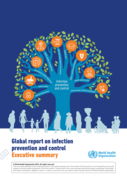
The report reveals that good IPC programmes can reduce health care infections by 70 %. oday, out of every 100 patients in acute-care hospitals, sev
...
WHO Technical Report Series, No. 961, 2011, Annex 8 - These guidelines are intended to provide a description of ways in which pharmacists can improve access to health care,
...

Cryptococcal disease is one of the most common opportunistic infections among people living with advanced HIV disease and is a major contributor to severe illness, morbidity, and mortality, particularly in sub-Saharan Africa.
These guidelines update the recommendations that were first released i
...
Assessing and improving quality and human rights in mental health and social care facilites
