
Filter
961
Text search:
European
Medicines
Agency
Featured
Recommendations
100
New Publications
212
Language
Document type
No document type
424
Studies & Reports
226
Guidelines
154
Manuals
56
Strategic & Response Plan
43
Fact sheets
29
Situation Updates
15
Training Material
9
Resource Platforms
3
Brochures
1
Online Courses
1
Countries / Regions
Western and Central Europe
60
Global
46
Ukraine
38
Eastern Europe
25
Africa
22
Sierra Leone
20
Nigeria
18
Liberia
16
Ghana
16
Kenya
16
Nepal
14
Ethiopia
12
Myanmar / Burma
12
Zambia
11
Syria
10
Latin America and the Carribbean
10
India
9
Germany
9
Eastern Europe and Central Asia
9
Guinea
8
Uganda
8
Philippines
8
Rwanda
8
South Africa
8
Bangladesh
8
Moldova
8
Congo, Democratic Republic of
7
West and Central Africa
7
Zimbabwe
6
Thailand
6
Indonesia
6
Burkina Faso
5
South Sudan
5
Tanzania
5
Malawi
5
East and Southern Africa
5
South–East Asia Region
5
Russia
5
Senegal
4
Jordan
4
Namibia
4
Brazil
4
Hungary
4
Botswana
4
Middle East and North Africa
4
Asia
4
Venezuela
4
Poland
4
Georgia
4
Pakistan
3
Cambodia
3
North Macedonia
3
Yemen
3
Albania
3
Romania
3
Jamaica
3
Morocco
2
Afghanistan
2
Lebanon
2
Mozambique
2
Sudan
2
Argentina
2
Eswatini/ Swaziland
2
Serbia
2
Western Pacific Region
2
Laos
2
Tajikistan
2
Bulgaria
2
Iran
2
Vietnam
2
Côte d’Ivoire / Ivory Coast
1
Saudi Arabia
1
Cameroon
1
Haiti
1
Somalia
1
Iraq
1
Turkey
1
Egypt
1
China
1
Benin
1
Central African Republic
1
Colombia
1
Ecuador
1
Bolivia
1
Greece
1
Lesotho
1
Mexico
1
Sri Lanka
1
Paraguay
1
Bhutan
1
Mongolia
1
Slovakia
1
Kyrgyzstan
1
Australia
1
Gabon
1
Denmark
1
Mauritius
1
Tunisia
1
United Kingdom
1
Norway
1
Portugal
1
Belarus
1
Authors & Publishers
Publication Years
Category
Countries
259
Clinical Guidelines
111
Public Health
57
Women & Child Health
41
Key Resources
28
Pharmacy & Technologies
23
Capacity Building
9
Toolboxes
AMR
90
COVID-19
89
TB
84
HIV
79
Mental Health
66
Pharmacy
53
Conflict
45
Rapid Response
32
Planetary Health
31
Ebola
27
Global Health Education
26
Refugee
23
Disability
18
NCDs
18
Health Financing Toolbox
15
Caregiver
14
NTDs
13
Natural Hazards
9
Zika
7
Specific Hazards
5
Polio
4
Cholera
2
To assess national-level responses to NCDs, WHO has implemented NCD country capacity surveys periodically since 2001. This report is the latest in that series. Since the first survey round, the NCD Country Capacity Survey (NCD CCS) has been conducted a further seven times, most recently in 2021. In
...

A System of Health Accounts 2011: Revised Edition provides an updated and systematic description of the financial flows related to the consumption of health care goods and services. As demands for information increase and more countries implement and institutionalise health accounts according to the
...
This report provides an overview of the operations and activities of the WHO Country Office in Ukraine in 2023. Despite the acute health impacts of the war in Ukraine, the Country Office continued its work according to its core mandate. WHO supported the Government of Ukraine in managing the health
...
The objectives of these WHO guidelines are to provide updated evidence- based recommendations for the treatment of persons with hepatitis C infection using, where possible, all DAA-only combinations. The guidelines also provide recommendations on the preferred regimens based on a patient’s HCV gen
...

Cryptococcal disease is one of the most common opportunistic infections among people living with advanced HIV disease and is a major contributor to severe illness, morbidity, and mortality, particularly in sub-Saharan Africa.
These guidelines update the recommendations that were first released i
...
WHO Pharmacovigilance indicators: a practical manual for the assessment of pharmacovigilance systems
This manual provides a practical method for determining the pharmacovigilance indices. It is designed to be simple and can be understood by any worker in pharmacovigilance without formal training in monitoring and evaluation. Pharmacovigilance as a medical discipline is crucial in preventing medicin
...

The aim of these Guidelines is to provide a framework for the conservation and sustainable use of plants in medicine. To do this, the Guidelines describe the various tasks that should be carried out to ensure that where medicinal plants are taken from the wild, they are taken on a basis that is sust
...
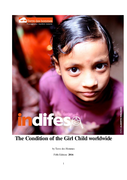
In the last five years, i.e. how old turned the Campaign “Indifesa” (Defenceless) in 2016, that was launched by Terre des Hommes in 2012, the world has become smaller. One can actually say that the derangements following the Arab Spring in 2011 reshuffled what is stable and what produces instabi
...
WHO published guidance for clinicians and health care decision-makers on the use of corticosteroids in patients with COVID-19.
We recommend systemic corticosteroids for the treatment of patients with severe and critical COVID-19. We suggest not to use corticosteroids in the treatment of patients
...
Tuberculosis (TB) is, and should be, a curable disease; however, each year significant numbers of patients acquire or develop drug-resistant TB, which has a much lower cure rate. Patients with drug-resistant TB have a high prevalence of symptoms; hence, staff caring for these patients should h
...
Following the 2014 Euromaidan Revolution, Ukraine embarked on a national reform program to reduce widespread corruption within government. In the health sector, the government introduced several complementary reforms that aimed to improve the health outcomes of Ukrainian citizens, but designed in su
...
Monitoring financial protection and utilization of health services in Mongolia 2009-2018 is based on national representative household socioeconomic surveys. The study finds that between 2009 and 2018, despite ambitious health reforms, the incidence of catastrophic health spending and impoverishing
...

The development of this Operational Roadmap has been driven by a growing consensus in Ukraine on the need to prioritize activities that are urgently required to address the mental health and psychosocial needs of the country’s population and also the importance of basing the response on existing s
...
For thousands of years, humans have been using wildlife for commercial and subsistence purposes. Wildlife trade takes place at local, national and international levels, with different forms of wildlife, such as live animals, partly processed products and finished products. Wildlife is a vital source
...

WHO/Europe has launched a new guide, providing support to countries on how to apply behavioural and cultural insights (BCI) for health. It presents a simple step-wise approach, complemented by a rich collection of detailed considerations, tools and exercises. The guide is the first of its kind, spec
...
This Indicator-Based Pharmacovigilance Assessment Tool (IPAT) was developed as a comprehensive performance metric for pharmacovigilance and medicine safety systems.
front cover © Jonathan Hyams/Save the Children
Given that the emergency has exceeded the worst-case scenario, this revised supplementary appeal for the Ukraine situation outlines UNHCR’s additional requirements of $1.246 billion for March to December 2022.
