
Filter
411
Text search:
D.
Yu
Featured
Recommendations
46
New Publications
44
Language
Document type
No document type
132
Guidelines
115
Studies & Reports
102
Manuals
26
Fact sheets
17
Strategic & Response Plan
10
Infographics
4
Training Material
2
Situation Updates
2
Resource Platforms
1
Countries / Regions
Brazil
21
Russia
21
Global
18
Germany
13
Latin America and the Carribbean
10
South Africa
9
Vietnam
9
India
6
Mozambique
6
Argentina
6
Ukraine
6
Myanmar / Burma
6
Asia
6
Spain
6
Philippines
5
Cambodia
5
Middle East and North Africa
5
Ghana
4
Kenya
4
Rwanda
4
Peru
4
Angola
4
Western and Central Europe
4
Paraguay
4
Africa
4
Laos
4
Syria
3
China
3
Yemen
3
Eastern Europe and Central Asia
3
Eastern Europe
3
Portugal
3
Nigeria
2
Guinea-Bissau
2
Uganda
2
Tanzania
2
Colombia
2
Ecuador
2
Western Pacific Region
2
France
2
Burkina Faso
1
Sierra Leone
1
Senegal
1
Congo, Democratic Republic of
1
Mali
1
Cameroon
1
Zimbabwe
1
Jordan
1
Lebanon
1
Turkey
1
Malawi
1
Sudan
1
Austria
1
Switzerland
1
Botswana
1
Guatemala
1
Lesotho
1
Chile
1
East and Southern Africa
1
West and Central Africa
1
South–East Asia Region
1
Italy
1
Tajikistan
1
United Kingdom
1
Authors & Publishers
Publication Years
Category
Countries
133
Clinical Guidelines
27
Public Health
26
Women & Child Health
9
Key Resources
6
Pharmacy & Technologies
5
Capacity Building
1
Toolboxes
COVID-19
139
Mental Health
35
HIV
28
TB
24
Planetary Health
24
Disability
18
AMR
15
NCDs
13
Rapid Response
12
NTDs
12
Pharmacy
11
Ebola
10
Refugee
8
Caregiver
8
Health Financing Toolbox
4
Cholera
2
Polio
2
Zika
2
Conflict
1
Natural Hazards
1
Global Health Education
1
Climate change is already having severe impacts across our planet, bringing new and previously unimaginable challenges to the people least responsible for greenhouse gas emissions.
This report, the first we’ve released jointly in the history of our organizations, provides a sobering review of h
...
This policy brief aims to provide a review of the current progress on implementing the Malawi national action plan on AMR, identifies critical gaps, and highlights findings to accelerate further progress in the human health sector. The target audience includes all those concerned with implementing a
...
The Quadripartite Organizations – the Food and Agriculture Organization of the United Nations (FAO), the United Nations Environment Programme (UNEP), the World Organisation for Animal Health (WOAH, founded as OIE), and the World Health Organization (WHO) – collaborate to drive the change and tra
...
This policy brief aims to provide a review of the current progress on implementing the Kenya national action plan on AMR, identifies critical gaps, and highlights findings to accelerate further progress in the human health sector. The target audience includes all those concerned with implementing ac
...
What are the FP and CAC competencies?
Through the clear articulation of the family planning and comprehensive abortion care (FP and CAC) competencies for the primary health care workforce, the aim is to advance improvements in FP and CAC service delivery by aligning health worker education approach
...

Mali national action plan on antimicrobial resistance: review of progress in the human health sector
This policy brief aims to provide a review of the current progress on implementing the Mali national action plan on AMR, identifies critical gaps, and highlights findings to accelerate further progress in the human health sector. The target audience includes all those concerned with implementing act
...

The desired impact of the OH JPA is a world better able to prevent, predict, detect and
respond to health threats and improve the health of humans, animals, plants and the
environment while contributing to sustainable development. The OH JPA aims to work
towards this vision in the following way:
...
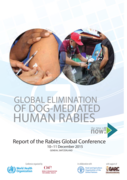
Rabies remains an under-reported neglected zoonosis with a case-fatality rate of almost 100% in humans and animals. Dog-mediated human rabies causes tens of thousands of human deaths annually despite being 100% preventable. More than 95% of human cases are caused by the bite of a rabies-infected dog
...
This paper introduces a new dataset of official financing—including foreign aid and other forms of concessional and non-concessional state financing—from China to 138 countries between 2000 and 2014. We use these data to investigate whether and to what extent Chinese aid affects economic growth
...
Hepatitis B (HBV) infection is a major public health problem and cause of chronic liver disease.
The 2024 HBV guidelines provide updated evidence-informed recommendations on key priority topics. These include expanded and simplified treatment criteria for adults but now also for adolescents; expa
...
Providing quality, stigma-free services is essential to equitable health care for all and achieving global HIV goals and broader Sustainable Development Goals related to health. Every person has the right to the highest attainable standard of physical and mental health. Countries have a legal obliga
...
The Implementation toolkit for accessible telehealth services provides practical guidance to support governments, industry partners, health service providers and civil society groups in the use and implementation of the WHO-ITU Global standard for accessibility of telehealth services. The toolkit is
...
Volume 2 · Supplement 4 · November 2016
ISSN 2055-66-40 – Print
Foreword
| ISSN 2055-66-59 – Online
www.viruseradication.com
Phil. Trans. R. Soc. B (2010) 365, 2959–2971; doi:10.1098/rstb.2010.0143.
Agricultural ecosystems provide humans with food, forage, bioenergy and pharmaceuticals and are essential to human wellbeing. These systems rely on ecosystem services provided by natural ecosystems, including pollination, b
...
European Journal of Biomedical and Pharmaceutical Sciences, vol.3 (2016) 1, 192-206
This review shows that if all sub areas of pharmaceutical waste management can efficiently work back to back environmental pollution and dangers to human health can reduce significantly.
February 2020Earth's Future 8(2):e2019EF001377.The water planetary boundary attempts to provide a global limit to anthropogenic water cycle modifications, but it has been challenging to translate and apply it to the regional and local scales at which water problems and management typically occur. We
...
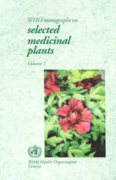
• provide scientific information on the safety, efficacy, and quality control/ quality assurance of widely used medicinal plants, in order to facilitate their appropriate use in Member States;
• provide models to assist Member States in developing their own mono- graphs or formularies for these
...
Available in: English, French, Chinese, Spanish, Russian, Arabic, Thai, Korean, Tajik, Vietnamese, Uzbek
http://www.who.int/disabilities/cbr/guidelines/en/

Diretrizes RBC
