
Filter
2860
Text search:
Prevention
of
disability
Featured
263
677
Language
2749
93
70
61
36
24
20
10
8
6
5
5
4
4
4
3
3
3
3
3
3
3
3
3
2
2
2
2
2
2
2
2
2
2
2
1
1
1
1
1
1
1
1
1
1
1
1
1
1
1
1
1
1
Document type
1684
471
286
164
134
41
36
23
8
5
5
3
Countries
156
147
77
62
61
52
50
49
47
47
41
40
40
39
35
34
34
34
32
30
29
28
25
25
24
24
22
19
19
19
18
16
15
15
12
11
11
11
10
10
9
9
9
9
9
9
8
8
7
7
7
6
6
6
6
6
5
5
5
5
5
5
5
5
5
4
4
4
4
4
3
3
3
3
3
2
2
2
2
2
2
2
2
2
2
2
2
2
2
2
2
2
2
2
2
2
2
2
1
1
1
1
1
1
1
1
1
1
1
1
1
1
1
1
1
1
1
1
1
1
1
1
1
1
1
1
1
1
1
1
1
1
1
Authors & Publishers
400
138
120
105
86
61
60
48
37
34
23
22
20
20
20
19
16
16
16
15
15
14
13
13
12
12
12
12
11
11
10
10
10
9
9
9
9
9
9
9
8
8
8
8
8
8
8
8
8
7
7
7
7
7
7
7
7
7
7
7
7
6
6
6
6
6
6
6
6
6
6
6
6
6
5
5
5
5
5
5
5
5
5
5
5
5
5
5
5
5
5
5
5
5
5
4
4
4
4
4
4
4
4
4
4
4
4
4
4
4
4
4
4
4
4
4
4
4
4
4
4
4
4
4
4
4
4
4
4
4
4
4
4
3
3
3
3
3
3
3
3
3
3
3
3
3
3
3
3
3
3
3
3
3
3
3
3
3
3
3
3
3
3
3
3
3
3
3
3
3
3
3
3
3
3
3
3
3
3
3
3
3
3
3
3
3
3
3
3
2
2
2
2
2
2
2
2
2
2
2
2
2
2
2
2
2
2
2
2
2
2
2
2
2
2
2
2
2
2
2
2
2
2
2
2
2
2
2
2
2
2
2
2
2
2
2
2
2
2
2
2
2
2
2
2
2
2
2
2
2
2
2
2
2
2
2
2
2
2
2
2
2
2
2
2
2
2
2
2
2
2
2
2
2
2
2
2
2
2
2
2
2
2
2
2
2
2
2
2
2
2
2
2
2
2
2
2
2
2
2
2
2
2
2
2
2
2
2
2
2
2
2
2
2
2
2
2
2
2
2
2
2
2
2
2
2
2
2
2
2
2
2
1
1
1
1
1
1
1
1
1
1
1
1
1
1
1
1
1
1
1
1
1
1
1
1
1
1
1
1
1
1
1
1
1
1
1
1
1
1
1
1
1
1
1
1
1
1
1
1
1
1
1
1
1
1
1
1
1
1
1
1
1
1
1
1
1
1
1
1
1
1
1
1
1
1
1
1
1
1
1
1
1
1
1
1
1
1
1
1
1
1
1
1
1
1
1
1
1
1
1
1
1
1
1
1
1
1
1
1
1
1
1
1
1
1
1
1
1
1
1
1
1
1
1
1
1
1
1
1
1
1
1
1
1
1
1
1
1
1
1
1
1
1
1
1
1
1
1
1
1
1
1
1
1
1
1
1
1
1
1
1
1
1
1
1
1
1
1
1
1
1
1
1
1
1
1
1
1
1
1
1
1
1
1
1
1
1
1
1
1
1
1
1
1
1
1
1
1
1
1
1
1
1
1
1
1
1
1
1
1
1
1
1
1
1
1
1
1
1
1
1
1
1
1
1
1
1
1
1
1
1
1
1
1
1
1
1
1
1
1
1
1
1
1
1
1
1
1
1
1
1
1
1
1
1
1
1
1
1
1
1
1
1
1
1
1
1
1
1
1
1
1
1
1
1
1
1
1
1
1
1
1
1
1
1
1
1
1
1
1
1
1
1
1
1
1
1
1
1
1
1
1
1
1
1
1
1
1
1
1
1
1
1
1
1
1
1
1
1
1
1
1
1
1
1
1
1
1
1
1
1
1
1
1
1
1
1
1
1
1
1
1
1
1
1
1
1
1
1
1
1
1
1
1
1
1
1
1
1
1
1
1
1
1
1
1
1
1
1
1
1
1
1
1
1
1
1
1
1
1
1
1
1
1
1
1
1
1
1
1
1
1
1
1
1
1
1
1
1
1
1
1
1
1
1
1
1
1
1
1
1
1
1
1
1
1
1
1
1
1
1
1
1
1
1
1
1
1
1
1
1
1
1
1
1
1
1
1
1
1
1
1
1
1
1
1
1
1
1
1
1
1
1
1
1
1
1
1
1
1
1
1
1
1
1
1
1
1
1
1
1
1
1
1
1
1
1
1
1
1
1
1
1
1
1
1
1
1
1
1
1
1
1
1
1
1
1
1
1
1
1
1
1
1
1
1
1
1
1
1
1
1
1
1
1
1
1
1
1
1
1
1
1
1
1
1
1
1
1
1
1
1
1
1
1
1
1
1
1
1
1
1
1
1
1
1
1
1
1
1
1
1
1
1
1
1
1
1
1
1
1
1
1
1
1
1
1
1
1
1
1
1
1
1
1
1
1
1
1
1
1
1
1
1
1
1
1
1
1
1
1
1
1
1
1
1
1
1
1
1
1
1
1
1
1
1
1
1
1
1
1
1
1
1
1
1
1
1
1
1
1
1
1
1
1
1
1
1
1
1
1
1
1
1
1
1
1
1
1
1
1
1
1
1
1
1
1
1
1
1
1
1
1
1
1
1
1
1
1
1
1
1
1
1
1
1
1
1
1
1
1
1
1
1
1
1
1
1
1
1
1
1
1
1
1
1
1
1
1
1
1
1
1
1
1
1
1
1
1
1
1
1
1
1
1
1
1
1
1
1
1
1
1
1
1
1
1
1
1
1
1
1
1
1
1
1
1
1
1
1
1
1
1
1
1
1
1
1
1
1
1
1
1
1
1
1
1
1
1
1
1
1
1
1
1
1
1
1
1
1
1
1
1
1
1
1
1
1
1
1
1
1
1
1
1
1
1
1
1
1
1
1
1
1
1
1
1
1
1
1
1
1
1
1
1
1
1
1
1
1
1
1
1
1
1
1
1
1
1
1
1
1
1
1
1
1
1
1
1
1
1
1
1
1
1
1
1
1
1
1
1
1
1
1
1
1
1
1
1
1
1
1
1
1
1
1
1
1
1
1
1
1
1
1
1
1
1
1
1
1
1
1
1
1
1
1
1
1
1
1
1
1
1
1
1
1
1
1
1
1
1
1
1
1
1
1
1
1
1
1
1
1
1
1
1
1
1
1
1
1
1
1
1
1
1
1
1
1
1
1
1
1
1
1
1
1
1
1
1
1
1
1
1
1
1
1
1
1
1
1
1
1
1
1
1
1
1
1
1
1
1
1
1
1
1
1
1
1
1
1
1
1
1
1
1
1
1
1
1
1
1
1
1
1
1
1
1
1
1
1
1
1
1
1
1
1
1
1
1
1
1
1
1
1
1
1
1
1
1
1
1
1
1
1
1
1
1
1
1
1
1
1
1
1
1
1
1
1
1
1
1
1
1
1
1
1
1
1
1
1
1
1
1
1
1
1
1
1
1
1
1
1
1
1
1
1
1
1
1
1
1
1
1
1
1
1
1
1
1
1
1
1
1
1
1
1
1
1
1
1
1
1
1
1
1
1
1
1
1
1
1
1
1
1
1
1
1
1
1
1
1
1
1
1
1
1
1
1
1
1
1
1
1
1
1
1
1
1
1
1
1
1
1
1
1
1
1
1
1
1
1
1
1
1
1
1
1
1
1
1
1
1
1
1
1
1
1
1
1
1
1
1
1
1
1
1
1
1
1
1
1
1
1
1
1
1
1
1
1
1
1
1
1
1
1
1
1
1
1
1
1
1
1
1
1
1
1
1
1
1
1
1
1
1
1
1
1
1
1
1
1
1
1
1
1
1
1
1
1
1
1
1
1
1
1
1
1
1
1
1
1
1
1
1
1
1
1
1
1
1
1
1
1
1
1
1
1
1
1
1
1
1
1
1
1
1
1
1
1
1
1
1
1
1
1
1
1
1
1
1
1
1
1
1
1
1
1
1
1
1
1
1
1
1
1
1
1
1
1
1
1
1
1
1
1
1
1
1
1
1
1
1
1
1
1
1
1
1
1
1
1
1
1
1
1
1
1
1
1
1
1
1
1
1
1
1
1
1
1
1
1
1
1
1
1
1
1
1
1
1
1
1
1
1
1
1
1
1
1
1
1
1
1
1
1
1
1
1
1
1
1
1
1
1
1
1
1
1
1
1
1
1
1
1
1
1
1
1
1
1
1
1
1
1
1
1
1
1
1
1
1
1
1
1
1
1
1
1
1
1
1
1
1
1
1
1
1
1
1
1
1
1
1
1
1
1
1
1
1
1
1
1
1
1
1
1
1
1
1
1
1
1
1
1
1
1
1
1
1
1
1
1
1
1
1
1
1
1
1
1
1
1
1
1
1
1
1
1
1
1
1
1
1
1
1
1
1
1
1
1
1
1
1
1
1
1
1
1
1
1
1
1
1
1
1
1
1
1
1
1
1
1
1
1
1
1
1
1
1
1
1
1
1
1
1
1
1
1
1
1
1
1
1
1
1
1
1
1
1
1
1
1
1
1
1
1
1
1
1
1
1
1
1
1
1
1
1
1
1
1
1
1
1
1
1
1
1
1
1
1
1
1
1
1
1
1
1
1
1
1
1
1
1
1
1
1
1
1
1
1
1
1
1
1
1
1
1
1
1
1
1
1
1
1
1
1
1
1
1
1
1
1
1
1
1
1
1
1
1
1
1
1
1
1
1
1
1
1
1
1
1
1
1
1
1
1
1
1
1
1
1
1
1
1
1
1
1
1
1
1
1
1
1
1
1
1
1
1
1
1
1
1
1
1
1
1
1
1
1
1
1
1
1
1
1
1
1
1
1
1
1
1
1
1
1
1
1
1
1
1
1
1
1
1
1
1
1
1
1
1
1
1
1
1
1
1
1
1
1
1
1
1
1
1
1
1
1
1
1
1
1
1
1
1
1
1
1
1
1
1
1
1
1
1
1
1
1
1
1
1
1
1
1
1
1
1
1
1
1
1
1
1
1
1
1
1
1
1
1
1
1
1
1
1
1
1
1
1
1
1
1
1
1
1
1
1
1
1
1
1
1
1
1
1
1
1
1
1
1
1
1
1
1
1
1
1
1
1
1
1
1
1
1
1
1
1
1
1
1
1
1
1
1
1
1
1
1
1
1
1
1
1
1
1
1
1
1
1
1
1
1
1
1
1
1
1
1
1
1
1
1
1
1
1
1
1
1
1
1
1
1
1
1
1
1
1
1
1
1
1
1
1
1
1
1
1
1
1
1
1
1
1
1
1
1
1
1
1
1
1
1
1
1
1
1
1
1
1
1
1
1
1
1
1
1
1
1
1
1
1
1
1
1
1
1
1
1
1
1
1
1
1
1
1
1
1
1
1
1
1
1
1
1
1
1
1
1
1
1
1
1
1
1
1
1
1
1
1
1
1
1
1
1
1
1
1
1
1
1
1
1
1
1
1
1
1
1
1
1
1
1
1
1
1
1
1
1
1
1
1
1
1
1
1
1
1
1
1
1
1
1
1
1
1
1
1
1
1
1
1
1
1
1
1
1
1
1
1
1
1
1
1
1
1
1
1
1
1
1
1
1
1
1
1
1
1
1
1
1
1
1
1
1
1
1
1
1
1
1
1
1
1
1
1
1
1
1
1
1
1
1
1
1
1
1
1
1
1
1
1
1
1
1
1
1
1
1
1
1
1
1
1
1
1
1
1
1
1
Publication Years
783
1781
284
12
Category
1014
245
240
185
79
45
6
3
2
Toolboxes
430
296
196
129
123
101
91
82
73
73
57
46
41
30
28
25
24
14
9
9
4
3
2
Nutrition Cluster Handbook
recommended
Josephine Ippe, Diane Holland, Leah Richardson, et al.
The Global Nutrition Cluster, UNICEF
(2013)
C1
The purpose of the handbook is to provide those involved in nutrition coordination with relevant tools, guidance, information and resources to support their roles in facilitating predictable, coordinated and effective preparation for, and responses
...
to, nutrition needs in humanitarian emergencies. Rather than being prescriptive, the handbook aims to raises key issues encountered to date.
more

Psychosocial Support and Social and Emotional Learning for Children and Youth in Emergency Settings
recommended
The purpose of this paper is to clarify relevant terminologies and approaches relating to psychosocial well-being and social and emotional learning (SEL) in education in crisis affected contexts, and to explore how psychosocial support (PSS) and soc
...
ial and emotional learning relate to one another.
more
This article reexamines a set of study findings that directly relate to the influence of gender on workplace violence, synthesizes these findings with other research from Rwanda, and examines the su
...
bsequent impact of the study on Rwanda’s policy environment.
more

The Republic of the Union of Myanmar is at a historic moment, with a new civilian government assuming power in 2016. The country graduated to lower-middle-income status in 2015, and has made signifi
...
cant progress in reducing poverty, improving food security and addressing malnutrition.
The remaining challenges to food and nutrition security and achievement of Sustainable Development Goal 2 targets include continued population displacements resulting from conflict, vulnerability to extreme weather events, poverty, limited social protection coverage, high malnutrition and persistent gender inequalities. more
The remaining challenges to food and nutrition security and achievement of Sustainable Development Goal 2 targets include continued population displacements resulting from conflict, vulnerability to extreme weather events, poverty, limited social protection coverage, high malnutrition and persistent gender inequalities. more
Adolescent Mental Health
Chiara Servili, Juliana Yartey, M.T. Yasamy, et. al.
World Health Organization WHO, UNICEF
(2012)
C_WHO
Mapping actions of nongovernmental organizations and other international development organizations
The objective of this guideline is to present the complete set of all WHO recommendations and best practice statements relating to abortion. While legal, regulatory, policy and service-delivery cont
...
exts may vary from country to country, the recommendations and best practices described in this document aim to enable evidence-based decision-making with respect to quality abortion care.
This guideline updates and replaces the recommendations in all previous WHO guidelines on abortion care
more

In the course of implementing a recently funded network of hubs for building capacities in mental health service development, training, and research (RedeAmericas), the peer support workers are bein
...
g introduced into the mental health workforce in three Latin American countries for the very first time. They will be part of a team, along with community mental health workers, that provides a modified Critical Time Intervention to individuals with severe psychiatric disorders living in the community. This article reviewed the background of this increasingly widespread development, and discussed its merits, as well as potential obstacles within local contexts.
more
Status Report on prison health in Europe
World Health Organization (Europe)
(2019)
C_WHO
Overwhelming evidence shows that a range of health concerns—mental illness, substance dependence, HIV/AIDS, and noncommunicable diseases—affect prisoners disproportionately. But, while incarceration poses risks to health—including inadequate n
...
utrition and exposure to violence—prisons also present important opportunities to promote health and risk reduction that need to be tapped.
Some recommended remedies:
Health ministries, not ministries of justice, should manage health care responsibilities
Ensure that testing is available, but not mandatory, for infectious diseases
Make prison health part of the broader public health agenda
more
When women lead - Change happens
UNAIDS (Joint United Nations Programme on HIVAIDS)
UNAIDS (Joint United Nations Programme on HIVAIDS)
(2017)
C2
Women advancing the end of AIDS

Rwanda first confirmed cases of coronavirus disease 2019 (COVID-19) in March 2020. Although the number of cases has been low, health system resources are being redirected to respond and an increasin
...
g number of children are affected by the socio-economic impacts of the pandemic, including disruptions to schooling and heightened protection risks.
While Rwanda remained Ebola-free during the outbreak, it remains a priority country and continues to maintain its Ebola preparedness. Rwanda is also home to 147,000 refugees, half of whom are children, who require assistance in and outside of camps.1 In 2021, UNICEF will continue to deliver life-saving services to refugees and children and families affected by COVID-19 and its socio-economic impacts, and maintain its Ebola preparedness and contingency planning.
more
This paper provides case studies of several food product improvement policies from across the WHO European Region. The aim is to share country experience, assess the various merits of the different
...
approaches, discuss lessons learned, and provide guidance for best practice that may be more widely applicable across the European Region.
more

The purpose of the toolkit is to bring together existing learning and guidance as a starting point for stakeholders to begin SRH preparedness work. Within the SRH sector the field of preparedness is
...
relatively new and growing. More collective effort is required to further evaluate the impact of preparedness efforts and push the field forward. This effort is a first attempt at a draft guidance for SRH preparedness, and is intended for field testing. The toolkit recognizes the longstanding work of the field of emergency and disaster risk management, and endeavors to bridge that work with the human rights-oriented and peoplecentered field of sexual and reproductive health.
more
This article looks at the Baseline Standards developed by the International Society for Paediatric
Oncology (SIOP) for paediatric oncology nursing care in low- and middle-income countries. The
Baseline Standards lay the foundation for effective care and address barriers such as inadequate
staffin
...
g levels, lack of support, limited access to nurse education and unsafe nursing environments.
more
The mhGAP community toolkit: field test version is an integral part of WHO's Mental Health Gap Action Programme (mhGAP), and aims at scaling up services for people with mental health conditions to achieve universal health coverage.
The toolkit p
...
rovides guidance for programme managers on how to identify local mental health needs and tailor community services to match these needs. It offers practical information and necessary tools for community providers to promote mental health, prevent mental health conditions and expand access to mental health services.
more

The development of this Operational Roadmap has been driven by a growing consensus in Ukraine on the need to prioritize activities that are urgently required to address the mental health and psychosocial needs
...
of the country’s population and also the importance of basing the response on existing structures, resources and innovations introduced in reforms in past years.
According to this consensus, new resources mobilized by and for Ukraine should complement existing ones, in line with the national vision and with best international standards, and should be planned in a way that further strengthens the country’s mental health system.
The Government of Ukraine is committed to urgently addressing the mental health and psychosocial needs of the population, under the auspices of the First Lady of Ukraine and the leadership of the recently established Intersectoral Coordination Council for Mental Health and Psychological Assistance to Victims of the Armed Aggression of the Russian Federation against Ukraine (referred to in this document as the Intersectoral Coordination Council).
This Roadmap has been developed following a series of consultations with Ukrainian authorities and national and international agencies working in the area of mental health and psychosocial support (MHPSS) and engaged in emergency response in Ukraine. The consultation process was organized by the Ministry of Health of Ukraine (MOH) and supported by WHO Ukraine, under the auspices of the First Lady of Ukraine and in collaboration with the MHPSS Technical Working Group of Ukraine (MHPSS TWG Ukraine) and the IASC MHPSS Reference Group (IASC MHPSS RG), and building on substantial advances in the mental health sector under existing programmes in the country.
The Roadmap is informed by international technical guidance and national policies and plans, including the IASC Guidelines on MHPSS in Emergency Settings, the Minimum Services Package for MHPSS in Emergencies (MHPSS MSP), the IASC Common Monitoring and Evaluation Framework, the World Health Organization (WHO)’s Comprehensive Mental Health Action Plan 2013– 2030, the WHO European Framework for Action on Mental Health, the Concept for Development of Mental Health Care in Ukraine until 2030, the National Mental Health Action Plan for 2021–2023 and the National Recovery and Development Plan.
Informed by the overall goal of MHPSS assistance in Ukraine – to reduce suffering and improve the mental health and psychosocial well-being of the affected population – the Roadmap aims to provide a consolidated overview of envisioned MHPSS priorities, informed by the local context and the vision of the Government of Ukraine together with national and international partners, and with the best available evidence and resources, to all MHPSS stakeholders already engaged in or joining emergency response and recovery efforts in Ukraine.
As well as information on the context in Ukraine, the Roadmap includes:
• a list of evidence-based MHPSS interventions and services contextualized and introduced in Ukraine in recent years (described in Table 1) and
• a set of multisectoral actions to scale up MHPSS services in both the short and longer terms, informed by available evidence, international technical guidance and expert consensus (described in Table 2).
more

Despite the significant role of vector control in national leishmaniasis control programmes, the programmatic community perceives vector control as the weakest component of leishmaniasis control str
...
ategies in terms of resources, scientific evidence of the usefulness of interventions and capacity for quality-assured implementation. Therefore, the main objective of this manual is to provide practical tools, techniques and procedures to strengthen sand fly control and surveillance in order to improve implementation of leishmaniasis control programmes. The manual provides a rationale for programme managers in different geographical regions on the types of vector control interventions to be used in different epidemiological and environmental settings and also how to measure their impact.
more
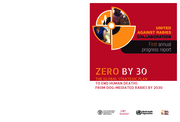
Rabies is entirely preventable, and vaccines, medicines, tools and technologies have long
been available to prevent people from dying of dog-mediated rabies. Nevertheless, rabies still
kills about 60 000 people a year,
...
of whom over 40% are children under 15, mainly in rural areas
of economically disadvantaged countries in Africa and Asia. Of all human cases, up to 99% are
acquired from the bite of an infected dog.
more

Rebuilding Liberia’s health system is crucial for improving the country’s overall health outcomes. This annual report highlights key achievements, challenges,and lessons learned in implementing programmes of technical cooperation with the Gov
...
ernment of Liberia from January to December 2022. The key achievements are summarized under the thematic areas of Universal Health Coverage, Health Emergencies and Corporate and Enabling Support.
more

The development of this draft Proposed programme budget 2022–2023 comes at a unique moment for WHO. The world is in the grip of the coronavirus disease (COVID-19) pandemic and faces health, social
...
and economic consequences on an unprecedented scale. Although it is not known when the COVID-19 pandemic will end, recent encouraging vaccine results, in addition to the examples of countries that have achieved good results through public health measures, hold out the prospect of better days ahead. The full impact of the pandemic cannot yet be determined. But whatever its implications, the Secretariat will rise to the challenge and is ready to adapt so that it is fully equipped to support Member States for any eventuality in the future – to make sure that the world will never again have to face this kind of crisis.
more
