
Filter
1820
Text search:
News
Featured
176
442
Language
1639
75
64
54
32
31
29
9
9
9
7
4
4
3
3
3
3
3
3
3
3
3
3
2
2
2
2
2
2
2
2
2
2
2
2
1
1
1
1
1
1
1
1
1
1
1
1
1
1
1
1
1
1
1
1
1
1
Document type
922
379
149
122
64
44
43
36
26
11
10
7
4
3
Countries
87
58
42
41
40
38
36
33
32
30
29
28
28
27
26
25
24
23
23
22
21
20
19
18
18
17
17
17
14
13
13
13
13
13
12
11
10
10
10
9
9
8
8
7
7
7
7
6
6
6
6
6
5
5
5
5
5
5
5
5
5
5
4
4
4
4
4
4
3
3
3
3
3
3
3
3
3
3
3
3
3
2
2
2
2
2
2
2
2
2
2
2
2
2
2
1
1
1
1
1
1
1
1
1
1
1
1
1
1
1
1
1
1
1
1
1
1
1
1
1
1
1
1
Authors & Publishers
162
65
64
63
37
35
34
34
28
20
19
14
13
13
13
12
11
10
10
10
9
9
9
8
8
8
8
7
7
7
7
6
6
6
6
6
6
6
6
5
5
5
5
5
4
4
4
4
4
4
4
4
4
4
4
4
4
4
4
4
4
4
4
4
4
4
4
4
4
4
3
3
3
3
3
3
3
3
3
3
3
3
3
3
3
3
3
3
3
3
3
3
3
3
3
3
3
3
3
3
3
3
3
3
3
3
3
3
3
3
3
3
3
3
3
3
3
3
3
3
3
3
3
3
3
2
2
2
2
2
2
2
2
2
2
2
2
2
2
2
2
2
2
2
2
2
2
2
2
2
2
2
2
2
2
2
2
2
2
2
2
2
2
2
2
2
2
2
2
2
2
2
2
2
2
2
2
2
2
2
2
2
2
2
2
2
2
2
2
2
2
2
2
2
2
2
2
2
2
2
2
2
2
2
2
2
2
2
2
2
2
2
2
2
2
2
2
2
2
2
2
2
2
2
2
2
2
2
2
2
2
2
2
2
2
2
2
2
2
2
2
2
2
2
2
2
1
1
1
1
1
1
1
1
1
1
1
1
1
1
1
1
1
1
1
1
1
1
1
1
1
1
1
1
1
1
1
1
1
1
1
1
1
1
1
1
1
1
1
1
1
1
1
1
1
1
1
1
1
1
1
1
1
1
1
1
1
1
1
1
1
1
1
1
1
1
1
1
1
1
1
1
1
1
1
1
1
1
1
1
1
1
1
1
1
1
1
1
1
1
1
1
1
1
1
1
1
1
1
1
1
1
1
1
1
1
1
1
1
1
1
1
1
1
1
1
1
1
1
1
1
1
1
1
1
1
1
1
1
1
1
1
1
1
1
1
1
1
1
1
1
1
1
1
1
1
1
1
1
1
1
1
1
1
1
1
1
1
1
1
1
1
1
1
1
1
1
1
1
1
1
1
1
1
1
1
1
1
1
1
1
1
1
1
1
1
1
1
1
1
1
1
1
1
1
1
1
1
1
1
1
1
1
1
1
1
1
1
1
1
1
1
1
1
1
1
1
1
1
1
1
1
1
1
1
1
1
1
1
1
1
1
1
1
1
1
1
1
1
1
1
1
1
1
1
1
1
1
1
1
1
1
1
1
1
1
1
1
1
1
1
1
1
1
1
1
1
1
1
1
1
1
1
1
1
1
1
1
1
1
1
1
1
1
1
1
1
1
1
1
1
1
1
1
1
1
1
1
1
1
1
1
1
1
1
1
1
1
1
1
1
1
1
1
1
1
1
1
1
1
1
1
1
1
1
1
1
1
1
1
1
1
1
1
1
1
1
1
1
1
1
1
1
1
1
1
1
1
1
1
1
1
1
1
1
1
1
1
1
1
1
1
1
1
1
1
1
1
1
1
1
1
1
1
1
1
1
1
1
1
1
1
1
1
1
1
1
1
1
1
1
1
1
1
1
1
1
1
1
1
1
1
1
1
1
1
1
1
1
1
1
1
1
1
1
1
1
1
1
1
1
1
1
1
1
1
1
1
1
1
1
1
1
1
1
1
1
1
1
1
1
1
1
1
1
1
1
1
1
1
1
1
1
1
1
1
1
1
1
1
1
1
1
1
1
1
1
1
1
1
1
1
1
1
1
1
1
1
1
1
1
1
1
1
1
1
1
1
1
1
1
1
1
1
1
1
1
1
1
1
1
1
1
1
1
1
1
1
1
1
1
1
1
1
1
1
1
1
1
1
1
1
1
1
1
1
1
1
1
1
1
1
1
1
1
1
1
1
1
1
1
1
1
1
1
1
1
1
1
1
1
1
1
1
1
1
1
1
1
1
1
1
1
1
1
1
1
1
1
1
1
1
1
1
1
1
1
1
1
1
1
1
1
1
1
1
1
1
1
1
1
1
1
1
1
1
1
1
1
1
1
1
1
1
1
1
1
1
1
1
1
1
1
1
1
1
1
1
1
1
1
1
1
1
1
1
1
1
1
1
1
1
1
1
1
1
1
1
1
1
1
1
1
1
1
1
1
1
1
1
1
1
1
1
1
1
1
1
1
1
1
1
1
1
1
1
1
1
1
1
1
1
1
1
1
1
1
1
1
1
1
1
1
1
1
1
1
1
1
1
1
1
1
1
1
1
1
1
1
1
1
1
1
1
1
1
1
1
1
1
1
1
1
1
1
1
1
1
1
1
1
1
1
1
1
1
1
1
1
1
1
1
1
1
1
1
1
1
1
1
1
1
1
1
1
1
1
1
1
1
1
1
1
1
1
1
1
1
1
1
1
1
1
1
1
1
1
1
1
1
1
1
1
1
1
1
1
1
1
1
1
1
1
1
1
1
1
1
1
1
1
1
1
1
1
1
1
1
1
1
1
1
1
1
1
1
1
1
1
1
1
1
1
1
1
1
1
1
1
1
1
1
1
1
1
1
1
1
1
1
1
1
1
1
1
1
1
1
1
1
1
1
1
1
1
1
1
1
1
1
1
1
1
1
1
1
1
1
1
1
1
1
1
1
1
1
1
1
1
1
1
1
1
1
1
1
1
1
1
1
1
1
1
1
1
1
1
1
1
1
1
1
1
1
1
1
1
1
1
1
1
1
1
1
1
1
1
1
1
1
1
1
1
1
1
1
1
1
1
1
1
1
1
1
1
1
1
1
1
1
1
1
1
1
1
1
1
1
1
1
1
1
1
1
1
1
1
1
1
1
1
1
1
1
1
1
1
1
1
1
1
1
1
1
1
1
1
1
1
1
1
1
1
1
1
1
1
1
1
1
1
1
1
1
1
1
1
1
1
1
1
1
1
1
1
1
1
1
1
1
1
1
1
1
1
1
1
1
1
1
1
1
1
1
1
1
1
1
1
1
1
1
1
1
1
1
1
1
1
1
1
1
1
1
1
1
1
1
1
1
1
1
1
1
1
1
1
1
1
1
1
1
1
1
1
1
1
1
1
1
1
1
1
1
1
1
1
1
1
1
1
1
1
1
1
1
1
1
1
1
1
1
1
1
1
1
1
1
1
1
1
1
1
1
1
1
1
1
1
1
1
1
1
1
1
1
1
1
1
1
1
1
1
1
1
1
1
1
1
1
1
1
1
1
1
1
1
1
1
1
1
1
1
1
1
1
1
1
1
1
1
1
1
1
1
1
1
1
1
1
1
1
1
1
1
1
1
1
1
1
1
1
1
1
1
1
1
1
1
1
1
1
1
1
1
1
1
1
1
1
1
1
1
1
1
1
1
1
1
1
1
1
1
1
1
1
1
1
1
1
1
1
1
1
1
1
1
1
1
1
1
1
1
1
1
1
1
1
1
1
1
1
1
1
1
1
1
1
1
1
1
1
1
1
1
1
1
1
1
1
1
1
1
1
1
1
1
1
1
1
1
1
1
1
1
1
1
1
1
1
1
1
1
1
1
1
1
1
1
1
1
1
1
1
1
1
1
1
1
1
1
1
1
1
1
1
1
1
1
1
1
1
1
1
1
1
1
1
1
1
1
1
1
1
1
1
1
1
1
1
1
1
1
1
1
1
1
1
1
1
1
1
1
1
1
1
1
1
1
1
1
1
1
1
1
1
1
1
1
1
1
1
1
1
1
1
1
1
1
1
1
1
1
1
1
1
1
1
1
1
1
1
1
1
1
1
1
1
1
1
1
1
1
1
1
1
1
1
1
1
1
1
1
1
1
1
1
1
1
1
1
1
1
1
1
1
1
1
1
1
1
1
1
1
1
1
1
1
1
1
1
1
1
1
1
1
1
1
1
1
1
1
1
1
1
1
1
1
1
1
1
1
1
1
1
1
1
1
1
1
1
1
1
1
1
1
1
1
1
1
1
1
1
1
1
1
1
1
1
1
1
1
1
1
1
1
1
1
1
1
1
1
1
1
1
1
1
1
1
1
1
1
1
1
1
1
1
1
1
1
1
1
1
1
1
1
1
1
1
1
1
1
1
1
1
1
1
1
1
1
1
1
1
1
1
1
1
1
1
1
1
1
1
1
1
1
1
1
1
1
1
1
1
1
1
1
1
1
1
1
Publication Years
1
644
1036
133
5
1
Category
590
73
72
70
70
26
7
2
1
Toolboxes
350
147
107
102
87
86
72
71
67
60
45
37
37
30
28
26
24
24
23
20
16
15
15
3
1
This report assesses the impact of the conflict in Ukraine and its implications for organized crime and security-related issues for neighbouring countries, with a focus on Moldova.
These include:
Organized crime and illicit trafficking (including trafficking in persons, drugs, arms, illicit toba
...
cco, and other goods); Cybercrimes and fraud; Disinformation and propaganda; and Chemical, Biological, Radiological, and Nuclear (CBRN) threats.
more

Countries, partners, and donors are committed to
the global elimination of blinding trachoma by 2020.
Achieving this public health milestone requires more
than funding; it requires health personnel with the
right mix of skills, and well supported and managed
health systems. Mass drug administra
...
tion (MDA)
with Zithromax®, the Pfizer, Inc. donated antibiotic,
is a key component of the SAFE strategy, endorsed
by the World Health Organization. There is growing
recognition that improving all aspects of MDA, from
planning to training, recording to reporting, and
receipt of drug to distribution (the supply chain), will
be necessary if MDA programmes are going to reduce
the community burden of Chlamydia trachomatis, and
eliminate trachoma as a cause of blindness by 2020.
more

The sixteenth meeting of the Strategic and Technical Advisory Group for Neglected Tropical Diseases (STAG-NTD) was held as a hybrid meeting, 27–28 September 2022.
Dr Ren Minghui, Assistant Director-General, Universal Health Coverage/Communicable and Noncommunicable Diseases, welcomed participan
...
ts to the meeting. He said the World Health Organization’s Department of Control of Neglected Tropical Diseases (WHO/NTD) was in a state of transition. Following the death of the late esteemed Director Dr Mwelecele Ntuli Malecela earlier in the year, Dr Gautam Biswas had taken over as Acting Director but would soon retire; the appointment of a new Director was under way. Owing to rotation of STAG-NTD members, this would be the last meeting for some and the first meeting for several new participants. The work however would continue with the same commitment. Discussions over the next two days would focus on critical issues regarding recovery of NTD services following the disruptions caused by coronavirus disease (COVID-19), which had impacted many health services worldwide. He looked forward to receiving the advice and guidance of STAG-N
more
À l’ère des évolutions numérique, démocratique, sociétale et politique, la communication est devenue plus que jamais une passerelle d’idées et d’initiatives révolutionnaires, capable de créer des communautés plus fortes, plus informées et plus impliquées que jamais. L’émergence
...
d’un journalisme éthique est devenue centrale dans toutes les rédactions et constitue la pierre angulaire d’un journalisme d’information au service du développement de la société.
Dans la foulée de ces évolutions, la question du genre est indissociable de cette avancée et il ne peut pas y avoir de journalisme éthique tant que la question du genre ne fait partie de son agenda.
more
En la era del cambio digital, democrático, social y político, la comunicación se ha convertido en un medio esencial para expresar ideas y desarrollar iniciativas revolucionarias, capaces de crear comunidades más fuertes, mejor informadas y más comprometidas que nunca. El surgimiento del periodi
...
smo ético se ha vuelto fundamental para las salas de prensa y es el pilar de las noticias periodísticas que favorecen el desarrollo de la sociedad. Al comenzar estos cambios, la cuestión del género se vuelve inseparable del tema del progreso y del periodismo ético.
more
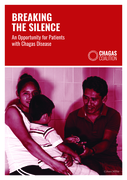
Not long ago, on the occasion of the 100th anniversary of the discovery of Chagas disease, several campaigns denounced the scant progress has been made in diffrent spheres- medical, scientific and politcal- but major challanges still remain. This is an appropriate time to celebrate what has been ach
...
ieved and to take the next step.
more
This fourth annual report monitors global progress towards the 2023 target for global elimination of industrially produced trans-fatty acids (TFA), highlighting achievements during the past year (October 2021 – September 2022). Countries are responding to the World Health Organization (WHO) call t
...
o action by putting into place best-practice TFA policies. Mandatory TFA policies are currently in effect for 3.4 billion people in 60 countries (43% of the world population); of these, 43 countries have best-practice policies in effect, covering 2.8 billion people (36% of the world population).
Over the past year, several additional countries took action to eliminate industrially produced TFA: best-practice policies came into effect in India in January 2022, Uruguay in May 2022 and Oman in July 2022. Best-practice policies were passed in Bangladesh in November 2021 (to come into effect in December 2022) and in Ukraine in September 2020 (to come into effect in October 2023), best-practice TFA policies are projected to pass soon in Mexico, Nigeria and Sri Lanka.
more

Two adjectives raise an issue for communicators working on Chagas disease (CD): “invisible and silent”. Two adjectives that can be ascribed to other neglected tropical diseases (NTD), but which are part of the essence of CD. Bringing CD out of its situation of neglect and oblivion is a mission e
...
ntrusted mainly to the world of communication as well as of science, politics and financial resources. However, communication has not always been considered among the priorities in the approach to the disease, except in valuable exceptions, some of which we have seen in the preceding article.
more
Schistosomiasis is a neglected tropical disease of global medical and veterinary importance. As efforts to eliminate schistosomiasis as a public health problem and interrupt transmission gather momentum, the potential zoonotic risk posed by livestock Schistosoma species via viable hybridisation in s
...
ub-Saharan Africa have been largely overlooked. We aimed to investigate the prevalence, distribution, and multi-host, multiparasite transmission cycle of Haematobium group schistosomiasis in Senegal, West Africa.
more
Conflicts and disasters, including pandemics, affect women and men in all their diversity differently, and women and girls often suffer the most. Crisis-related hardships combine and compound pre-existing disadvantages, for example, they often cause women’s working conditions to worsen while incre
...
asing their overall workload and care responsibilities. At the same time, crises can give rise to changes that enable women to take up roles that were previously available only to men, and crises can open opportunities to address existing gender-based discrimination and violations of rights.
more
Every day in 2020, approximately 800 women died from preventable causes related to pregnancy and childbirth - meaning that a woman dies around every two minutes.
Sustainable Development Goal (SDG) target 3.1 is to reduce maternal mortality to less than 70 maternal deaths per 100 000 live births by
...
2030.
The United Nations Maternal Mortality Estimation Inter-Agency Group (MMEIG) – comprising WHO, the United Nations Children’s Fund (UNICEF), the United Nations Population Fund (UNFPA), the World Bank Group and the United Nations Department of Economic and Social Affairs, Population Division (UNDESA/Population Division) has collaborated with external technical experts on a new round of estimates covering 2000 to 2020. The estimates represent the most up to date, internationally-comparable MMEIG estimates of maternal mortality, using refined input data and methods from previous rounds.
The report presents internationally comparable global, regional and country-level estimates and trends for maternal mortality between 2000 and 2020.
more
The fifth World Food Safety Day (WFSD) will be celebrated on 7 June 2023 to draw attention and inspire action to help prevent, detect and manage foodborne risks, contributing to food security, human health, economic prosperity, agricultural production, market access, tourism and sustainable developm
...
ent.
This publication is a guide for all those who want to get involved.
more
The WHO Pharmaceuticals Newsletter provides you with the latest information on the safety of medicinal products and regulatory actions taken by authorities around the world.
In addition, this edition includes summary and recommendations from the virtual meeting of the members of the WHO Programme f
...
or International Drug Monitoring (PIDM) and other partners, which was held on 20 October 2022.
more
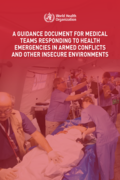
Medical care for people caught up in armed conflict and other insecure environments saves lives and alleviates suffering. It is one of the most immediate and high priority needs of an affected population and is often the first type of response activated and/or requested by authorities and affected c
...
ommunities. Medical teams working in armed conflict and other insecure environments
frequently face serious threats to their security and safety, challenges to patient access, and at times limited acceptance by affected communities in which they work and parties to the conflict. Such difficulties are likely to increase (6) and
thereby creating a critical need to establish contact and trust with all sides in conflicts and in other insecure environments to ensure operational continuity. This trust can best be achieved when all sides perceive the medical teams to be neutral, impartial, and independent, and specifically not aiding (or being perceived to aid) any one party to achieve a military, political or economic
advantage. For medical teams that are deploying increasingly closer to the frontlines, the implications of and consequences for both staff and patients of teams not being fully prepared, and/or not fully comprehending the context in which they work, can be severe. Medical response can easily be hindered or compromised by intentional or unintentional acts and the behaviour and
conduct of the teams themselves
more
PLoS Negl Trop Dis 16(10): e0009774. Although the practice of communication is often called upon when intervening asn involgvingcommunties affected by NTD's, the disciplinary framewokr of healt communication research has been largely absent from NTD strategies. To illustrate how practices conceptual
...
ized and developed within the communication field habe been applied in the context of NTD elimination, we conducted a scoping review focusing on two diseases currently targeted for elimination by the WHO: lymphatic filariasis and Chagas disease
more
This training guide is designed to enable participants to understand the human rights perspective on migration, and how human rights laws and standards can be operationalized to make migration safer and an empowering experience for all. It provides an introduction to related principles and issues an
...
d is designed for persons with limited knowledge of human rights or migration.
The training guide contains session plans for the trainer and is supported by sample slide presentations and associated materials, including activities and handouts for participants, which are available electronically as individual components.
more

Promoting health and preventing disease is a critical component of the effort required to achieve Universal Health Coverage (UHC). to date, efforts to achieve UHC have focused mostly on strengthening health systems and their capacities to provide curative care. However, experience from the COVID-19
...
pandemic has reaffirmed the need for resilient health systems, emphasizing primary health care, including preventive and promotive health and well-being.
Emerging from the eye of the storm as the global health lead agency during the pandemic, WHO is equipped with the required insights and actions for a holistic approach to “building back fairer and better” after COVID-19.
The Healthier Populations (UHP) Cluster in the African Region is designed to support Pillar 3 of WHO’s 13th Global Programme of Work (GPW13) which aims to make 1 billion people healthier by reducing health inequities, preventing diseases and injuries, addressing health determinants, and promoting partnerships for collaborative actions amongst all stakeholders.
more
Access to NCD medicines: emergent issues during the COVID-19 pandemic and key structural factors
recommended
The coronavirus disease (COVID-19) pandemic exacerbated pre-existing inequalities in the treatment and care of noncommunicable diseases (NCDs). This report examines the effect of the COVID-19 pandemic on access to NCD medicines, and the policies and strategies implemented by countries and health sys
...
tems to anticipate and mitigate stresses across NCD medicine supply chains. The full range of upstream and downstream impacts are investigated, including: manufacturing; procurement, importation and last mile delivery; patient-level effects through affordability and availability; and the effects on NCD medicine availability by category of disease. The report culminates in recommended actions and interventions for key stakeholders in the NCD pharmaceutical supply chain, including governments, regulatory authorities, manufacturers and the private sector; as well as directions for future research for improving access and supply chain access resilience.
more
The Event-based Surveillance Framework is intended to be used by authorities and agencies responsible for
surveillance and response. This framework serves as an outline to guide stakeholders interested in implementing
event-based surveillance (EBS) using a multisectoral, One Health approach. To
...
that end, the document is arranged
in interlinked chapters and annexes that can be modified and adapted, as needed, by users.
This is a revised version of the original “Framework for Event-based Surveillance” that was published in 2018. This
framework does not replace any other available EBS materials, but rather builds on existing relevant or related
documents and serves as a practical guide for the implementation of EBS in Africa. This framework is aligned with
the third edition of the WHO Joint External Evaluation for the following indicators: strengthened early warning
surveillance systems that are able to detect events of significance for public health and health security (Indicator
D2.1); improved communication and collaboration across sectors and between National, intermediate and local
public health response levels of authority regarding surveillance of events of public health significance (Indicator
D2.2); and improved national and intermediate-level capacity to analyse data (Indicator D2.3). As countries begin
to implement and demonstrate EBS functionality they will ensure an increase in JEE scores and progress towards
meeting the requirements outlined in the IHR3F
Additionally, in African Union Member States that have adopted the Integrated Disease Surveillance and
Response (IDSR) strategy, this document is a complement to and can enhance the implementation of IDSR,
especially for the 3rd edition (2019) that includes components related to EBS.
more
This bulletin focuses on the situation in Ukraine and several key refugee-receiving countries (Bulgaria, Czechia, Hungary, Poland, Republic of Moldova, Romania, and Slovakia), with the understanding that other countries in the European Region are also receiving Ukrainian refugees and WHO is pr
...
oviding technical support to them.
more
