
Filter
1873
Text search:
Bangladesh
Featured
157
551
Language
1651
122
101
30
28
22
21
8
7
5
5
3
3
2
2
2
2
2
1
1
1
1
1
1
1
1
1
1
1
1
1
1
Document type
1106
376
174
84
39
32
23
14
11
6
5
2
1
Countries
293
121
112
62
60
45
42
28
23
21
18
17
17
15
15
15
14
13
13
12
11
10
10
10
10
10
10
10
9
9
9
8
8
8
8
7
6
6
6
6
6
6
6
6
5
5
5
4
4
4
4
4
4
3
3
3
3
3
3
3
3
2
2
2
2
2
2
2
2
2
2
2
2
2
1
1
1
1
1
1
1
1
1
1
1
1
1
1
1
1
1
1
1
1
1
1
1
1
1
Authors & Publishers
199
81
74
71
61
57
42
40
22
21
21
15
14
14
14
14
13
12
11
11
10
9
9
9
9
8
8
8
8
8
7
7
7
7
7
7
6
6
6
6
6
6
6
6
5
5
5
5
5
5
5
5
5
5
5
5
5
5
5
5
5
5
5
4
4
4
4
4
4
4
4
4
4
4
4
4
4
4
4
4
4
4
4
4
4
4
4
4
4
3
3
3
3
3
3
3
3
3
3
3
3
3
3
3
3
3
3
3
3
3
3
3
3
3
3
3
3
3
3
3
3
3
3
3
3
3
3
3
3
3
3
3
3
3
3
2
2
2
2
2
2
2
2
2
2
2
2
2
2
2
2
2
2
2
2
2
2
2
2
2
2
2
2
2
2
2
2
2
2
2
2
2
2
2
2
2
2
2
2
2
2
2
2
2
2
2
2
2
2
2
2
2
2
2
2
2
2
2
2
2
2
2
2
2
2
2
2
2
2
2
2
2
2
2
2
2
2
2
2
2
2
2
2
2
2
2
2
2
2
2
2
2
2
2
2
2
2
2
2
2
2
2
2
2
2
2
2
2
2
2
2
1
1
1
1
1
1
1
1
1
1
1
1
1
1
1
1
1
1
1
1
1
1
1
1
1
1
1
1
1
1
1
1
1
1
1
1
1
1
1
1
1
1
1
1
1
1
1
1
1
1
1
1
1
1
1
1
1
1
1
1
1
1
1
1
1
1
1
1
1
1
1
1
1
1
1
1
1
1
1
1
1
1
1
1
1
1
1
1
1
1
1
1
1
1
1
1
1
1
1
1
1
1
1
1
1
1
1
1
1
1
1
1
1
1
1
1
1
1
1
1
1
1
1
1
1
1
1
1
1
1
1
1
1
1
1
1
1
1
1
1
1
1
1
1
1
1
1
1
1
1
1
1
1
1
1
1
1
1
1
1
1
1
1
1
1
1
1
1
1
1
1
1
1
1
1
1
1
1
1
1
1
1
1
1
1
1
1
1
1
1
1
1
1
1
1
1
1
1
1
1
1
1
1
1
1
1
1
1
1
1
1
1
1
1
1
1
1
1
1
1
1
1
1
1
1
1
1
1
1
1
1
1
1
1
1
1
1
1
1
1
1
1
1
1
1
1
1
1
1
1
1
1
1
1
1
1
1
1
1
1
1
1
1
1
1
1
1
1
1
1
1
1
1
1
1
1
1
1
1
1
1
1
1
1
1
1
1
1
1
1
1
1
1
1
1
1
1
1
1
1
1
1
1
1
1
1
1
1
1
1
1
1
1
1
1
1
1
1
1
1
1
1
1
1
1
1
1
1
1
1
1
1
1
1
1
1
1
1
1
1
1
1
1
1
1
1
1
1
1
1
1
1
1
1
1
1
1
1
1
1
1
1
1
1
1
1
1
1
1
1
1
1
1
1
1
1
1
1
1
1
1
1
1
1
1
1
1
1
1
1
1
1
1
1
1
1
1
1
1
1
1
1
1
1
1
1
1
1
1
1
1
1
1
1
1
1
1
1
1
1
1
1
1
1
1
1
1
1
1
1
1
1
1
1
1
1
1
1
1
1
1
1
1
1
1
1
1
1
1
1
1
1
1
1
1
1
1
1
1
1
1
1
1
1
1
1
1
1
1
1
1
1
1
1
1
1
1
1
1
1
1
1
1
1
1
1
1
1
1
1
1
1
1
1
1
1
1
1
1
1
1
1
1
1
1
1
1
1
1
1
1
1
1
1
1
1
1
1
1
1
1
1
1
1
1
1
1
1
1
1
1
1
1
1
1
1
1
1
1
1
1
1
1
1
1
1
1
1
1
1
1
1
1
1
1
1
1
1
1
1
1
1
1
1
1
1
1
1
1
1
1
1
1
1
1
1
1
1
1
1
1
1
1
1
1
1
1
1
1
1
1
1
1
1
1
1
1
1
1
1
1
1
1
1
1
1
1
1
1
1
1
1
1
1
1
1
1
1
1
1
1
1
1
1
1
1
1
1
1
1
1
1
1
1
1
1
1
1
1
1
1
1
1
1
1
1
1
1
1
1
1
1
1
1
1
1
1
1
1
1
1
1
1
1
1
1
1
1
1
1
1
1
1
1
1
1
1
1
1
1
1
1
1
1
1
1
1
1
1
1
1
1
1
1
1
1
1
1
1
1
1
1
1
1
1
1
1
1
1
1
1
1
1
1
1
1
1
1
1
1
1
1
1
1
1
1
1
1
1
1
1
1
1
1
1
1
1
1
1
1
1
1
1
1
1
1
1
1
1
1
1
1
1
1
1
1
1
1
1
1
1
1
1
1
1
1
1
1
1
1
1
1
1
1
1
1
1
1
1
1
1
1
1
1
1
1
1
1
1
1
1
1
1
1
1
1
1
1
1
1
1
1
1
1
1
1
1
1
1
1
1
1
1
1
1
1
1
1
1
1
1
1
1
1
1
1
1
1
1
1
1
1
1
1
1
1
1
1
1
1
1
1
1
1
1
1
1
1
1
1
1
1
1
1
1
1
1
1
1
1
1
1
1
1
1
1
1
1
1
1
1
1
1
1
1
1
1
1
1
1
1
1
1
1
1
1
1
1
1
1
1
1
1
1
1
1
1
1
1
1
1
1
1
1
1
1
1
1
1
1
1
1
1
1
1
1
1
1
1
1
1
1
1
1
1
1
1
1
1
1
1
1
1
1
1
1
1
1
1
1
1
1
1
1
1
1
1
1
1
1
1
1
1
1
1
1
1
1
1
1
1
1
1
1
1
1
1
1
1
1
1
1
1
1
1
1
1
1
1
1
1
1
1
1
1
1
1
1
1
1
1
1
1
1
1
1
1
1
1
1
1
1
1
1
1
1
1
1
1
1
1
1
1
1
1
1
1
1
1
1
1
1
1
1
1
1
1
1
1
1
1
1
1
1
1
1
1
1
1
1
1
1
1
1
1
1
1
1
1
1
1
1
1
1
1
1
1
1
1
1
1
1
1
1
1
1
1
1
1
1
1
1
1
1
1
1
1
1
1
1
1
1
1
1
1
1
1
1
1
1
1
1
1
1
1
1
1
1
1
1
1
1
1
1
1
1
1
1
1
1
1
1
1
1
1
1
1
1
1
1
1
1
1
1
1
1
1
1
1
1
1
1
1
1
1
1
1
1
1
1
1
1
1
1
1
1
1
1
1
1
1
1
1
1
1
1
1
1
1
1
1
1
1
1
1
1
1
1
1
1
1
1
1
1
1
1
1
1
1
1
1
1
1
1
1
1
1
1
1
1
1
1
1
1
1
1
1
1
1
1
1
1
1
1
1
1
1
1
1
1
1
1
1
1
1
1
1
1
1
1
1
1
1
1
1
1
1
1
1
1
1
1
1
1
1
1
1
1
1
1
1
1
1
1
1
1
1
1
1
1
1
1
1
1
1
1
1
1
1
1
1
1
1
1
1
1
1
1
1
1
1
1
1
1
1
1
1
1
1
1
1
1
1
1
1
1
1
1
1
1
1
1
1
1
1
1
1
1
1
1
1
1
1
1
1
1
1
1
1
1
1
1
1
1
1
1
1
1
1
1
1
1
1
1
1
1
1
1
1
1
1
1
1
1
1
1
1
1
1
1
1
1
1
1
1
1
1
1
1
1
1
1
1
1
1
1
1
1
1
1
1
1
1
1
1
1
1
1
1
1
1
1
1
1
1
1
1
1
1
1
1
1
1
1
1
1
1
1
1
1
1
1
1
1
1
1
1
1
1
1
1
1
1
1
1
1
1
1
1
1
1
1
1
1
1
1
1
1
1
1
1
1
1
1
1
1
1
1
1
1
1
1
1
1
1
1
1
1
1
1
1
1
1
Publication Years
482
1212
173
6
Category
559
177
147
118
108
53
15
2
Toolboxes
143
136
126
108
104
99
58
58
58
50
43
39
37
30
27
23
23
22
11
10
5
4
3
2
1
La presente Nota Informativa sirve como orientación a los solicitantes que están preparando una solicitud de financiamiento del Fondo Mundial para la tuberculosis. Ofrece recomendaciones sobre cómo establecer prioridades y metas para que las intervenciones relacionadas con la tuberculosis consiga
...
n la máxima repercusión posible. Promueve inversiones estratégicas para salvar vidas y obtener beneficios económicos, teniendo en cuenta la situación de la tuberculosis en cada país y otros factores contextuales:
• Su perfil de tuberculosis: tanto farmacosensible como farmacorresistente.
• El contexto del sistema de salud del país.
• Los obstáculos relacionados con los derechos humanos y el género.
• Las barreras socioeconómicas y estructurales que impiden acceder a los servicios
de tuberculosis.
more

La pandemia de COVID-19 está afectando de manera desproporcionada a los pueblos indígenas, exacerbando las
desigualdades estructurales subyacentes y la discriminación generalizada. Estos graves efectos deben abordarse
específicamente en la respuesta y las implicaciones derivadas de esta crisis
...
.
more
Human rights-based approaches to the creation of knowledge involve application of human rights principles to both the content and process of knowledge creation. Human rights-based approaches have special significance for the sexual and reproductive health and rights (SRHR) of all people, in particul
...
ar for women and girls, people living with disability, lesbian, gay, bisexual, trans, queer or Intersex (LGBTQI) populations, refugees, migrants and other marginalised populations.
more
The leishmaniases are a group of diseases caused by Leishmania spp., which occur in cutaneous, mucocutaneous and visceral forms. They are neglected tropical diseases (NTDs), which disproportionately affect marginalized populations who have limited access to health care. HIV co-infected patients with
...
Leishmania infection are highly infectious to sandflies, and an increase in the coinfection rate in an endemic area is likely to increase the effective infective reservoir.
more
Mental health is critically important to everyone, everywhere. All over the world, mental health needs are high but responses are insufficient and inadequate. The World mental health report: transforming mental health for all is designed to inspire and inform better mental health for everyone everyw
...
here. Drawing on the latest evidence available, showcasing examples of good practice from around the world, and voicing people’s lived experience, it highlights why and where change is most needed and how it can best be achieved. It calls on all stakeholders to work together to deepen the value and commitment given to mental health, reshape the environments that influence mental health, and strengthen the systems that care for mental health.
more
Mental health is critically important to everyone, everywhere. All over the world, mental health needs are high but responses are insufficient and inadequate. The World mental health report: transforming mental health for all is designed to inspire and inform better mental health for everyone everyw
...
here. Drawing on the latest evidence available, showcasing examples of good practice from around the world, and voicing people’s lived experience, it highlights why and where change is most needed and how it can best be achieved. It calls on all stakeholders to work together to deepen the value and commitment given to mental health, reshape the environments that influence mental health, and strengthen the systems that care for mental health.
more
Global food insecurity has markedly increased over the last two-years due to conflict, economic and political instability, displacement, environmental degradation and disasters, and major disruptions to global food systems because of the Covid-19 pandemic. In 2021, levels of hunger surpassed all pre
...
vious records with close to 193 million people acutely food insecure and in need of urgent assistance across 53 countries and territories. This represents an increase of nearly 40 million people compared to what was previously considered a record level high in 2020.
more
Concepte Note, June 2022
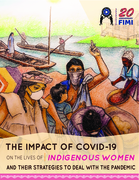
The International Forum of Indigenous Women (IIWF) has prepared this report in order to have a
document for analysis and systematization of the impacts of the COVID-19 pandemic on the lives
of Indigenous Women, and to identify the strategies promoted by them. This document is expected
to serve as
...
a political tool for advocacy. The methodology used in this analysis is a gender and
Indigenous Women’s collective and individual human rights approach. The results are mainly based
on a global, participatory survey, conducted in English, French and Spanish languages, aimed at
indigenous women’s organizations and leaders.
more
For patients on HFNO with persistent hypoxaemia or respiratory distress:
• Check the equipment: inspect the exterior of the machine, the tubing (circuit), the prong for any sign of mechanical damage, confirm it fits and the filters are in place. Ensure the settings are appropriate and flow is max
...
imized.
• Check the oxygen source: there is sufficient oxygen available and flowing through the device. If FiO2 > 50% of oxygen is needed, the device must have a blender.
• Check there is no obstruction with secretions: patients with COVID-19 may have very thick secretions which may block small and large airways and cause sudden respiratory deterioration.
more
WHO recommends prompt recognition of progressive acute hypoxaemic respiratory failure when a patient with respiratory distress is failing to respond to standard oxygen therapy and adequate preparation to provide advanced oxygen/ventilatory support.
Hypoxaemic respiratory failure in ARDS commonly re
...
sults from intrapulmonary ventilation-perfusion mismatch or shunt and usually requires mechanical ventilation.
At any time, if there are urgent or emergent indications for intubation, do not delay.
WHO suggests that hospitalized patients with severe or critical COVID-19 with acute hypoxaemic respiratory failure that do not require emergent intubation be treated with HFNO, or CPAP or NIV (BiPAP) rather than standard oxygen therapy.
more
For patients on NIPPV or HFNO with persistent hypoxaemia or respiratory distress:
• Check the equipment: inspect the exterior of the machine, the tubing (circuit), the mask for any sign of mechanical damage, confirm it fits securely without leak (if CPAP/BiPAP) and the filters are in place. Ensur
...
e the settings are appropriate and flow is maximized.
• Check the oxygen source: there is sufficient oxygen available and flowing through the device. If FiO2 > 50% of oxygen is needed, the ventilator must have a blender.
• Check there is no obstruction with secretions: patients with COVID-19 may have very thick secretions which may block small and large airways and cause sudden respiratory deterioration.
more
Adapting community-led approaches . Three out of 10 people in urban areas do not use improved sanitation facilities, and one out of 10 people are forced to practise open defecation. Still higher proportions do not have access to safely managed sanitation facilities, where the fecal sludge
is contai
...
ned and either left in situ or safely emptied, transported, and delivered to a treatment plant.
more

Infectious disease outbreaks and epidemics are increasing in frequency, scale and impact. Health care facilities can amplify the transmission of emerging infectious diseases or multidrug-resistant organisms (MDRO) within their settings and communities. Therefore, evidence-based infection prevention
...
and control (IPC) measures in health care facilities are critical for preventing and containing outbreaks, while still delivering safe, effective and quality health care. This toolkit is intended to support IPC improvements for outbreak management in all such facilities, both public and private throughout the health system. Specifically, this document systematically describes a framework of overarching principles to approach the preparedness, readiness and response outbreak management phases. The document also provides a toolkit of resource links to guide specific actions for each infectious disease and/or MDRO outbreak management phase at any health facility. This document is specifically tailored to an audience of stakeholders who establish and monitor health care facility-level IPC programs including: IPC focal points, epidemiologists, public health experts, outbreak response incident managers, facility-level IPC committee(s), safety and quality leads and managers, and other facility level IPC stakeholders.
more
Implementation guide for national, district and facility levels.
This implementation guide contains practical guidance for policy-makers,
programme managers, health practitioners and other actors working to
establish and implement quality of care (QoC) programmes for maternal,
newborn and child
...
health (MNCH) at national, district and facility levels.
It is intended to help anyone, throughout the health system, who wants
to take action to improve the QoC for MNCH.
more
Climate change is already having severe impacts across our planet, bringing new and previously unimaginable challenges to the people least responsible for greenhouse gas emissions.
This report, the first we’ve released jointly in the history of our organizations, provides a sobering review of h
...
ow just one of those challenges – the increase in deadly heat-waves – threatens to drive new emergency needs in the not-so-distant future.
more
This report provides an overview of air pollution levels and associated health impacts in cities around the world. Since urban areas are often hotspots for poor air quality, city-level data can help to inform targeted efforts to curb urban air pollution and improve public health. This report draws o
...
n data from the Global Burden of Disease project and from peer-reviewed analyses led by Susan Anenberg of the George Washington University.
more
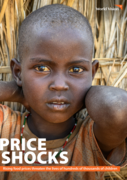
Conflict, climate change, the COVID-19 pandemic, and the economic effects of the Ukraine crisis are interacting to create new and worsen existing hunger hotspots, reversing the gains families had made to escape poverty.
Prise en charge d’une épidémie de choléra
recommended
Guide pratique à l’usage des médecins, infirmiers, techniciens de laboratoire, auxiliaires de santé, techniciens sanitaires et logisticiens
