
Filter
1790
Text search:
ART
coverage
Featured
126
611
Language
1741
28
20
16
9
7
6
5
3
3
3
3
3
2
2
2
2
2
2
2
2
2
1
1
1
1
1
1
1
1
1
1
Document type
1306
216
131
54
31
17
15
10
7
2
1
Countries
91
81
60
54
47
47
42
42
42
40
39
37
33
30
30
29
29
28
27
27
26
26
25
23
21
20
17
16
14
13
12
12
12
10
10
10
9
8
8
7
7
7
7
7
7
6
5
5
5
5
5
5
4
4
4
4
3
3
3
3
3
3
3
3
2
2
2
2
2
2
2
2
2
2
2
2
2
2
1
1
1
1
1
1
1
1
1
1
1
1
1
1
1
1
1
1
1
1
1
1
1
1
1
1
1
1
1
1
1
1
1
1
Authors & Publishers
144
123
121
101
78
50
35
31
24
22
22
20
19
16
16
15
14
14
13
13
12
12
12
11
11
10
10
9
9
9
9
9
9
9
8
8
7
7
6
6
6
6
6
6
6
5
5
5
5
5
5
5
5
5
5
5
5
4
4
4
4
4
4
4
4
4
4
4
4
4
4
4
4
4
4
4
4
4
4
4
4
4
4
4
3
3
3
3
3
3
3
3
3
3
3
3
3
3
3
3
3
3
3
3
3
3
3
3
3
3
3
3
3
3
3
3
3
3
3
3
3
3
3
3
3
3
3
3
3
3
3
3
3
3
3
3
3
2
2
2
2
2
2
2
2
2
2
2
2
2
2
2
2
2
2
2
2
2
2
2
2
2
2
2
2
2
2
2
2
2
2
2
2
2
2
2
2
2
2
2
2
2
2
2
2
2
2
2
2
2
2
2
2
2
2
2
2
2
2
2
2
2
2
2
2
2
2
2
2
2
2
2
2
2
2
2
2
2
2
2
2
2
2
2
2
2
2
2
2
2
2
2
2
2
2
2
2
2
2
2
2
2
2
2
2
2
2
2
2
2
2
2
2
2
2
2
2
2
2
2
2
2
2
2
1
1
1
1
1
1
1
1
1
1
1
1
1
1
1
1
1
1
1
1
1
1
1
1
1
1
1
1
1
1
1
1
1
1
1
1
1
1
1
1
1
1
1
1
1
1
1
1
1
1
1
1
1
1
1
1
1
1
1
1
1
1
1
1
1
1
1
1
1
1
1
1
1
1
1
1
1
1
1
1
1
1
1
1
1
1
1
1
1
1
1
1
1
1
1
1
1
1
1
1
1
1
1
1
1
1
1
1
1
1
1
1
1
1
1
1
1
1
1
1
1
1
1
1
1
1
1
1
1
1
1
1
1
1
1
1
1
1
1
1
1
1
1
1
1
1
1
1
1
1
1
1
1
1
1
1
1
1
1
1
1
1
1
1
1
1
1
1
1
1
1
1
1
1
1
1
1
1
1
1
1
1
1
1
1
1
1
1
1
1
1
1
1
1
1
1
1
1
1
1
1
1
1
1
1
1
1
1
1
1
1
1
1
1
1
1
1
1
1
1
1
1
1
1
1
1
1
1
1
1
1
1
1
1
1
1
1
1
1
1
1
1
1
1
1
1
1
1
1
1
1
1
1
1
1
1
1
1
1
1
1
1
1
1
1
1
1
1
1
1
1
1
1
1
1
1
1
1
1
1
1
1
1
1
1
1
1
1
1
1
1
1
1
1
1
1
1
1
1
1
1
1
1
1
1
1
1
1
1
1
1
1
1
1
1
1
1
1
1
1
1
1
1
1
1
1
1
1
1
1
1
1
1
1
1
1
1
1
1
1
1
1
1
1
1
1
1
1
1
1
1
1
1
1
1
1
1
1
1
1
1
1
1
1
1
1
1
1
1
1
1
1
1
1
1
1
1
1
1
1
1
1
1
1
1
1
1
1
1
1
1
1
1
1
1
1
1
1
1
1
1
1
1
1
1
1
1
1
1
1
1
1
1
1
1
1
1
1
1
1
1
1
1
1
1
1
1
1
1
1
1
1
1
1
1
1
1
1
1
1
1
1
1
1
1
1
1
1
1
1
1
1
1
1
1
1
1
1
1
1
1
1
1
1
1
1
1
1
1
1
1
1
1
1
1
1
1
1
1
1
1
1
1
1
1
1
1
1
1
1
1
1
1
1
1
1
1
1
1
1
1
1
1
1
1
1
1
1
1
1
1
1
1
1
1
1
1
1
1
1
1
1
1
1
1
1
1
1
1
1
1
1
1
1
1
1
1
1
1
1
1
1
1
1
1
1
1
1
1
1
1
1
1
1
1
1
1
1
1
1
1
1
1
1
1
1
1
1
1
1
1
1
1
1
1
1
1
1
1
1
1
1
1
1
1
1
1
1
1
1
1
1
1
1
1
1
1
1
1
1
1
1
1
1
1
1
1
1
1
1
1
1
1
1
1
1
1
1
1
1
1
1
1
1
1
1
1
1
1
1
1
1
1
1
1
1
1
1
1
1
1
1
1
1
1
1
1
1
1
1
1
1
1
1
1
1
1
1
1
1
1
1
1
1
1
1
1
1
1
1
1
1
1
1
1
1
1
1
1
1
1
1
1
1
1
1
1
1
1
1
1
1
1
1
1
1
1
1
1
1
1
1
1
1
1
1
1
1
1
1
1
1
1
1
1
1
1
1
1
1
1
1
1
1
1
1
1
1
1
1
1
1
1
1
1
1
1
1
1
1
1
1
1
1
1
1
1
1
1
1
1
1
1
1
1
1
1
1
1
1
1
1
1
1
1
1
1
1
1
1
1
1
1
1
1
1
1
1
1
1
1
1
1
1
1
1
1
1
1
1
1
1
1
1
1
1
1
1
1
1
1
1
1
1
1
1
1
1
1
1
1
1
1
1
1
1
1
1
1
1
1
1
1
1
1
1
1
1
1
1
1
1
1
1
1
1
1
1
1
1
1
1
1
1
1
1
1
1
1
1
1
1
1
1
1
1
1
1
1
1
1
1
1
1
1
1
1
1
1
1
1
1
1
1
1
1
1
1
1
1
1
1
1
1
1
1
1
1
1
1
1
1
1
1
1
1
1
1
1
1
1
1
1
1
1
1
1
1
1
1
1
1
1
1
1
1
1
1
1
1
1
1
1
1
1
1
1
1
1
1
1
1
1
1
1
1
1
1
1
1
1
1
1
1
1
1
1
1
1
1
1
1
1
1
1
1
1
1
1
1
1
1
1
1
1
1
1
1
1
1
1
1
1
1
1
1
1
1
1
1
1
1
1
1
1
1
1
1
1
1
1
1
1
1
1
1
1
1
1
1
1
1
1
1
1
1
1
1
1
1
1
1
1
1
1
1
1
1
1
1
1
1
1
1
1
1
1
1
1
1
1
1
1
1
1
1
1
1
1
1
1
1
1
1
1
1
1
1
1
1
1
1
1
1
1
1
1
1
1
1
1
1
1
1
1
1
1
1
1
1
1
1
1
1
1
1
1
1
1
1
1
1
1
1
1
1
1
1
1
1
1
1
1
1
1
1
1
1
1
1
1
1
1
1
1
1
1
1
1
1
1
1
1
1
1
1
1
1
1
1
1
1
1
1
1
1
1
1
1
1
1
1
1
1
1
1
1
1
1
1
1
1
1
1
1
1
1
1
1
1
1
1
1
1
1
1
1
1
1
1
1
1
1
1
1
1
1
1
1
1
1
1
1
1
1
1
1
1
1
1
1
1
1
1
1
1
1
1
1
1
1
1
1
1
1
1
1
1
1
1
1
1
1
1
1
1
1
1
1
1
1
1
1
1
1
1
1
1
1
1
1
1
1
1
1
1
1
1
1
1
1
1
1
1
1
1
1
1
1
1
1
1
1
1
1
1
1
1
1
1
1
1
1
1
1
1
1
1
1
1
1
1
1
1
1
1
1
1
1
1
1
1
1
1
1
1
1
1
1
1
1
1
1
1
1
1
1
1
1
1
1
1
1
1
1
1
1
1
1
1
1
1
1
1
1
1
1
1
1
1
1
1
1
1
1
1
1
1
1
1
1
1
1
1
1
1
1
1
1
1
1
1
1
1
1
1
1
1
1
1
1
1
1
1
1
1
1
1
1
1
1
1
1
1
1
1
1
1
1
1
1
1
1
1
1
1
1
1
1
1
1
1
1
1
1
1
1
1
1
1
1
1
1
1
1
1
1
1
1
1
1
1
1
1
1
1
1
1
1
1
1
1
1
1
1
1
1
1
1
1
1
1
1
1
1
1
1
Publication Years
269
1407
111
1
2
Category
888
115
62
61
38
12
8
2
1
1
Toolboxes
418
151
59
41
33
31
30
29
25
18
16
16
14
13
11
10
7
5
5
3
3
3
1
1
The objective of this project was to list the medical devices required to provide the essential reproductive, maternal, newborn and child health interventions defined by existing WHO guidelines and publications, in order to improve access to these devices in low- and middle-income countries, support
...
quality of care, and strengthen health-care system. The medical devices are allocated across the reproductive, maternal, newborn and child health continuum of care according to the level of health-care delivery.
more
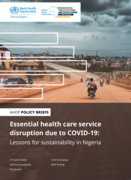
Essential health care service disruption due to COVID-19: lessons for sustainability in Nigeria
AHOP National Centre based in Nigeria
World Health Organization WHO, Regional Office Africa
(2022)
C_WHO
The brief concludes that sustaining the continuity of EHS requires policies that ensure a whole-society and systems strengthening approach. This involves increased health care investment, community engagement, disease control regulations, and multisector approaches to improve resilience, EHS quality
...
, and equity.
more
Enabling young children to achieve their full developmental potential is a human right and an essential requisite for sustainable development. Given the critical importance of enabling children to make the best start in life, the health sector, among other sectors, has an important role and responsi
...
bility to support nurturing care for early childhood development. This guideline provides direction for strengthening policies and programmes to better address early childhood development.
more
This report makes the case for a major new initiative—to rapidly recruit, train and deploy 2 million community health workers in Africa. Drawing on a vast body of evidence and substantial regional experience, the report shows how community health workers save lives and improve quality of life and
...
how investments in community health workers effectively harness the demographic dividend, reduce gender inequality and accelerate economic growth and development. Indeed, the benefits of community health workers stretch from one end of the Agenda for Sustainable Development to the other.
more
The figures and findings reflected in the 2020 PMR represent the independent analysis of the United Nations (UN) and its humanitarian partners based on information available to them. Many of the figures provided throughout the document are estimates based on sometimes incomplete and partial data set
...
s using the methodologies for collection that were available at the time. The Government of Syria has expressed its reservations over the data sources and methodology of assessments used to inform the 2020 Humanitarian Needs Overview (HNO) as well as on a number of HNO findings reflected in the 2020 HRP. This applies throughout the document.
more
This manual summarizes key issues related to the safety of NTD medicines and their administration, with a focus on essential medicines used in mass drug administration (MDA), also called preventive chemotherapy. It can be used as a standalone reference manual, but is intended to be used in conjuncti
...
on with the accompanying training modules, which provide practical instruction, and the aide-mémoires. Versions of the aide-mémoires and training modules are available respectively for both (i) programme managers and district-level health officials and (ii) community drug distributors and community health workers
more
UNHCR’s Public Health Strategy 2021-2025 is based on the lessons learnt, and builds on the achievements, of the Global Strategy for Public Health 2014-2018.
Progress was made on policies favouring inclusion and integration into national systems3 with 92% of 48 operations surveyed reporting refuge
...
es having access to national primary health care facilities under the same conditions as nationals and 96% reporting refugees having access to all relevant vaccines under the same conditions as nationals. While many refugee hosting countries have policies that allow refugees to access national health services, many face partial access, prohibitive out-of-pocket expenditures and other barriers including distance to facilities, language and provider acceptance. Furthermore, more work is needed on strengthening these systems to be able to meet the needs of both host communities and refugees.
more
This implementation brief addresses integration of HIV testing services into family planning (FP) services. It is intended as a practical resource for national health programmes seeking to introduce or scale up HIV testing and linkage to HIV prevention, sexually transmitted infection, and antiretrov
...
iral therapy services in FP.
This document highlights emerging good practices and country experiences of integrated HIV prevention and testing services within FP and advocates for increased linkage for FP clients to HIV services according to their needs. It also brings together information on models of integration of HIV testing into FP services, programme examples from east and southern Africa and guidance on the implementation monitoring process.
more
The African Development Bank has launched a consultation process with health ministers and other partners as it develops a strategy to drive enhanced access to health services across Africa through 2030.
Input from ministers in the Bank’s 54 regional member countries, development partners and c
...
ivil society is expected to strengthen the Bank’s Strategy for Quality Health Infrastructure in Africa (2021-2030). A robust scoping study titled “Good Health and Well-being” underpins the strategy.
more
Testing men for HIV during their partner’s pregnancy can guide couples-based HIV prevention and treatment, but testing rates remain low. We investigated a combination approach, using evidence-based strategies, to increase HIV testing in male partners of HIV-positive and HIV-negative
...
pregnant women.
more

The Essential Nutrition Actions and Essential Hygiene Actions Training Guide: Community Workers strengthens the capacity of community workers to deliver and promote the essential nutrition and hygiene actions. It introduces technical content within hands-on sessions to practice counseling and negoti
...
ation, using role plays and field practice. It guides community workers in understanding why and how to integrate messages on nutrition and hygiene into their different program platforms using a life cycle approach to deliver the right message to right person at the right time.
more
This training guide applies a participatory approach, reflecting the considerable evidence that adults learn best by practicing and reflecting on their experiences. It thus emphasizes exercises to improve skills in counseling that support clients to adopt optimal nutrition practices. Women’s nutri
...
tion and infant feeding in the context of HIV are also addressed. Guidelines to link the prevention of malnutrition with treatment via the Integrated Management of Acute Malnutrition are also included. It can also be conducted with nutrition managers to equip them to provide supportive supervision to health and community workers.
more
Preliminary fndings from a global survey of urban young people on the air they breathe and a child health co-benefts analysis of radical decarbonisation of 16 global cities.
Technology landscape

As a lower-middle-income country (LMIC), South Africa (SA) bears
the burden of maternal and neonatal mortality similar to other sub-
Saharan African countries. According to the Saving Mothers Report
2017/19, there has been a progressive and sustained reduction
in institutional maternal mortality
...
(iMMR) in the past three triennia
(2010-2019), from 320 per 100,000 live births to 120 per 100,000 live
births.
According to the Rapid Mortality Survey, the country’s infant mortality
rate has declined from 29 deaths per 1000 live births in 2014 to 25
deaths per 1,000 live births in 2018. The institutional neonatal death
rate showed a slight decrease from 12,7 deaths per 1,000 live births in
2016 to the current level of 12 per 1,000 live births and has remained
static at this level for the past three years (saDHIS).
Working towards the Sustainable Development Goal (SDG) of reducing maternal mortality to below 70 per 100 000 live births and neonatal mortality to 12 deaths per 1000 live births, South Africa aims to reduce institutional maternal mortality, neonatal mortality and stillbirths by 50% by 2030.
This Maternal, Perinatal and Neonatal Health Policy provides a
framework for the delivery of quality, comprehensive, and integrated
MNH services and will guide the development and review of guidelines
and related MNH interventions, including strengthening of the service
delivery platform, governance, leadership and accountability for
the provision of quality MNH services, development of advocacy
messages, and guiding civil society priorities and community
initiatives. The policy will also guide the development and review of
academic curricula and the setting of research priorities.
more
