
Filter
1969
Text search:
country
regulation
Featured
125
575
Language
1924
40
39
35
19
18
12
11
5
5
5
5
4
4
4
4
3
3
3
3
3
3
3
3
2
2
2
2
2
2
1
1
1
1
1
1
1
1
1
1
1
1
1
1
1
1
1
1
1
Document type
1082
406
216
105
98
22
18
14
4
3
1
Countries
85
79
72
69
47
43
42
41
40
36
33
30
29
28
28
27
27
27
27
24
23
23
20
20
19
18
18
18
16
14
14
13
13
12
11
11
10
9
9
9
9
9
8
8
8
7
7
7
6
6
5
5
5
5
5
4
4
4
4
4
3
3
3
3
3
3
3
3
3
3
3
3
2
2
2
2
2
2
2
2
2
2
2
2
2
2
2
2
2
2
2
2
1
1
1
1
1
1
1
1
1
1
1
1
1
1
1
1
1
1
1
1
1
1
1
1
1
1
1
1
1
Authors & Publishers
264
80
76
76
56
29
25
23
19
18
17
16
16
14
13
12
12
11
10
10
10
10
9
9
8
8
8
8
7
7
7
7
7
7
7
6
6
6
6
6
6
6
6
6
6
5
5
5
5
5
5
5
5
5
5
4
4
4
4
4
4
4
4
4
4
4
4
4
4
4
4
4
4
3
3
3
3
3
3
3
3
3
3
3
3
3
3
3
3
3
3
3
3
3
3
3
3
3
3
3
3
3
3
3
3
3
3
3
3
3
3
2
2
2
2
2
2
2
2
2
2
2
2
2
2
2
2
2
2
2
2
2
2
2
2
2
2
2
2
2
2
2
2
2
2
2
2
2
2
2
2
2
2
2
2
2
2
2
2
2
2
2
2
2
2
2
2
2
2
2
2
2
2
2
2
2
2
2
2
2
2
2
2
2
2
2
2
2
2
2
2
2
2
2
2
2
2
2
2
2
2
2
2
2
2
2
2
2
2
2
2
2
2
2
2
2
2
2
2
2
2
2
2
2
2
2
2
2
2
2
2
2
2
1
1
1
1
1
1
1
1
1
1
1
1
1
1
1
1
1
1
1
1
1
1
1
1
1
1
1
1
1
1
1
1
1
1
1
1
1
1
1
1
1
1
1
1
1
1
1
1
1
1
1
1
1
1
1
1
1
1
1
1
1
1
1
1
1
1
1
1
1
1
1
1
1
1
1
1
1
1
1
1
1
1
1
1
1
1
1
1
1
1
1
1
1
1
1
1
1
1
1
1
1
1
1
1
1
1
1
1
1
1
1
1
1
1
1
1
1
1
1
1
1
1
1
1
1
1
1
1
1
1
1
1
1
1
1
1
1
1
1
1
1
1
1
1
1
1
1
1
1
1
1
1
1
1
1
1
1
1
1
1
1
1
1
1
1
1
1
1
1
1
1
1
1
1
1
1
1
1
1
1
1
1
1
1
1
1
1
1
1
1
1
1
1
1
1
1
1
1
1
1
1
1
1
1
1
1
1
1
1
1
1
1
1
1
1
1
1
1
1
1
1
1
1
1
1
1
1
1
1
1
1
1
1
1
1
1
1
1
1
1
1
1
1
1
1
1
1
1
1
1
1
1
1
1
1
1
1
1
1
1
1
1
1
1
1
1
1
1
1
1
1
1
1
1
1
1
1
1
1
1
1
1
1
1
1
1
1
1
1
1
1
1
1
1
1
1
1
1
1
1
1
1
1
1
1
1
1
1
1
1
1
1
1
1
1
1
1
1
1
1
1
1
1
1
1
1
1
1
1
1
1
1
1
1
1
1
1
1
1
1
1
1
1
1
1
1
1
1
1
1
1
1
1
1
1
1
1
1
1
1
1
1
1
1
1
1
1
1
1
1
1
1
1
1
1
1
1
1
1
1
1
1
1
1
1
1
1
1
1
1
1
1
1
1
1
1
1
1
1
1
1
1
1
1
1
1
1
1
1
1
1
1
1
1
1
1
1
1
1
1
1
1
1
1
1
1
1
1
1
1
1
1
1
1
1
1
1
1
1
1
1
1
1
1
1
1
1
1
1
1
1
1
1
1
1
1
1
1
1
1
1
1
1
1
1
1
1
1
1
1
1
1
1
1
1
1
1
1
1
1
1
1
1
1
1
1
1
1
1
1
1
1
1
1
1
1
1
1
1
1
1
1
1
1
1
1
1
1
1
1
1
1
1
1
1
1
1
1
1
1
1
1
1
1
1
1
1
1
1
1
1
1
1
1
1
1
1
1
1
1
1
1
1
1
1
1
1
1
1
1
1
1
1
1
1
1
1
1
1
1
1
1
1
1
1
1
1
1
1
1
1
1
1
1
1
1
1
1
1
1
1
1
1
1
1
1
1
1
1
1
1
1
1
1
1
1
1
1
1
1
1
1
1
1
1
1
1
1
1
1
1
1
1
1
1
1
1
1
1
1
1
1
1
1
1
1
1
1
1
1
1
1
1
1
1
1
1
1
1
1
1
1
1
1
1
1
1
1
1
1
1
1
1
1
1
1
1
1
1
1
1
1
1
1
1
1
1
1
1
1
1
1
1
1
1
1
1
1
1
1
1
1
1
1
1
1
1
1
1
1
1
1
1
1
1
1
1
1
1
1
1
1
1
1
1
1
1
1
1
1
1
1
1
1
1
1
1
1
1
1
1
1
1
1
1
1
1
1
1
1
1
1
1
1
1
1
1
1
1
1
1
1
1
1
1
1
1
1
1
1
1
1
1
1
1
1
1
1
1
1
1
1
1
1
1
1
1
1
1
1
1
1
1
1
1
1
1
1
1
1
1
1
1
1
1
1
1
1
1
1
1
1
1
1
1
1
1
1
1
1
1
1
1
1
1
1
1
1
1
1
1
1
1
1
1
1
1
1
1
1
1
1
1
1
1
1
1
1
1
1
1
1
1
1
1
1
1
1
1
1
1
1
1
1
1
1
1
1
1
1
1
1
1
1
1
1
1
1
1
1
1
1
1
1
1
1
1
1
1
1
1
1
1
1
1
1
1
1
1
1
1
1
1
1
1
1
1
1
1
1
1
1
1
1
1
1
1
1
1
1
1
1
1
1
1
1
1
1
1
1
1
1
1
1
1
1
1
1
1
1
1
1
1
1
1
1
1
1
1
1
1
1
1
1
1
1
1
1
1
1
1
1
1
1
1
1
1
1
1
1
1
1
1
1
1
1
1
1
1
1
1
1
1
1
1
1
1
1
1
1
1
1
1
1
1
1
1
1
1
1
1
1
1
1
1
1
1
1
1
1
1
1
1
1
1
1
1
1
1
1
1
1
1
1
1
1
1
1
1
1
1
1
1
1
1
1
1
1
1
1
1
1
1
1
1
1
1
1
1
1
1
1
1
1
1
1
1
1
1
1
1
1
1
1
1
1
1
1
1
1
1
1
1
1
1
1
1
1
1
1
1
1
1
1
1
1
1
1
1
1
1
1
1
1
1
1
1
1
1
1
1
1
1
1
1
1
1
1
1
1
1
1
1
1
1
1
1
1
1
1
1
1
1
1
1
1
1
1
1
1
1
1
1
1
1
1
1
1
1
1
1
1
1
1
1
1
1
1
1
1
1
1
1
1
1
1
1
1
1
1
1
1
1
1
1
1
1
1
1
1
1
1
1
1
1
1
1
1
1
1
1
1
1
1
1
1
1
1
1
1
1
1
1
1
1
1
1
1
1
1
1
1
1
1
1
1
1
1
1
1
1
1
1
1
1
1
1
1
1
1
1
1
1
1
1
1
1
1
1
1
1
1
1
1
1
1
1
1
1
1
1
1
1
1
1
1
1
1
1
1
1
1
1
1
1
1
1
1
1
1
1
1
1
1
1
1
1
1
1
1
1
1
1
1
1
1
1
1
1
1
1
1
1
1
1
1
1
1
1
1
1
1
1
1
1
1
1
1
1
1
1
1
1
1
1
1
1
1
1
1
1
1
1
1
1
1
1
1
1
1
1
1
1
1
1
1
1
1
1
1
1
1
1
1
1
1
1
1
1
1
1
1
1
1
1
1
1
1
1
1
1
1
1
1
1
1
1
1
1
1
1
1
1
1
1
1
1
1
1
1
1
1
1
1
1
1
1
1
1
1
1
1
1
1
1
1
1
1
1
1
1
1
1
1
1
1
1
1
1
1
1
1
1
1
1
1
1
1
1
1
1
1
1
1
1
1
1
1
1
1
1
1
1
1
1
1
1
1
1
1
1
1
1
1
1
1
1
1
1
1
1
1
1
1
1
1
1
1
1
1
1
1
1
1
1
1
1
1
1
1
1
1
1
1
1
1
1
1
1
1
1
1
1
1
1
1
1
1
1
1
1
1
1
1
1
1
1
1
1
1
1
1
1
1
1
1
1
1
1
1
1
1
1
1
1
1
1
1
1
1
1
1
1
1
1
1
1
1
1
1
1
1
1
1
1
1
1
1
1
1
1
1
1
1
1
1
1
Publication Years
522
1270
167
10
Category
811
138
102
81
74
26
22
3
Toolboxes
158
127
110
97
89
74
68
60
55
50
49
44
40
38
24
22
21
17
10
8
7
5
2
1
This document, Ghana’s National Newborn Health Strategy and Action Plan 2014–2018 outlines a targeted strategy for accelerating the reduction of newborn deaths in Ghana. Furthermore it provides a costed action plan with clearly marked timelines for implementation to facilitate resource mobilisat
...
ion, monitoring and evaluation, and scaling up of proposed newborn interventions. It is expected that all stakeholders working towards improving the health of children in Ghana will buy into this plan and collaborate towards attainment of the goals and objectives outlined here.
more

This document describes the key areas that national governments should consider for the introduction and scale-up of point-of-care (POC) diagnostics within national programmes, as new innovative POC technologies are being introduced into the market. The next steps taken to include these new innovati
...
ons within the broader context of national diagnostic networks of conventional laboratories could influence the achievement of the 2030 Fast Track targets for ending the AIDS epidemic.
POC diagnostics, when strategically introduced and integrated into national diagnostic networks, may help catalyse changes that improve the way diagnostics and clinical services are delivered. This document distils this understanding based on programmatic and market experiences of introducing POC diagnostics through catalytic investments in POC HIV technologies across numerous countries in sub-Saharan Africa. more
POC diagnostics, when strategically introduced and integrated into national diagnostic networks, may help catalyse changes that improve the way diagnostics and clinical services are delivered. This document distils this understanding based on programmatic and market experiences of introducing POC diagnostics through catalytic investments in POC HIV technologies across numerous countries in sub-Saharan Africa. more

A case study of the role of an Essential Health Benefit in the delivery of integrated health services in Zambia
Luwabelwa, M.; Banda, P; Palale M.; Chama-Chiliba, C.
Regional Network for Equity in Health in east and southern Africa (EQUINET)
(2017)
C1
Regional Network for Equity in Health in east and southern Africa (EQUINET): Disussion Paper 111
The health services delivery system in Zambia is pyramid in structure, with primary healthcare (PHC) services at community level, at the base, followed by first and second level hospitals at distric ... t and provincial levels, respectively, and third level (tertiary) services at national level. Notably, primary health services are free in Zambia and health service providers are either governmentowned or not-for-profit facilities.
Over the years, resource constraints have affected the quality and extent of healthcare services at all levels, requiring the mobilisation of additional resources for the sector. In doing so, prioritisation was high on the agenda of health sector reform. The EHB, therefore, prioritises interventions with the highest impact on the population, enabling policy makers to revisit priority diseases and conditions and to cost the services provided at each level of facility. Other key issues in developing the EHB in Zambia have included the need to have cost-effective services and cost per capita of services for more systematic budgeting, to rank interventions and to validate and cost the health benefit package as a whole. more
The health services delivery system in Zambia is pyramid in structure, with primary healthcare (PHC) services at community level, at the base, followed by first and second level hospitals at distric ... t and provincial levels, respectively, and third level (tertiary) services at national level. Notably, primary health services are free in Zambia and health service providers are either governmentowned or not-for-profit facilities.
Over the years, resource constraints have affected the quality and extent of healthcare services at all levels, requiring the mobilisation of additional resources for the sector. In doing so, prioritisation was high on the agenda of health sector reform. The EHB, therefore, prioritises interventions with the highest impact on the population, enabling policy makers to revisit priority diseases and conditions and to cost the services provided at each level of facility. Other key issues in developing the EHB in Zambia have included the need to have cost-effective services and cost per capita of services for more systematic budgeting, to rank interventions and to validate and cost the health benefit package as a whole. more

The articles in this compendium elaborate on some of the ideas shared at the symposium. Together, they provide a broad view of the dynamic interactions among physical, sexual and brain development that take place during adolescence. They highlight some of the risks to optimal development – includi
...
ng toxic stress, which can interfere with the formation of brain connections, and other vulnerabilities unique to the onset of puberty and independence. They also point to the opportunities for developing interventions that can build on earlier investments in child development – consolidating gains and even offsetting the effects of deficits and traumas experienced earlier in childhood.
more
The purpose of this strategy is to guide the planning, management and development of human resources for health in Rwanda for the period 2011 - 2016. The overall aim of the plan is to increase the number of appropriately skilled, motivated and equitably distributed health service providers for Rwand
...
a.
more


Addressing Forced Displacement through Development Planning and Co-operation: Guidance for Donor Policy Makers and Practitioners
Mwangi, Annabel; Gamez, Laura et al.
Organisation for Economic Co-operation and Development (OECD)
(2017)
C1
OECD Development Policy Tools
Recognising that donor policies and responses constantly evolve, this guidance recommends that donors operating in situations of forced displacement prioritise three broad areas of work, where they can best contribute to existing capacities at the national, regiona ... l and global levels. more
Recognising that donor policies and responses constantly evolve, this guidance recommends that donors operating in situations of forced displacement prioritise three broad areas of work, where they can best contribute to existing capacities at the national, regiona ... l and global levels. more

Punjab Province Report: Nutrition Political Economy, Pakistan
Zaidi, Shehla; Bhutta, Zulfiqar et al.
Institute of Development Studies, Aga Khan University
(2015)
C1
In this report a nutrition governance framework was applied to research and analyse the provincial experience with nutrition policy in Pakistan, looking both at chronic and acute malnutrition. Twenty-one in-depth interviews with key stakeholders were also conducted along with a review of published a
...
nd grey literature. Findings were validated and supplemented by consultative provincial roundtable meetings. Punjab’s nutritional puzzle is that it has high levels of chronic malnutrition and micro-nutrient deficiencies despite a surplus production of food and a low poverty level. Under-nutrition is mainly linked to insufficient attention to preventive health strategies and to a lack of connection between relevant sectors such as Education, Health, Poverty, Safe Water and Sanitation, and Food. Strategic opportunities are recommended which include cross-party political support and ownership for nutrition, with steering by executive leadership; multi-sectoral action and functional integration of various departments and programmes with the creation of a central convening structure for effective cross-sectoral coordination; broadening of nutritional activities beyond salt iodization and vitamin A coverage; central co-ordination of monitoring and evaluation and effective partnerships between the state and non-state sector around data production, awareness, advocacy, and monitoring.
more

This document provides a systematic approach in developing a coordinated, standardized, reliable, efficient, cost-effective, and sustainable specimen transport and referral system to support IVHD and VL testing networks. This document provides technical and programmatic recommendations on the approp
...
riate specimen storage and transportation of specimens for HIV VL and IVHD testing. Along with the national guidelines for specimen storage and transport, these standards should provide guidance on the creation or improvement of specimen referral networks and specimen transport systems. In addition, standard operating procedures (SOPs) targeting drivers and persons responsible for packing of specimens and results return are included in this document.
No publication year indicated in the document. more
No publication year indicated in the document. more

The overall goal of the Kenya Health Sector Referral Strategy is to improve client access to referral. The objectives of the strategy are to realise improved capacity of health providers to identify clients who require referral, develop protocols that will lead to referral system efficiency and effe
...
ctiveness, and promote and facilitate information and communication technology (ICT) to manage referrals, improve care, enhance capacity of the referral system in Kenya, provide communication and related equipment, and promote research and innovation for referrals.
more
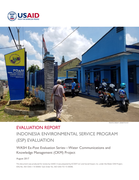
WASH Ex-Post Evaluation Series - Water Communications and Knowledge Management (CKM) Project
This evaluation examines the sustainability of selected components of the USAID/Indonesia Environmental Services Program (ESP), which was implemented from 2004–2010. Among other objectives, this activ ... ity sought to improve health and livelihoods of Indonesians through enhanced and expanded access to key environmental services.
Following up on the program seven years after it ended, this evaluation addresses the sustainability of ESP’s capacity-building efforts with Indonesian municipal water utilities, known as Perusahaan Daerah Air Minum (PDAM), and financial mechanisms to improve utility management and expanded water access in urban areas. more
This evaluation examines the sustainability of selected components of the USAID/Indonesia Environmental Services Program (ESP), which was implemented from 2004–2010. Among other objectives, this activ ... ity sought to improve health and livelihoods of Indonesians through enhanced and expanded access to key environmental services.
Following up on the program seven years after it ended, this evaluation addresses the sustainability of ESP’s capacity-building efforts with Indonesian municipal water utilities, known as Perusahaan Daerah Air Minum (PDAM), and financial mechanisms to improve utility management and expanded water access in urban areas. more
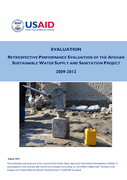
USAID/Afghanistan’s $443 million investment in the Afghan Sustainable Water Supply and Sanitation (SWSS) activity is one of the Agency’s largest single investments in sustainable rural water supply delivery. The project installed about 2,123 wells with hand pumps across Afghanistan from 2009–2
...
012. This report presents findings from a retrospective evaluation of a random selection of wells with hand pumps installed under the SWSS project.
This evaluation’s key purpose is to identify factors that support and hinder sustainable water service delivery in different contexts. more
This evaluation’s key purpose is to identify factors that support and hinder sustainable water service delivery in different contexts. more

In many of Myanmar’s contested regions, healthcare services are provided through two parallel governance systems – by the government’s Ministry of Health, and by providers linked to ethnic armed organizations. Building upon efforts to build trust between these two actors following ceasefires s
...
igned in 2011 and 2012, the new National League for Democracy-led government offers an unprecedented opportunity to increase cooperation between these systems and to ensure health services reach Myanmar’s most vulnerable populations.
The report provides an overview of existing health service arrangements in these areas, from both the Ministry of Health and from ethnic and community-based health organizations. It then unpacks the concept of “convergence”, highlighting key opportunities and policy recommendations for both government and non-government actors. more
The report provides an overview of existing health service arrangements in these areas, from both the Ministry of Health and from ethnic and community-based health organizations. It then unpacks the concept of “convergence”, highlighting key opportunities and policy recommendations for both government and non-government actors. more
The Sendai Framework for Disaster Risk Reduction 2015-2030 outlines seven clear targets and four priorities for action to prevent new and reduce existing disaster risks: (i) Understanding disaster risk; (ii) Strengthening disaster risk governance to manage disaster risk; (iii) Investing in disaster
...
reduction for resilience and; (iv) Enhancing disaster preparedness for effective response, and to "Build Back Better" in recovery, rehabilitation and reconstruction.
It aims to achieve the substantial reduction of disaster risk and losses in lives, livelihoods and health and in the economic, physical, social, cultural and environmental assets of persons, businesses, communities and countries over the next 15 years. more
It aims to achieve the substantial reduction of disaster risk and losses in lives, livelihoods and health and in the economic, physical, social, cultural and environmental assets of persons, businesses, communities and countries over the next 15 years. more

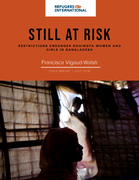
In April 2018, Refugees International (RI) conducted a mission to Bangladesh, to research the GBV (gender-based violence) response for Rohingya women and girls. RI found that the entire humanitarian system is struggling under tremendous constraints in Bangladesh, and protection and health actors do
...
deliver lifesaving services to survivors in an incredibly challenging environment. This report, however, focuses on key gaps and challenges in GBV programming, as communicated by practitioners deployed to Bangladesh at various stages of the emergency, by local organizations, and by the affected women and girls themselves.
In the analyses and recommendations provided in this report, RI draws in part from the framework of the international initiative to safeguard women and girls in emergencies — the Call to Action on Protection from Gender-Based Violence in Emergencies — and urges the donors and humanitarian organizations that are Call to Action partners to implement it more effectively and with urgency during this emergency. more
In the analyses and recommendations provided in this report, RI draws in part from the framework of the international initiative to safeguard women and girls in emergencies — the Call to Action on Protection from Gender-Based Violence in Emergencies — and urges the donors and humanitarian organizations that are Call to Action partners to implement it more effectively and with urgency during this emergency. more
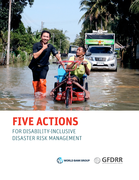
A recent survey of the literature and experience identified five broad actions that development institutions and governments, as well as their partners and stakeholders, can take to improve disability-inclusive disaster risk management. Those five actions are:
- Include persons with disabilitie ... s as valued stakeholders in disaster risk management activities
- Help remove barriers to the full participation of persons with disabilities
- Increase awareness among governments and their partners of the safety and security needs of persons with disabilities
- Collect data that is disaggregated by disability
- Ensure that new construction, rehabilitation and reconstruction are accessible to persons with disabilities more
- Include persons with disabilitie ... s as valued stakeholders in disaster risk management activities
- Help remove barriers to the full participation of persons with disabilities
- Increase awareness among governments and their partners of the safety and security needs of persons with disabilities
- Collect data that is disaggregated by disability
- Ensure that new construction, rehabilitation and reconstruction are accessible to persons with disabilities more
Full eHandbook under: http://www.msh.org/resources/health-systems-in-action-an-ehandbook-for-leaders-and-managers
Effective supply management has the potential to make a powerful contribution to the reliable availability of essential medicines, which are a crucial part of the delivery of highqualit
...
y health care services. Because medicines are costly and poor management so often results in waste, good supply management is also crucial to the cost-effectiveness of providing medicines.
more

Improving medicines access and use for child health: a guide to developing interventions
Ross-Degnan, D., Vialle-Valentin, C., and Briggs, J.
USAID, SIAPS (Systems for Improved Access to Pharmaceuticals and Services)
(2015)
C1
Submitted to the US Agency for International Development by the
Systems for Improved Access to Pharmaceuticals and Services (SIAPS) Program.
This manual provides a framework to identify problems and design interventions to improve access to and use of medicines for children. It is a resource for
...
both health policy makers and health system managers and presents a structured approach to the steps introduced in the framework in the context of child health.
more
