
Filter
2062
Text search:
outpatient
care
Featured
230
561
Language
1993
40
35
29
15
13
11
7
4
4
4
3
3
3
3
3
3
2
2
2
2
2
2
2
2
1
1
1
1
1
1
1
1
1
1
1
1
Document type
1232
295
280
123
44
34
22
20
4
4
2
1
Countries
92
84
61
56
55
48
48
45
40
37
36
36
36
34
34
34
29
29
27
27
25
23
23
20
16
15
14
13
13
13
12
12
11
10
10
9
9
9
8
8
8
8
8
8
8
7
7
7
7
6
6
5
5
5
5
5
4
4
4
4
4
4
4
4
4
4
3
3
3
3
3
3
3
3
2
2
2
2
2
2
2
2
2
2
2
2
2
2
2
2
2
2
2
2
2
2
2
1
1
1
1
1
1
1
1
1
1
1
1
1
1
1
1
1
1
1
1
1
1
1
1
1
1
1
Authors & Publishers
288
137
92
83
64
46
34
29
29
24
18
18
15
14
13
13
13
12
11
10
10
9
9
9
9
9
9
9
8
8
8
7
7
6
6
6
6
6
6
6
6
6
6
6
6
5
5
5
5
5
5
5
5
5
5
5
4
4
4
4
4
4
4
4
4
4
4
4
4
4
4
4
4
4
4
4
4
4
4
4
3
3
3
3
3
3
3
3
3
3
3
3
3
3
3
3
3
3
3
3
3
3
3
3
3
3
3
3
3
3
3
3
3
3
3
3
3
3
3
3
3
3
3
3
3
3
3
3
3
3
2
2
2
2
2
2
2
2
2
2
2
2
2
2
2
2
2
2
2
2
2
2
2
2
2
2
2
2
2
2
2
2
2
2
2
2
2
2
2
2
2
2
2
2
2
2
2
2
2
2
2
2
2
2
2
2
2
2
2
2
2
2
2
2
2
2
2
2
2
2
2
2
2
2
2
2
2
2
2
2
2
2
2
2
2
2
2
2
2
2
2
2
2
2
2
2
2
2
2
2
2
2
2
2
2
2
2
2
2
2
2
2
2
2
2
2
2
2
2
2
2
2
2
2
2
2
2
2
2
2
2
2
2
2
2
2
2
2
2
2
2
2
2
2
2
2
1
1
1
1
1
1
1
1
1
1
1
1
1
1
1
1
1
1
1
1
1
1
1
1
1
1
1
1
1
1
1
1
1
1
1
1
1
1
1
1
1
1
1
1
1
1
1
1
1
1
1
1
1
1
1
1
1
1
1
1
1
1
1
1
1
1
1
1
1
1
1
1
1
1
1
1
1
1
1
1
1
1
1
1
1
1
1
1
1
1
1
1
1
1
1
1
1
1
1
1
1
1
1
1
1
1
1
1
1
1
1
1
1
1
1
1
1
1
1
1
1
1
1
1
1
1
1
1
1
1
1
1
1
1
1
1
1
1
1
1
1
1
1
1
1
1
1
1
1
1
1
1
1
1
1
1
1
1
1
1
1
1
1
1
1
1
1
1
1
1
1
1
1
1
1
1
1
1
1
1
1
1
1
1
1
1
1
1
1
1
1
1
1
1
1
1
1
1
1
1
1
1
1
1
1
1
1
1
1
1
1
1
1
1
1
1
1
1
1
1
1
1
1
1
1
1
1
1
1
1
1
1
1
1
1
1
1
1
1
1
1
1
1
1
1
1
1
1
1
1
1
1
1
1
1
1
1
1
1
1
1
1
1
1
1
1
1
1
1
1
1
1
1
1
1
1
1
1
1
1
1
1
1
1
1
1
1
1
1
1
1
1
1
1
1
1
1
1
1
1
1
1
1
1
1
1
1
1
1
1
1
1
1
1
1
1
1
1
1
1
1
1
1
1
1
1
1
1
1
1
1
1
1
1
1
1
1
1
1
1
1
1
1
1
1
1
1
1
1
1
1
1
1
1
1
1
1
1
1
1
1
1
1
1
1
1
1
1
1
1
1
1
1
1
1
1
1
1
1
1
1
1
1
1
1
1
1
1
1
1
1
1
1
1
1
1
1
1
1
1
1
1
1
1
1
1
1
1
1
1
1
1
1
1
1
1
1
1
1
1
1
1
1
1
1
1
1
1
1
1
1
1
1
1
1
1
1
1
1
1
1
1
1
1
1
1
1
1
1
1
1
1
1
1
1
1
1
1
1
1
1
1
1
1
1
1
1
1
1
1
1
1
1
1
1
1
1
1
1
1
1
1
1
1
1
1
1
1
1
1
1
1
1
1
1
1
1
1
1
1
1
1
1
1
1
1
1
1
1
1
1
1
1
1
1
1
1
1
1
1
1
1
1
1
1
1
1
1
1
1
1
1
1
1
1
1
1
1
1
1
1
1
1
1
1
1
1
1
1
1
1
1
1
1
1
1
1
1
1
1
1
1
1
1
1
1
1
1
1
1
1
1
1
1
1
1
1
1
1
1
1
1
1
1
1
1
1
1
1
1
1
1
1
1
1
1
1
1
1
1
1
1
1
1
1
1
1
1
1
1
1
1
1
1
1
1
1
1
1
1
1
1
1
1
1
1
1
1
1
1
1
1
1
1
1
1
1
1
1
1
1
1
1
1
1
1
1
1
1
1
1
1
1
1
1
1
1
1
1
1
1
1
1
1
1
1
1
1
1
1
1
1
1
1
1
1
1
1
1
1
1
1
1
1
1
1
1
1
1
1
1
1
1
1
1
1
1
1
1
1
1
1
1
1
1
1
1
1
1
1
1
1
1
1
1
1
1
1
1
1
1
1
1
1
1
1
1
1
1
1
1
1
1
1
1
1
1
1
1
1
1
1
1
1
1
1
1
1
1
1
1
1
1
1
1
1
1
1
1
1
1
1
1
1
1
1
1
1
1
1
1
1
1
1
1
1
1
1
1
1
1
1
1
1
1
1
1
1
1
1
1
1
1
1
1
1
1
1
1
1
1
1
1
1
1
1
1
1
1
1
1
1
1
1
1
1
1
1
1
1
1
1
1
1
1
1
1
1
1
1
1
1
1
1
1
1
1
1
1
1
1
1
1
1
1
1
1
1
1
1
1
1
1
1
1
1
1
1
1
1
1
1
1
1
1
1
1
1
1
1
1
1
1
1
1
1
1
1
1
1
1
1
1
1
1
1
1
1
1
1
1
1
1
1
1
1
1
1
1
1
1
1
1
1
1
1
1
1
1
1
1
1
1
1
1
1
1
1
1
1
1
1
1
1
1
1
1
1
1
1
1
1
1
1
1
1
1
1
1
1
1
1
1
1
1
1
1
1
1
1
1
1
1
1
1
1
1
1
1
1
1
1
1
1
1
1
1
1
1
1
1
1
1
1
1
1
1
1
1
1
1
1
1
1
1
1
1
1
1
1
1
1
1
1
1
1
1
1
1
1
1
1
1
1
1
1
1
1
1
1
1
1
1
1
1
1
1
1
1
1
1
1
1
1
1
1
1
1
1
1
1
1
1
1
1
1
1
1
1
1
1
1
1
1
1
1
1
1
1
1
1
1
1
1
1
1
1
1
1
1
1
1
1
1
1
1
1
1
1
1
1
1
1
1
1
1
1
1
1
1
1
1
1
1
1
1
1
1
1
1
1
1
1
1
1
1
1
1
1
1
1
1
1
1
1
1
1
1
1
1
1
1
1
1
1
1
1
1
1
1
1
1
1
1
1
1
1
1
1
1
1
1
1
1
1
1
1
1
1
1
1
1
1
1
1
1
1
1
1
1
1
1
1
1
1
1
1
1
1
1
1
1
1
1
1
1
1
1
1
1
1
1
1
1
1
1
1
1
1
1
1
1
1
1
1
1
1
1
1
1
1
1
1
1
1
1
1
1
1
1
1
1
1
1
1
1
1
1
1
1
1
1
1
1
1
1
1
1
1
1
1
1
1
1
1
1
1
1
1
1
1
1
1
1
1
1
1
1
1
1
1
1
1
1
1
1
1
1
1
1
1
1
1
1
1
1
1
1
1
1
1
1
1
1
1
1
1
1
1
1
1
1
1
1
1
1
1
1
1
1
1
1
1
1
1
1
1
1
1
1
1
1
1
1
1
1
1
1
1
1
1
1
1
1
1
1
1
1
1
1
1
1
1
1
1
1
1
1
1
1
1
1
1
1
1
1
1
1
1
1
1
1
1
1
1
1
1
1
1
1
1
1
1
1
1
1
1
1
1
1
1
1
1
1
1
1
1
1
1
1
1
1
1
1
1
1
1
1
1
1
1
1
1
1
1
1
1
1
1
1
1
1
1
1
1
1
1
1
1
1
1
1
1
1
1
1
1
1
1
1
1
1
1
1
1
1
1
1
1
1
1
1
1
1
1
1
1
1
1
1
1
1
1
1
1
1
1
1
1
1
1
1
1
1
1
1
1
1
1
1
1
1
1
1
1
1
1
1
1
1
1
1
1
1
1
1
1
1
1
1
1
1
1
1
1
1
1
1
1
1
1
1
1
1
1
1
1
1
1
1
1
1
1
1
1
1
1
1
1
1
1
1
1
1
1
1
1
1
1
1
1
1
1
1
1
1
1
1
1
1
1
1
1
1
1
1
1
1
1
1
1
1
1
1
1
1
1
1
1
1
1
1
1
1
1
1
1
1
Publication Years
482
1346
220
12
1
1
Category
879
197
113
107
70
37
19
1
1
Toolboxes
263
150
144
121
79
77
69
52
39
37
36
35
29
22
22
18
17
13
8
7
6
5
3
1
1
International health regulations (2005): state party self-assessment annual reporting tool, 2nd ed
Second edition.
AVailable in English, French, Spanish, Russian, Chinese and Portuguese
This manual for trainers outlines the information and materials required to undertake training in line with the WASH FIT Guide, including background documents, the content of the recommended training modules and training evaluation approaches. The modular approach outlined enables trainers to decide
...
on all topics that are most useful to support the delivery of targeted training at the local level. It also provides sample training schedules, evaluation forms and is linked to a full set of interactive, adult-learning focused, training slides.
more
May 9, 2022.Since the onset of the COVID-19 pandemic, a large number of clinical trials have been planned and developed to assess the effectiveness and safety of various interventions that could prevent hospitalizations and progression to severe disease in people infected with SARS-CoV-2. Currently,
...
the WHO and the PAHO recommend the use of corticosteroids, tocilizumab, baricitinib, and casirivimab e imdevimab (the latter in seronegative COVID-19 patients) and propose the use of sotrovimab, casirivimab/imdevimab, and molnupiravir in patients with non-severe illness who are at high risk for complications
more
Policy Brief November 2021 Available in English, Spanish and Portuguese
The COVID-19 pandemic has fueled the ongoing antimicrobial resistance (AMR) global crisis due to the increase in the use of antibiotics to treat COVID-19 patients, disruptions to infection prevention and control practices in o
...
verwhelmed health systems, and diversion of human and financial resources away from monitoring and responding to AMR threats. Moreover, AMR is likely to have caused more COVID-19 deaths, as secondary bacterial infections can worsen the outcome of severe and critical COVID-19 illness. Therefore, it is more urgent than ever to prioritize efforts towards AMR containment and support countries to improve the detection, characterization and rapid response to emerging AMR.
more
Consultancy Report May 2022
Saving lives is the priority of WHO’s response in Ukraine. WHO works to ensure time-critical, lifesaving multisectoral assistance, non-discriminatory access to emergency and essential health services and priority prevention programmes, and laying the foundation for longer-term health systems recov
...
ery and strengthening.
more
Despite the continuing war in Ukraine, the Government is preparing for the country’s recovery and reconstruction. Given the magnitude of the attacks on the health infrastructure and consequent disruption to health system functioning, reconstruction of the health system is integral to the countryâ€
...
™s recovery. The immediate priorities are to restore essential services, respond to new physical and mental health needs, protect public health, and provide a secure and attractive environment for the return of both health professionals and the general population. This policy note identifies strategic directions for post-war health system recovery in the short and longer terms, while sustaining essential health services during the ongoing invasion
more
UNICEF Syria’s series of think pieces. Every day counts. An outlook on child protection for the most vulnerable children in Syria.To navigate the complex and continuously changing context and attain sustainable results for children, UNICEF – along with other UN agencies - seeks to make a shift i
...
n its programming towards early recovery while maintaining the delivery of humanitarian assistance based on needs on the ground. This will help strengthen the linkages between the needs-based emergency response and essential service restoration, socioeconomic resilience, and social cohesion.
more
The World Health Organization (WHO) convened a meeting of the Technical Advisory Group on Buruli ulcer at its headquarters in Geneva, Switzerland on 25 to 27 March 2019
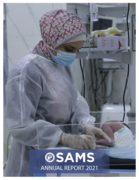
SAMS team rose to meet these challenges, delivering world class COVID treatment with four newly established COVID hospitals complete with 100 ICU beds and state of the art equipment like ventilators, monitors, and oxygen generators. By using innovative technologies, SAMS’ physicians were able to s
...
hare the knowledge they gained treating
more
This policy brief aims to provide a review of the current progress on implementing the Kenya national action plan on AMR, identifies critical gaps, and highlights findings to accelerate further progress in the human health sector. The target audience includes all those concerned with implementing ac
...
tions to combat antimicrobial resistance in Kenya.
more
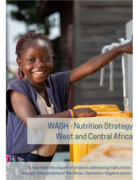
This document was prepared by UNICEF Regional Office for West and Central Africa, under the leadership of Christophe Valingot and the review of Joachim Peeters (WASH Specialist) and Arnaud Laillou (Nutrition Specialist), on behalf of the WASH Regional Group and the Nutrition Regional Group.
This
...
WASH - Nutrition strategic guidance note for West and Central Africa builds on the precedent WASH-in-NUT strategy elaborated in 2012 and is the regional outcome of a multiyear collaborative work conducted at country level between 2018 and 2022, in Mali, Niger, Nigeria Chad, Burkina Faso. This work is based on a strong multi-partner collaboration, involving national technical directorates of the water and sanitation sector as well as technical directorates of Health and Nutrition, civil society organizations, national and international NGOs as well as United Nations agencies.
This document can serve as a technical and strategic guide for any partner wishing to strengthen the intersectorality of WASH-Nutrition programmes. It presents the regional WASH & Nutrition context, a brief review of the latest scientific evidence, and proposes an integrated WASH-Nutrition programming framework adapted to the regional context of West and Central Africa. Beyond the implementation of programmes, this document also calls for the explicit and concrete inclusion of WASH-Nutrition integration into national policy documents.
more

The MHPSS MSP is an easy-to-follow intersectoral package, which spells out the activities and actions that all humanitarian actors should put in place in all emergencies for an effective MHPSS response. It speaks to different actors at the global, regional, national, and local levels to plan, coordi
...
nate and implement an effective MHPSS response.
more

Not long ago, on the occasion of the 100th anniversary of the discovery of Chagas disease, several campaigns denounced the scant progress has been made in diffrent spheres- medical, scientific and politcal- but major challanges still remain. This is an appropriate time to celebrate what has been ach
...
ieved and to take the next step.
more

The Practical manual on laboratory strengthening, 2022 update provides practical guidance on implementation of WHO recommendations and best practices for TB laboratory strengthening. It is an updated version of the GLI Practical Guide to Laboratory Strengthening published in 2017 and provides the la
...
test practical guidance on use of newly recommended diagnostics as well as guidance in key technical areas, including quality assurance and quality management systems, specimen collection and registration, procurement and supply-chain management, diagnostic connectivity, biosafety, data management, human resources, strategic planning, and model algorithms. The key changes are:
inclusion of recent or updated WHO recommendations for tests to diagnose TB and detect drug resistance;
alignment with the latest WHO critical concentrations for phenotypic drug-susceptibility testing (DST) and the new definitions of pre-XDR-TB and XDR-TB;
updated information on building quality-assured TB testing and management capacity using the Stepwise Laboratory Quality Improvement Process Towards Accreditation (SLIPTA) approach (Score-TB package1);
updated information on assessing, analysing and optimising TB diagnostic networks; and
updated information on the use of next-generation sequencing (NGS) to detect mutations associated with drug resistance for surveillance purposes.
The document also provides references to resources and tools relevant for work on laboratory strengthening.
more
Lymphatic filariasis (LF) infection if untreated results in fluid accumulation in the limbs or breasts (lymphedema) or genitalia (hydrocele) that is painful and causes great discomfort. Morbidity management and disability prevention (MMDP) strategies such as surgery for hydrocele, treatment of acute
...
attacks and management of lymphedema are necessary for the management of the advanced stages of LF. However, very few countries including Zambia, have adequate information on the health beliefs and health seeking behavior of communities living in endemic areas towards MMDP services for LF. This study sought to explore community and health provider perspectives towards MMDP services for LF in a highly endemic region, Luangwa District, Zambia, between February and April 2019.
more
The military offensive by the Russian Federation in Ukraine which began February 2022 has triggered one of the world’s fastest-growing displacement and humanitarian crisis, with geopolitical and economic ripples felt across the globe. The ongoing war has caused large-scale disruptions to the deliv
...
ery of health services and a near-collapse of the health system. But the crisis also saw an extraordinary mobilization and crisis response to a health emergency by WHO and its more than 100 partners.
more
This publication is a compendium of 49 country examples highlighting efforts in improving refugees’ and migrants’ health following the adoption of the WHO Global Action Plan on Promoting the health of refugees and migrants at the seventy-second World Health Assembly, in May 2019.
COVID-19 has altered health sector capacity in low-income and middle-income countries (LMICs). Cost data to inform evidence-based priority setting are urgently needed. Consequently, in this paper, we calculate the full economic health sector costs of COVID-19 clinical management in 79 LMICs under di
...
fferent epidemiological scenarios.
more

Member States of the Region have initiated processes to strengthen leadership and governance for mental health. Several countries have developed and implemented mental health plans, strategies and legislations. Direct spending on mental health needs to be increased throughout the Region through the
...
health sector as well as other relevant sectors.
more
