
Filter
2088
Text search:
practical
manual
Featured
274
480
Language
1948
71
63
63
35
20
10
5
4
4
4
4
3
3
3
3
2
2
2
2
2
1
1
1
1
1
1
1
1
1
1
1
1
1
1
1
1
1
1
Document type
1221
331
236
151
81
41
11
5
4
3
2
1
Countries
104
64
52
48
40
34
32
32
31
29
28
28
27
25
24
24
23
23
18
17
16
14
13
13
13
12
10
10
9
8
7
7
6
6
6
6
6
5
5
5
5
5
5
4
4
4
4
4
4
3
3
3
3
3
3
3
3
3
3
3
3
2
2
2
2
2
2
2
2
2
2
2
2
1
1
1
1
1
1
1
1
1
1
1
1
1
1
1
1
1
1
1
1
1
1
1
1
1
1
1
1
1
Authors & Publishers
333
133
97
79
66
56
45
42
29
21
19
16
15
15
15
15
14
13
12
10
10
9
9
9
9
9
8
7
7
7
7
7
7
7
7
7
6
6
6
6
6
6
6
6
6
6
6
6
6
6
6
5
5
5
5
5
5
5
5
5
5
5
5
5
5
4
4
4
4
4
4
4
4
4
4
4
4
4
4
4
4
4
4
4
4
4
4
4
4
4
4
3
3
3
3
3
3
3
3
3
3
3
3
3
3
3
3
3
3
3
3
3
3
3
3
3
3
3
3
3
3
3
3
3
3
3
3
3
3
3
3
3
3
3
3
3
3
3
3
3
2
2
2
2
2
2
2
2
2
2
2
2
2
2
2
2
2
2
2
2
2
2
2
2
2
2
2
2
2
2
2
2
2
2
2
2
2
2
2
2
2
2
2
2
2
2
2
2
2
2
2
2
2
2
2
2
2
2
2
2
2
2
2
2
2
2
2
2
2
2
2
2
2
2
2
2
2
2
2
2
2
2
2
2
2
2
2
2
2
2
2
2
2
2
2
2
2
2
2
2
2
2
2
2
2
2
2
2
2
2
2
2
2
2
2
2
2
2
2
2
2
2
2
2
2
2
2
2
2
2
2
2
2
2
2
2
2
2
2
2
2
2
2
2
2
2
2
2
2
2
2
2
2
2
2
2
2
1
1
1
1
1
1
1
1
1
1
1
1
1
1
1
1
1
1
1
1
1
1
1
1
1
1
1
1
1
1
1
1
1
1
1
1
1
1
1
1
1
1
1
1
1
1
1
1
1
1
1
1
1
1
1
1
1
1
1
1
1
1
1
1
1
1
1
1
1
1
1
1
1
1
1
1
1
1
1
1
1
1
1
1
1
1
1
1
1
1
1
1
1
1
1
1
1
1
1
1
1
1
1
1
1
1
1
1
1
1
1
1
1
1
1
1
1
1
1
1
1
1
1
1
1
1
1
1
1
1
1
1
1
1
1
1
1
1
1
1
1
1
1
1
1
1
1
1
1
1
1
1
1
1
1
1
1
1
1
1
1
1
1
1
1
1
1
1
1
1
1
1
1
1
1
1
1
1
1
1
1
1
1
1
1
1
1
1
1
1
1
1
1
1
1
1
1
1
1
1
1
1
1
1
1
1
1
1
1
1
1
1
1
1
1
1
1
1
1
1
1
1
1
1
1
1
1
1
1
1
1
1
1
1
1
1
1
1
1
1
1
1
1
1
1
1
1
1
1
1
1
1
1
1
1
1
1
1
1
1
1
1
1
1
1
1
1
1
1
1
1
1
1
1
1
1
1
1
1
1
1
1
1
1
1
1
1
1
1
1
1
1
1
1
1
1
1
1
1
1
1
1
1
1
1
1
1
1
1
1
1
1
1
1
1
1
1
1
1
1
1
1
1
1
1
1
1
1
1
1
1
1
1
1
1
1
1
1
1
1
1
1
1
1
1
1
1
1
1
1
1
1
1
1
1
1
1
1
1
1
1
1
1
1
1
1
1
1
1
1
1
1
1
1
1
1
1
1
1
1
1
1
1
1
1
1
1
1
1
1
1
1
1
1
1
1
1
1
1
1
1
1
1
1
1
1
1
1
1
1
1
1
1
1
1
1
1
1
1
1
1
1
1
1
1
1
1
1
1
1
1
1
1
1
1
1
1
1
1
1
1
1
1
1
1
1
1
1
1
1
1
1
1
1
1
1
1
1
1
1
1
1
1
1
1
1
1
1
1
1
1
1
1
1
1
1
1
1
1
1
1
1
1
1
1
1
1
1
1
1
1
1
1
1
1
1
1
1
1
1
1
1
1
1
1
1
1
1
1
1
1
1
1
1
1
1
1
1
1
1
1
1
1
1
1
1
1
1
1
1
1
1
1
1
1
1
1
1
1
1
1
1
1
1
1
1
1
1
1
1
1
1
1
1
1
1
1
1
1
1
1
1
1
1
1
1
1
1
1
1
1
1
1
1
1
1
1
1
1
1
1
1
1
1
1
1
1
1
1
1
1
1
1
1
1
1
1
1
1
1
1
1
1
1
1
1
1
1
1
1
1
1
1
1
1
1
1
1
1
1
1
1
1
1
1
1
1
1
1
1
1
1
1
1
1
1
1
1
1
1
1
1
1
1
1
1
1
1
1
1
1
1
1
1
1
1
1
1
1
1
1
1
1
1
1
1
1
1
1
1
1
1
1
1
1
1
1
1
1
1
1
1
1
1
1
1
1
1
1
1
1
1
1
1
1
1
1
1
1
1
1
1
1
1
1
1
1
1
1
1
1
1
1
1
1
1
1
1
1
1
1
1
1
1
1
1
1
1
1
1
1
1
1
1
1
1
1
1
1
1
1
1
1
1
1
1
1
1
1
1
1
1
1
1
1
1
1
1
1
1
1
1
1
1
1
1
1
1
1
1
1
1
1
1
1
1
1
1
1
1
1
1
1
1
1
1
1
1
1
1
1
1
1
1
1
1
1
1
1
1
1
1
1
1
1
1
1
1
1
1
1
1
1
1
1
1
1
1
1
1
1
1
1
1
1
1
1
1
1
1
1
1
1
1
1
1
1
1
1
1
1
1
1
1
1
1
1
1
1
1
1
1
1
1
1
1
1
1
1
1
1
1
1
1
1
1
1
1
1
1
1
1
1
1
1
1
1
1
1
1
1
1
1
1
1
1
1
1
1
1
1
1
1
1
1
1
1
1
1
1
1
1
1
1
1
1
1
1
1
1
1
1
1
1
1
1
1
1
1
1
1
1
1
1
1
1
1
1
1
1
1
1
1
1
1
1
1
1
1
1
1
1
1
1
1
1
1
1
1
1
1
1
1
1
1
1
1
1
1
1
1
1
1
1
1
1
1
1
1
1
1
1
1
1
1
1
1
1
1
1
1
1
1
1
1
1
1
1
1
1
1
1
1
1
1
1
1
1
1
1
1
1
1
1
1
1
1
1
1
1
1
1
1
1
1
1
1
1
1
1
1
1
1
1
1
1
1
1
1
1
1
1
1
1
1
1
1
1
1
1
1
1
1
1
1
1
1
1
1
1
1
1
1
1
1
1
1
1
1
1
1
1
1
1
1
1
1
1
1
1
1
1
1
1
1
1
1
1
1
1
1
1
1
1
1
1
1
1
1
1
1
1
1
1
1
1
1
1
1
1
1
1
1
1
1
1
1
1
1
1
1
1
1
1
1
1
1
1
1
1
1
1
1
1
1
1
1
1
1
1
1
1
1
1
1
1
1
1
1
1
1
1
1
1
1
1
1
1
1
1
1
1
1
1
1
1
1
1
1
1
1
1
1
1
1
1
1
1
1
1
1
1
1
1
1
1
1
1
1
1
1
1
1
1
1
1
1
1
1
1
1
1
1
1
1
1
1
1
1
1
1
1
1
1
1
1
1
1
1
1
1
1
1
1
1
1
1
1
1
1
1
1
1
1
1
1
1
1
1
1
1
1
1
1
1
1
1
1
1
1
1
1
1
1
1
1
1
1
1
1
1
1
1
1
1
1
1
1
1
1
1
1
1
1
1
1
1
1
1
1
1
1
1
1
1
1
1
1
1
1
1
1
1
1
1
1
1
1
1
1
1
1
1
1
1
1
1
1
1
1
1
1
1
1
1
1
1
1
1
1
1
1
1
1
1
1
1
1
1
1
1
1
1
1
1
1
1
1
1
1
1
1
1
1
1
1
1
1
1
1
1
1
1
1
1
1
1
1
1
1
1
1
1
1
1
1
1
1
1
1
1
1
1
1
1
1
1
1
1
1
1
1
1
1
1
1
1
1
1
1
1
1
1
1
1
1
1
1
1
1
1
1
1
1
1
1
1
1
1
1
1
1
1
1
1
1
1
1
1
1
1
1
1
1
1
1
1
1
1
1
1
1
1
1
1
1
1
1
1
1
1
1
1
1
1
1
1
1
1
1
1
1
1
1
1
1
1
1
1
1
1
1
1
1
1
1
1
1
1
1
1
1
1
1
1
1
1
1
1
1
1
1
1
1
1
1
1
1
1
1
1
1
1
1
1
1
1
1
1
1
1
1
1
1
1
1
1
1
1
1
1
1
1
1
1
1
1
1
1
1
1
1
1
1
1
1
1
1
1
1
1
Publication Years
1
428
1279
348
31
1
Category
569
209
182
175
150
131
32
4
1
Toolboxes
214
131
114
109
107
101
79
76
61
55
54
53
47
47
26
25
21
19
18
12
6
4
3
1
Professional Standards for Protection Work
recommended
Carried out by humanitarian and human rights actors in armed conflict and other situations of violence
This guideline (third edition) constitutes a set of minimum but essential standards aimed at ensuring that protection work is safe and effective. The standards reflect shared thinking and common
...
agreement among humanitarian and human rights practitioners
more

WHO TRS N°1012.
Key updates include: (i) surveillance strategies, including cross-sectoral linking of systems and suitable diagnostics; (ii) the latest recommendations on human and animal immunization; (iii) palliative care in lowresource settings; (iv) risk assessment to guide management of bite
...
victims; and (v) a proposed process for validation and verification of countries reaching zero human deaths from rabies.
more

Rehabilitation in health systems provides recommendations for Member States and other relevant stakeholders to strengthen and expand the availability of quality rehabilitation services. Currently, there is a significant unmet need for rehabilitation services and it is frequently undervalued in the h
...
ealth system. As populations age and the prevalence of noncommunicable diseases and injuries increases, and the demand for rehabilitation grows, strengthening rehabilitation in health systems becomes ever more paramount.
more

Zambia has recognised the Public Health threat of antimicrobial resistance and its impact on morbidity and mortality, as well as the subsequent economic consequences. The country has recorded microorganisms which have developed resistance to antimicrobial drugs. Notable among these are; Multidrug Re
...
sistant Mycobacterium Tuberculosis (MDR), Human Immunodeficiency virus resistant to antiretroviral drugs, Plasmodium resistance to antimalarial drugs, and fungal species showing indications of resistance to antifungal drugs. Emergence of “Superbugs” such as Methicillin Resistant Staphylococcus aureus (MRSA), Extended Spectrum beta-lactam (ESBL) producing Klebsiella pneumoniae and Vancomycin Resistant Enterococci (VRE) have also been reported.
more

Guidelines on sanitation and health
recommended
The new WHO Guidelines on Sanitation and Health summarize the evidence on the effectiveness of a range of sanitation interventions and provide a comprehensive framework for health-protecting sanitation, covering policy and governance measures, implementation of sanitation technologies, systems and b
...
ehavioural interventions, risk-based management, and monitoring approaches. Critically, the guidelines articulate the role of the health sector in maximizing the health impact of sanitation interventions.
The guidelines also identify gaps in the evidence-base to guide future research efforts to improve the effectiveness of sanitation interventions.
(French, Spanish, Russian, Arabic in production)
more
The main objectives of these guidelines are:
A. To create awareness among the CBM family (International Office, Member Associations, Regional Offices, Country Offices and partners) on the opportunity savings groups create to attain socio-economic empowerment of a significantly larger number of pers
...
ons with disabilities particularly among the poorest of the poor.
B. Lobbying mainstream savings group providers and donors to promote the inclusion of persons with disabilities in their programmes as a right as a catalyst of inclusive development.
C. To highlight and illustrate the key steps and procedures that are required to link persons with disabilities through CBR programmes with existing mainstream savings groups and/or promote development of disability specific savings groups.
more

The Community Action Research on Disability (CARD) programme in Uganda embraced and modified the EDR approach, recognising the need for including people with disability in the research process from concept to outcome, and nurturing participation and collaboration between all the stakeholders in achi
...
eving action-based research. T
more
Living Conditions among People with Activity Limitations in Zambia: A National Representative Study.
This research report provides results from the study on living conditions among people with disabilities in Zambia. Comparisons are made between individuals with and without disabilities and also between households with and without a disabled family member. Results obtained in Zambia are also compar
...
ed to those obtained in earlier studies carried out in Namibia, Zimbabwe and Malawi. The Zambian study was undertaken in 2005-2006.
more
Living Conditions among People with Activity Limitations in Malawi. A National Representative Study.
This research report provides results from the study on living conditions
among people with disabilities in Malawi. Comparisons are made between
individuals with and without disabilities and also between households with and without a disabled family member. Results obtained in Malawi are also comp
...
ared those obtained in earlier studies carried out in Namibia and Zimbabwe. The Malawian study was undertaken in 2003.
more
Lessons learnt from the ADCAP programme | This guide shares good practices and challenges that have emerged through the experience of the Age and Disability Capacity Programme (ADCAP) implementing partners, in embedding inclusion of older people and people with disabilities within their humanitaria
...
n policies and practices. All mainstream and specialist organisations engaged in humanitarian responses can learn and benefit from this experience. This guide complements the ‘Humanitarian inclusion standards for older people and people with disabilities’ (see Appendix 4), by documenting practices that will help humanitarian organisations to systematically include older people and people with disabilities.
more
Guide de réadaptation à base communautaire (RBC)
En 2003, une Consultation internationale consacrée à l’examen de la réadaptation à base communautaire organisée à Helsinki a émis un certain nombre de recommandations essentielles. Par la suite, la RBC a été redéfinie, dans un document
...
d’orientation conjoint de l’OIT, l’UNESCO et l’OMS, comme une stratégie faisant partie intégrante du développement communautaire général qui vise à assurer la réadaptation, l’égalité des chances et l’intégration sociale des personnes handicapées.
more
Antimicrobial resistance (AMR) is a major public health challenge, which is recognized as high priority area by the Government of India. The increasing consumption of antibiotics is one of the key drivers of antimicrobial resistance seen in bugs of public health importance. Irrational prescription o
...
f broad-spectrum antibiotics, poor regulations around sale of antibiotics, self-medication, lack of education and awareness regarding responsible use of antibiotics have been identified as some of the key factors driving antimicrobial resistance in our country. The ‘National Health Policy’ (2017), addresses antimicrobial resistance as one of the key issues and prioritises development of guidelines regarding antibiotic use, limiting the over-the-counter use of antibiotics, restricting the use of antibiotics as growth promoters in livestock, and pharmaco-vigilance including prescription audit inclusive of antibiotic usage in the hospital and community.
more
Antimicrobial Resistance Surveillance and Research Network | This document contains detail procedures on sample collection, transport, isolation, identification of fungi for the diagnosis of invasive fungal infections and antifungal susceptibility testing of yeast
Prepared as an outcome of ICMR Subcommittee on Cancer Cervix | This consensus document on management of cervix cancer summarizes the modalities of treatment including the site-specific anti-cancer therapies, supportive and palliative care and molecular markers and research questions. It also interwe
...
aves clinical, biochemical and epidemiological studies.
more
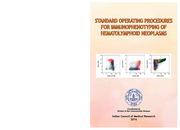
Prepared as an outcome of ICMR Expert Group on Immunophenotyping of Hematolymphoid Neoplasms | Coordinated by Division of Non Communicable Diseases | This document addresses on various issue related to good quality practices in laboratory work up of flow cytometric immunophenotyping and will be of u
...
se to pathologists, cytometrists, hematologists, technologists and scientists working in this field.
more
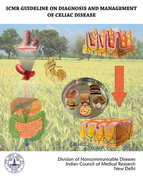
Division of Noncommunicable Diseases | draft guidelines on diagnosis and management of a chronic immune-mediated enteropathy called celiac disease. This disease is caused is mainly caused in genetically susceptible individuals by ingestion of gluten proteins that are present in wheat, barley and oat
...
s.
more
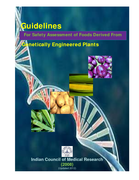
Original text from 2008, updated in 2012. This document marks the beginning of a structured approach to safety assessment of GE foods, which are yet to be approved in our country. It is understood that many changes will become necessary and will be incorporated as we progress. This document will ho
...
wever, remain an important milestone in the process towards safety evaluation of food derived from GE plants in India.
more
In its resolution 34/16, the Human Rights Council decided to focus its next full-day meeting on “Protecting the rights of the child in humanitarian situations” and invited the Office of the High Commissioner to prepare a report on that issue, in close collaboration with relevant stakeholders. Th
...
e report is to be presented to the Human Rights Council at its thirty-seventh session to inform the annual day of discussion on children’s rights.
more

Over half a billion children are living in areas with extremely high levels of floods and nearly 160 million children live in areas of high or extremely high droughts. The World Health Organisation (WHO) estimates that 26% of the annual 6.6 million deaths of children under five are linked to environ
...
ment-related causes and conditions. Children are also disproportionately affected by pollution, not only in terms of death rates, but also in terms of cognitive and physical development. This report illustrates that environmental causes also have an impact on whether children are pushed to work and on the kind of work they engage in, the conditions of work, exposure to dangerous toxicants and the risk of exploitation. However, the report raises more questions than it answers as it is one of the first reports addressing the question, how environmental degradation and climate change affect the vulnerability of children towards exploitation.
more
