
Filter
531
Text search:
training
children
with
visual
impairment
Featured
50
121
Language
Document type
424
45
24
23
6
5
2
1
1
Countries
29
24
18
16
13
13
10
10
10
9
9
8
8
7
6
6
6
5
5
5
4
4
4
4
4
3
3
3
3
3
2
2
2
2
2
2
2
2
2
1
1
1
1
1
1
1
1
1
1
1
1
1
1
1
1
1
1
1
1
1
1
1
1
Authors & Publishers
Publication Years
Category
199
43
36
18
7
6
Toolboxes
189
73
20
11
11
9
7
5
5
5
4
4
3
3
3
2
2
1
BioMed Central; BMC International Health and Human Rights (2016) 16:20; DOI 10.1186/s12914-016-0094-y
This training and guidance has been developed to provide an in-depth understanding on what it means to respect legal capacity in mental health and related areas as well as concrete strategies to ensure that people are able to exercise their right to
...
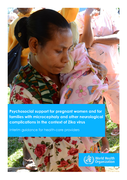
Inerim Guidance for health-care providers. This document describes guidance for a supportive response by healthcare providers (e.g. physicians, nurses), focusing primarily on women affected by Zika virus infection during pregnancy and their families, for their mental health and psychosocial needs.
Understanding The UN Convention On The Rights Of Persons With Disabilities

Stats SA has released an in-depth report on persons with disabilities. The report, written using Census 2011 data, is the first in a series of in-depth analyses of various Census 2011 variables, such as ageing and education.
The report provides sta
...
National Tuberclosis and
Leprosy Programme (NTLP)
Purpose of review: We review recent evidence regarding risk factors for childhood posttraumatic stress disorder (PTSD) and treatment outcome studies from 2010 to 2012 including dissemination studies, early intervention studies and studies involving preschool
...
Early Childhood Matters is a journal about early childhood. It looks at specific issues regarding the development of young children, in particular from a psychosocial perspective. It is published twice per year by the Bernard van Leer Foundation.
...
PLoS Med 15(7): e1002615. https://doi.org/10.1371/journal. pmed.1002615
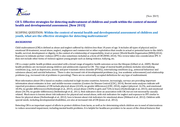
(New 2015)
Scoping question: Within the context of mental health and developmental assessment of children and youth, what are the effective strategies for detecting maltreatment?
