
Filter
3978
Text search:
public
opinion
Featured
393
902
Language
3789
198
98
77
46
35
30
16
8
7
7
7
5
5
5
4
4
4
4
3
3
3
3
3
3
3
3
3
3
2
2
2
2
2
2
2
2
2
2
2
2
2
2
2
2
1
1
1
1
1
1
1
1
1
1
1
1
1
1
1
1
Document type
2105
727
561
261
169
68
40
20
12
5
5
Countries
204
120
108
64
61
61
59
58
57
51
49
49
47
45
43
43
42
42
39
39
36
34
32
30
26
22
21
20
20
18
18
18
18
17
16
16
16
16
15
15
15
14
14
14
14
13
13
13
12
12
11
11
10
10
9
9
8
8
8
7
7
7
7
6
6
5
5
5
5
5
5
4
4
4
4
4
4
4
4
3
3
3
3
3
3
3
3
3
2
2
2
2
2
2
2
2
2
2
2
2
2
2
2
2
2
2
2
2
2
1
1
1
1
1
1
1
1
1
1
1
1
1
1
1
1
1
1
1
1
1
1
1
1
1
1
Authors & Publishers
882
365
212
199
151
116
77
74
38
36
34
29
23
22
21
20
18
17
17
17
17
17
16
15
15
15
15
15
14
13
13
13
12
11
11
10
9
9
9
9
9
9
9
8
8
8
8
8
8
8
8
8
7
7
7
7
7
7
7
7
7
6
6
6
6
6
6
6
6
6
6
6
6
6
6
6
5
5
5
5
5
5
5
5
5
5
5
5
5
5
5
5
5
5
5
5
5
5
5
5
5
5
5
5
5
5
5
5
4
4
4
4
4
4
4
4
4
4
4
4
4
4
4
4
4
4
4
4
4
4
4
4
4
4
4
4
4
4
4
4
4
3
3
3
3
3
3
3
3
3
3
3
3
3
3
3
3
3
3
3
3
3
3
3
3
3
3
3
3
3
3
3
3
3
3
3
3
3
3
3
3
3
3
3
3
3
3
3
3
3
3
3
3
3
3
3
3
3
3
3
3
3
3
3
3
3
3
2
2
2
2
2
2
2
2
2
2
2
2
2
2
2
2
2
2
2
2
2
2
2
2
2
2
2
2
2
2
2
2
2
2
2
2
2
2
2
2
2
2
2
2
2
2
2
2
2
2
2
2
2
2
2
2
2
2
2
2
2
2
2
2
2
2
2
2
2
2
2
2
2
2
2
2
2
2
2
2
2
2
2
2
2
2
2
2
2
2
2
2
2
2
2
2
2
2
2
2
2
2
2
2
2
2
2
2
2
2
2
2
2
2
2
2
2
2
2
2
2
2
2
2
2
2
2
2
2
2
2
2
2
2
2
2
2
2
2
2
2
2
2
2
2
2
2
2
2
2
2
2
2
2
2
2
2
2
2
2
2
2
2
2
2
2
2
2
2
2
2
2
2
2
2
2
2
2
2
2
2
1
1
1
1
1
1
1
1
1
1
1
1
1
1
1
1
1
1
1
1
1
1
1
1
1
1
1
1
1
1
1
1
1
1
1
1
1
1
1
1
1
1
1
1
1
1
1
1
1
1
1
1
1
1
1
1
1
1
1
1
1
1
1
1
1
1
1
1
1
1
1
1
1
1
1
1
1
1
1
1
1
1
1
1
1
1
1
1
1
1
1
1
1
1
1
1
1
1
1
1
1
1
1
1
1
1
1
1
1
1
1
1
1
1
1
1
1
1
1
1
1
1
1
1
1
1
1
1
1
1
1
1
1
1
1
1
1
1
1
1
1
1
1
1
1
1
1
1
1
1
1
1
1
1
1
1
1
1
1
1
1
1
1
1
1
1
1
1
1
1
1
1
1
1
1
1
1
1
1
1
1
1
1
1
1
1
1
1
1
1
1
1
1
1
1
1
1
1
1
1
1
1
1
1
1
1
1
1
1
1
1
1
1
1
1
1
1
1
1
1
1
1
1
1
1
1
1
1
1
1
1
1
1
1
1
1
1
1
1
1
1
1
1
1
1
1
1
1
1
1
1
1
1
1
1
1
1
1
1
1
1
1
1
1
1
1
1
1
1
1
1
1
1
1
1
1
1
1
1
1
1
1
1
1
1
1
1
1
1
1
1
1
1
1
1
1
1
1
1
1
1
1
1
1
1
1
1
1
1
1
1
1
1
1
1
1
1
1
1
1
1
1
1
1
1
1
1
1
1
1
1
1
1
1
1
1
1
1
1
1
1
1
1
1
1
1
1
1
1
1
1
1
1
1
1
1
1
1
1
1
1
1
1
1
1
1
1
1
1
1
1
1
1
1
1
1
1
1
1
1
1
1
1
1
1
1
1
1
1
1
1
1
1
1
1
1
1
1
1
1
1
1
1
1
1
1
1
1
1
1
1
1
1
1
1
1
1
1
1
1
1
1
1
1
1
1
1
1
1
1
1
1
1
1
1
1
1
1
1
1
1
1
1
1
1
1
1
1
1
1
1
1
1
1
1
1
1
1
1
1
1
1
1
1
1
1
1
1
1
1
1
1
1
1
1
1
1
1
1
1
1
1
1
1
1
1
1
1
1
1
1
1
1
1
1
1
1
1
1
1
1
1
1
1
1
1
1
1
1
1
1
1
1
1
1
1
1
1
1
1
1
1
1
1
1
1
1
1
1
1
1
1
1
1
1
1
1
1
1
1
1
1
1
1
1
1
1
1
1
1
1
1
1
1
1
1
1
1
1
1
1
1
1
1
1
1
1
1
1
1
1
1
1
1
1
1
1
1
1
1
1
1
1
1
1
1
1
1
1
1
1
1
1
1
1
1
1
1
1
1
1
1
1
1
1
1
1
1
1
1
1
1
1
1
1
1
1
1
1
1
1
1
1
1
1
1
1
1
1
1
1
1
1
1
1
1
1
1
1
1
1
1
1
1
1
1
1
1
1
1
1
1
1
1
1
1
1
1
1
1
1
1
1
1
1
1
1
1
1
1
1
1
1
1
1
1
1
1
1
1
1
1
1
1
1
1
1
1
1
1
1
1
1
1
1
1
1
1
1
1
1
1
1
1
1
1
1
1
1
1
1
1
1
1
1
1
1
1
1
1
1
1
1
1
1
1
1
1
1
1
1
1
1
1
1
1
1
1
1
1
1
1
1
1
1
1
1
1
1
1
1
1
1
1
1
1
1
1
1
1
1
1
1
1
1
1
1
1
1
1
1
1
1
1
1
1
1
1
1
1
1
1
1
1
1
1
1
1
1
1
1
1
1
1
1
1
1
1
1
1
1
1
1
1
1
1
1
1
1
1
1
1
1
1
1
1
1
1
1
1
1
1
1
1
1
1
1
1
1
1
1
1
1
1
1
1
1
1
1
1
1
1
1
1
1
1
1
1
1
1
1
1
1
1
1
1
1
1
1
1
1
1
1
1
1
1
1
1
1
1
1
1
1
1
1
1
1
1
1
1
1
1
1
1
1
1
1
1
1
1
1
1
1
1
1
1
1
1
1
1
1
1
1
1
1
1
1
1
1
1
1
1
1
1
1
1
1
1
1
1
1
1
1
1
1
1
1
1
1
1
1
1
1
1
1
1
1
1
1
1
1
1
1
1
1
1
1
1
1
1
1
1
1
1
1
1
1
1
1
1
1
1
1
1
1
1
1
1
1
1
1
1
1
1
1
1
1
1
1
1
1
1
1
1
1
1
1
1
1
1
1
1
1
1
1
1
1
1
1
1
1
1
1
1
1
1
1
1
1
1
1
1
1
1
1
1
1
1
1
1
1
1
1
1
1
1
1
1
1
1
1
1
1
1
1
1
1
1
1
1
1
1
1
1
1
1
1
1
1
1
1
1
1
1
1
1
1
1
1
1
1
1
1
1
1
1
1
1
1
1
1
1
1
1
1
1
1
1
1
1
1
1
1
1
1
1
1
1
1
1
1
1
1
1
1
1
1
1
1
1
1
1
1
1
1
1
1
1
1
1
1
1
1
1
1
1
1
1
1
1
1
1
1
1
1
1
1
1
1
1
1
1
1
1
1
1
1
1
1
1
1
1
1
1
1
1
1
1
1
1
1
1
1
1
1
1
1
1
1
1
1
1
1
1
1
1
1
1
1
1
1
1
1
1
1
1
1
1
1
1
1
1
1
1
1
1
1
1
1
1
1
1
1
1
1
1
1
1
1
1
1
1
1
1
1
1
1
1
1
1
1
1
1
1
1
1
1
1
1
1
1
1
1
1
1
1
1
1
1
1
1
1
1
1
1
1
1
1
1
1
1
1
1
1
1
1
1
1
1
1
1
1
1
1
1
1
1
1
1
1
1
1
1
1
1
1
1
1
1
1
1
1
1
1
1
1
1
1
1
1
1
1
1
1
1
1
1
1
1
1
1
1
1
1
1
1
1
1
1
1
1
1
1
1
1
1
1
1
1
1
1
1
1
1
1
1
1
1
1
1
1
1
1
1
1
1
1
1
1
1
1
1
1
1
1
1
1
1
1
1
1
1
1
1
1
1
1
1
1
1
1
1
1
1
1
1
1
1
1
1
1
1
1
1
1
1
1
1
1
1
1
1
1
1
1
1
1
1
1
1
1
1
1
1
1
1
1
1
1
1
1
1
1
1
1
1
1
1
1
1
1
1
1
1
1
1
1
1
1
1
1
1
1
1
1
1
1
1
1
1
1
1
1
1
1
1
1
1
1
1
1
1
1
1
1
1
1
1
1
1
1
1
1
1
1
1
1
1
1
1
1
1
1
1
1
1
1
1
1
1
1
1
1
1
1
1
1
1
1
1
1
1
1
1
1
1
1
1
1
1
1
1
1
1
1
1
1
1
1
1
1
1
1
1
1
1
1
1
1
1
1
1
1
1
1
1
1
1
1
1
1
1
1
1
1
1
1
1
1
1
1
1
1
1
1
1
1
1
1
1
1
1
1
1
1
1
1
1
1
1
1
1
1
1
1
1
1
1
1
1
1
1
1
1
1
1
1
1
1
1
1
1
1
1
1
1
1
1
1
1
1
1
1
1
1
1
1
1
1
1
1
1
1
1
1
1
1
1
1
1
1
1
1
1
1
1
1
1
1
1
1
1
1
1
1
1
1
1
1
1
1
1
1
1
1
1
1
1
1
1
1
1
1
1
1
1
1
1
1
1
1
1
1
1
1
1
1
1
1
1
1
1
1
1
1
1
1
1
1
1
1
1
1
1
1
1
1
1
1
1
1
1
1
1
1
1
1
1
1
1
1
1
1
1
1
1
1
1
1
1
1
1
1
1
1
1
1
1
1
1
1
1
1
1
1
1
1
1
1
1
1
1
1
1
1
1
1
1
1
1
1
1
1
1
1
1
1
1
1
1
1
1
1
1
1
1
1
1
1
1
1
1
1
1
1
1
1
1
1
1
1
1
1
1
1
1
1
1
1
1
1
1
1
1
1
1
1
1
1
1
1
1
1
1
1
1
1
1
1
1
1
1
1
1
1
1
1
1
1
1
1
1
1
1
1
1
1
1
1
1
1
1
1
1
1
1
1
1
1
1
1
1
1
1
1
1
1
1
1
1
1
1
1
1
1
1
1
1
1
1
1
1
1
1
1
1
1
1
1
1
1
1
1
1
1
1
1
1
1
1
1
1
1
1
1
1
1
1
1
1
1
1
1
1
1
1
1
1
1
1
1
1
1
1
1
1
1
1
1
1
1
1
1
1
1
1
1
1
1
1
1
1
1
1
1
1
1
1
1
1
1
1
1
1
1
1
1
1
1
1
1
1
1
1
1
1
1
1
1
1
1
1
1
1
1
1
1
1
1
1
1
1
1
1
1
1
1
1
1
1
1
1
1
1
1
1
1
1
1
1
1
1
1
1
1
1
1
1
1
1
1
1
1
1
1
1
1
1
1
1
1
1
1
1
1
1
1
1
1
1
1
1
1
1
1
1
1
1
1
1
1
1
1
1
1
1
1
1
1
1
1
1
1
1
1
1
1
1
1
1
1
1
1
1
1
1
1
1
1
1
1
1
1
1
1
1
1
1
1
1
1
1
1
1
1
1
1
1
1
1
1
1
1
1
1
1
1
1
1
1
1
1
1
1
1
1
1
1
1
1
1
1
1
1
1
1
1
1
1
1
1
1
1
1
1
1
1
1
1
1
1
1
1
1
1
1
1
1
1
1
1
1
1
1
1
1
1
1
1
1
1
1
1
1
1
1
1
1
1
1
1
1
1
1
1
1
1
1
1
1
1
1
1
1
1
1
1
1
1
1
1
1
1
1
1
1
1
1
1
1
1
1
1
1
1
1
1
1
1
1
1
1
1
1
1
1
1
1
1
1
1
1
1
1
1
1
1
1
1
1
1
1
1
1
1
1
1
1
1
1
1
1
1
1
1
1
1
1
1
1
1
1
1
1
1
1
1
1
1
1
1
1
1
1
1
1
1
1
1
1
1
1
1
1
1
1
1
1
1
1
1
1
1
1
1
1
1
1
1
1
1
1
1
1
1
1
1
1
1
1
1
1
1
1
1
1
1
1
1
1
1
1
1
1
1
1
1
1
1
1
1
1
1
1
1
1
1
1
1
1
1
1
1
1
1
1
1
1
1
1
1
1
1
1
1
1
1
1
1
1
1
1
1
1
1
1
1
1
1
1
1
1
1
1
1
1
1
1
1
1
1
1
1
1
1
1
1
1
1
1
1
1
1
1
1
1
1
1
1
1
1
1
1
1
1
1
1
1
1
1
1
1
1
1
1
1
1
1
1
1
1
1
1
1
1
1
1
1
1
1
1
1
1
1
1
1
1
1
1
1
1
1
1
1
1
1
1
1
1
1
1
1
1
1
1
1
1
1
1
1
1
1
1
1
1
1
1
1
1
1
1
1
1
1
Publication Years
1153
2417
381
20
1
2
3
1
Category
985
433
311
280
179
89
71
4
1
Toolboxes
370
335
281
247
166
164
158
132
131
120
113
101
99
91
78
74
45
41
28
28
21
19
17
2
1
JOIN European First Aid Guidelines
recommended
In the event of an accident or medical emergency, First Aid saves lives. Keeping the patient alive and safe until the arrival of expert professional help is a vital part of the chain of care which leads to recovery. The principle of First Aid must be simple skills, clearly taught and capable of bein
...
g performed in a stressful situation by those with no medical training. This manual is intended to offer a basic level of First Aid for members of the general public.
The contents of this manual are offered as a first edition of European First Aid Guidelines for general use. As such they are compatible with current practise, with other specialist guidelines (for example regarding the management of burns) and with the evidence base where one exists. These guidelines will be updated on a regular basis by the JOIN Clinical Working Group.
more
Pathogen genomic surveillance has become a priority for public health systems in recent years. Genomic sequencing is increasingly being used to characterize pathogens and monitor important public he
...
alth priorities (e.g. poliovirus, influenza virus, Mycobacterium tuberculosis and Vibrio cholerae, antimicrobial resistance (AMR)). The decrease in cost and time of sequencing and the exponential development of bioinformatic pipelines have played a critical role in integrating pathogen genomics into routine public health surveillance. The coronavirus disease 2019 (COVID-19) pandemic has highlighted the role that sequencing plays in the surveillance of infectious diseases. Sequencing facilitates earlier detection, more accurate investigation of outbreaks, closer real-time monitoring of pathogen evolution and tailored development and evaluation of interventions to inform local to global public health decision-making and action. However, there remains a need to coordinate efforts, leverage and link existing surveillance and laboratory networks and capabilities, and systematically integrate genetic sequence data (GSD) with clinical and epidemiological data to strengthen its utility.
more
Public health emergencies, including pandemics, highlight the need for health systems and services that are prepared, resilient and ready to respond to health security threats. Endorsed by Member States in 2023, the Asia Pacific Health Security Acti
...
on Framework (APHSAF) is designed to engage multisectoral actors in health security, and to reflect the complex nature of current and future public health emergencies. The Framework presents six interconnected, multisectoral domains of work that together form a comprehensive, multi-hazard health security system — emphasizing the One Health approach. The Framework also supports progress towards the Sustainable Development Goals and universal health coverage while meeting the responsibilities and obligations of the International Health Regulations (2005).
more
COVID 19 Vaccine Perceptions: A 15 country study
recommended
Initial public health responses to control the pandemic focused on promoting protective behaviors among the general population, including frequent hand washing, physical distancing and the use of face masks in
...
public spaces However, many saw these only as interim measures to reduce the spread of the virus and hopes for a return to a sense of ‘ rested on the development of a safe and effective vaccine.
more

Rabies is a global public health problem with important socioeconomic impacts. Human rabies is preventable; almost all cases are transmitted through the bite of a rabid dog. Elimination of human rabies is possible. Technical support and tools are av
...
ailable. This report covers:
- Why investment is needed: key rationale.
- Investment purpose: global elimination of rabies.
- Investment in action: four case examples in Philippines, Kwa-Zulu Natal, South Africa, United Republic of Tanzania, Bangladesh.
- Summary results of case examples: Programme similarities and differences, and Health impact success stories from case examples. more
- Why investment is needed: key rationale.
- Investment purpose: global elimination of rabies.
- Investment in action: four case examples in Philippines, Kwa-Zulu Natal, South Africa, United Republic of Tanzania, Bangladesh.
- Summary results of case examples: Programme similarities and differences, and Health impact success stories from case examples. more
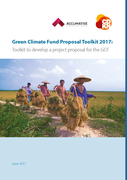
Green Climate Fund Proposal Toolkit 2017: Toolkit to develop a project proposal for the GCF
Fayolle, Virginie; Odianose, Serena
Acclimatise, Climate and Development Knowledge Network (CDKN)
(2017)
C1
The GCF aims to support developing countries in achieving a paradigm shift to low-emission and climate-resilient pathways. This is achieved by funding innovative and transformative lowemission (mitigation) and climate-resilient (adaptation) projects and programmes developed by the
...
public and private sectors to contribute to the implementation of national climate change priorities in developing countries. While it is relatively easy to tell what a mitigation project or programme is (i.e. its contribution to the reduction of greenhouse gases in the atmosphere, and/or whether it increases the capacity of an ecosystem to absorb them), the blurred line between a general development project and an adaptation project has been a contentious issue in the international climate finance debate. The relevant question is not whether a project is (also) a development project, but whether the project contributes to adaptation (i.e. what the adaptation/additionality argument is).
This toolkit helps governments and project developers understand how to fulfil the Green Climate Fund’s requirements when developing a fully-fledged funding proposal. more
This toolkit helps governments and project developers understand how to fulfil the Green Climate Fund’s requirements when developing a fully-fledged funding proposal. more
Current Opinion in Psychiatry: May 2018 - Volume 31 - Issue 3 - p 256–257
No Public Health without Refugee and Migrant health.
This report, the first of its kind, creates an evidence base with the aim of catalysing progress towards developing and promoting migrant-sensitive health systems in the 53 Member States of the W
...
HO European Region and beyond. This report seeks to illuminate the causes, conse-quences and responses to the health needs and challenges faced by refugees and migrants in the Region, while also providing a snapshot of the progress being made across the Region. Additionally, the report seeks to identify gaps that require further action through collaboration, to improve the collection and availability of high-quality data and to stimulate policy initiatives
more
HIV and Adolescents: Guidance for HIV testing and counseling and care for adolescents living with HIV
World Health Organization; Unicef; UNAIDS; et al.
(2013)
C_WHO
Recommendations for a Public Health approach and considerations for policy-makers and managers
Prevention and Treatment of HIV ands other sexually transmitted infections among men who have sex with men and transgender people
World Health Organization; UNAIDS; UNDP; et al.
(2011)
C_WHO
Recommendations for a public health approach
HIV/AIDS Programme
The socioeconomic factors and public health inadequacies that facilitated the rapid spread of this infection continue to exist. As it is a new and emerging disease it has not received sufficient coverage yet in the medical curricula of Member States
...
. Specific treatment is not available, and there is no vaccine for the prevention of chikungunya fever. It has therefore become imperative to develop guidelines, based on the limited clinical experience gathered from managing patients so far, for appropriate management of patients in communities and in health facilities. Experts engaged in managing patients with chikungunya fever in the Region were brought together by the WHO Regional Office for South-East Asia to outline guidelines for managing various situations and stages of the disease.
The socioeconomic factors and public health inadequacies that facilitated the rapid spread of this infection continue to exist. As it is a new and emerging disease it has not received sufficient coverage yet in the medical curricula of Member States. Specific treatment is not available, and there is no vaccine for the prevention of chikungunya fever. It has therefore become imperative to develop guidelines, based on the limited clinical experience gathered from managing patients so far, for appropriate management of patients in communities and in health facilities. Experts engaged in managing patients with chikungunya fever in the Region were brought together by the WHO Regional Office for South-East Asia to outline guidelines for managing various situations and stages of the disease. This publication is the end result of that exercise and is intended to assist health-care providers in planning and implementing appropriate care to patients with chikungunya fever according to their actual clinical conditions
more
Best practices for communicating with the public during an outbreak
Antimicrobial resistance (AMR) is an increasing worldwide public health problem with
important implications for the European Union (EU). When antibiotics become
ineffective, bacterial infections lead to increased morbidity, use of healthcare,
mor
...
tality and cost. Globally, estimates suggest that AMR leads to 700 000 deaths
per annum. For the EU, the European Centre for Disease Prevention and Control
(ECDC) has estimated that AMR currently causes 25 000 deaths annually and losses of
at least EUR 1.5 billion per annum in extra healthcare costs and productivity.
more

This publication outlines public health aspects of alcohol use and harm in WHO South East Asia Region Countries. It summarizes Global Regional and country specific data and also discusses aspects of alcohol control that are important in the context
...
of the Region. The possible future trend of alcohol use in the Region is also analysed and current and future barriers to effective alcohol control in countries of the Region are discussed.
more
Reporting system for the general public - This document aims to provide practical guidelines on how to set up national systems for consumers to report adverse reactions to medicines. The purpose is to help countries set up a well-organized and effec
...
tive consumer reporting system within their pharmacovigilance centre. Throughout this document, the phrase “consumer reporting” is used to refer to reporting of adverse drug reactions (ADRs) by the general public.
more
Early detection, assessment and response to acute public health events:
Best practices” are exemplary public health practices that have achieved results, and which need to be scaled up so as to benefit more people. The expansion and institutionalization of successfully tested best practices requires strategic planning
...
. There are several creative and constructive actions by people and organizations in the health sector to improve the health outcomes of people.
more
Training leaders in public health
IMDP 2016 Training Catalogue
The new guidelines provide public health guidance on pharmacological agents for managing hyperglycaemia in type 1 and type 2 diabetes for use in primary health-care in low-resource settings. These guidelines update the recommendations for managing h
...
yperglycaemia in the WHO Package of Essential NCD Interventions (WHO PEN) for primary care in low-resources settings, reviewing several newer oral agents as second- and third-line treatment: dipeptidyl peptidase-4 inhibitors, sodium-glucose co-transporter 2 inhibitors and thiazolidinediones. The guidelines also present recommendations on the selection of type of insulin (analogue versus human insulin) for adults with type 1 and type 2 diabetes.
more

BMC Public Health (2019) 19:1608
https://doi.org/10.1186/s12889-019-7853-3
