
Filter
1957
Text search:
foreign
countries
Featured
153
565
Language
1896
47
35
30
26
20
14
10
10
9
9
6
6
6
6
5
5
5
4
4
4
4
4
4
4
4
4
3
3
3
3
3
3
3
3
2
2
2
2
2
2
2
2
2
2
2
1
1
1
1
1
1
1
1
1
1
1
1
1
1
1
Document type
1156
394
156
105
55
27
24
20
9
4
1
1
Countries
104
57
57
53
48
48
47
45
42
39
38
38
30
30
27
25
25
24
24
22
22
21
21
21
21
20
20
19
19
16
15
15
15
14
14
12
11
11
11
10
9
8
8
8
8
8
7
7
7
7
7
7
6
6
6
6
5
5
5
5
5
5
5
5
5
5
4
4
4
4
3
3
3
3
3
3
2
2
2
2
2
2
2
2
2
2
2
2
2
1
1
1
1
1
1
1
1
1
1
1
1
1
1
1
1
1
1
1
1
1
1
1
1
1
1
1
1
1
1
1
Authors & Publishers
157
74
69
56
43
34
26
25
22
22
12
11
10
10
10
10
9
9
8
8
8
8
8
7
7
7
7
7
7
7
7
6
6
6
6
6
6
6
5
5
5
5
5
5
5
5
5
5
5
5
5
5
5
5
5
4
4
4
4
4
4
4
4
4
4
4
4
4
4
4
4
4
4
4
4
4
3
3
3
3
3
3
3
3
3
3
3
3
3
3
3
3
3
3
3
3
3
3
3
3
3
3
3
3
3
3
3
3
3
3
3
3
3
3
3
3
3
3
3
3
3
3
2
2
2
2
2
2
2
2
2
2
2
2
2
2
2
2
2
2
2
2
2
2
2
2
2
2
2
2
2
2
2
2
2
2
2
2
2
2
2
2
2
2
2
2
2
2
2
2
2
2
2
2
2
2
2
2
2
2
2
2
2
2
2
2
2
2
2
2
2
2
2
2
2
2
2
2
2
2
2
2
2
2
2
2
2
2
2
2
2
2
2
2
2
2
2
2
2
2
2
2
2
2
2
2
2
2
2
2
2
2
2
2
2
2
2
2
2
2
2
2
2
2
2
2
2
2
1
1
1
1
1
1
1
1
1
1
1
1
1
1
1
1
1
1
1
1
1
1
1
1
1
1
1
1
1
1
1
1
1
1
1
1
1
1
1
1
1
1
1
1
1
1
1
1
1
1
1
1
1
1
1
1
1
1
1
1
1
1
1
1
1
1
1
1
1
1
1
1
1
1
1
1
1
1
1
1
1
1
1
1
1
1
1
1
1
1
1
1
1
1
1
1
1
1
1
1
1
1
1
1
1
1
1
1
1
1
1
1
1
1
1
1
1
1
1
1
1
1
1
1
1
1
1
1
1
1
1
1
1
1
1
1
1
1
1
1
1
1
1
1
1
1
1
1
1
1
1
1
1
1
1
1
1
1
1
1
1
1
1
1
1
1
1
1
1
1
1
1
1
1
1
1
1
1
1
1
1
1
1
1
1
1
1
1
1
1
1
1
1
1
1
1
1
1
1
1
1
1
1
1
1
1
1
1
1
1
1
1
1
1
1
1
1
1
1
1
1
1
1
1
1
1
1
1
1
1
1
1
1
1
1
1
1
1
1
1
1
1
1
1
1
1
1
1
1
1
1
1
1
1
1
1
1
1
1
1
1
1
1
1
1
1
1
1
1
1
1
1
1
1
1
1
1
1
1
1
1
1
1
1
1
1
1
1
1
1
1
1
1
1
1
1
1
1
1
1
1
1
1
1
1
1
1
1
1
1
1
1
1
1
1
1
1
1
1
1
1
1
1
1
1
1
1
1
1
1
1
1
1
1
1
1
1
1
1
1
1
1
1
1
1
1
1
1
1
1
1
1
1
1
1
1
1
1
1
1
1
1
1
1
1
1
1
1
1
1
1
1
1
1
1
1
1
1
1
1
1
1
1
1
1
1
1
1
1
1
1
1
1
1
1
1
1
1
1
1
1
1
1
1
1
1
1
1
1
1
1
1
1
1
1
1
1
1
1
1
1
1
1
1
1
1
1
1
1
1
1
1
1
1
1
1
1
1
1
1
1
1
1
1
1
1
1
1
1
1
1
1
1
1
1
1
1
1
1
1
1
1
1
1
1
1
1
1
1
1
1
1
1
1
1
1
1
1
1
1
1
1
1
1
1
1
1
1
1
1
1
1
1
1
1
1
1
1
1
1
1
1
1
1
1
1
1
1
1
1
1
1
1
1
1
1
1
1
1
1
1
1
1
1
1
1
1
1
1
1
1
1
1
1
1
1
1
1
1
1
1
1
1
1
1
1
1
1
1
1
1
1
1
1
1
1
1
1
1
1
1
1
1
1
1
1
1
1
1
1
1
1
1
1
1
1
1
1
1
1
1
1
1
1
1
1
1
1
1
1
1
1
1
1
1
1
1
1
1
1
1
1
1
1
1
1
1
1
1
1
1
1
1
1
1
1
1
1
1
1
1
1
1
1
1
1
1
1
1
1
1
1
1
1
1
1
1
1
1
1
1
1
1
1
1
1
1
1
1
1
1
1
1
1
1
1
1
1
1
1
1
1
1
1
1
1
1
1
1
1
1
1
1
1
1
1
1
1
1
1
1
1
1
1
1
1
1
1
1
1
1
1
1
1
1
1
1
1
1
1
1
1
1
1
1
1
1
1
1
1
1
1
1
1
1
1
1
1
1
1
1
1
1
1
1
1
1
1
1
1
1
1
1
1
1
1
1
1
1
1
1
1
1
1
1
1
1
1
1
1
1
1
1
1
1
1
1
1
1
1
1
1
1
1
1
1
1
1
1
1
1
1
1
1
1
1
1
1
1
1
1
1
1
1
1
1
1
1
1
1
1
1
1
1
1
1
1
1
1
1
1
1
1
1
1
1
1
1
1
1
1
1
1
1
1
1
1
1
1
1
1
1
1
1
1
1
1
1
1
1
1
1
1
1
1
1
1
1
1
1
1
1
1
1
1
1
1
1
1
1
1
1
1
1
1
1
1
1
1
1
1
1
1
1
1
1
1
1
1
1
1
1
1
1
1
1
1
1
1
1
1
1
1
1
1
1
1
1
1
1
1
1
1
1
1
1
1
1
1
1
1
1
1
1
1
1
1
1
1
1
1
1
1
1
1
1
1
1
1
1
1
1
1
1
1
1
1
1
1
1
1
1
1
1
1
1
1
1
1
1
1
1
1
1
1
1
1
1
1
1
1
1
1
1
1
1
1
1
1
1
1
1
1
1
1
1
1
1
1
1
1
1
1
1
1
1
1
1
1
1
1
1
1
1
1
1
1
1
1
1
1
1
1
1
1
1
1
1
1
1
1
1
1
1
1
1
1
1
1
1
1
1
1
1
1
1
1
1
1
1
1
1
1
1
1
1
1
1
1
1
1
1
1
1
1
1
1
1
1
1
1
1
1
1
1
1
1
1
1
1
1
1
1
1
1
1
1
1
1
1
1
1
1
1
1
1
1
1
1
1
1
1
1
1
1
1
1
1
1
1
1
1
1
1
1
1
1
1
1
1
1
1
1
1
1
1
1
1
1
1
1
1
1
1
1
1
1
1
1
1
1
1
1
1
1
1
1
1
1
1
1
1
1
1
1
1
1
1
1
1
1
1
1
1
1
1
1
1
1
1
1
1
1
1
1
1
1
1
1
1
1
1
1
1
1
1
1
1
1
1
1
1
1
1
1
1
1
1
1
1
1
1
1
1
1
1
1
1
1
1
1
1
1
1
1
1
1
1
1
1
1
1
1
1
1
1
1
1
1
1
1
1
1
1
1
1
1
1
1
1
1
1
1
1
1
1
1
1
1
1
1
1
1
1
1
1
1
1
1
1
1
1
1
1
1
1
1
1
1
1
1
1
1
1
1
1
1
1
1
1
1
1
1
1
1
1
1
1
1
1
1
1
1
1
1
1
1
1
1
1
1
1
1
1
1
1
1
1
1
1
1
1
1
1
1
1
1
1
1
1
1
1
1
1
1
1
1
1
1
1
1
1
1
1
1
1
1
1
1
1
1
1
1
1
1
1
1
1
1
1
1
1
1
1
1
1
1
1
1
1
1
1
1
1
1
1
1
1
1
1
1
1
1
1
1
1
1
1
1
1
1
1
1
1
1
1
1
1
1
1
1
1
1
1
1
1
1
1
1
1
1
1
1
1
1
1
1
1
1
1
1
1
1
1
1
1
1
1
1
1
1
1
1
1
1
1
1
1
1
1
1
1
1
1
1
1
1
1
1
1
1
1
1
1
1
1
1
1
1
1
1
1
1
1
1
1
1
1
1
1
1
1
1
1
1
1
1
1
1
1
1
1
1
1
1
1
1
1
1
1
1
1
1
1
1
1
1
1
1
1
1
1
1
1
1
1
1
1
1
1
1
1
1
1
1
1
1
1
1
1
1
1
1
1
1
1
1
1
1
1
1
1
1
1
1
1
1
1
1
1
1
1
1
1
1
1
1
1
1
1
1
1
1
1
1
1
1
1
1
1
1
1
1
1
1
1
1
1
1
1
1
1
1
1
1
1
1
1
1
1
1
1
1
1
1
1
1
1
1
1
1
1
1
1
1
1
1
1
1
1
1
1
1
1
1
1
1
1
1
1
1
1
1
1
1
1
1
1
1
1
1
1
1
1
1
1
1
1
1
1
1
1
1
1
1
1
1
1
1
1
1
1
1
1
1
1
1
1
1
1
1
1
1
1
1
1
1
1
1
1
1
1
1
1
1
1
1
1
1
1
1
1
1
1
1
1
1
1
1
1
1
1
1
1
1
1
1
1
1
1
1
1
1
1
1
1
1
1
1
1
1
1
1
1
1
1
1
1
1
1
1
1
1
1
1
1
1
1
1
1
1
1
1
1
1
1
1
1
1
1
1
1
1
1
1
1
1
1
1
1
1
1
1
1
1
1
1
1
1
1
1
1
1
1
1
1
1
1
1
1
1
1
1
1
1
1
1
1
1
1
1
1
1
1
1
1
1
1
1
1
1
1
1
1
1
1
1
1
1
1
1
1
1
1
1
1
1
1
1
1
1
1
1
1
1
1
1
1
1
1
1
1
1
1
Publication Years
1
513
1219
198
21
1
2
1
1
Category
718
110
88
84
84
31
14
5
Toolboxes
141
122
107
98
93
83
77
74
74
71
64
48
40
39
39
32
28
21
15
11
6
4
4
2
2
Ukrainian Title: ІНСТРУКЦІЯ ДЛЯ ПІДТРИМКИ ІНТЕГРАЦІЇ ФАРМАЦЕВТИЧНИХ ПРАЦІВНИКІВ-БІЖЕНЦІВ З УКРАЇНИ
This information is based on data provided by the All-Ukrainian Pharmaceutical Chamber (AUPC) to the International Pharmaceutic
...
al Federation (FIP) in 2017, reviewed by Dr Iryna Vlasenko in April 2022. It is provided to support the integration of refugee pharmacists or pharmacy technicians from Ukraine in other countries. Some data may not be entirely up to date, but will be updated as soon as possible. This document was also developed following the recommendations and inputs by the FIP Forum for Pharmacy Professional Regulators and the FIP Workforce Development Hub.
more
Ensuring mental health and well-being has become a worldwide imperative and an important target
of the Sustainable Development Goals.
But in all countries around the world, our response has been woefully insufficient, and we have made
little prog
...
ress to advance mental health as a fundamental human right.
One in ten people are affected by a mental health condition, up to 200 million people have an
intellectual disability and an estimated 50 million people have dementia. Many persons with mental
health conditions, or psychosocial, intellectual, or cognitive disabilities lack access to quality mental
health services that respond to their needs and respect their rights and dignity.
more
Uganda hosts approximately 1.1 million refugees making it Africa’s largest refugee hosting country and one of the five largest refugee hosting countries in the world. Most recently, throughout 2016- 2018, Uganda was impacted by three parallel emer
...
gencies from South Sudan, the Democratic Republic of the Congo (DRC), and Burundi. In view of the on-going conflicts and famine
vulnerabilities in the Great Lakes Region, more refugee influxes and protracted refugee situations are anticipated in the foreseeable future. The unprecedented mass influx of refugees into Uganda in 2016-2018 has put enormous pressure on
the country’s basic service provision, in particular health and education services. Refugees share all social services with the local host communities. The refugee hosting districts are among the least developed districts in the country, and thus the additional refugee population is putting a high strain on already limited resources.
more
During the year 2022, COVID-19 continued to be a significant challenge in Eritrea as in many other countries across the world. As COVID-19 devastated communities around the world, WHO worked with the MoH to strengthen the National and Sub-National h
...
ealth systems in order to meet community needs and mitigate the devastation during the pandemic and beyond.
One of the major achievements in the year 2022 was the beginning of the journey towards validation of
the elimination of mother to child transmission of HIV, syphilis, and hepatitis B. This is the culmination of years
of commitment and determination by the political leadership, national and international partnerships to
reduce the associated indices to levels that qualify for elimination.
more
Financing Global Health 2017: Funding Universal Health Coverage and the Unfinished HIV/AIDS Agenda
Institute for Health Metrics and Evaluation (IHME)
Institute for Health Metrics and Evaluation (IHME)
(2018)
C2
In 2017, $37.4 billion of development assistance was provided to low- and middleincome countries to maintain or improve health. This amount is down slightly compared to 2016, and since 2010, development assistance for health (DAH) has grown at an an
...
nualized rate of 1.0%. While global development assistance for health has seemingly leveled off, global health spending continues to climb, outpacing economic growth in many countries. Total health spending for 2015, the most recent year for which data are available, was estimated to be $9.7 trillion (95% uncertainty interval: 9.7–9.8)*, up 4.7% (3.9–5.6) from the prior year, and accounted for 10% of the world’s total economy. With some sources of health spending growing and other types remaining steady, and with major variations in spending from country to country, it is more important than ever to understand where resources for health come from, where they go, and how they align with health needs. This information is critical for planning and is a necessary catalyst for change as we aim to close the gap on the unfinished agenda of the Millennium Development Goals (MDGs) and move forward toward universal health coverage (UHC) in the Sustainable Development Goals (SDGs) era.
more
Over the 20 years that followed, this unique partnership has invested more than US$53 billion, saving 44 million lives and reducing the combined death rate from the three diseases by more than half in the countries in which the Global Fund invests.
The definition of Official Development Assistance (ODA) has for 40 years been the global standard for measuring donor efforts in supporting development co-operation objectives. It has provided the yardstick for documenting the volume and the terms of the concessional resources provided, assessing do
...
nor performance against their aid pledges and enabling partner countries, civil society and others to hold donors to account. Yet for all its value, the ODA definition has always reflected a compromise between political expediency and statistical reality. It is based on interpretation and consensus and therefore allows for flexibility. It has evolved over the decades, while preserving the original concepts of a definition based on principal developmental motivation, official character and a degree of concessionality. While agreement on the ODA concept was a major achievement, discussion of the appropriateness of this measure has never ended. The paper documents the evolution of the ODA concept and proposes a possible new approach to measuring aid effort.
more
Guidelines for the management of asthma in adults and adolescents: Position statement of the South African Thoracic Society – 2021 update
Lalloo, U.G.; Kalla, I.S.; Abdool-Gaffar, S. et al.
African Journal of Thoracic and Critical Care Medicine
(2021)
CC
sthma prevalence is increasing worldwide, and surveys indicate that most patients in developed and developing countries, including South Africa, do not receive optimal care and are therefore not well controlled. Standard management guidelines adapte
...
d to in-country realities are important to support optimal care. The South African Thoracic Society (SATS) first published a guideline for the management of chronic persistent asthma in 1992, which has subsequently been revised several times.
The main aim of the present document was to revise and update SATS’ statement on the suggested management of chronic asthma, based on the need to promote optimal care and control of asthma, together with the incorporation of new concepts and drug developments. This revised document reinforces optimal care and incorporates the following primary objectives to achieve the recent advances in asthma care:
• continued emphasis on the use of inhaled corticosteroids (ICS) as the foundation of asthma treatment
• to reduce the reliance on short-acting beta-2 agonist (SABA) monotherapy for asthma symptoms
• to incorporate the evidence and strategy for the use of the combination of an ICS and formoterol for acute symptom relief (instead of a SABA)
• to incorporate the evidence and strategy for the use of as-needed ICS-long-acting beta agonists (LABA) for patients with infrequent symptoms or ‘mild’ asthma
• to incorporate the evidence and strategy for the use of a long-acting muscarinic antagonist (LAMA) in combination with ICS-LABA; and
• to incorporate the evidence and strategy for the use of and management with a biologic therapy in severe asthma.
more
Smallpox eradication was certified in 1980. Mpox has been endemic in Central and West African countries since it was first detected in 1958 . It is a zoonosis; cases are often found close to tropical rainforests where various animals carry the ortho
...
poxvirus that causes the disease. In endemic countries, most mpox infections in humans result from a primary animal-to-human transmission. Human-to-human transmission can result from close contact with respiratory secretions, skin lesions of an infected person, or recently contaminated objects. Transmission can also occur via the placenta from mother to fetus or through close contact during and after birth.
more
Asthma prevalence is increasing worldwide and surveys indicate that the majority of patients in developed and developing countries do not receive optimal care and are therefore not well controlled. The aim of these guidelines is to promote a better
...
standard of treatment based on advances in the understanding of the pathophysiology and pharmacotherapy of asthma and to encourage uniformity in the management of asthma.
more
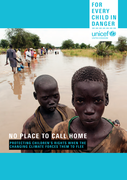
Around the world, approximately 1 in 45 children are on the move – nearly 50 million boys and girls that have migrated across borders or been forcibly displaced within their own countries.1 Climate-related events
and their impacts are already con
...
tributing significantly to these staggering numbers,with 14.7 million people facing new internal displacement as a result of weather-related disasters in 2015 alone. The annual average
since 2008 is higher still, at 21.5 million, equivalent to almost 2,500 people being displaced every single day.2
more
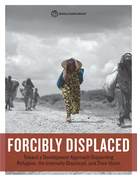
The report depicts the reality of forced displacement as a developing world crisis with implications for sustainable growth: 95 percent of the displaced live in developing countries and over half are in displacement for more than four years. To help
...
the displaced, the report suggests ways to rebuild their lives with dignity through development support, focusing on their vulnerabilities such as loss of assets and lack of legal rights and opportunities. It also examines how to help host communities that need to manage the sudden arrival of large numbers of displaced people, under pressure to expand services, create jobs and address long-standing development issues.
more
Herd immunity by mass vaccination offers the potential to substantially limit the continuing spread of COVID-19, but high levels of vaccine hesitancy threaten this goal. In a cross-country analysis of vaccine hesitant respondents across Latin America in January 2021, we experimentally tested how fiv
...
e features of mass vaccination campaigns—the vaccine’s producer, efficacy, endorser, distributor, and current population uptake rate—shifted willingness to take a COVID-19 vaccine. We find that citizens preferred Western-produced vaccines, but were highly influenced by factual information about vaccine efficacy. Vaccine hesitant individuals were more responsive to vaccine messengers with medical expertise than political, religious, or media elite endorsements. Citizen trust in foreign governments, domestic leaders, and state institutions moderated the effects of the campaign features on vaccine acceptance. These findings can help inform the design of unfolding mass inoculation campaigns.
more
This report sets out ways to make pre-hospital care and ambulance services operating in areas of armed violence safer. Written by the Norwegian Red Cross with support from the ICRC and the Mexican Red Cross, the report summarizes field experience in over 20
...
countries.
more
This report seeks to uncover the extent to which global goals crowd in international financing, inform domestic policy priorities, and navigate progress toward development outcomes in low- and middle-income countries (LICs and MICs). Our report:
Pr
...
ovides a historical perspective on how ODA financing was aligned with the MDGs, and the perceived influence of global goals in shaping domestic priorities
Offers a baseline of ODA financing to the SDGs and a forward-looking perspective in translating past lessons learned from the MDGs era into actionable insights
Using a pilot methodology developed by AidData, we analyze ODA flows during the MDGs era (2000-2013) and approximate baseline financing for each goal prior to the adoption of Agenda 2030 in September 2015. The dataset used in the report, Financing to the SDGs, Version 1.0, provides project-level data on estimated Official Development Assistance (ODA) commitments to the 17 Sustainable Development Goals (SDGs) from 2000 to 2013. In this report, we also draw upon the responses of nearly 7,000 public, private, and civil society leaders from AidData’s novel 2014 Reform Efforts Survey to assess how national-level policymakers perceive the MDGs in light of their domestic reform priorities, and what this may mean for the SDGs.
more

Ebola virus disease preparedness strengthening team Guinea-Bissau country visit 12–20 November 2014
World Health Organization
(2014)
The main objective of this mission was to assess the level of preparedness of Guinea-Bissau in respect of the WHO consolidated checklist. The checklist helps countries to assess and test their level of readiness it is being used to identify concrete
...
action to be taken and where countries will require support from partners. It lists 10 key components and tasks for both countries and the international community that should be completed within 30, 60 and 90 days from the date of issue of the list, with minimal requirements for equipment, material and human resources.
The components include: overall coordination; rapid response teams; public awareness and community engagement; infection prevention and control; epidemiological and laboratory surveillance; contact tracing; points of entry; laboratory; social mobilization and risk communication; budget.
more
This helpdesk report seeks to establish what lessons have been learnt from the current and previous Ebola outbreaks. It recommends good practice and makes suggestions based on the evidence for good practice and preparedness to reduce transmission and prevent further risk and exposure in affected
...
countries.
more
The aim of the pandemic preparedness checklist is primarily to provide an outline of the essential minimum elements of preparedness, as well as elements of preparedness that are considered desirable. It is recommended that responsible authorities or institutes in
...
countries that are in the process of planning should consider the specific aspects of the checklist for which they are responsible. The Checkllist is available in English, Japanese, Russian and Arabic from the website http://www.who.int/influenza/resources/documents/checklist/en/
more
The Organisation of African Unity (OAU) Convention Governing the Specific Aspects of Refugee Problems in Africa takes into account the unique aspects of the refugee situation on the African Continent. The 1951 Geneva Convention definition of refugees as "persons fleeing a well-founded fear of persec
...
ution" had not considered several problems encountered by African refugees and was too narrow within the African context. As a result, Article One of the OAU Convention adds a second paragraph to extend the definition of the term "refugee" and include external aggression, occupation, foreign domination or events seriously disturbing public order as causes of migration and flight.
The document contains both the English and the French versions of the original text.
For versions in Arabic, Kirundi, Russian and Spanish check also:
http://www.refworld.org/docid/3ae6b36018.html
more
Cartagena Declaration on Refugees for Latin America
Colloquium on the International Protection of Refugees
(1984)
CC2
The Cartagena Declaration on Refugees was adopted by the Colloquium on the International Protection of Refugees in Central America, Mexico and Panama on November 22, 1984. The declaration is a non-binding agreement but has been incorporated in refugee law in various
...
countries. The Cartagena Declaration on Refugees bases its principles on the “commitments with regards to refugees” defined in the Contadora Act on Peace and Cooperation (which are based on the 1951 UN Refugee Convention and the 1967 Protocol).
It includes a range of detailed commitments to peace, democratization, regional security and economic co-operation. It also provided for regional committees to evaluate and verify compliance with these commitments.
This document contains the Spanish, French and English versions of the original text.
more
