
Filter
406
Text search:
MHPSS
Featured
72
70
Language
Document type
105
75
69
40
30
29
19
15
14
8
2
Countries / Regions
33
26
24
15
13
13
11
11
10
10
9
8
8
8
7
7
7
6
5
5
5
5
5
5
5
4
4
4
4
3
3
3
3
3
3
3
3
3
2
2
2
2
2
2
2
2
2
2
2
2
2
2
2
2
1
1
1
1
1
1
1
1
1
1
1
1
1
1
1
1
1
1
1
1
1
1
1
1
1
1
1
1
Authors & Publishers
Publication Years
Category
151
17
14
12
5
4
Toolboxes
133
90
62
24
19
10
6
6
3
2
2
2
1
1
The training manual consists of: (i) Tools for communication, reassurance and comfort for staff working directly with distressed children; (ii) Advice and guidance for staff working with parents and primary care-givers; (iii) Suggestions for ways to support a distressed child. It provides a non-i
...
Formation en Premiers Secours Psychologiques aux enfants : 2 jours
Gestion du stress du personnel : 1 journée
This guide is strongly practice -oriented and intended as an open resource when replicating similar methods of psychosocial care in other projects. It describes the steps in the development of our pilot project
"Low threshold psychosocial support for refugees and asylum seekers’ in
...
Volunteers are impacted by COVID-19 like everyone else worldwide. They worry about being stigmatized by family and community members, fear contracting the virus, having to be in isolation or quarantine, losing colleagues etc. Volunteers may also be affected by witnessing the death of someone they su
...

Humanitarian emergencies and crises (Humanitarian emergencies and crises) are large-scale events that may result in the breakdown of health care systems and society, forced displacement, death, and physical, psychological, social and spiritual suffering on a massive scale. Current responses to Human
...
‘Psychosocial Support of Children in Emergencies’ is a reference document for humanitarian workers who want to increase their understanding of the experiences of children in emergency situations and how to support them in mitigating the negative effects of these experiences and how to prevent fu
...
Results from studies evaluating the effectiveness of focused psychosocial support interventions in children exposed to traumatic events in humanitarian settings in low-income and middle-income countries have been inconsistent, showing varying results by setting and subgroup (eg, age or gender). We a
...
Assessment and Guidance for Strengthening Integration of Mental Health into Primary Health Care and Community-Based Service Platforms in Ukraine
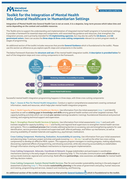
This Toolkit aims to support the understanding and implementation of integrated mental health programs in humanitarian settings. It provides a framework for essential steps and components, with associated key guidance and resources, that strengthen the integration process, and is primarily intended
...
The Sphere Handbook in Ukrainian
recommended
The Ukrainian translation of the Handbook was done by the Rev Marian and Dr Roman Curkowskyj Foundation. Established in 1990 in Toronto, Canada, the Foundation supports the advancement of education, notably through the publication of works in Ukrainian. 2011 Edition.
Guidelines.
The guidelines set out essential actions that humanitarian actors must take in order to effectively identify and respond to the needs and rights of persons with disabilities who are most at risk of being left behind in humanitarian settings.
The recommended actions in each chapter pl
...
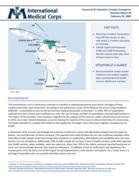

Infectious diseases like COVID-19 can disrupt the environments in which children grow and develop. Disruptions to families, friendships, daily routines and the wider community can have negative consequences for children’s well-being, development and protection. In addition, measures used to preven
...


People experiencing social disadvantage and marginalization are known to be disproportionately impacted by ill-health. In the context of the COVID-19 pandemic, persons with disabilities may have increased risk for exposure, complications, and death
In April 2020, the UN launched a coordinated global humanitarian response plan (GHRP) to fight COVID-19 in some of the world’s most vulnerable countries and address the needs of the most vulnerable people. This tips sheet provides practical tips to strengthen disability inclusion within the new up
...
In humanitarian settings, tailoring community engagement interventions for gender, language, and local culture improves communities’ uptake with interventions. Measures taken to prevent and respond to COVID-19 pandemic such as confinement may increase GBV, especially domestic violence and Intimate
...
