
Filter
3630
Text search:
Health,
Psychosocial
Featured
397
856
Language
3194
253
108
105
73
46
38
32
29
9
8
7
6
6
6
6
6
6
5
5
5
5
4
4
4
3
3
3
3
3
3
3
2
2
2
2
2
2
2
2
1
1
1
1
1
1
1
1
1
1
1
1
1
1
1
1
Document type
2144
482
379
196
136
88
72
72
27
19
5
3
2
1
1
Countries
135
108
106
96
80
78
76
71
69
66
64
61
59
54
52
49
47
46
45
45
41
39
38
37
35
35
34
34
33
32
30
29
23
22
22
21
21
20
20
20
19
19
19
19
18
18
17
15
12
12
12
11
11
11
10
10
10
10
10
9
9
9
9
8
8
8
8
8
8
8
7
7
6
6
6
6
5
5
5
5
5
5
5
4
4
4
4
4
3
3
3
3
3
3
3
3
3
3
3
3
3
3
3
3
2
2
2
2
2
2
2
2
2
2
2
2
2
2
2
1
1
1
1
1
1
1
1
1
1
1
1
1
1
1
1
1
1
1
1
1
1
1
1
Authors & Publishers
362
201
200
116
100
84
83
76
70
68
44
43
43
40
36
31
30
27
25
24
22
22
21
20
20
20
20
19
19
19
17
16
15
15
15
14
13
13
12
12
12
12
11
11
11
11
11
10
10
9
9
9
9
9
9
9
9
9
9
9
8
8
8
8
8
8
8
8
7
7
7
7
7
7
7
7
7
7
6
6
6
6
6
6
6
6
6
6
6
5
5
5
5
5
5
5
5
5
5
5
5
5
5
5
5
5
5
5
5
5
5
5
5
5
5
4
4
4
4
4
4
4
4
4
4
4
4
4
4
4
4
4
4
4
4
4
4
4
4
4
4
4
4
4
4
4
4
4
4
4
4
4
4
4
4
4
4
4
4
4
4
4
4
4
4
4
4
4
4
4
4
4
4
3
3
3
3
3
3
3
3
3
3
3
3
3
3
3
3
3
3
3
3
3
3
3
3
3
3
3
3
3
3
3
3
3
3
3
3
3
3
3
3
3
3
3
3
3
3
3
3
3
3
3
3
3
3
3
3
3
3
3
3
3
3
3
3
3
3
3
3
3
3
3
3
3
3
3
3
3
3
3
3
3
3
2
2
2
2
2
2
2
2
2
2
2
2
2
2
2
2
2
2
2
2
2
2
2
2
2
2
2
2
2
2
2
2
2
2
2
2
2
2
2
2
2
2
2
2
2
2
2
2
2
2
2
2
2
2
2
2
2
2
2
2
2
2
2
2
2
2
2
2
2
2
2
2
2
2
2
2
2
2
2
2
2
2
2
2
2
2
2
2
2
2
2
2
2
2
2
2
2
2
2
2
2
2
2
2
2
2
2
2
2
2
2
2
2
2
2
2
2
2
2
2
2
2
2
2
2
2
2
2
2
2
2
2
2
2
2
2
2
2
2
2
2
2
2
2
2
2
2
2
2
2
2
2
2
2
2
2
2
2
2
2
2
2
2
2
2
2
2
2
2
2
2
2
2
2
2
2
2
2
2
2
2
2
2
2
2
2
2
2
2
2
2
2
2
2
2
2
2
2
2
2
2
2
2
2
2
2
2
2
2
2
2
2
2
2
2
2
2
2
2
2
2
2
2
2
2
2
2
2
2
2
2
2
2
2
2
2
2
2
2
2
2
2
1
1
1
1
1
1
1
1
1
1
1
1
1
1
1
1
1
1
1
1
1
1
1
1
1
1
1
1
1
1
1
1
1
1
1
1
1
1
1
1
1
1
1
1
1
1
1
1
1
1
1
1
1
1
1
1
1
1
1
1
1
1
1
1
1
1
1
1
1
1
1
1
1
1
1
1
1
1
1
1
1
1
1
1
1
1
1
1
1
1
1
1
1
1
1
1
1
1
1
1
1
1
1
1
1
1
1
1
1
1
1
1
1
1
1
1
1
1
1
1
1
1
1
1
1
1
1
1
1
1
1
1
1
1
1
1
1
1
1
1
1
1
1
1
1
1
1
1
1
1
1
1
1
1
1
1
1
1
1
1
1
1
1
1
1
1
1
1
1
1
1
1
1
1
1
1
1
1
1
1
1
1
1
1
1
1
1
1
1
1
1
1
1
1
1
1
1
1
1
1
1
1
1
1
1
1
1
1
1
1
1
1
1
1
1
1
1
1
1
1
1
1
1
1
1
1
1
1
1
1
1
1
1
1
1
1
1
1
1
1
1
1
1
1
1
1
1
1
1
1
1
1
1
1
1
1
1
1
1
1
1
1
1
1
1
1
1
1
1
1
1
1
1
1
1
1
1
1
1
1
1
1
1
1
1
1
1
1
1
1
1
1
1
1
1
1
1
1
1
1
1
1
1
1
1
1
1
1
1
1
1
1
1
1
1
1
1
1
1
1
1
1
1
1
1
1
1
1
1
1
1
1
1
1
1
1
1
1
1
1
1
1
1
1
1
1
1
1
1
1
1
1
1
1
1
1
1
1
1
1
1
1
1
1
1
1
1
1
1
1
1
1
1
1
1
1
1
1
1
1
1
1
1
1
1
1
1
1
1
1
1
1
1
1
1
1
1
1
1
1
1
1
1
1
1
1
1
1
1
1
1
1
1
1
1
1
1
1
1
1
1
1
1
1
1
1
1
1
1
1
1
1
1
1
1
1
1
1
1
1
1
1
1
1
1
1
1
1
1
1
1
1
1
1
1
1
1
1
1
1
1
1
1
1
1
1
1
1
1
1
1
1
1
1
1
1
1
1
1
1
1
1
1
1
1
1
1
1
1
1
1
1
1
1
1
1
1
1
1
1
1
1
1
1
1
1
1
1
1
1
1
1
1
1
1
1
1
1
1
1
1
1
1
1
1
1
1
1
1
1
1
1
1
1
1
1
1
1
1
1
1
1
1
1
1
1
1
1
1
1
1
1
1
1
1
1
1
1
1
1
1
1
1
1
1
1
1
1
1
1
1
1
1
1
1
1
1
1
1
1
1
1
1
1
1
1
1
1
1
1
1
1
1
1
1
1
1
1
1
1
1
1
1
1
1
1
1
1
1
1
1
1
1
1
1
1
1
1
1
1
1
1
1
1
1
1
1
1
1
1
1
1
1
1
1
1
1
1
1
1
1
1
1
1
1
1
1
1
1
1
1
1
1
1
1
1
1
1
1
1
1
1
1
1
1
1
1
1
1
1
1
1
1
1
1
1
1
1
1
1
1
1
1
1
1
1
1
1
1
1
1
1
1
1
1
1
1
1
1
1
1
1
1
1
1
1
1
1
1
1
1
1
1
1
1
1
1
1
1
1
1
1
1
1
1
1
1
1
1
1
1
1
1
1
1
1
1
1
1
1
1
1
1
1
1
1
1
1
1
1
1
1
1
1
1
1
1
1
1
1
1
1
1
1
1
1
1
1
1
1
1
1
1
1
1
1
1
1
1
1
1
1
1
1
1
1
1
1
1
1
1
1
1
1
1
1
1
1
1
1
1
1
1
1
1
1
1
1
1
1
1
1
1
1
1
1
1
1
1
1
1
1
1
1
1
1
1
1
1
1
1
1
1
1
1
1
1
1
1
1
1
1
1
1
1
1
1
1
1
1
1
1
1
1
1
1
1
1
1
1
1
1
1
1
1
1
1
1
1
1
1
1
1
1
1
1
1
1
1
1
1
1
1
1
1
1
1
1
1
1
1
1
1
1
1
1
1
1
1
1
1
1
1
1
1
1
1
1
1
1
1
1
1
1
1
1
1
1
1
1
1
1
1
1
1
1
1
1
1
1
1
1
1
1
1
1
1
1
1
1
1
1
1
1
1
1
1
1
1
1
1
1
1
1
1
1
1
1
1
1
1
1
1
1
1
1
1
1
1
1
1
1
1
1
1
1
1
1
1
1
1
1
1
1
1
1
1
1
1
1
1
1
1
1
1
1
1
1
1
1
1
1
1
1
1
1
1
1
1
1
1
1
1
1
1
1
1
1
1
1
1
1
1
1
1
1
1
1
1
1
1
1
1
1
1
1
1
1
1
1
1
1
1
1
1
1
1
1
1
1
1
1
1
1
1
1
1
1
1
1
1
1
1
1
1
1
1
1
1
1
1
1
1
1
1
1
1
1
1
1
1
1
1
1
1
1
1
1
1
1
1
1
1
1
1
1
1
1
1
1
1
1
1
1
1
1
1
1
1
1
1
1
1
1
1
1
1
1
1
1
1
1
1
1
1
1
1
1
1
1
1
1
1
1
1
1
1
1
1
1
1
1
1
1
1
1
1
1
1
1
1
1
1
1
1
1
1
1
1
1
1
1
1
1
1
1
1
1
1
1
1
1
1
1
1
1
1
1
1
1
1
1
1
1
1
1
1
1
1
1
1
1
1
1
1
1
1
1
1
1
1
1
1
1
1
1
1
1
1
1
1
1
1
1
1
1
1
1
1
1
1
1
1
1
1
1
1
1
1
1
1
1
1
1
1
1
1
1
1
1
1
1
1
1
1
1
1
1
1
1
1
1
1
1
1
1
1
1
1
1
1
1
1
1
1
1
1
1
1
1
1
1
1
1
1
1
1
1
1
1
1
1
1
1
1
1
1
1
1
1
1
1
1
1
1
1
1
1
1
1
1
1
1
1
1
1
1
1
1
1
1
1
1
1
1
1
1
1
1
1
1
1
1
1
1
1
1
1
1
1
1
1
1
1
1
1
1
1
1
1
1
1
1
1
1
1
1
1
1
1
1
1
1
1
1
1
1
1
1
1
1
1
1
1
1
1
1
1
1
1
1
1
1
1
1
1
1
1
1
1
1
1
1
1
1
1
1
1
1
1
1
1
1
1
1
1
1
1
1
1
1
1
1
1
1
1
1
1
1
1
1
1
1
1
1
1
1
1
1
1
1
1
1
1
1
1
1
1
1
1
1
1
1
1
1
1
1
1
1
1
1
1
1
1
1
1
1
1
1
1
1
1
1
1
1
1
1
1
1
1
1
1
1
1
1
1
1
1
1
1
1
1
1
1
1
1
1
1
1
1
1
1
1
1
1
1
1
1
1
1
1
1
1
1
1
1
1
1
1
1
1
1
1
1
1
1
1
1
1
1
1
1
1
1
1
1
1
1
1
1
1
1
1
1
1
1
1
1
1
1
1
1
1
1
1
1
1
1
1
1
1
1
1
1
1
1
1
1
1
1
1
1
1
1
1
1
1
1
1
1
1
1
1
1
1
1
1
1
1
1
1
1
1
1
1
1
1
1
1
1
1
1
1
1
1
1
1
1
1
1
1
1
1
1
1
1
1
1
1
1
1
1
1
1
1
1
1
1
1
1
1
1
1
1
1
1
1
1
1
1
1
1
1
1
1
1
1
1
1
1
1
1
1
1
1
1
1
1
1
1
1
1
1
1
1
1
1
1
1
1
1
1
1
1
1
1
1
1
1
1
1
1
1
1
1
1
1
1
1
1
1
1
1
1
1
1
1
1
1
1
1
1
1
1
1
1
1
1
1
1
1
1
1
1
1
1
1
1
1
1
1
1
1
1
1
1
1
1
1
1
1
1
1
1
1
1
1
1
1
1
1
1
1
1
1
1
1
1
1
1
1
1
1
1
1
1
1
1
1
1
1
1
1
1
1
1
1
1
1
1
1
1
1
1
1
1
1
1
1
1
1
1
1
1
1
1
1
1
1
1
1
1
1
1
1
1
1
1
1
1
1
1
1
1
1
1
1
1
1
1
1
1
1
1
1
1
1
1
1
1
1
1
1
1
1
1
1
1
1
1
1
1
1
1
1
1
1
1
1
1
1
1
1
1
1
1
1
1
1
1
1
1
1
1
1
1
1
1
1
1
1
1
1
1
1
1
1
1
1
1
1
1
1
1
1
1
1
1
1
1
1
1
1
1
1
1
1
1
1
1
1
1
1
1
1
1
1
1
1
1
1
1
1
1
1
1
1
1
1
1
1
1
1
1
1
1
1
1
1
1
1
1
1
1
1
1
1
1
1
1
1
1
1
1
1
1
1
1
1
1
1
1
1
1
1
1
1
1
1
1
1
1
1
1
1
1
1
1
1
1
1
1
1
1
1
1
1
1
1
1
1
1
1
1
1
1
1
1
1
1
1
1
1
1
1
1
1
1
1
1
1
1
1
1
1
1
1
1
1
1
1
1
1
1
1
1
1
1
1
1
1
1
1
1
1
1
1
1
1
1
1
1
1
1
1
1
1
1
1
1
1
1
1
1
1
1
1
1
1
1
1
1
1
1
1
1
1
1
1
1
1
1
1
1
1
1
1
1
1
1
1
1
1
1
1
1
1
1
1
1
1
1
1
1
1
1
1
1
1
1
1
1
1
1
1
1
1
1
1
1
1
1
1
1
1
1
1
1
1
1
1
1
1
1
1
1
1
1
1
1
1
1
1
1
1
1
1
1
1
1
1
1
1
1
1
1
1
1
1
1
1
1
1
1
1
1
1
1
1
1
1
1
1
1
1
1
1
1
1
1
1
1
1
1
1
1
1
1
1
1
1
1
1
1
1
1
1
1
1
1
1
1
1
1
1
1
1
1
1
1
1
1
1
1
1
1
1
1
1
1
1
1
1
1
1
1
1
1
1
1
1
1
1
1
1
1
1
1
1
1
1
1
1
1
1
1
1
1
1
1
1
1
1
1
1
1
1
1
1
1
1
1
1
1
1
1
1
1
1
1
1
1
1
1
1
1
1
1
1
1
1
1
1
1
1
1
1
1
1
1
1
1
1
1
1
1
1
1
1
1
1
1
1
1
1
1
1
1
1
1
1
1
1
1
1
1
1
1
1
1
1
1
1
1
1
1
1
1
1
1
1
1
1
1
1
1
1
1
1
1
1
1
1
1
1
1
1
1
1
1
1
1
1
1
1
1
1
1
1
1
1
1
1
1
1
1
1
1
1
1
1
1
1
1
1
1
1
1
1
1
1
1
1
1
1
1
1
1
1
1
1
1
1
1
1
1
1
1
1
1
1
1
1
1
1
1
1
1
1
1
1
1
1
1
1
1
1
1
1
1
1
1
1
1
1
1
1
1
1
1
1
1
1
1
1
1
1
1
1
1
1
1
1
1
1
1
1
1
1
1
1
1
1
1
1
1
1
1
1
1
1
1
1
1
1
1
1
1
1
1
1
1
1
1
1
1
1
1
1
1
1
1
1
1
1
1
1
1
1
1
1
1
1
1
1
1
1
1
1
1
1
1
1
1
1
1
1
1
1
1
1
1
1
1
1
1
1
1
1
1
1
1
1
1
1
1
1
1
1
1
1
1
1
1
1
1
1
1
1
1
1
1
1
1
1
1
1
1
1
1
1
1
1
1
1
1
1
1
1
1
1
1
1
1
1
1
1
Publication Years
1051
2306
266
6
1
Category
1193
194
170
141
103
97
6
5
2
2
Toolboxes
758
398
296
213
207
152
146
93
91
91
69
48
47
27
26
21
10
9
8
5
5
5
4
4
1
EQUIP: Ensuring Quality in Psychological Support is a joint WHO/UNICEF project to improve the competence of helpers and the consistency and quality of training and service delivery. The EQUIP platform makes freely available competency assessment tools and e-learning courses to support governments, t
...
raining institutions, and non-governmental organizations, both in humanitarian and development settings, to train and supervise the workforce to deliver effective psychological support to adults and children.
EQUIP enhances training and supervision for improved mental health and psychosocial support services.
EQUIP used a consensus-building approach including key stakeholders to develop the evidence-informed competency-based training materials and guidance, as well as the competency assessment tools. These resources have been tested in Ethiopia, Jordan, Kenya, Lebanon, Nepal, Peru, Uganda and Zambia, with results demonstrating training improvements in groups that used the EQUIP platform. For example, use of EQUIP in Lebanon with children and adolescents led to an increase in mastery of core helping skills compared to standard training approaches.
more
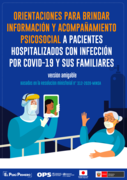
Guidance on providing information and psychosocial support to patients hospitalized with COVID-19 infection and their relatives
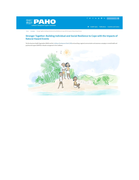
Under the theme “Stronger Together”, the campaign aims to offer information and strategies to assist communities in the region in better coping with the psychological impact of adverse events before, during and after a disaster situation. It also aims to raise awareness to reduce the stigma abou
...
t seeking mental health and psychosocial support.
You can download a wide range of communication material: videos, posters, radio jingles, guidebooks.
The Caribbean is highly prone to natural hazards, including seismic activity, hurricanes, landslides and floods. These events have resulted in lost lives, serious injuries and severe damage to housing and infrastructure. A single hurricane event can affect more than one island, and completely erase the gains of many years of productivity. As a result, these unpredictable hazards create disruption and have an ongoing impact on people’s lives - affecting their mental health and psychosocial well-being.
Although everyone is affected in some way by disaster events, there are a wide range of reactions and feelings that a person can experience. People may feel overwhelmed, confused or very uncertain about what is happening. They can also feel very fearful, anxious, numb or detached. People who feel safe, connected, calm and hopeful, have access to social, physical and emotional support and find ways to help themselves after a disaster, however, will be better able to recover long-term from mental health effects
more
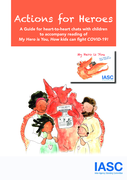
The Actions for Heroes Guide is developed by the Inter-Agency Standing Committee Reference Group on Mental Health and Psychosocial Support in Emergency Settings (IASC MHPSS RG) to accompany reading
...
the children’s storybook My Hero is You, How kids can fight COVID-19! Available in English, French, Spanish and Ukranian
https://interagencystandingcommittee.org/iasc-reference-group-mental-health-and-psychosocial-support-emergency-settings/actions-heroes-guide-heart-heart-chats-children-accompany-reading-my-hero-you-how-kids-can-fight
The storybook My Hero is You explains how children can protect themselves, their families and their friends from the coronavirus and how to manage difficult emotions when confronted with our new and rapidly changing reality. The storybook has been translated into 135+ languages and multimedia adaptations have been made.
more
Overview
Learning objectives
• Name the general principles of essential care and practice.
• Name management principles of priority MNS conditions.
• Use effective communication skills in interactions with people with MNS conditions.
• Perform assessments for priority MNS conditions.
â
...
€¢ Assess and manage physical health in MNS conditions.
• Know the impact of violence and gender-based violence on mental health.
• Provide psychosocial interventions to a person with a priority MNS condition and their
carer.
• Deliver pharmacological interventions as needed and appropriate in priority MNS
conditions considering special populations.
• Plan and perform follow-up for MNS conditions.
• Refer to specialists and links with outside agencies for MNS conditions as appropriate and
available.
• Promote respect and dignity for people with priority MNS conditions.
more
This book was a project developed by the Inter-Agency Standing Committee Reference Group on Mental Health and Psychosocial Support in Emergency Settings (IASC MHPSS RG). The project was supported by
...
global, regional and country based experts from Member Agencies of the IASC MHPSS RG, in addition to parents, caregivers, teachers and children in 104 countries.
The book was shared through storytelling to children in several countries affected by COVID-19. Feedback from children, parents and caregivers was then used to review and update the story.
Over 1,700 children, parents, caregivers and teachers from around the world took the time to shared how they were coping with the COVID-19 pandemic. Available in 141 Languages
more
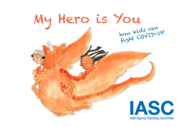
My hero is you - How kids can fight COVID-19
recommended
A new story book that aims to help children understand and come to terms with COVID-19 has been produced
With the help of a fantasy creature, Ario, “My Hero is You, How kids can fight COVID-19!” explains how children can protect themselves, their families and friends from coronavirus and how to
...
manage difficult emotions when confronted with a new and rapidly changing reality.
Available in more languages
The book – aimed primarily at children aged 6-11 years old – is a project of the Inter-Agency Standing Committee Reference Group on Mental Health and Psychosocial Support in Emergency Settings, a unique collaboration of United Nations agencies, national and international nongovernmental organizations and international agencies providing mental health and psychosocial support in emergency settings.
Available in different languages
more
A new story book that aims to help children understand and come to terms with COVID-19 has been produced
With the help of a fantasy creature, Ario, “My Hero is You, How kids can fight COVID-19!” explains how children can protect themselves, their families and friends from coronavirus and how to
...
manage difficult emotions when confronted with a new and rapidly changing reality.
Available in more languages
The book – aimed primarily at children aged 6-11 years old – is a project of the Inter-Agency Standing Committee Reference Group on Mental Health and Psychosocial Support in Emergency Settings, a unique collaboration of United Nations agencies, national and international nongovernmental organizations and international agencies providing mental health and psychosocial support in emergency settings.
Available in different languages
more
A new story book that aims to help children understand and come to terms with COVID-19 has been produced
With the help of a fantasy creature, Ario, “My Hero is You, How kids can fight COVID-19!” explains how children can protect themselves, their families and friends from coronavirus and how to
...
manage difficult emotions when confronted with a new and rapidly changing reality.
Available in more languages
The book – aimed primarily at children aged 6-11 years old – is a project of the Inter-Agency Standing Committee Reference Group on Mental Health and Psychosocial Support in Emergency Settings, a unique collaboration of United Nations agencies, national and international nongovernmental organizations and international agencies providing mental health and psychosocial support in emergency settings.
Available in different languages
more
A new story book that aims to help children understand and come to terms with COVID-19 has been produced
With the help of a fantasy creature, Ario, “My Hero is You, How kids can fight COVID-19!” explains how children can protect themselves, their families and friends from coronavirus and how to
...
manage difficult emotions when confronted with a new and rapidly changing reality.
Available in more languages
The book – aimed primarily at children aged 6-11 years old – is a project of the Inter-Agency Standing Committee Reference Group on Mental Health and Psychosocial Support in Emergency Settings, a unique collaboration of United Nations agencies, national and international nongovernmental organizations and international agencies providing mental health and psychosocial support in emergency settings.
Available in different languages
more

Guidance module.
The QualityRights training and orientation modules have been developed to enhance the knowledge, skills and understanding of key stakeholders on how to promote the rights of people with psychosocial, intellectual or cognitive disa
...
bilities, improve the quality of services and support provided in the field of mental health and related areas, in line with international human rights standards, in particular the UN Convention on the Rights of Persons with Disabilities and the recovery approach.
mental health and related fields, in accordance with international human rights standards, in particular the UN Convention on the Rights of Persons with Disabilities and the recovery approach.
more
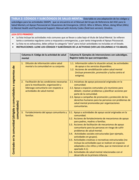
Esta tabla es una adaptación de los códigos y subcódigos para las actividades SMAPS que se encuentra en el Manual del Grupo de Referencia del IASC para la Salud Mental y el Apoyo Psicosocial en Situaciones de Emergencia (2012). Who is Where, When, doing What (4Ws) in Mental
...
Health and Psychosocial Support: Manual with Activity Codes ( field test-version). Ginebra.
more
WHO QualityRights Act, unite and empower
recommended
QualityRights is WHO’s global initiative to improve the quality of care provided by mental health services and promote the human rights of people with psychosocial, intellectual and cognitive disa
...
bilities1. It offers a new approach to mental health care which is rights-based and recovery-oriented.
more
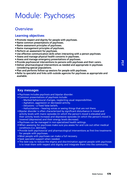
Overview
Learning objectives
• Promote respect and dignity for people with psychoses.
• Name common presentations of psychoses.
• Name assessment principles of psychoses.
• Name management principles of psychoses.
• Perform an assessment for psychoses.
• Use effective communicatio
...
n skills when interacting with a person psychoses.
• Assess and manage physical health concerns in psychoses.
• Assess and manage emergency presentations of psychoses.
• Provide psychosocial interventions to persons with psychoses and their carers.
• Deliver pharmacological interventions as needed and appropriate in psychoses
considering special populations.
• Plan and performs follow-up sessions for people with psychoses.
• Refer to specialist and links with outside agencies for psychoses as appropriate and
available.
more
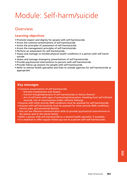
Learning objectives
• Promote respect and dignity for people with self-harm/suicide.
• Know the common presentations of self-harm/suicide.
• Know the principles of assessment of self-harm/suicide.
• Know the management principles of self-harm/suicide.
• Perform an assessment for self-
...
harm/suicide.
• Assess and manage co-morbid physical health conditions
• Assess and manage emergency presentations of self-harm/suicide.
• Provide psychosocial interventions to persons with self-harm/suicide.
• Provide follow-up sessions for people with self-harm/suicide.
• Refer to mental health specialists and links to outside agencies
more

The Guidelines on promotive and preventive mental health interventions for adolescents - Helping Adolescents thrive (HAT), provide evidence-informed recommendations on psychosocial interventions to
...
promote mental health, prevent mental disorders, and reduce self-harm and other risk behaviours among adolescents.
The HAT Guidelines aims to inform policy development, service planning and the strengthening of health and education systems, and facilitate mainstreaming of adolescent mental health promotion and prevention strategies across sectors and delivery platforms.
more

À l’heure actuelle, vous vous sentez probablement sous pression, ainsi que bon nombre de vos collègues. Le stress et les sentiments qui l’accompagnent ne reflètent aucunement une incapacité de faire votre travail ni même une faiblesse.Préserver sa santé mentale et son bien-être
...
psychosocial est actuellement tout aussi essentiel que veiller à sa santé physique.Vous n’êtes pas dans une course contre la montre. C’est un marathon, une épreuve de grande endurance qui requiert une prise en charge personnelle à tout instant.
more
Un nouveau livre d'histoires visant à aider les enfants à comprendre et à accepter le COVID-19 a été publié.
Avec l'aide d'une créature fantastique, Ario, "My Hero is You, How kids can fight COVID-19 !" explique comment les enfants peuvent se protéger, protéger leur famille et leurs amis c
...
ontre le coronavirus et comment gérer des émotions difficiles lorsqu'ils sont confrontés à une nouvelle réalité qui change rapidement.
Disponible en plusieurs langues
Ce livre - qui s'adresse principalement aux enfants âgés de 6 à 11 ans - est un projet du Groupe de référence du Comité permanent interorganisations sur la santé mentale et le soutien psychosocial dans les situations d'urgence, une collaboration unique entre les agences des Nations unies, les organisations non gouvernementales nationales et internationales et les organismes internationaux qui fournissent un soutien en matière de santé mentale et de soutien psychosocial dans les situations d'urgence.
Disponible en plusieurs langues
more
Les modules de formation et d’orientation QualityRights ont été élaborés pour renforcer les connaissances, les compétences et la compréhension des principales parties prenantes sur la manière de promouvoir les droits des personnes en situation de handicap
...
psychosocial, intellectuel ou cognitif, d'améliorer la qualité des services et des aides fournis dans le domaine de
la santé mentale et dans les domaines connexes, conformément aux normes internationales en matière de droits humains, et en particulier la Convention des Nations unies relative aux droits des personnes handicapées et l'approche du rétablissement.
more
Providing information, education and communication for key people involved in Chagas disease control
The Information, education and communication (IEC) activities, with the development of contextualized activities for various actors and scenarios about preventative measures and surveillance tools, are essential to increase awareness, reduce biomedical and
...
psychosocial barriers to accessing diagnosis and care; keep the maximum number of actors involved; and reach the affected population, including family, friends and society in general.
more
