
Filter
16544
Filtered Results: 16544
Text search:
organisation
Featured
Recommendations
1450
New Publications
3871
Language
Document type
No document type
8475
Studies & Reports
2616
Guidelines
2059
Fact sheets
744
Manuals
730
Strategic & Response Plan
535
Training Material
329
Situation Updates
295
Infographics
202
Resource Platforms
191
Online Courses
135
Videos
111
Brochures
84
Dashboards/Maps
28
App
10
Countries / Regions
Global
736
India
528
Kenya
322
Latin America and the Carribbean
310
Sierra Leone
308
Congo, Democratic Republic of
303
Liberia
271
Western and Central Europe
262
Nigeria
258
Uganda
253
Ethiopia
251
Germany
243
South Africa
236
Nepal
224
Myanmar / Burma
212
Senegal
211
Africa
211
Syria
207
Russia
201
Ukraine
192
Rwanda
188
Bangladesh
187
Burkina Faso
175
Brazil
170
Zambia
166
Malawi
160
Guinea
155
Tanzania
152
Ghana
148
Haiti
144
Mozambique
140
Eastern Europe
118
South Sudan
115
Philippines
114
Indonesia
111
Benin
108
West and Central Africa
107
Middle East and North Africa
106
Namibia
96
Yemen
96
Mali
91
South–East Asia Region
88
Venezuela
87
Zimbabwe
85
Cambodia
84
Lesotho
84
Cameroon
83
East and Southern Africa
77
Central African Republic
73
Asia
72
Côte d’Ivoire / Ivory Coast
70
Colombia
67
Madagascar
65
Angola
64
Eastern Europe and Central Asia
59
Paraguay
58
Botswana
55
Niger
41
Peru
40
Pakistan
39
Argentina
39
Eswatini/ Swaziland
39
Somalia
38
Afghanistan
38
Sudan
38
Lebanon
36
China
31
Guinea-Bissau
30
Chad
30
Vietnam
30
Western Pacific Region
29
Thailand
27
Jordan
26
Ecuador
25
Iraq
24
Tajikistan
23
Togo
22
Turkey
20
Bolivia
20
Chile
20
North America
20
Sri Lanka
19
Moldova
19
Georgia
17
Laos
16
Spain
16
Burundi
15
Portugal
15
Mexico
14
Albania
14
Kazakhstan
14
Libya
13
USA
12
Palestine
12
Egypt
11
Armenia
11
Southern Africa
11
Kyrgyzstan
11
Saudi Arabia
10
Iran
10
Belarus
10
Papua New Guinea
9
North Macedonia
9
Greece
9
Morocco
8
Malaysia
8
Timor Leste/ East Timor
8
Romania
8
France
8
Switzerland
7
El Salvador
7
Guatemala
7
Bhutan
7
Poland
7
Tunisia
7
United Kingdom
7
Gambia
6
Serbia
6
Hungary
6
Djibouti
6
Congo-Brazzaville
6
Canada
6
Estonia
6
Jamaica
6
Japan
6
Honduras
5
Italy
5
Uzbekistan
5
Uruguay
5
Turkmenistan
5
Azerbaijan
5
Mauritania
4
Fiji
4
Gabon
4
Singapore
3
Dominican Republic
3
Croatia
3
Mongolia
3
Qatar
3
Belgium
3
Mauritius
3
Israel
3
Bosnia and Herzegovina
3
Cuba
2
Nicaragua
2
Luxembourg
2
North Korea
2
Bulgaria
2
Lithuania
2
Slovakia
2
Denmark
2
South Korea
2
Algeria
2
Ireland
1
Vanuatu
1
Austria
1
Cape Verde
1
Bahamas
1
Other region
1
Solomon Islands
1
Australia
1
Maldives
1
Norway
1
Morocco
1
Latvia
1
Barbados
1
Eritrea
1
Authors & Publishers
Publication Years
Category
Countries
5699
Clinical Guidelines
1160
Public Health
873
Women & Child Health
812
Key Resources
709
Capacity Building
352
Pharmacy & Technologies
175
Annual Report MEDBOX
3
General Guidelines
2
Protection & Security
2
Toolboxes
COVID-19
2000
Mental Health
1198
HIV
987
TB
848
Ebola
653
Disability
633
Rapid Response
584
Planetary Health
567
NTDs
532
Refugee
465
Caregiver
461
AMR
449
Conflict
434
NCDs
394
Global Health Education
301
Pharmacy
259
Natural Hazards
207
Zika
198
Health Financing Toolbox
149
Cholera
148
Polio
95
Specific Hazards
78
Social Ethics
69
Typhoon
10
Health Financing
3
South Sudan
2
COVID-19 Guidance on use of personal protective equipment for different clinical settings and activities
recommended
This document provides guidance to African Union Member States based on a specific request from Member States for a checklist/guidance of the required personal protective equipment (PPE) needed by healthcare workers and care givers for the Coronavirus Disease 2019 (COVID-19) pandemic. This document ...
Options for the decontamination and reuse of respirators in the context of the COVID-19 pandemic
recommended
Guiding principles for reuse are:
Respirators which have been visibly contaminated (e.g. during procedure at intubated patients, such as suction cleaning of airways, taking probes, extubation attempts, etc.) or are damaged or not fitting, should be discarded and cannot be taken for re-use or de...
Talking About Corona-19
in English and Vietnamese
Informations for Kids
Infection preventions
Hygiene

Este documento fornece orientações aos Estados-Membros da União Africana sobre considerações fundamentais em matéria de saúde mental e apoio psicossocial (MHPSS) em relação à pandemia de coronavírus de 2019 (COVID-19). Contém orientações úteis sobre o MHPSS para a comunidade, profissi...
Physical distancing measures are important to reduce COVID-19 transmission. However, when stringently applied, they can result in negative health and socio-economic impacts. This report draws on a rapid review of available literature, case studies from across Africa and expert knowledge to make reco...
Physical distancing measures are important to reduce COVID-19 transmission. However, when stringently applied, they can result in negative health and socio-economic impacts. This report draws on a rapid review of available literature, case studies from across Africa and expert knowledge to make reco...
Children in every country, every culture and at every social level face various forms of abuse,
neglect, exploitation and violence1. The abuse takes place at home, in school, in institutions,
at work, in the community, in armed conflict and natural disasters. Much violence against
children, such ...
Today, more children than ever before are displaced within their own countries. Their harrowing stories of displacement are unfolding every day, and with increasing frequency. At the end of 2019, approximately 45.7 million people were internally displaced by conflict and violence (Fig. 1.1). Nearly ...
God. XXIX, BR. 2/2016. str. 323-334
In this paper an attempt has been made to contextualize the ecological dimension of contemporary Catholic
social teaching. With this aim in mind, the authors discuss the merits of several theories and approaches
(political economy approaches, ecological moderni...
Psychological first aid (PFA) is a method of helping people in distress so they feel calm and supported to cope better with their challenges. It is a way of assisting someone to manage their situation and make informed decisions. The basis of psychological first aid is caring about the person in dis...
The United Nations Network on Migration is committed to supporting all partners in pursuit of the implementation of the Global Compact for Safe, Orderly and Regular Migration, recognizing that this cooperative framework provides an invaluable tool for ensuring inclusive, collective responses to COVI...
This document summarizes preparedness and response activities to address the coronavirus disease (COVID-19) outbreak in South Sudan through the end of 2020. The addendum includes the activities and financial requirements of the updated National COVID-19 Response Plan. Originally issued in March prio...
This paper is an initial compilation of the promising practices on risk communication and community engagement that have developed in Europe during the COVID pandemic, in complementarity to the UNHCR’s Practical Recommendations and Good Practice to Address Protection Concerns in the Context of the...
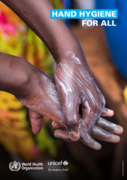
Three billion people – 40 per cent of the world’s population – do not have a place in their homes to wash their hands with water and soap. Three quarters of those who lack access to water and soap live in the world’s poorest countries and are amongst the most vulnerable: children and familie...

This Interim Guidance outlines how key public health and social measures needed to reduce the risk of COVID-19 spread and the impact of the disease can be adapted for use in low capacity and humanitarian settings. The recommendations outlined here need to be adjusted to the scale of transmission, co...
The Lancet Global Health Published:May 12, 2020DOI:https://doi.org/10.1016/S2214-109X(20)30229-1
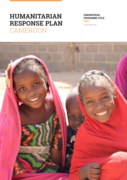
In 2021, the humanitarian community continued to support those in need, placing protection at the centre of its response. Learning from and building on past efforts, humanitarian actors will continue to respond and adapt their response to the various shocks impacting populations in Cameroon, such as...
Key highlights from January to April 2020 (Syria situation)
Across the MENA region, UNHCR is receiving alarming reports of increasing mental health issues among the forcibly displaced. Mental health and psychosocial support (MHPSS) activities are being stepped up by UNHCR and partners to address th...
