
Filter
2478
Text search:
translation
Featured
288
550
Language
Document type
1000
535
402
222
130
72
33
30
24
10
7
5
4
1
Countries
167
67
57
52
51
45
42
39
33
28
28
27
27
27
25
24
24
23
23
22
21
20
18
17
17
17
17
17
17
16
15
15
15
14
13
12
11
11
10
10
10
8
8
8
8
8
8
8
7
7
7
7
7
7
6
6
5
5
5
5
4
4
4
4
3
3
3
3
3
3
3
3
3
3
3
3
3
3
3
2
2
2
2
2
2
2
2
2
2
2
2
2
2
2
2
2
2
2
2
2
2
2
2
2
2
1
1
1
1
1
1
1
1
1
1
1
1
1
1
1
1
1
1
1
1
1
1
1
1
1
1
1
1
Authors & Publishers
Publication Years
Category
614
277
220
184
127
69
39
2
Toolboxes
253
215
169
129
119
114
105
101
88
81
80
75
70
64
54
32
26
24
12
9
9
7
5
2
As the number of transboundary pest and animal and foodborne disease outbreaks rises, so does the number of people who are chronically hungry due to these and other factors. The correlation can be explained by the link between our health and that of the planet. We rely on land and sea for the produc
...
The animal health subsector within the agriculture sector is the gatekeeper of antimicrobial resistance (AMR) in livestock, aquaculture, animal products, and the immediate animal environment. In support of member countries taking responsibility for and moving forward with putting AMR monitoring and
...
In response to COVID-19, UNICEF continues to support the Ministry of Health and Sports’ Health Literacy Promotion Unit to translate and disseminate messages including in ethnic languages for the border areas on good hygiene and handwashing. Social media boosting and message dissemination reach app
...
This course is designed for anyone with an interest in antibiotic resistance, no matter if you are a member of the public, a student, a health professional or any other expert.
Our focus is to provide an overview of antibiotic resistance from several different angles. An important aim is to give an
...
A regional guide for governments in Asia and the Pacific to review, update and develop policies to address antimicrobial resistance and antimicrobial use in animal production
A short movie about the history and the current status of antibiotics from the four week online course: Antibiotic Resistance: the silent tsunami, produced by ReAct and Uppsala University, Sweden.

This policy paper outlines key health financing policy actions for countries to ensure universal access to health services and financial protection for people fleeing conflict. It focuses on three policy areas – granting entitlement and ensure access to the full range of needed health services for
...
Productive and Inclusive Cities for an Emerging Democratic Republic of Congo
FAO’s component of the Global COVID-19 Humanitarian Response Plan
18.5.2020
Временные рекомендации
20 марта 2020 г.
В этом документе представлены временные рекомендации, касающиеся управления поставками донорской крови в рамках ответных Ð
...
Reusing a legacy interactive audio instruction (IAI) program to provide education in a humanitarian crisis is a quick solution and a smart use of previous investments (“Learning in the Time of Ebola”). This article highlights and advises on the issues that relate to adapting and updating previou
...
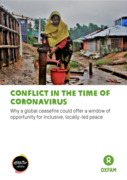
The equation is simple: we cannot effectively respond to a global pandemic when millions of people are still caught in warzones. We cannot treat sick people when hospitals are being bombed, or prevent the spread of coronavirus when tens of millions are forced to flee from violence. We must have a gl
...
Five months after the beginning of the desert locust upsurge in the Greater Horn of Africa and Yemen, and four months since the launch of the response plan (24 January 2020) a total of USD 130 million have been mobilized in the region.
As described in the recently published Food and Agriculture Org
...
Use this checklist to quickly remind yourself of the essential components of community engagement in your response, including when movement restrictions may be in place.
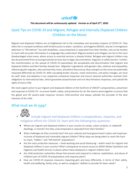
Quick Tips on COVID-19 and Migrant, Refugee and Internally Displaced Children (Children on the Move)
This document will be continuously updated. Version as of April 27th, 2020
Migrant and displaced children are at heightened risk to the immediate and secondary impacts of COVID-19. They often live in cramped conditions with limited access to water, sanitation, and hygiene (WASH), may be in immig
...
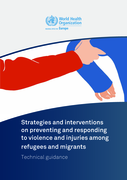
This technical guidance outlines current evidence, knowledge and best practice relating to incidences of violence and injuries among refugees and migrants in the WHO European Region. It highlights key principles, summarizes priority actions and challenges, maps existing international commitments and
...
2nd edition
The Lancet DOI: 10.1016/S0140-6736(20)31053-9
The WHO Global Health Estimates show that nearly half a million deaths (493 471) occurred in the WHO European Region due to violence and injuries in 2016. This represents a decline of 29% from 2000. Injuries account for 5.3% of all deaths and 9.6 of all years of life lost. They are a leading cause o
...
