Filter
1687
Text search:
brain
health
Featured
173
362
Language
1557
61
54
53
32
22
19
17
6
6
5
5
4
4
4
4
4
4
3
3
3
3
3
3
3
2
2
2
2
2
2
2
2
2
2
2
2
2
2
2
1
1
1
1
1
1
1
1
1
1
1
1
1
1
1
1
1
1
1
Document type
1078
193
175
93
52
35
28
13
7
5
5
3
Countries
124
53
36
34
28
27
23
21
21
21
20
20
20
20
16
16
16
15
14
14
13
11
10
9
8
8
8
8
6
6
6
6
5
5
4
4
4
4
3
3
3
3
3
3
3
3
3
2
2
2
2
2
2
2
2
2
2
2
2
1
1
1
1
1
1
1
1
1
1
1
1
1
1
1
1
1
1
1
1
1
1
1
1
1
1
1
1
1
1
1
1
1
1
Authors & Publishers
211
90
80
71
64
62
48
34
16
15
14
12
11
11
11
10
9
9
9
9
9
8
8
8
7
7
7
6
6
6
6
6
6
6
6
6
5
5
5
5
5
5
5
5
5
5
5
5
5
4
4
4
4
4
4
4
4
4
4
4
4
4
4
3
3
3
3
3
3
3
3
3
3
3
3
3
3
3
3
3
3
3
3
3
3
3
3
3
3
3
3
3
3
3
3
3
3
3
3
3
3
3
3
3
2
2
2
2
2
2
2
2
2
2
2
2
2
2
2
2
2
2
2
2
2
2
2
2
2
2
2
2
2
2
2
2
2
2
2
2
2
2
2
2
2
2
2
2
2
2
2
2
2
2
2
2
2
2
2
2
2
2
2
2
2
2
2
2
2
2
2
2
2
2
2
2
2
2
2
2
2
2
2
2
2
2
2
2
2
2
2
2
2
2
2
2
2
2
2
2
2
2
2
2
2
2
2
2
2
2
2
2
2
2
2
2
2
2
2
2
2
2
2
2
2
2
2
2
1
1
1
1
1
1
1
1
1
1
1
1
1
1
1
1
1
1
1
1
1
1
1
1
1
1
1
1
1
1
1
1
1
1
1
1
1
1
1
1
1
1
1
1
1
1
1
1
1
1
1
1
1
1
1
1
1
1
1
1
1
1
1
1
1
1
1
1
1
1
1
1
1
1
1
1
1
1
1
1
1
1
1
1
1
1
1
1
1
1
1
1
1
1
1
1
1
1
1
1
1
1
1
1
1
1
1
1
1
1
1
1
1
1
1
1
1
1
1
1
1
1
1
1
1
1
1
1
1
1
1
1
1
1
1
1
1
1
1
1
1
1
1
1
1
1
1
1
1
1
1
1
1
1
1
1
1
1
1
1
1
1
1
1
1
1
1
1
1
1
1
1
1
1
1
1
1
1
1
1
1
1
1
1
1
1
1
1
1
1
1
1
1
1
1
1
1
1
1
1
1
1
1
1
1
1
1
1
1
1
1
1
1
1
1
1
1
1
1
1
1
1
1
1
1
1
1
1
1
1
1
1
1
1
1
1
1
1
1
1
1
1
1
1
1
1
1
1
1
1
1
1
1
1
1
1
1
1
1
1
1
1
1
1
1
1
1
1
1
1
1
1
1
1
1
1
1
1
1
1
1
1
1
1
1
1
1
1
1
1
1
1
1
1
1
1
1
1
1
1
1
1
1
1
1
1
1
1
1
1
1
1
1
1
1
1
1
1
1
1
1
1
1
1
1
1
1
1
1
1
1
1
1
1
1
1
1
1
1
1
1
1
1
1
1
1
1
1
1
1
1
1
1
1
1
1
1
1
1
1
1
1
1
1
1
1
1
1
1
1
1
1
1
1
1
1
1
1
1
1
1
1
1
1
1
1
1
1
1
1
1
1
1
1
1
1
1
1
1
1
1
1
1
1
1
1
1
1
1
1
1
1
1
1
1
1
1
1
1
1
1
1
1
1
1
1
1
1
1
1
1
1
1
1
1
1
1
1
1
1
1
1
1
1
1
1
1
1
1
1
1
1
1
1
1
1
1
1
1
1
1
1
1
1
1
1
1
1
1
1
1
1
1
1
1
1
1
1
1
1
1
1
1
1
1
1
1
1
1
1
1
1
1
1
1
1
1
1
1
1
1
1
1
1
1
1
1
1
1
1
1
1
1
1
1
1
1
1
1
1
1
1
1
1
1
1
1
1
1
1
1
1
1
1
1
1
1
1
1
1
1
1
1
1
1
1
1
1
1
1
1
1
1
1
1
1
1
1
1
1
1
1
1
1
1
1
1
1
1
1
1
1
1
1
1
1
1
1
1
1
1
1
1
1
1
1
1
1
1
1
1
1
1
1
1
1
1
1
1
1
1
1
1
1
1
1
1
1
1
1
1
1
1
1
1
1
1
1
1
1
1
1
1
1
1
1
1
1
1
1
1
1
1
1
1
1
1
1
1
1
1
1
1
1
1
1
1
1
1
1
1
1
1
1
1
1
1
1
1
1
1
1
1
1
1
1
1
1
1
1
1
1
1
1
1
1
1
1
1
1
1
1
1
1
1
1
1
1
1
1
1
1
1
1
1
1
1
1
1
1
1
1
1
1
1
1
1
1
1
1
1
1
1
1
1
1
1
1
1
1
1
1
1
1
1
1
1
1
1
1
1
1
1
1
1
1
1
1
1
1
1
1
1
1
1
1
1
1
1
1
1
1
1
1
1
1
1
1
1
1
1
1
1
1
1
1
1
1
1
1
1
1
1
1
1
1
1
1
1
1
1
1
1
1
1
1
1
1
1
1
1
1
1
1
1
1
1
1
1
1
1
1
1
1
1
1
1
1
1
1
1
1
1
1
1
1
1
1
1
1
1
1
1
1
1
1
1
1
1
1
1
1
1
1
1
1
1
1
1
1
1
1
1
1
1
1
1
1
1
1
1
1
1
1
1
1
1
1
1
1
1
1
1
1
1
1
1
1
1
1
1
1
1
1
1
1
1
1
1
1
1
1
1
1
1
1
1
1
1
1
1
1
1
1
1
1
1
1
1
1
1
1
1
1
1
1
1
1
1
1
1
1
1
1
1
1
1
1
1
1
1
1
1
1
1
1
1
1
1
1
1
1
1
1
1
1
1
1
1
1
1
1
1
1
1
1
1
1
1
1
1
1
1
1
1
1
1
1
1
1
1
1
1
1
1
1
1
1
1
1
1
1
1
1
1
1
1
1
1
1
1
1
1
1
1
1
1
1
1
1
1
1
1
1
1
1
1
1
1
1
1
1
1
1
1
1
1
1
1
1
1
1
1
1
1
1
1
1
1
1
1
1
1
1
1
1
1
1
1
1
1
1
1
1
1
1
1
1
1
1
1
1
1
1
1
1
1
1
1
1
1
1
1
1
1
1
1
1
1
1
1
1
1
1
1
1
1
1
1
1
1
1
1
1
1
1
1
1
1
1
1
1
1
1
1
1
1
1
1
1
1
1
1
1
1
1
1
1
1
1
1
1
1
1
1
1
1
1
1
1
1
1
1
1
1
1
1
1
1
1
1
1
1
1
1
1
1
1
1
1
1
1
1
1
1
1
1
1
1
1
1
1
1
1
1
1
1
1
1
1
1
1
1
1
1
1
1
1
1
1
1
1
1
1
1
1
1
1
1
1
1
1
1
1
1
1
1
1
1
1
1
1
1
1
1
1
1
1
1
1
1
1
1
1
1
1
1
1
1
1
1
1
1
1
1
1
1
1
1
1
1
1
1
1
1
1
1
1
1
1
1
1
1
1
1
1
1
1
1
1
1
1
1
1
1
1
1
1
1
1
1
1
1
1
1
1
1
1
1
1
1
1
1
1
1
1
1
1
1
1
1
1
1
1
1
1
1
1
1
1
1
1
1
1
1
1
1
1
1
1
1
1
1
1
1
1
1
1
1
1
1
1
1
1
1
1
1
1
1
1
1
1
1
1
1
1
1
1
1
1
1
1
1
1
1
1
1
1
1
1
1
1
1
1
1
1
1
1
1
1
1
1
1
1
1
1
1
1
1
1
1
1
1
1
1
1
1
1
1
1
1
1
1
1
1
1
1
1
1
1
1
1
1
1
1
1
1
1
1
1
1
1
1
1
1
1
1
1
1
1
1
1
1
1
1
1
1
1
1
1
1
1
1
1
1
1
1
1
1
1
1
1
1
1
1
1
1
1
1
1
1
1
1
1
1
1
1
1
1
1
1
1
1
1
1
1
1
1
1
1
1
1
1
1
1
1
1
1
1
1
1
1
1
1
1
1
1
1
Publication Years
356
1104
213
13
1
Category
479
167
118
109
51
33
8
2
1
1
Toolboxes
424
132
88
58
55
54
50
50
39
36
34
32
26
25
17
15
13
13
10
8
8
4
4

Robust clinical research capacity in low- and middle-income countries is key to stemming the spread of epidemics, according to a new report from the International Vaccines Task Force (IVTF). The report lays out how to develop the political support, financing and coordination required to build this c
...
apacity as a crucial component of global epidemic preparedness. The IVTF was convened by the World Bank Group (WBG) and the Coalition for Epidemic Preparedness Innovations (CEPI) in October 2017.
more
ECDC Technical Report
In line with ECDC’s recommendations provided in the ’Risk Assessment of HTLV-1/2 transmission by tissue/cell transplantation’ dated 14 March 2012, this Directive replaces the term ‘incidence’ with ‘prevalence’ in the description of endemic areas of HTLV-1/2 i ... nfection. According to the new requirements ‘HTLV-1 antibody testing must be performed for donors living in, or originating from high-prevalence areas or with sexual partners originating from those areas or where the donor’s parents originate from those areas’ and this applies to both donors of non-reproductive tissues and cells and reproductive cells.
ECDC contracted experts from the Institut Pasteur in Paris to systematically review the published evidence on the distribution of HTLV-1 infection prevalence throughout the world and to identify high-prevalence countries and areas. more
In line with ECDC’s recommendations provided in the ’Risk Assessment of HTLV-1/2 transmission by tissue/cell transplantation’ dated 14 March 2012, this Directive replaces the term ‘incidence’ with ‘prevalence’ in the description of endemic areas of HTLV-1/2 i ... nfection. According to the new requirements ‘HTLV-1 antibody testing must be performed for donors living in, or originating from high-prevalence areas or with sexual partners originating from those areas or where the donor’s parents originate from those areas’ and this applies to both donors of non-reproductive tissues and cells and reproductive cells.
ECDC contracted experts from the Institut Pasteur in Paris to systematically review the published evidence on the distribution of HTLV-1 infection prevalence throughout the world and to identify high-prevalence countries and areas. more
Part of the CBM Prevention Toolkit on “Recognising Impairments at Birth”

The main objective of the malaria prevention and control programme in Somalia is to prevent mortality and reduce morbidity due to malaria. The groups most vulnerable to the disease, children aged under 5 years and pregnant women, are especially targeted. Effective case management - early diagnosis a
...
nd treatment - is a critical component of malaria prevention and control. To achieve the main objective of reducing malaria morbidity and prevention of malaria mortality, the availability of safe, effective, affordable and accessible anti-malarial drugs is a prerequisite.
more

Singing to the Lions is a free training package (facilitator’s guide, supplement and video) by CRS, that is designed to help children and youth lessen the impact of violence and abuse in their lives. The main component is a three-day workshop where participants learn skills that can help them tran
...
sform their lives and no longer feel dominated by fear. Although the workshop is aimed at young people and includes games, art and songs, it can also be used to help adults take action on aspects of their lives that cause fear and, in so doing, become better parents and caregivers.
Singing to the Lions is available in English, French and Spanish, with Arabic and Hindi in process. See the links below. It can be easily adapted to different cultures, with different pictures and metaphors (e.g., “Singing to the Wolves” in Arabic; “Charming the Snakes” in Hindi.)
more

Lancet Oncol 2018 Published Online September 12, 2018 http://dx.doi.org/10.1016/S1470-2045(18)30447-9
UNICEF’s 2013 flagship report, The State of the World’s Children, focuses on Children with Disabilities. The report covers a range of thematic areas and attempts to contribute to the global discussion on and draw greater attention to disability rights for children. This thematic note presents ex
...
cerpts from the report related to Nutrition. All references and original sources can be found in the full report.
more
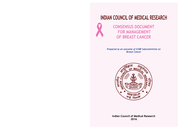
Prepared as an outcome of ICMR Subcommittee on Breast Cancer |.This consensus document on management of breast cancers summarizes the
modalities of treatment including the site-specific anti-cancer therapies, supportive and palliative care and molecular markers and research questions. It also inter
...
weaves clinical, biochemical and epidemiological studies.
more
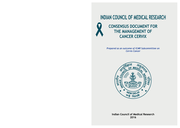
Prepared as an outcome of ICMR Subcommittee on Cancer Cervix | This consensus document on management of cervix cancer summarizes the modalities of treatment including the site-specific anti-cancer therapies, supportive and palliative care and molecular markers and research questions. It also interwe
...
aves clinical, biochemical and epidemiological studies.
more
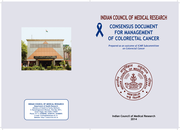
Prepared as an outcome of ICMR Subcommittee on Colorectal Cancer | Coordinated by Division of Non Communicable Diseases | This Consensus Document on Management of Colorectal Cancer summarizes the modalities of treatment including the site-specific anti-cancer therapies,
supportive and palliative ca
...
re and molecular markers and research questions. It also interweaves clinical, biochemical and epidemiological studies.
more
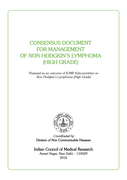
Prepared as an outcome of ICMR Subcommittee on Non Hodgkin’s Lymphoma (High Grade) | This consensus document on management of non- hodgkin’s lymphoma – high grade summarizes the modalities of treatment including the site-specific anti-cancer therapies, supportive and palliative care and molec
...
ular markers and research questions. It also interweaves clinical, biochemical and epidemiological studies.
more
Prepared as an outcome of ICMR Subcommittee on Soft Tissue Sarcoma and Osteosarcoma | This consensus document on Management of Soft Tissue Sarcoma and Osteosarcoma summarizes the modalities of treatment including the site-specific anti-cancer therapies, supportive and palliative care and molecular
...
markers and research questions. It also interweaves clinical, biochemical and epidemiological studies.
more

The guidelines reiterate that the general principles of ethics for biomedical research involving human participants shall also be applicable. In addition, the guidelines specify unique provisions for stem cells, because of their inherent property for unlimited proliferation, differentiation to cells
...
of the germ layers, oncogenic potential, unrecognised toxicities and possible involvement in pre-implantation stages of human development. The guideline therefore focuses on: 1. Monitoring mechanism and regulatory pathway for basic, clinical research and product development based on categories of research and level of manipulation. 2. Procurement of gametes, embryos and somatic cells for derivation and propagation of any stem cell lines, their banking and distribution. 3. Other important areas like international collaboration, exchange of cell/lines and education for stakeholders and advertisement.
more
Anxiety Disorders
Chapter F.4
Background: Understanding the natural course of child and adolescent posttraumatic stress disorder (PTSD) has significant implications for the identification of, and intervention for, at-risk youth. We used a meta-analytic approach to examine longitudinal changes in youth PTSD prevalence and symptom
...
s over the first 12 months posttrauma.
Journal of Child Psychology and Psychiatry57:8 (2016), pp 884–898
more

This brochure will briefly look at childhood trauma and PTSD, discussing the symptoms that may be seen in children and adults, as well as discussing some treatment options. If you do read this brochure and feel that your experiences and current symptoms match those of PTSD then we encourage you to s
...
eek help from a medical professional as soon as possible. Please also consider that certain aspects discussed in this brochure may act as a trigger for those already experiencing PTSD or PTSD like symptoms. Please be aware of this and stop reading if you feel the brochure is upsetting you.
more
Practice Parameter for the Assessment and Treatment of Children and Adolescents With Posttraumatic Stress Disorder
American Academy of Child and Adolescent Psychiatry (AACAP)
Journal of the American Academy of Child & Adolescent Psychiatry
(2010)
CC
This Practice Parameter reviews the evidence from research and clinical experience and highlights significant advances in the assessment and treatment of posttraumatic stress disorder since the previous Parameter was published in 1998. It highlights the importance of early identification of posttrau
...
matic stress disorder, the importance of gathering information from parents and children, and the assessment and treatment of comorbid disorders. It presents evidence to support trauma-focused psychotherapy, medications, and a combination of interventions in a multimodal approach.
Journal of the American Academy of Children & Adolescents Psychiatry, Vol. 49 No. 4 APRIL 2010 pp.414-430
more

Early Childhood Matters is a journal about early childhood. It looks at specific issues regarding the development of young children, in particular from a psychosocial perspective. It is published twice per year by the Bernard van Leer Foundation.
On Page 54 of this issue the article titled: "Par
...
enting in times of war: supporting caregivers and children in crisis" can be found. In this article: Humanitarian interventions to support and guide parents and caregivers in times of war can mitigate the negative effects of violence and chaos on children and promote their resilience and development. This article highlights recent findings from the International Rescue Committee’s parenting programmes in Syria, underscoring the importance of such programmes not only in strengthening caregiving practices but also in addressing the psychological needs of parents.
more
Взаимосвязь факторов питания и микрофлоры кишечника с развитием депрессивных расстройств (обзор)
А. А. Шульдяков, Ю. Б. Барыльник, Е. П. Ляпина et al.
Saratov Journal of Medical Scientific Research
(2016)
C1
Распространенность депрессивных расстройств и их роль в формировании различных вариантов патологии человека обусловливают актуальность поиска новых подходов к
...
профилактике и лечению депрессий. Перспективным направлением может стать модификация микробиома кишечника. Основанием для разработок в этой области являются приведенные в обзоре данные исследований, подтверждающих значимость состава кишечной флоры в регуляции психических функций, в частности настроения и поведения, роль диеты в развитии депрессий. Обсуждена гипотеза о роли микробиома кишечника в развитии депрессивных расстройств. http://www.ssmj.ru/system/files/2016_02_168-174.pdf
more