
Filter
1481
Text search:
Antenatal
Care
Visits
Featured
109
607
Language
Document type
1128
156
105
35
19
17
8
6
3
1
1
1
1
Countries
113
87
68
64
63
60
59
48
48
48
47
47
47
42
35
33
31
20
19
18
18
17
14
13
13
12
12
12
11
10
8
8
7
7
7
6
6
6
5
5
5
4
4
4
4
4
4
4
3
3
3
3
3
2
2
2
2
2
2
2
2
2
2
2
1
1
1
1
1
1
1
1
1
1
1
1
1
1
1
1
1
1
1
Authors & Publishers
Publication Years
Category
1003
136
70
56
39
27
4
Toolboxes
133
43
35
28
27
27
19
19
12
8
7
5
5
5
4
4
4
4
2
2
2
1
1
Technical Report
The project will support preventive actions, traditional medicine and the coordination and
implementation capacities of the national framework for HIV/AIDS control.
Despite Pakistan's progress in reducing the number of wild poliovirus type 1 (WPV1) cases to 8 in 2017 and 12 in 2018, 2019 has seen a significant rise in the number of WPV1 cases (41 cases as of July 8 2019). One of the most intractable challenges the Pakistan Polio Eradication Initiative (PEI) is
...
The infectious disease burden in India is among the highest in the world. A large amount of antibiot-ics are consumed in fighting infections, some of them saving lives, but every use adding to antibiotic resistance in bacteria. Antibiotic use is increasing steadily (table 1), particularly
...
This document provides guidance on the implementation of the shielding approach in urban areas in LICs and crisis-affected regions. It is intended for the community itself, national and local governance institutions, and humanitarian and development actors operating in the country.
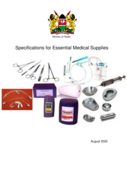
August 2020.
Essential diagnostic products areconsidered an integral part of UHC, they are an indispensable element for delivery ofservices andare also a requirement for qualitycare. Despite this realization, a review of the UHC pilot in September 2019 es
...
August 2020.
In December 2018, the President launched the UHC pilot covering four strategically selected counties-Isiolo, Kisumu, Machakos and Nyeri. It isplanned that by the year 2022, all persons in Kenya will be able to use the essential services they need for their health
...

This annual report highlights the work of the WHO from January to June 2021 ( December 2021). The activities featured herein are by no means exhausted but implemented with technical and financial support through WHO in Nigeria; facilitated by its presence at all levels of governance (national, state
...
Core Indicators 2019: Health Trends in the Americas starts with a demographic overview of the Americas to demonstrate how the Region has changed over 25 years. These key demographic indicators provide valuable context to better understand the population’s characteristics and their impact on health
...
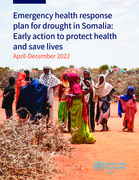
Nearly 260 000 people died in parts of Somalia between October 2010 and April 2012, including
133 000 children under five during the famine and food crisis in Somalia making it the worst famine in history.
A study commissioned and funded by the Food and Agriculture Organization of the United Natio
...

Adolescence, defined as the period between 10 and 19 years of age, is a developmental stage during which many psychosocial and mental health challenges emerge. There is a well-established link between mental health and HIV outcomes. Adolescents and young adults living with HIV typically have additio
...
This status report shows how far we have come—and how much further we must go—if we hope to meet the global commitments to end AIDS in children. It offers a snapshot of global progress and permits an early assessment of the impact of the Global Alliance’s work.
The Department of Nutrition, HIV and AIDS (DNHA) in Ministry of Health and Population is grateful to all stakeholders who contributed to the development of the Nutrition Education Communication Strategy II. The DNHA acknowledges the financial and technical support from the World Bank and USAID throu
...
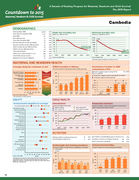
The Countdown country profile presents in one place the best and latest evidence to enable an assessment of a country’s progress in improving reproductive, maternal, newborn, and child health (RMNCH)
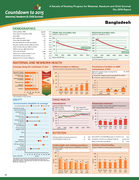
The Countdown country profile presents in one place the best and latest evidence to enable an assessment of a country’s progress in improving reproductive, maternal, newborn, and child health (RMNCH)
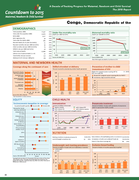
The Countdown country profile presents in one place the best and latest evidence to enable an assessment of a country’s progress in improving reproductive, maternal, newborn, and child health (RMNCH)
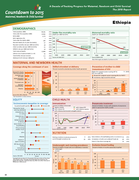
The Countdown country profile presents in one place the best and latest evidence to enable an assessment of a country’s progress in improving reproductive, maternal, newborn, and child health (RMNCH)
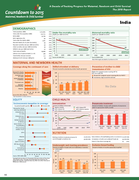
The Countdown country profile presents in one place the best and latest evidence to enable an assessment of a country’s progress in improving reproductive, maternal, newborn, and child health (RMNCH)
