
Filter
1509
Text search:
Health
Infrastructure
Division
Featured
109
500
Language
Document type
985
240
133
70
47
16
8
4
3
3
Countries
109
90
64
53
49
44
42
39
35
31
27
25
25
25
22
21
20
20
19
18
17
15
15
14
12
12
11
10
10
10
9
9
9
8
7
7
7
7
7
7
7
7
7
6
6
6
6
6
6
6
5
5
5
4
4
4
4
3
3
3
3
3
3
3
3
2
2
2
2
2
2
2
2
2
2
2
2
2
2
2
1
1
1
1
1
1
1
1
1
1
1
1
1
1
1
1
1
1
1
1
1
1
1
1
1
1
1
1
1
1
1
1
1
1
1
1
1
Authors & Publishers
Publication Years
Category
738
82
74
72
67
20
14
5
Toolboxes
76
68
68
66
64
57
53
42
40
39
29
25
23
22
20
20
18
17
14
11
6
4
2
2
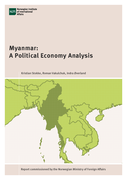
After almost 50 years of military dictatorship, and following the 2010 general elections which were rigged in favour of the military Union Solidarity and Development Party (USDP), Myanmar underwent a series of political reforms from 2011 onwards. In November 2015, the first free general elections si
...
Special Issue: Special Education in Sub-Saharan Africa | This special issue of our Communication*Support*World*Network*Newsletter attempts to share practical ideas and information about special education for children with disabilities in sub-Saharan Africa. Our intent is to begin a dialogue among th
...
Background paper for the Oslo Summit on Education for Development
DEVELOPMENT BULLETIN | No.74, June 2011 | Editor: Pamela Thomas | Features and case studies | Progress with implementing conventions and strategies | Progress with capacity building | Progress with disability-inclusive education | Disability-inclusive research | Innovative inclusion | Review of urba
...
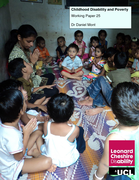
As the Convention of the Rights of Children recognizes, children are human beings with a distinct set of rights, and not the passive objects of care and charity. They deserve to be full participants in society, and to live lives free of poverty. But for children, living in poverty is particularly im
...
This brief focuses on disability rights in the ASEAN countries, namely Brunei Darussalam, Cambodia, Indonesia, Lao People’s Democratic
Republic (PDR), Malaysia, Myanmar, the Philippines, Singapore, Thailand and Viet Nam.
Kenya has great potential for enhancing education for individuals with intellectual disabilities. The fact that it has recognized the need to care for learners with special needs is commendable. In comparison to many African countries, Kenya and Nigeria are ahead in developing programs for special e
...
The potential for terrorist use of chemical agents is a noted concern highlighted by the Tokyo sarin gas attacks of 1995. The events of September 11, 2001, increased congressional attention towards reducing the vulnerability of the United States to such unconventional attacks. The
possibility that
...
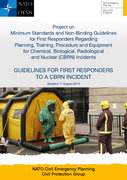
Project on Minimum Standards and Non-Binding Guidelines for First Responders Regarding Planning, Training, Procedure and Equipment for Chemical, Biological, Radiological and Nuclear (CBRN) Incidents
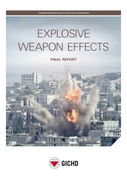
States, the United Nations and civil society organisations continue to raise concerns about the humanitarian impact caused by the use of explosive weapons in populated areas (EWIPA). This issue is currently being examined from political, legal, socio-economic and humanitarian perspectives. The GICHD
...
Background paper for the Oslo Summit on Education for Development.
This paper covers the four topics of the Oslo Summit: investment in education, quality of learning, education in emergencies and girls’ education. Disability continues to be one of the primary causes of educational disadvantage a
...
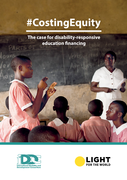
The report surveyed 9 leading bilateral and multilateral education donors in respect of their approach to disability-inclusive education.
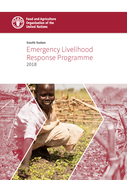
In 2018, the Food and Agriculture Organization of the United Nations (FAO) in South Sudan must respond to the highest levels of food insecurity ever recorded in the country. To address this challenge, FAO revised its multiyear Emergency Livelihood Response Programme (ELRP) to enable rapid food produ
...
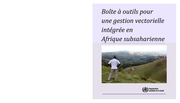
This toolkit for integrated vector management (IVM) is designed to help national and regional programme managers coordinate across sectors to design and run large IVM programmes.
The toolkit provides the technical detail required to plan, implement, monitor and evaluate an IVM approach. IVM can be
...

OECD Development Policy Tools
Recognising that donor policies and responses constantly evolve, this guidance recommends that donors operating in situations of forced displacement prioritise three broad areas of work, where they can best contribute to existing capacities at the national, regiona ...
Recognising that donor policies and responses constantly evolve, this guidance recommends that donors operating in situations of forced displacement prioritise three broad areas of work, where they can best contribute to existing capacities at the national, regiona ...

This working paper is a case study on South Sudan as an important refugee country of origin. The case study looks at issues of forced displacement in South Sudan and underscores the linkages between internally displaced persons and South Sudanese refugees. The case study highlights the importance of
...
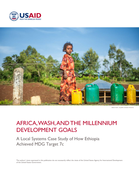
Ethiopia met the MDG target for drinking water access with a unique and high degree of success. The magnitude of the country’s success in providing improved drinking water to nearly half of its population in 25 years despite its diversity, size, and challenges cannot be overstated. This case study
...
