
Filter
2857
Text search:
public
health
emergencies
Featured
350
746
Language
2692
123
96
65
60
41
28
18
13
12
9
8
8
7
7
7
6
6
6
5
5
4
4
4
4
4
4
3
3
3
3
3
3
3
3
3
2
2
2
2
2
2
2
2
2
2
2
2
2
1
1
1
1
1
1
1
1
1
1
1
1
1
Document type
1384
493
409
209
177
59
43
43
19
9
7
2
1
1
Countries
148
86
73
71
67
62
55
55
51
48
43
41
40
39
39
38
38
37
28
26
25
25
24
24
22
22
22
22
21
20
20
19
19
18
17
16
14
14
14
14
13
12
12
12
11
11
11
11
11
10
10
10
10
9
9
9
8
8
8
7
7
7
7
7
6
6
6
6
6
6
5
5
5
5
4
4
4
4
3
3
3
3
3
3
3
3
3
3
3
3
3
3
3
3
3
2
2
2
2
2
2
2
2
2
2
2
2
1
1
1
1
1
1
1
1
1
1
1
1
1
1
1
1
1
1
1
1
1
1
1
1
1
Authors & Publishers
490
133
112
93
82
72
48
45
37
30
26
26
23
22
22
21
18
18
18
16
14
14
13
12
11
11
10
10
10
10
10
9
9
9
9
9
9
9
8
8
8
8
8
8
8
8
8
8
7
7
7
7
7
7
7
7
7
6
6
6
6
6
6
6
6
6
6
6
6
5
5
5
5
5
5
5
5
5
5
5
5
5
5
5
5
5
5
5
5
5
4
4
4
4
4
4
4
4
4
4
4
4
4
4
4
4
4
4
4
4
4
4
4
4
4
4
4
4
4
3
3
3
3
3
3
3
3
3
3
3
3
3
3
3
3
3
3
3
3
3
3
3
3
3
3
3
3
3
3
3
3
3
3
3
3
3
3
3
3
3
3
3
3
3
3
3
3
3
3
3
3
3
3
3
2
2
2
2
2
2
2
2
2
2
2
2
2
2
2
2
2
2
2
2
2
2
2
2
2
2
2
2
2
2
2
2
2
2
2
2
2
2
2
2
2
2
2
2
2
2
2
2
2
2
2
2
2
2
2
2
2
2
2
2
2
2
2
2
2
2
2
2
2
2
2
2
2
2
2
2
2
2
2
2
2
2
2
2
2
2
2
2
2
2
2
2
2
2
2
2
2
2
2
2
2
2
2
2
2
2
2
2
2
2
2
2
2
2
2
2
2
2
2
2
2
2
2
2
2
2
2
2
2
2
2
2
2
2
2
2
2
2
2
2
2
2
2
2
2
2
2
2
2
2
2
1
1
1
1
1
1
1
1
1
1
1
1
1
1
1
1
1
1
1
1
1
1
1
1
1
1
1
1
1
1
1
1
1
1
1
1
1
1
1
1
1
1
1
1
1
1
1
1
1
1
1
1
1
1
1
1
1
1
1
1
1
1
1
1
1
1
1
1
1
1
1
1
1
1
1
1
1
1
1
1
1
1
1
1
1
1
1
1
1
1
1
1
1
1
1
1
1
1
1
1
1
1
1
1
1
1
1
1
1
1
1
1
1
1
1
1
1
1
1
1
1
1
1
1
1
1
1
1
1
1
1
1
1
1
1
1
1
1
1
1
1
1
1
1
1
1
1
1
1
1
1
1
1
1
1
1
1
1
1
1
1
1
1
1
1
1
1
1
1
1
1
1
1
1
1
1
1
1
1
1
1
1
1
1
1
1
1
1
1
1
1
1
1
1
1
1
1
1
1
1
1
1
1
1
1
1
1
1
1
1
1
1
1
1
1
1
1
1
1
1
1
1
1
1
1
1
1
1
1
1
1
1
1
1
1
1
1
1
1
1
1
1
1
1
1
1
1
1
1
1
1
1
1
1
1
1
1
1
1
1
1
1
1
1
1
1
1
1
1
1
1
1
1
1
1
1
1
1
1
1
1
1
1
1
1
1
1
1
1
1
1
1
1
1
1
1
1
1
1
1
1
1
1
1
1
1
1
1
1
1
1
1
1
1
1
1
1
1
1
1
1
1
1
1
1
1
1
1
1
1
1
1
1
1
1
1
1
1
1
1
1
1
1
1
1
1
1
1
1
1
1
1
1
1
1
1
1
1
1
1
1
1
1
1
1
1
1
1
1
1
1
1
1
1
1
1
1
1
1
1
1
1
1
1
1
1
1
1
1
1
1
1
1
1
1
1
1
1
1
1
1
1
1
1
1
1
1
1
1
1
1
1
1
1
1
1
1
1
1
1
1
1
1
1
1
1
1
1
1
1
1
1
1
1
1
1
1
1
1
1
1
1
1
1
1
1
1
1
1
1
1
1
1
1
1
1
1
1
1
1
1
1
1
1
1
1
1
1
1
1
1
1
1
1
1
1
1
1
1
1
1
1
1
1
1
1
1
1
1
1
1
1
1
1
1
1
1
1
1
1
1
1
1
1
1
1
1
1
1
1
1
1
1
1
1
1
1
1
1
1
1
1
1
1
1
1
1
1
1
1
1
1
1
1
1
1
1
1
1
1
1
1
1
1
1
1
1
1
1
1
1
1
1
1
1
1
1
1
1
1
1
1
1
1
1
1
1
1
1
1
1
1
1
1
1
1
1
1
1
1
1
1
1
1
1
1
1
1
1
1
1
1
1
1
1
1
1
1
1
1
1
1
1
1
1
1
1
1
1
1
1
1
1
1
1
1
1
1
1
1
1
1
1
1
1
1
1
1
1
1
1
1
1
1
1
1
1
1
1
1
1
1
1
1
1
1
1
1
1
1
1
1
1
1
1
1
1
1
1
1
1
1
1
1
1
1
1
1
1
1
1
1
1
1
1
1
1
1
1
1
1
1
1
1
1
1
1
1
1
1
1
1
1
1
1
1
1
1
1
1
1
1
1
1
1
1
1
1
1
1
1
1
1
1
1
1
1
1
1
1
1
1
1
1
1
1
1
1
1
1
1
1
1
1
1
1
1
1
1
1
1
1
1
1
1
1
1
1
1
1
1
1
1
1
1
1
1
1
1
1
1
1
1
1
1
1
1
1
1
1
1
1
1
1
1
1
1
1
1
1
1
1
1
1
1
1
1
1
1
1
1
1
1
1
1
1
1
1
1
1
1
1
1
1
1
1
1
1
1
1
1
1
1
1
1
1
1
1
1
1
1
1
1
1
1
1
1
1
1
1
1
1
1
1
1
1
1
1
1
1
1
1
1
1
1
1
1
1
1
1
1
1
1
1
1
1
1
1
1
1
1
1
1
1
1
1
1
1
1
1
1
1
1
1
1
1
1
1
1
1
1
1
1
1
1
1
1
1
1
1
1
1
1
1
1
1
1
1
1
1
1
1
1
1
1
1
1
1
1
1
1
1
1
1
1
1
1
1
1
1
1
1
1
1
1
1
1
1
1
1
1
1
1
1
1
1
1
1
1
1
1
1
1
1
1
1
1
1
1
1
1
1
1
1
1
1
1
1
1
1
1
1
1
1
1
1
1
1
1
1
1
1
1
1
1
1
1
1
1
1
1
1
1
1
1
1
1
1
1
1
1
1
1
1
1
1
1
1
1
1
1
1
1
1
1
1
1
1
1
1
1
1
1
1
1
1
1
1
1
1
1
1
1
1
1
1
1
1
1
1
1
1
1
1
1
1
1
1
1
1
1
1
1
1
1
1
1
1
1
1
1
1
1
1
1
1
1
1
1
1
1
1
1
1
1
1
1
1
1
1
1
1
1
1
1
1
1
1
1
1
1
1
1
1
1
1
1
1
1
1
1
1
1
1
1
1
1
1
1
1
1
1
1
1
1
1
1
1
1
1
1
1
1
1
1
1
1
1
1
1
1
1
1
1
1
1
1
1
1
1
1
1
1
1
1
1
1
1
1
1
1
1
1
1
1
1
1
1
1
1
1
1
1
1
1
1
1
1
1
1
1
1
1
1
1
1
1
1
1
1
1
1
1
1
1
1
1
1
1
1
1
1
1
1
1
1
1
1
1
1
1
1
1
1
1
1
1
1
1
1
1
1
1
1
1
1
1
1
1
1
1
1
1
1
1
1
1
1
1
1
1
1
1
1
1
1
1
1
1
1
1
1
1
1
1
1
1
1
1
1
1
1
1
1
1
1
1
1
1
1
1
1
1
1
1
1
1
1
1
1
1
1
1
1
1
1
1
1
1
1
1
1
1
1
1
1
1
1
1
1
1
1
1
1
1
1
1
1
1
1
1
1
1
1
1
1
1
1
1
1
1
1
1
1
1
1
1
1
1
1
1
1
1
1
1
1
1
1
1
1
1
1
1
1
1
1
1
1
1
1
1
1
1
1
1
1
1
1
1
1
1
1
1
1
1
1
1
1
1
1
1
1
1
1
1
1
1
1
1
1
1
1
1
1
1
1
1
1
1
1
1
1
1
1
1
1
1
1
1
1
1
1
1
1
1
1
1
1
1
1
1
1
1
1
1
1
1
1
1
1
1
1
1
1
1
1
1
1
1
1
1
1
1
1
1
1
1
1
1
1
1
1
1
1
1
1
1
1
1
1
1
1
1
1
1
1
1
1
1
1
1
1
1
1
1
1
1
1
1
1
1
1
1
1
1
1
1
1
1
1
1
1
1
1
1
1
1
1
1
1
1
1
1
1
1
1
1
1
1
1
1
1
1
1
1
1
1
1
1
1
1
1
1
1
1
1
1
1
1
1
1
1
1
1
1
1
1
1
1
1
1
1
1
1
1
1
1
1
1
1
1
1
1
1
1
1
1
1
1
1
1
1
1
1
1
1
1
1
1
1
1
1
1
1
1
1
1
1
1
1
1
1
1
1
1
1
1
1
1
1
1
1
1
1
1
1
1
1
1
1
1
1
1
1
1
1
1
1
1
1
1
1
1
1
1
1
1
1
1
1
1
1
1
1
1
1
1
1
1
1
1
1
1
1
Publication Years
1119
1457
268
12
1
Category
975
199
176
175
162
68
23
9
2
1
Toolboxes
431
199
182
180
110
109
105
92
85
77
71
62
51
44
41
39
37
33
32
29
14
12
2
2
1
1
Medical care for people caught up in armed conflict and other insecure environments saves lives and alleviates suffering. It is one of the most immediate and high priority needs of an affected population and is often the first type of response activated and/or requested by authorities and affected c
...
ommunities. Medical teams working in armed conflict and other insecure environments
frequently face serious threats to their security and safety, challenges to patient access, and at times limited acceptance by affected communities in which they work and parties to the conflict. Such difficulties are likely to increase (6) and
thereby creating a critical need to establish contact and trust with all sides in conflicts and in other insecure environments to ensure operational continuity. This trust can best be achieved when all sides perceive the medical teams to be neutral, impartial, and independent, and specifically not aiding (or being perceived to aid) any one party to achieve a military, political or economic
advantage. For medical teams that are deploying increasingly closer to the frontlines, the implications of and consequences for both staff and patients of teams not being fully prepared, and/or not fully comprehending the context in which they work, can be severe. Medical response can easily be hindered or compromised by intentional or unintentional acts and the behaviour and
conduct of the teams themselves
more
The active participation and engagement of health and care workers (HCWs) in health emergency preparedness, readiness and response is crucial to support risk communication, community engagemen
...
t and infodemic management (RCCE-IM) interventions during emergencies. HCWs hold unique positions in society – repeatedly being identified among the main influencers of people’s behaviours: they are one of the most trusted sources of health information and advice in communities and role models for the acceptance and uptake of protective measures during health emergencies. On the frontline, HCWs have valuable insights and knowledge that can be harnessed to support health emergencies across the entire emergency cycle. Between October and December 2023, the WHO Regional Office for Europe interviewed key informants on strategies and experiences to meaningfully engage HCWs during emergencies
more
UNHCR’s Public Health Strategy 2021-2025 is based on the lessons learnt, and builds on the achievements, of the Global Strategy for Public
...
Health 2014-2018.
Progress was made on policies favouring inclusion and integration into national systems3 with 92% of 48 operations surveyed reporting refugees having access to national primary health care facilities under the same conditions as nationals and 96% reporting refugees having access to all relevant vaccines under the same conditions as nationals. While many refugee hosting countries have policies that allow refugees to access national health services, many face partial access, prohibitive out-of-pocket expenditures and other barriers including distance to facilities, language and provider acceptance. Furthermore, more work is needed on strengthening these systems to be able to meet the needs of both host communities and refugees.
more
This manual has been developed to guide rapid risk assessment of acute public health risks from any type of hazard in response to requests from Member States of the World
...
Health Organization (WHO). The manual is aimed primarily at national departments with health-protection responsibilities, National Focal Points (NFPs) for the International Heath Regulations (IHR) and WHO staff. It should also be useful to others who join multidisciplinary risk assessment teams, such as clinicians, field epidemiologists, veterinarians, chemists, food-safety specialists.
more

This Interim Guidance outlines how key public health and social measures needed to reduce the risk of COVID-19 spread and the impact of the disease can be adapted for use in low capacity and humanit
...
arian settings. The recommendations outlined here need to be adjusted to the scale of transmission, context and resources, in order to achieve the objective of managing COVID-19, namely to reduce transmission and facilitate the detection and management of infected and exposed individuals within the population. The Guidance is intended for humanitarian and development actors of all operational levels working with communities ocal authorities involved in COVID-19 preparedness and response operations in these settings, in support of national and local governments and plans. Additional considerations for support to residents of urban informal settlements and slums are available in Annex 1.
more
Areas for action include: increasing prioritisation and awareness of dementia; reducing the risk of dementia; diagnosis, treatment and care; support for dementia carers; strengthening information systems for dementia; and research and innovation.
Making the Case for Alcohol as a Public Health Threat in the Region. The purpose of this document is to explain the need for making alcohol a top public
...
health priority in the region and the need for national and regional action. Current evidence-based research shows that alcohol consumption and drinking patterns in the Americas are at damaging levels, with the region surpassing global averages for many alcohol related problems.
more
Considerations for implementing and adjusting public health and social measures in the context of COVID-19
recommended
interim guidance, 14 June 2021
This document is intended for national authorities and decision makers in countries that have introduced large scale public health and social measures. It offers guid
...
ance for adjusting public health and social measures, while managing the risk of a resurgence of cases.
Available in English, Arabic, Chinese, French, Russian and Spanish
more
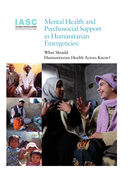
Mental Health and Psychosocial Support in Humanitarian Emergencies: What Should Humanitarian Health Actors Know?
recommended
IASC Reference Group for Mental Health and Psychosocial Support
Inter-Agency Standing Committee
(2010)
C1
This document is for humanitarian health actors working at national and sub-national level in countries facing humanitarian emergencies. It applies to Hea
...
lth Cluster partners, including governmental and non-governmental health service providers.
Based on the IASC Guidelines on Mental Health and Psychosocial Support in Emergency Settings (IASC, 2007), it gives an overview of essential knowledge that humanitarian health actors should have about mental health and psychosocial support (MHPSS) in humanitarian emergencies.
This document by the IASC Reference Group for Mental Health and Psychosocial Support was developed in consultation with the IASC Global Health Cluster.
more
The checklist is aligned with, and builds upon, existing COVID-19-related WHO guidelines and is structured around protective measures related to: 1) hand hygiene and respiratory etiquette; 2) physical distancing; 3) use of masks in schools; 4) environmental cleaning and ventilation; and 5) respectin
...
g procedures for isolation of all people with symptoms. The checklist is designed to support policy-makers, staff and officials from the education and health sectors, local authorities, school principals/leaders and administrators, teachers’ unions, community leaders, school staff, teachers, parents and caregivers.
more
Community Assessment For Public Health Emergency Response (Casper) Toolkit; third edition 3.2
recommended
2nd edition
For the control of vectors and pests of public health importance. Sixth edition
This report documents the secondary humanitarian problems and impacts of large-scale Ebola outbreak on the different humanitarian sectors, to provide a non-exhaustive plan to help future responders. A large scale Ebola outbreak, in this document, refers to an epidemic with an unprecedented scale, ge
...
ographical spread and duration.
more
8 January 2021
Sequencing enabled the world to rapidly identify SARS-CoV-2 and develop diagnostic tests and other tools for outbreak management. Continued genome sequencing supports the monitoring of the disease’s spread and evolution of the virus. Accelerated integration of genome sequencing int
...
o the practices of the global health community is required if we want to be better prepared for the future threats. This document provides guidance for laboratories on maximizing the impact of SARS-CoV-2 sequencing now and other emerging pathogens in the future.
more
