
Filter
156
Text search:
landmines
Featured
13
41
Language
Document type
118
13
8
5
5
4
3
Countries / Regions
17
10
7
6
6
5
4
4
4
3
3
3
3
3
3
2
2
2
2
2
2
2
2
2
2
2
2
2
2
2
1
1
1
1
1
1
1
1
1
1
1
1
1
1
1
1
1
1
1
1
1
1
1
1
1
1
1
1
1
1
1
1
1
1
1
Authors & Publishers
Publication Years
Category
48
14
7
2
2
1
1
Toolboxes
33
32
15
14
8
5
5
2
2
1
1
1
1
In December 2013, UNICEF published its first comprehensive evaluation assessing how well its global and country strategies and programmes have worked to protect children in emergencies.
The ‘Evaluation of UNICEF Programmes to Protect Children in Emergencies’ was undertaken to identify key suc
...
In its resolution 34/16, the Human Rights Council decided to focus its next full-day meeting on “Protecting the rights of the child in humanitarian situations” and invited the Office of the High Commissioner to prepare a report on that issue, in close collaboration with relevant stakeholders. Th
...

Education in emergencies is a young area; the evidence of its impact is often anecdotal, and although its status as a humanitarian concern has gained legitimacy in recent years, it has yet to be accepted across the humanitarian community. Much more needs to be done to enhance our understanding of t
...
This document is designed to provide UNICEF staff and UNICEF partner staff with principles and concepts that can assist them to respond to the psychosocial needs of children in natural disasters and social emergencies such as armed conflict and other forms of violence. It aims to introduce humanitar
...
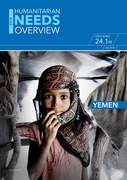
The humanitarian crisis in Yemen remains the worst in the world. Nearly four years of conflict and severe economic decline are driving the country to the brink of famine and exacerbating needs in all sectors. An estimated 80 per cent of the population – 24 million people – require some form of h
...
Prioritise education in conflict-affected areas:
Across the world 28 million1 primary school-age children living in conflict-affected countries are
out-of-school, and they form half of the world’s total out-of-school population. During conflict,
infrastructure assets such as schools are damaged
...
War Trauma Foundation strengthens mental health care and psychosocial support through capacity building and development and dissemination of expertise through the implementation of programmes in (post) conflict areas. We develop and evaluate new methods in close cooperation with (local) partner orga
...

This study primarily aims to understand how children living in areas of civil strife are denied their basic rights, especially the right to education and protection. For this study, eight districts affected by civil strife across the three states (Chhattisgarh: Dantewada, Bijapur, Bastar and Narayan
...

BJPSYCH INTERNATIONALVOLUME 12NUMBER 4NOVEMBER 2015
Continuing a worrying decade-long rising trend, the number of people forced to flee due to persecution, conflict, violence, human rights violations and events seriously disturbing public order climbed to 89.3 million by the end of 2021. This is more than double the 42.7 million people who remained f
...
The present report, which covers the period from January to December 2018, is submitted pursuant to Security Council resolution 2427 (2018). The preparation of the report involved broad consultations within the United Nations, in the field and at Headquarters, and with relevant Member States. It hig
...
As of June 2019, the number of Venezuelans leaving their country reached 4 million, with Colombia, Peru, Chile, Ecuador and Brazil hosting the vast majority of Venezuelans in Latin America. The end of the first half of the year was marked by the announcement of tighter immigration measures in Peru
...
Supplement October 2010
HIV/AIDS, security and conflict: making the connections
This working paper aims to provide a rough over-view of existing rules and guidelines on the coopera-tion between the UN and the private sector – at least as they are publicly available. It will describe com-mon features and discuss advances and shortcomings of the most prominent a
...
Abuses by ArmThis report is based on research in Catatumbo in April 2019. We interviewed more than 80 people, including abuse victims, their relatives, community leaders, church representatives, human rights officials, local authorities, judicial officials, and members of humanitarian and human righ
...
Internally displaced children are twice invisible in global and national data. First, because internally displaced people (IDPs) of all ages are often unaccounted for. Second, because age-disaggregation of any kind of data is limited, and even more so for IDPs.
Planning adequate responses to meet
...
As part of the new strategy preparation, USAID/Senegal requested assistance with a gender assessment. This study was conducted from March 20 to April 11, 2010. It was supported jointly by the Women in Development Indefinite Quantity Contract (WID IQC) Task Order 1 ShortTerm Technical Assistance and
...

