
Filter
331
Text search:
National
Drug
Authority,
Uganda
Featured
Recommendations
26
New Publications
112
Language
Document type
No document type
195
Studies & Reports
72
Guidelines
32
Strategic & Response Plan
14
Manuals
9
Fact sheets
5
Training Material
2
Situation Updates
2
Countries / Regions
Uganda
67
Kenya
26
Ethiopia
12
Tanzania
12
Malawi
11
Nigeria
9
Zambia
9
Global
9
Liberia
8
Congo, Democratic Republic of
8
Rwanda
8
Africa
8
Sierra Leone
7
Ghana
7
South Africa
7
Namibia
4
Guinea
3
Zimbabwe
3
Senegal
2
Pakistan
2
Jordan
2
Syria
2
Sudan
2
Eswatini/ Swaziland
2
Iran
2
Morocco
1
Saudi Arabia
1
Cameroon
1
Haiti
1
Philippines
1
India
1
Somalia
1
South Sudan
1
Iraq
1
Germany
1
Lebanon
1
Cambodia
1
Thailand
1
Benin
1
Central African Republic
1
Botswana
1
Greece
1
Lesotho
1
Mexico
1
Sri Lanka
1
West and Central Africa
1
Latin America and the Carribbean
1
Western and Central Europe
1
Venezuela
1
Albania
1
Laos
1
Georgia
1
Gabon
1
Tunisia
1
Authors & Publishers
Publication Years
Category
Countries
150
Clinical Guidelines
29
Public Health
16
Women & Child Health
13
Key Resources
8
Pharmacy & Technologies
8
Capacity Building
2
Toolboxes
HIV
43
AMR
33
Mental Health
23
Pharmacy
20
TB
16
NTDs
12
Ebola
9
Refugee
9
Rapid Response
8
COVID-19
6
Caregiver
6
Planetary Health
5
NCDs
5
Disability
4
Conflict
4
Global Health Education
3
Zika
2
Health Financing Toolbox
2
Cholera
1
Natural Hazards
1
This working paper was conceived to offer practical tips and suggestions on how to establish and sustain the multisectoral coordination needed to develop and implement National Action Plans on AMR (NAPs). It is intended for anyone with responsibilit
...
In September, 2018, the first international Medicine Quality and Public Health Conference was held at Oxford University, UK, to discuss opportunities and solutions to ensure that all people have access to affordable and quality-assured medical products. Delegates developed the short Oxford Statement
...
This working paper was conceived to offer practical tips and suggestions on how to establish and sustain the multisectoral coordination needed to develop and implement National Action Plans on AMR (NAPs). It is intended for anyone with responsibilit
...
This document is a guide defining requirements for quality and safety for malaria rapid diagnostic testing services to safeguard the quality of the results, the safety of the operators and patients and that of the environment for use by national mal
...
Fact Book on WHO Level I and Level II monitoring indicators - To monitor the progress of efforts to improve the global medicines situation, WHO has developed a system of indicators that measure important aspects of a country’s pharmaceutical situation. Level 1 indicators measure the existence and
...
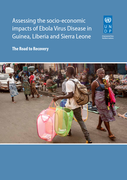
The Road to Recovery. This synthesis report is based on three national studies on the evolution of the Ebola epidemic and its impact on Guinea, Liberia and Sierra Leone
Improving Infection Prevention and Control Practices at Health Facilities in Resource-Limited Settings
recommended
SIAPS Technical Report. This report summarizes key accomplishments and lessons learned in implementing SIAPS’ approach to improving IPC practices in four countries: South Africa, Namibia, Jordan, and Ethiopia. All activities address SIAPS’s overall objective to build or enhance
...

Le présent document de travail a été conçu pour offrir des conseils pratiqueset des suggestions sur la manièred’établir et de maintenir la collaboration multisectorielle nécessaire pour élaborer et mettre en œuvre les plans d’action nationaux (PAN) de lutte contre la RAM. Il s’adresse
...
This report provides an update on the key facets of HIV treatment access, including the latest HIV treatment guidelines from World Health Organization (WHO), an overview on pricing for first-line, second-line, and salvage regimens, and a summary of the opportunities for – and threats to – expand
...

Overcoming barriers in low- and middle-income countries
For the first time, this year’s report includes information on hepatitis C diagnostics. With a focus on selected countries with diverse HCV epidemics, the report provides updates on the various dimensions of access to HCV diagnostics and pha
...
2nd edition - Published in 2003, the first WHO/HAI medicine prices manual Medicine Prices – A
New Approach to Measurement Draft for field-testing provides a draft methodology and tools to conduct national medicine prices and availability surveys
...
July 2018
This fourth edition of the Unitaid/WHO market and technology landscape: HIV rapid diagnostic tests for self-testing report summarizes the current HIV testing gap; the challenges facing efforts to scale up; and the potential role HIV self-testing (HIVST) could play to achieve the United
...
Despite the increasing population of refugees stuck in protracted situations and our awareness of the vulnerability of children and adolescents growing in up these contexts, relatively little is known about community based child protection mechanisms (CBCPMs) in refugee communities. CBCPMs, defined
...
The WHO country office for Ghana, began the year 2019 with a 4-day staff retreat at the Busua Beach Resort in the Western Region from 04 to 08 March 2019. The theme for the retreat was ‘Impacting the Health and Lives of the people of Ghana through the Triple Billion Goal”. The staff outlined pri
...
The Government of the Republic of Zambia has placed priority on ensuring that Zambians are healthy and productive as a catalyst to the attainment of socioeconomic development . The Vision 2030 aims to transform Zambia into a prosperous middle-income country as articulated also in the 7th
...
Occupational health and safety programmes aim to prevent diseases and injuries arising out of, linked with or occurring in the course of work, while improving the quality and safety of care, safeguarding the health workforce and promoting environmental sustainability in the health sector.
This gu
...

In 2014, the Ministry of Health (MOH) in Malawi conducted a nationwide assessment of emergency obstetric and newborn care (EmONC) services. This cross-sectional facility-based survey used 10 data collection modules. Data collection began on 23rd September 2014 and concluded on 17th October 2014, in
...
Recently, a renewed interest in large-scale community health worker (CHW) programs has been seen globally. This renewal provides an opportune moment to take stock of issues and challenges such programs face and what can be done to make them as effective as possible. With this in mind, this manual is
...
Medical devices are used for the prevention, diagnosis and treatment of illness and diseases and for rehabilitation. WHO developed guidance on medical device donation in 2011, which has been now reviewed, with new evidence, new references on considerations for medical device solicitation and provisi
...
Bull World Health Organ 2017;95:594–598
