
Filter
560
Text search:
Global
Health
Workforce
Alliance
Featured
Recommendations
53
New Publications
153
Language
Document type
No document type
271
Studies & Reports
123
Guidelines
68
Strategic & Response Plan
57
Manuals
25
Training Material
8
Fact sheets
4
Resource Platforms
2
Situation Updates
1
Infographics
1
Countries / Regions
Global
37
Ethiopia
21
Kenya
20
Liberia
18
Sierra Leone
16
India
13
Uganda
12
Malawi
12
Zambia
11
Nigeria
10
Syria
10
Western and Central Europe
10
Africa
10
South Africa
9
Namibia
9
Myanmar / Burma
8
Bangladesh
7
Lesotho
7
Guinea
6
South–East Asia Region
6
Ghana
5
Nepal
5
Tanzania
5
Rwanda
4
East and Southern Africa
4
Middle East and North Africa
4
Latin America and the Carribbean
4
Asia
4
Burkina Faso
3
Haiti
3
Cambodia
3
Indonesia
3
Yemen
3
West and Central Africa
3
Eastern Europe
3
Russia
3
Senegal
2
Zimbabwe
2
Philippines
2
South Sudan
2
Jordan
2
Afghanistan
2
Lebanon
2
Ukraine
2
Botswana
2
Sri Lanka
2
Congo, Democratic Republic of
1
Mali
1
Cameroon
1
Somalia
1
Iraq
1
Germany
1
Turkey
1
Thailand
1
Mozambique
1
Papua New Guinea
1
Brazil
1
Mexico
1
Western Pacific Region
1
Southern Africa
1
Laos
1
Timor Leste/ East Timor
1
Authors & Publishers
Publication Years
Category
Countries
200
Public Health
55
Clinical Guidelines
40
Women & Child Health
36
Key Resources
18
Capacity Building
7
Pharmacy & Technologies
3
Toolboxes
COVID-19
52
Global Health Education
35
Caregiver
34
Mental Health
28
Planetary Health
28
HIV
27
Disability
26
TB
20
NCDs
16
Ebola
15
Health Financing Toolbox
13
Rapid Response
11
AMR
9
Conflict
7
Polio
5
Refugee
5
Pharmacy
5
NTDs
2
Cholera
1
Zika
1
Social Ethics
1
The Lancet Global Health Published:May 12, 2020DOI:https://doi.org/10.1016/S2214-109X(20)30229-1

Lesotho’s predominantly rural population faces significant health challenges within a setting of inadequate human resources for health. It is essential that nurses and nurse-midwives, who together
...

This document lays out economic arguments for investing in the Access to COVID-19 Tools Accelerator (ACT-Accelerator). Framed within an overall context that recognizes the broader human health and societal impacts of the COVID-19 crisis, ACT-Acceler
...
The document, "Progress on the Prevention and Control of Non-Communicable Diseases," reports on global efforts to reduce the impact of NCDs, such as heart disease, cancer, diabetes, and chronic respiratory diseases, following the commitments made at
...
After introducing Ethiopia's WASH sector challenges and trends, the plan describes IRC Ethiopia's vision and strategy which draws from IRC and Water For People's joint framework - Destination 2030. It then details the organisational changes and business development needed to implement the strategic
...
The report and an accompanying series of studies show the global uptake of the World Health Organization (WHO) Surgical Safety Checklist in its first ten years since its launch and recommend ways th
...
Cardiovascular disease (CVD) is the leading cause of global deaths, with the majority occurring in low- and middle-income countries (LMIC). The primary and secondary prevention of CVD is suboptimal throughout the world, but the evidence-practice gap
...
The NDMS&IP focuses on mainstreaming disability to promote equitable access to services in the six thematic areas of health, education, livelihoods, empowerment, and social inclusion and cross-cutting issues.
The first part of the NDMS&IP outlines
...
23 February 2022
A summary of the commitments and targets within the United Nations General Assembly’s 2021 Political Declaration on HIV and AIDS.The United Nations General Assembly’s 2021 Political Declaration on AIDS features bold global comm
...
Recommended actions and international and national level
At least half of the world’s population does not have full coverage of essential health services. Health expenses push more than 100 million people into extreme poverty each and every year, forcin
...
The coronavirus disease (COVID-19) pandemic exacerbated pre-existing inequalities in the treatment and care of noncommunicable diseases (NCDs). This report examines the effect of the COVID-19 pandemic on access to NCD medicines, and the policies and strategies implemented by countries and
...
The present information document supplements the WHO audited financial statements for 2018. It contains information on WHO's voluntary contributions by fund and by contributor in the year 2018.
NAMIBIA (2012/13-2015/16)
This updated Comprehensive Mental Health Action Plan 2013-2030 builds upon its predecessor and sets out clear actions for Member States, the WHO Secretariat and international, regional and national partners to promote mental
...
This report includes analysis from informal regional consultations in the African Region, the Caribbean and North America, Latin America, South-East Asia Region, European Region, Eastern Mediterranean Region, alongside three forums in the Western Pacific Region. It analyses the overarching similarit
...
As countries commit to achieving universal health coverage, it is imperative to ensure that the design and delivery of palliative care services place attention on quality of care, with action needed across all domains of quality
...

The majority of developing countries will fail to achieve their targets for Universal Health Coverage (UHC)1 and the health- and poverty-related Sustainable Development Goals (SDGs) unless they take
...
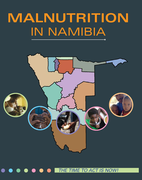
This report details the nutrition situation in Namibia. It provides information on what needs to be done! The situation calls for a consorted action. Nutrition is everyone’s business.The establishment of the National Alliance for Improved Nutritio
...
