
Filter
303
Text search:
профилактика
и
контроль
Featured
50
55
Language
Document type
119
65
35
25
16
14
13
7
5
2
2
Countries / Regions
20
17
12
5
5
4
4
4
3
2
2
2
2
2
2
2
2
2
1
1
1
1
1
1
1
1
1
1
1
1
1
1
1
1
1
1
1
1
1
1
1
1
1
1
1
Authors & Publishers
Publication Years
Category
150
126
54
33
15
13
6
Toolboxes
69
37
32
29
17
14
11
9
6
5
3
3
2
2
2
1
1
Based on scientific evidence, expert consensus and country experiences, the WHO core components for infection prevention and control (IPC) are the foundation for establishing or strengthening effective programmes at the national and facility level.
These new guidelines on core components of infecti
...

This country cooperation strategy (CCS) outlines how the World Health Organization (WHO) will work with the Lao People’s Democratic Republic over the next five years (2024–2028), supporting the implementation of the five-year health sector development plans and the Health Sector Reform Strategy
...
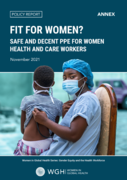
One of the many gender inequities in the health and care workforce that COVID-19 has exposed is around the fit and design of Personal Protective Equipment (PPE). The rapid onset and scale of COVID-19 led to shortages of PPE in most countries, causing preventable infection and mortality among healthc
...
Biosafety involves the implementation of containment principles, technologies and practices to prevent unintentional exposure to biological agents. Biosecurity involves the protection, control and accountability of biological materials and information related to these materials and dualuse research,
...
No country can claim to be free from health-care associated infections, therefore, improvement of infection prevention and control (IPC) strategies is essential. WHO recommends the use of multimodal improvement strategies to implement IPC interventions. These include each item of standard and transm
...
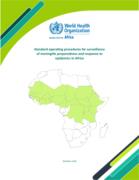
Epidemic meningitis is a major public health challenge in the African 'meningitis belt', an area that extends from Senegal to Ethiopia with an estimated total population of 500 million. Since 2002, the World Health Organization (WHO), in collaboration with its collaborating centres for meningitis, h
...

The Guideline for Disinfection and Sterilization in Healthcare Facilities, 2008, presents evidence-
based recommendations on the preferred methods for cleaning, disinfection and sterilization of patient-
care medical devices and for cleaning and disinfecting the healthcare environment. This docume
...
Investment in all the drivers and facilitators of hand hygiene action in health care to ensure that it occurs at the point of care and other critical moments requires a multidisciplinary, multifaceted approach. WHO describes such an approach as a “multimodal improvement strategy” (MMIS) which is
...
This document aims to support those working in primary care to strengthen IPC, informed by existing WHO IPC guidance and implementation resources. Many of the existing WHO IPC guidance and implementation resources initially developed for acute health care facilities have a potential utility for IPC
...
The recently published World Health Organization (WHO) Strengthening infection prevention and control in primary care document collates existing standards, measurement and implementation approaches, and resources for infection prevention and control (IPC) in primary care. During its development, it
...
Health care waste can be difficult to treat and dispose of safely. The environmental and health impacts of waste put extra pressure on resources. Therefore, it is important to try and reduce the quantities of waste wherever possible. Ensure waste is segregated properly at the point of disposal. It i
...
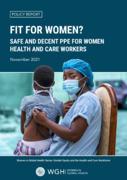
One of the many gender inequities in the health and care workforce that COVID-19 has exposed is around the fit and design of Personal Protective Equipment (PPE). The rapid onset and scale of COVID-19 led to shortages of PPE in most countries, causing preventable infection and mortality among healthc
...
One of the many gender inequities in the health and care workforce that COVID-19 has exposed is around the fit and design of Personal Protective Equipment (PPE). The rapid onset and scale of COVID-19 led to shortages of PPE in most countries, causing preventable infection and mortality among healthc
...
Una de las muchas desigualdades de género en el personal sanitario y asistencial que COVID-19 ha puesto de manifiesto es la relativa al ajuste y el diseño de los equipos de protección individual (EPP). La rápida aparición y la escala de COVID-19 condujeron a la escasez de EPP en la mayoría de
...
Janvier 2022.
L'une des nombreuses inégalités entre les sexes dans le secteur de la santé et des soins que COVID-19 a révélées concerne l'ajustement et la conception des équipements de protection individuelle (EPI). L'apparition rapide et l'ampleur de COVID-19 ont entraîné des pénuries d'
...
