Filter
1688
Text search:
Asia
Pacific
Featured
129
395
Language
Document type
904
403
175
76
47
26
19
15
12
10
1
Countries
140
58
44
42
41
36
34
32
31
27
23
16
16
16
13
11
10
10
10
9
9
9
9
9
7
7
7
7
6
5
5
5
5
5
5
5
5
4
4
4
4
4
4
4
4
3
3
3
3
3
2
2
2
2
2
2
2
2
2
2
2
2
1
1
1
1
1
1
1
1
1
1
1
1
1
1
1
1
1
1
1
1
1
1
1
1
1
1
1
1
1
1
1
1
1
Authors & Publishers
Publication Years
Category
344
159
104
101
64
29
22
5
Toolboxes
220
148
142
115
109
70
64
59
48
48
39
38
35
34
33
29
23
21
10
9
5
4
3
2
1
Fact Book on WHO Level I and Level II monitoring indicators - To monitor the progress of efforts to improve the global medicines situation, WHO has developed a system of indicators that measure important aspects of a country’s pharmaceutical situation. Level 1 indicators measure the existence and
...
Guide for coordinators and data collectors - The WHO Operational Package for Assessing, Monitoring and Evaluating Country Pharmaceutical Situations is intended as a useful tool for researchers, policy-makers, planners and others who need to use standardized measurement tools to gather data and other
...
WHO commissioned a survey, carried out in September/October 2015, among some 10 000 members of the public in 12 countries (2 per WHO Region: Barbados, China, Egypt, India, Indonesia, Mexico, Nigeria, the Russian Federation, Serbia, South Africa, Sudan and Viet Nam) on their use of antibiotics, knowl
...
Who suffers Most from Extreme Weather Events? Weather-related Loss Events in 2019 and 2000 to 2019
The Global Climate Risk Index 2021 analyses and ranks to what extent countries and regions have been affected by impacts of climate related extreme weather events (storms, floods, heatwaves etc.). The
...
Report of the WHO/Bill & Melinda Gates Foundation Consultation. The Consultation was organized back-to-back with the first annual meeting of the International Coordinating Group of the BMGF-funded project for human and dog rabies elimination in developing countries, held at WHO headquarters, Geneva,
...
The Global Campaign Against Epilepsy “Out of the Shadows”
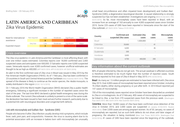
ACAPS Briefing Note: Zika virus epidemic
This guideline provides global, evidence-informed recommendations on daily iron supplementation in infants and children, as a public-health intervention for the prevention of anaemia and iron deficiency. It includes recommendations for iron supplementation in countries where malaria is prevalent.
The threat posed by Zika virus infection highlights the need to reinforce preparedness arrangements for mosquito-borne diseases in EU/EEA countries, especially for pathogens transmitted by Aedes aegypti and Aedes albopictus.
The aim of this document is to highlight measures that can effectively red
...
This Training module on malaria elimination has been developed by WHO to support health professionals in planning, managing, monitoring and evaluating malaria elimination programmes.
Supporting exercises: These files are necessary for participants to complete a number of exercises listed in the man
...