
Filter
2287
Text search:
eye
health
Featured
314
611
Language
2209
52
45
38
28
24
13
8
8
6
6
5
5
4
4
4
4
4
3
3
3
3
3
2
2
2
2
2
2
2
1
1
1
1
1
1
1
1
1
1
1
1
1
1
1
1
1
1
1
1
1
1
Document type
1337
369
240
133
79
49
38
16
12
9
3
1
1
Countries
192
72
71
65
61
56
51
50
48
46
40
39
35
34
29
26
25
25
24
22
22
19
18
14
14
12
12
12
12
11
10
10
10
10
9
9
8
8
8
8
7
7
6
6
6
6
5
5
5
5
5
5
4
4
4
4
4
4
3
3
3
3
3
3
3
2
2
2
2
2
2
2
2
2
2
2
2
2
2
2
2
2
1
1
1
1
1
1
1
1
1
1
1
1
1
1
1
1
1
1
1
1
1
1
1
1
1
1
1
1
1
1
1
1
Authors & Publishers
269
111
71
69
65
51
49
39
22
20
20
17
17
15
15
14
14
14
13
13
13
11
11
11
10
10
10
10
10
9
9
9
9
8
8
8
8
8
8
8
8
8
7
7
7
7
7
7
7
6
6
6
6
6
6
6
6
6
6
6
6
5
5
5
5
5
5
5
5
5
5
5
5
5
4
4
4
4
4
4
4
4
4
4
4
4
4
4
4
4
4
4
4
4
4
4
4
4
4
4
4
4
4
4
4
4
4
4
4
4
3
3
3
3
3
3
3
3
3
3
3
3
3
3
3
3
3
3
3
3
3
3
3
3
3
3
3
3
3
3
3
3
3
3
3
3
3
2
2
2
2
2
2
2
2
2
2
2
2
2
2
2
2
2
2
2
2
2
2
2
2
2
2
2
2
2
2
2
2
2
2
2
2
2
2
2
2
2
2
2
2
2
2
2
2
2
2
2
2
2
2
2
2
2
2
2
2
2
2
2
2
2
2
2
2
2
2
2
2
2
2
2
2
2
2
2
2
2
2
2
2
2
2
2
2
2
2
2
2
2
2
2
2
2
2
2
2
2
2
2
2
2
2
2
2
2
2
2
2
2
2
2
2
2
2
2
2
2
2
2
2
2
2
2
2
2
2
2
2
2
2
2
2
2
2
2
2
2
2
2
2
2
2
1
1
1
1
1
1
1
1
1
1
1
1
1
1
1
1
1
1
1
1
1
1
1
1
1
1
1
1
1
1
1
1
1
1
1
1
1
1
1
1
1
1
1
1
1
1
1
1
1
1
1
1
1
1
1
1
1
1
1
1
1
1
1
1
1
1
1
1
1
1
1
1
1
1
1
1
1
1
1
1
1
1
1
1
1
1
1
1
1
1
1
1
1
1
1
1
1
1
1
1
1
1
1
1
1
1
1
1
1
1
1
1
1
1
1
1
1
1
1
1
1
1
1
1
1
1
1
1
1
1
1
1
1
1
1
1
1
1
1
1
1
1
1
1
1
1
1
1
1
1
1
1
1
1
1
1
1
1
1
1
1
1
1
1
1
1
1
1
1
1
1
1
1
1
1
1
1
1
1
1
1
1
1
1
1
1
1
1
1
1
1
1
1
1
1
1
1
1
1
1
1
1
1
1
1
1
1
1
1
1
1
1
1
1
1
1
1
1
1
1
1
1
1
1
1
1
1
1
1
1
1
1
1
1
1
1
1
1
1
1
1
1
1
1
1
1
1
1
1
1
1
1
1
1
1
1
1
1
1
1
1
1
1
1
1
1
1
1
1
1
1
1
1
1
1
1
1
1
1
1
1
1
1
1
1
1
1
1
1
1
1
1
1
1
1
1
1
1
1
1
1
1
1
1
1
1
1
1
1
1
1
1
1
1
1
1
1
1
1
1
1
1
1
1
1
1
1
1
1
1
1
1
1
1
1
1
1
1
1
1
1
1
1
1
1
1
1
1
1
1
1
1
1
1
1
1
1
1
1
1
1
1
1
1
1
1
1
1
1
1
1
1
1
1
1
1
1
1
1
1
1
1
1
1
1
1
1
1
1
1
1
1
1
1
1
1
1
1
1
1
1
1
1
1
1
1
1
1
1
1
1
1
1
1
1
1
1
1
1
1
1
1
1
1
1
1
1
1
1
1
1
1
1
1
1
1
1
1
1
1
1
1
1
1
1
1
1
1
1
1
1
1
1
1
1
1
1
1
1
1
1
1
1
1
1
1
1
1
1
1
1
1
1
1
1
1
1
1
1
1
1
1
1
1
1
1
1
1
1
1
1
1
1
1
1
1
1
1
1
1
1
1
1
1
1
1
1
1
1
1
1
1
1
1
1
1
1
1
1
1
1
1
1
1
1
1
1
1
1
1
1
1
1
1
1
1
1
1
1
1
1
1
1
1
1
1
1
1
1
1
1
1
1
1
1
1
1
1
1
1
1
1
1
1
1
1
1
1
1
1
1
1
1
1
1
1
1
1
1
1
1
1
1
1
1
1
1
1
1
1
1
1
1
1
1
1
1
1
1
1
1
1
1
1
1
1
1
1
1
1
1
1
1
1
1
1
1
1
1
1
1
1
1
1
1
1
1
1
1
1
1
1
1
1
1
1
1
1
1
1
1
1
1
1
1
1
1
1
1
1
1
1
1
1
1
1
1
1
1
1
1
1
1
1
1
1
1
1
1
1
1
1
1
1
1
1
1
1
1
1
1
1
1
1
1
1
1
1
1
1
1
1
1
1
1
1
1
1
1
1
1
1
1
1
1
1
1
1
1
1
1
1
1
1
1
1
1
1
1
1
1
1
1
1
1
1
1
1
1
1
1
1
1
1
1
1
1
1
1
1
1
1
1
1
1
1
1
1
1
1
1
1
1
1
1
1
1
1
1
1
1
1
1
1
1
1
1
1
1
1
1
1
1
1
1
1
1
1
1
1
1
1
1
1
1
1
1
1
1
1
1
1
1
1
1
1
1
1
1
1
1
1
1
1
1
1
1
1
1
1
1
1
1
1
1
1
1
1
1
1
1
1
1
1
1
1
1
1
1
1
1
1
1
1
1
1
1
1
1
1
1
1
1
1
1
1
1
1
1
1
1
1
1
1
1
1
1
1
1
1
1
1
1
1
1
1
1
1
1
1
1
1
1
1
1
1
1
1
1
1
1
1
1
1
1
1
1
1
1
1
1
1
1
1
1
1
1
1
1
1
1
1
1
1
1
1
1
1
1
1
1
1
1
1
1
1
1
1
1
1
1
1
1
1
1
1
1
1
1
1
1
1
1
1
1
1
1
1
1
1
1
1
1
1
1
1
1
1
1
1
1
1
1
1
1
1
1
1
1
1
1
1
1
1
1
1
1
1
1
1
1
1
1
1
1
1
1
1
1
1
1
1
1
1
1
1
1
1
1
1
1
1
1
1
1
1
1
1
1
1
1
1
1
1
1
1
1
1
1
1
1
1
1
1
1
1
1
1
1
1
1
1
1
1
1
1
1
1
1
1
1
1
1
1
1
1
1
1
1
1
1
1
1
1
1
1
1
1
1
1
1
1
1
1
1
1
1
1
1
1
1
1
1
1
1
1
1
1
1
1
1
1
1
1
1
1
1
1
1
1
1
1
1
1
1
1
1
1
1
1
1
1
1
1
1
1
1
1
1
1
1
1
1
1
1
1
1
1
1
1
1
1
1
1
1
1
1
1
1
1
1
1
1
1
1
1
1
1
1
1
1
1
1
1
1
1
1
1
1
1
1
1
1
1
1
1
1
1
1
1
1
1
1
1
1
1
1
1
1
1
1
1
1
1
1
1
1
1
1
1
1
1
1
1
1
1
1
1
1
1
1
1
1
1
1
1
1
1
1
1
1
1
1
1
1
1
1
1
1
1
1
1
1
1
1
1
1
1
1
1
1
1
1
1
1
1
1
1
1
1
1
1
1
1
1
1
1
1
1
1
1
1
1
1
1
1
1
1
1
1
1
1
1
1
1
1
1
1
1
1
1
1
1
1
1
1
1
1
1
1
1
1
1
1
1
1
1
1
1
1
1
1
1
1
1
1
1
1
1
1
1
1
1
1
1
1
1
1
1
1
1
1
1
1
1
1
1
1
1
1
1
1
1
1
1
1
1
1
1
1
1
1
1
1
1
1
1
1
1
1
1
1
1
1
1
1
1
1
1
1
1
1
1
1
1
1
1
1
1
1
1
1
1
1
1
1
1
1
1
1
1
1
1
1
1
1
1
1
1
1
1
1
1
1
1
1
1
1
1
1
1
1
1
1
1
1
1
1
1
1
1
1
1
1
1
1
1
1
1
1
1
1
1
1
1
1
1
1
1
1
1
1
1
1
1
1
1
1
1
1
1
1
1
1
1
1
1
1
1
1
1
1
1
1
1
1
1
1
1
1
1
1
1
1
1
1
1
1
1
1
1
1
1
1
1
1
1
1
1
1
1
1
1
1
1
1
1
1
1
1
1
1
1
1
1
1
1
1
1
1
1
1
1
1
1
1
1
1
1
1
1
1
1
1
1
1
1
1
1
1
1
1
1
1
1
1
1
1
1
1
1
1
1
1
1
1
1
1
1
1
1
1
1
1
1
1
1
1
1
1
1
1
1
1
1
1
1
1
1
1
1
1
1
1
1
1
1
1
1
1
1
1
1
1
1
1
1
1
1
1
1
1
1
1
1
1
1
1
1
1
1
1
1
1
1
1
1
1
1
1
1
1
1
1
1
1
1
1
1
1
1
1
1
1
1
1
1
1
1
1
1
1
1
1
1
1
1
1
1
1
1
1
1
1
1
1
1
1
1
1
1
1
1
1
1
1
1
1
1
1
1
1
1
1
1
1
1
1
1
1
1
1
1
1
1
1
1
1
1
1
1
1
1
1
1
1
1
1
Publication Years
531
1384
345
27
Category
913
268
143
108
91
79
27
1
Toolboxes
187
178
147
94
91
84
83
79
62
54
50
44
44
32
32
29
26
24
24
11
10
10
3
1
1
Guidelines for the Prevention and Containment of Antimicrobial Resistance in South African Hospitals
These guidelines form part of efforts to institutionalise the prevention and containment of antimicrobial resistance (AMR) in health care facilities in South Africa, as outlined in the Antimicrobial Resistance Strategic Framework and Implementation
...
Plan. The focus of these guidelines is on two interrelated aspects of prevention of healthcare associated infections (HAIs) and their spread; and the application of antimicrobial stewardship (AMS) practices at hospital level.
more

Introduction to HIV, AIDS and STI Surveillance - HIV Clinical Staging and Case Reporting
United States Department of Health and Human Services; Centers for Disease Control and Prevention (HHS-CDC); Global AIDS Program (GAP); et al.
United States Department of Health and Human Services; Centers for Disease Control and Prevention (HHS-CDC); Global AIDS Program (GAP); et al.
(2009)
C2
Participant Manual September 2009

The product of all this work is the Standard Treatment Guideline and Essential Medicines List of Common Medical Conditions in the Kingdom of Swaziland. These systematically developed statements are designed to assist practitioners in making decisions about appropriate treatment for specific clinical
...
conditions. They are meant to reflect expert consensus based on a review of current and published scientific evidence of acceptable approaches to diagnosis, man-agement, or prevention of specific conditions.It is enlightening to note that section A of the document contains the STG, and effort has been made to have the conditions commonly encountered in Swaziland classified according to systems. Written in simple, clear language, each section consists of a short definition followed by common symptoms and signs of the disease or condition and then management (pharmacological and nonpharmacological)
more
Guidelines on Clinical Management of COVID – 19
Government of India Ministry of Health & Family Welfare Directorate General of Health Services (EMR Division)
Government of India Ministry of Health & Family Welfare Directorate General of Health Services (EMR Division)
(2020)
C2
17th March 2020
1PEP GUIDELINES | 2019 EDITION. The prevalence of both HIV and Hepatitis B is high in South Africa therefore there is a significant risk of acquiring these infections following exposure to infected material. Studies suggest that post- exposure prophylaxis (PEP) with highly active antiretroviral trea
...
tment (HAART) is highly effective in preventing HIV infection if taken correctly for the full recommended duration of 28 days, and that prophylaxis with Hepatitis B immunoglobulin and vaccination may prevent Hepatitis B infection if given soon after exposure. This update of the Western Cape guidelines for management of potentially infectious exposures is based on current evidence and guidelines issued by the WHO, NDoH and the SA HIV Clinicians Society. The key aim is to promote successful completion of the recommended ART regimen in the 28 day period of therapy, as well as prevent infection with Hepatitis B
more
This document is a checklist CHW supervisors can use to ensure that CHWs are implementing high quality home visits.
Job satisfaction among healthcare workers in Ghana and Kenya during the COVID-19 pandemic: Role of perceived preparedness, stress, and burnout
Afulani PA, Nutor JJ, Agbadi P, Gyamerah AO, Musana J, Aborigo RA, et al.
PLOS Global Public Health
(2021)
CC
The COVID-19 pandemic has affected job satisfaction among healthcare workers; yet this has not been empirically examined in sub-Saharan Africa (SSA). We addressed this gap by examining job satisfaction and associated factors among healthcare workers in Ghana and Kenya during the COVID-19 pandemic. W
...
e conducted a cross-sectional study with healthcare workers (N = 1012). The two phased data collection included: (1) survey data collected in Ghana from April 17 to May 31, 2020, and (2) survey data collected in Ghana and Kenya from November 9, 2020, to March 8, 2021. We utilized a quantitative measure of job satisfaction, as well as validated psychosocial measures of perceived preparedness, stress, and burnout; and conducted descriptive, bivariable, and multivariable analysis using ordered logistic regression. We found high levels of job dissatisfaction (38.1%), low perceived preparedness (62.2%), stress (70.5%), and burnout (69.4%) among providers. High perceived preparedness was positively associated with higher job satisfaction (adjusted proportional odds ratio (APOR) = 2.83, CI [1.66,4.84]); while high stress and burnout were associated with lower job satisfaction (APOR = 0.18, CI [0.09,0.37] and APOR = 0.38, CI [0.252,0.583] for high stress and burnout respectively). Other factors positively associated with job satisfaction included prior job satisfaction, perceived appreciation from management, and perceived communication from management. Fear of infection was negatively associated with job satisfaction. The COVID-19 pandemic has negatively impacted job satisfaction among healthcare workers. Inadequate preparedness, stress, and burnout are significant contributing factors. Given the already strained healthcare system and low morale among healthcare workers in SSA, efforts are needed to increase preparedness, better manage stress and burnout, and improve job satisfaction, especially during the pandemic.
more

Kenya Quality Model for Health - Level 2 Facilities
Kenya Quality Model for Health - Hospitals
The Adult Standard Treatment Guidelines and Essential Medicines List for Hospital Level provide a platform for transparency to enable equitable access to safe, effective, and affordable treatment options at hospital level taking into consideration the changing clinical needs of our population and th
...
e pragmatic implications of the introducing a new health technology.
more
Guidelines for the Prevention and Contaiment of of Antimicrobial Resistance in South African Hospitals
recommended
These guidelines form part of efforts to institutionalize the prevention and containment of antimicrobial resistance (AMR) in healthcare facilities in South Africa, as outlined in the Antimicrobial Resistance Strategic Framework and Implementation Plan. The focus of these guidelines is on two interr
...
elated aspects of prevention of healthcare associated infections (HAIs) and their spread; and the application of antimicrobial stewardship (AMS) practices at hospital level. They aim to serve as a practical, step-by-step or ‘how-to’ guide, addressing the infection prevention and AMS components of a robust response in a hospital. They draw on
evidence from various international guidance documents and standards for interventions that have been shown to be successful in infection
prevention and AMS programmes. These interventions have been customised to the South African hospital setting based on local
experiences in the public and private health sectors. This was done through a series of workshops and requests for comment involving
country-level experts.
more
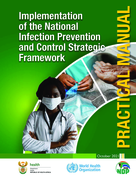
The strategic framework gives guidance to public and private health facilities and health workers on compliance with standards relating to IPC practices. To further assist
...
health facilities to implement the IPC strategic framework, this practical implementation manual has been developed in parallel to accompany the document.
These implementation strategies should be read in conjunction with the National Infection Prevention and Control (IPC) Strategic Framework (2020) to support an IPC programme at health facility level towards reducing healthcare-associated infections (HAI) and antimicrobial resistance (AMR). This manual is aligned with the World Health Organization (WHO) Core Component IPC programme recommendations and highlights the essentials for developing and improving IPC at health facility level in a systematic, stepwise manner for South Africa. It supports the Framework for the Prevention and Containment of AMR in South African Hospitals (2018).
more
Standard Treatment Guidelines and Essential Medicines List for South Africa : Primary Healthcare Level 2020 edition
the Essential Drugs Programme, the PHCAdult Hospital Level Expert review Committee, the National Essential Medicines List Committee
National Department of Health South Africa
(2020)
CC
The PHC STGs and EML should be used by healthcare workers providing care at clinics, community health centres, and gateway clinics at hospitals.
Pharmaceutical and Therapeutics Committees (PTCs) are responsible for ensuring the availability of medi
...
cines listed in the PHC EML at those facilities, as well as at higher levels of care.
more
Hypertension in adults: diagnosis and management
the National Institute for Health and Care Excellence (NICE)
the National Institute for Health and Care Excellence (NICE)
(2023)
CC
The NICE guideline "Hypertension in Adults: Diagnosis and Management" outlines recommendations for diagnosing and managing hypertension in adults over 18, including those with type 2 diabetes. It emphasizes accurate blood pressure measurement, recommending ambulatory or home monitoring to confirm di
...
agnosis. Cardiovascular risk and target organ damage should be assessed, considering age, lifestyle, and other conditions. Initial treatment focuses on lifestyle changes such as diet, exercise, and smoking cessation, with medication advised for stage 1 hypertension at high cardiovascular risk or stage 2 hypertension. Regular monitoring and treatment adjustments are recommended to maintain target blood pressure levels, with specific guidance for people over 80 and those with additional conditions like diabetes or kidney disease. The guideline aims to reduce risks of heart attack, stroke, and other complications, supporting evidence-based treatment decisions in clinical practice.
more
This document serves to provide interim guidance/ recommendations to carry out mpox surveillance activities mainly case investigation, contact tracing and isolation. For the development of this document WHO, UKHSA and CDC guidelines were referred to and adopted within the country context.
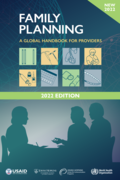
Family planning: a global handbook for providers
recommended
4th edition 2022 of the Handbook includes new WHO recommendations that expand contraceptive choices. Also, guidance on starting ongoing contraception following emergency contraception is provided.
Drawing on lessons from recent outbreaks, this new edition details tangible me
...
asures for frontline health workers to protect access to family planning services during emergencies, such as wider access to self-administered contraceptives and the use of digital technologies by providers. It also expands guidance for women and young people at high risk of HIV.
more
